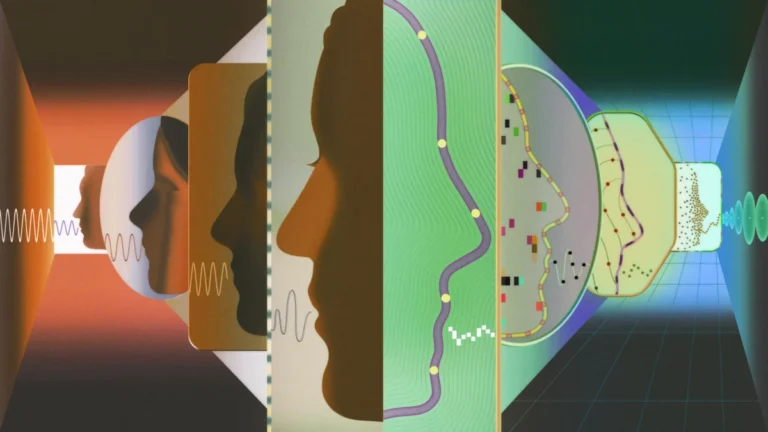

In an era defined by ideological fragmentation and the rapid shifting of social coalitions, understanding the nuances of the American electorate has become an exercise in complexity. The latest political typology released by the Pew Research Center offers a rigorous framework for navigating this landscape. By moving beyond the binary of “Democrat vs. Republican,” the center’s latest research—specifically the Wave 183 topline—provides a granular look at the fractured nature of political identity in the mid-2020s.
Main Facts: A New Taxonomy of the American Voter
The political typology is not merely a survey of voting intentions; it is a diagnostic tool designed to categorize voters based on core values, policy preferences, and institutional trust. The research identifies a series of distinct clusters, ranging from highly partisan ideological wings to disillusioned moderates.
At the heart of the findings is the distinction between the "Standard Profile" and the "Extended Profile." The standard profile captures the baseline ideological leanings, measuring economic sentiment, social liberalism versus conservatism, and foreign policy outlooks. The extended profile, however, drills deeper into the psychological underpinnings of these choices, exploring how voters perceive the nature of the state, their personal role in community governance, and the perceived threats to their way of life.
The central takeaway is clear: the American electorate is not simply divided into two camps. Instead, it is composed of overlapping, often contradictory, segments that defy traditional party branding. These segments are defined by their "political DNA"—a combination of demographic realities, media consumption habits, and fundamental beliefs about the role of government.
Chronology: The Evolution of the Typology
The development of the current typology is the culmination of months of rigorous methodological refinement.
- Q1 2026: Pew Research Center initiates the pilot phase for Wave 183, testing a new battery of questions designed to capture the "post-election fatigue" observed in the previous cycle.
- April 2026: Extensive focus groups are conducted across four key geographic regions to calibrate the survey questions. Researchers identify a growing shift in how voters define "economic security," moving away from GDP metrics toward cost-of-living indicators.
- May 10, 2026: The official topline data (Wave 183) is finalized and released. This document serves as the foundational text for the extended profile, detailing the specific phrasing of questions that differentiate "hard-core" partisans from "pragmatic" voters.
- Late May 2026: Independent academic panels review the data, noting that the typology successfully identifies a "hidden middle" that often goes unrepresented in traditional horse-race polling.
Supporting Data: Dissecting the Methodology
To understand the depth of this research, one must look at the technical architecture provided in the Wave 183 topline. The survey utilizes a sophisticated weighting process to ensure that the findings are representative of the diverse American demographic.
The "Standard Profile" questions focus on fixed pillars of political identity:
- Economic Philosophy: Does the individual prioritize market-driven growth or government-funded social safety nets?
- Social Values: How do voters perceive the pace of cultural change in the United States?
- Institutional Trust: What is the respondent’s confidence level in the judiciary, the executive branch, and the mainstream media?
The "Extended Profile" takes this further. It includes questions regarding:
- Technological Governance: Should the state regulate AI and digital spaces, or should market forces dictate the evolution of technology?
- Global Positioning: Is the U.S. role in global affairs a net benefit or a potential liability to local economic interests?
- Community Cohesion: What defines a "contributing citizen"?
When analyzed together, these data points reveal that segments previously thought to be aligned often diverge on specific policy issues. For example, the data shows that while a specific demographic may be fiscally conservative, they are increasingly progressive regarding environmental policy, creating a "policy paradox" that confuses traditional political strategists.
Official Responses and Expert Analysis
The release of the typology has sparked intense discussion among political analysts and pollsters.
"This is the most comprehensive mapping of the American mind we have seen in years," says Dr. Elena Vance, a senior political scientist. "By providing both the standard and extended profiles, Pew allows us to see not just what people think, but why they hold these positions. The distinction between a voter’s public partisan identity and their private policy preference is where the real story lies."
However, not all feedback has been uncritical. Some commentators argue that the categories, while accurate, may be too static to capture the volatility of modern politics. "The typology is a snapshot," notes political strategist Marcus Thorne. "But in a digital-first environment, these sentiments can shift in weeks, not years. The extended profile is a valuable tool, but it must be read as a snapshot in time rather than a permanent map of the soul."
Pew Research Center, in its official summary, emphasizes that the goal is not to predict the next election result but to illuminate the underlying currents that will eventually shape the electoral climate. The organization has committed to ongoing updates of the Wave 183 data to account for external shocks, such as economic shifts or geopolitical events.
Implications: The Future of Political Engagement
The implications of this research are profound for both policy makers and the public.
For Political Strategists
The data suggests that the "big tent" strategy is increasingly obsolete. With the population fractured into such distinct, internally consistent, yet externally opposing groups, the most successful campaigns will likely be those that can identify "bridge issues"—topics where multiple segments find common ground, despite ideological disagreements on other fronts.
For Media and Communication
The extended profile highlights the "information silos" that exist across the political spectrum. Understanding that different voter types consume information through fundamentally different value lenses means that messaging cannot be one-size-fits-all. Organizations that wish to reach a broad audience must tailor their communication to the core psychological profile of the audience segment.
For the Democratic Process
Perhaps the most significant implication is the reminder that political identity is a complex, multi-layered construct. By moving the discourse away from the binary "us versus them" mentality, the Pew Research typology invites a more sophisticated understanding of the electorate. It forces us to acknowledge that the person on the other side of the political aisle likely has a complex set of reasons for their beliefs, rooted in a different set of priorities and fears.
Conclusion: Navigating the Complexity
As we look toward the remainder of the decade, the tools provided by the Pew Research Center’s Wave 183 topline will be indispensable. Whether one is a researcher, a policy maker, or a concerned citizen, the ability to decode the "extended profile" of the American voter is essential for navigating the current political landscape.
The typology does not offer easy answers. Instead, it offers a mirror. It forces us to see the fragmentation clearly and, in doing so, provides the first step toward a more informed and nuanced public discourse. The architecture of our political future is being built today, one survey response at a time, and understanding that structure is the key to maintaining a functioning democracy in an increasingly complex world.
For those wishing to delve deeper into the raw data and the specific methodology behind these findings, the full Wave 183 topline report remains the definitive resource. As the data is further scrutinized by experts and applied to real-world scenarios, it will undoubtedly serve as the benchmark for understanding the American political consciousness for years to come.
About the Author