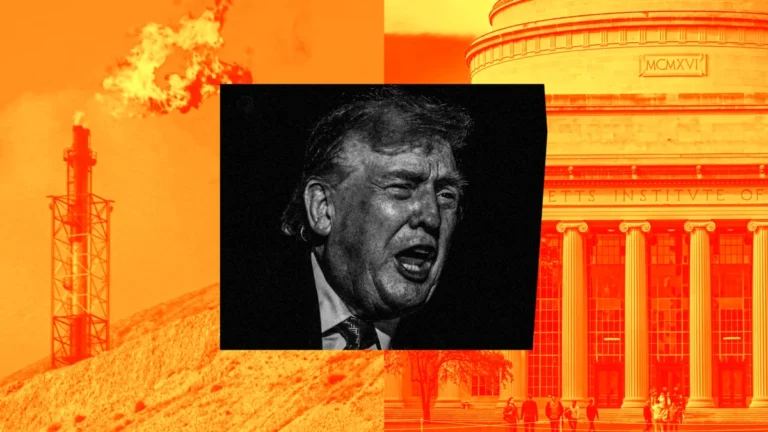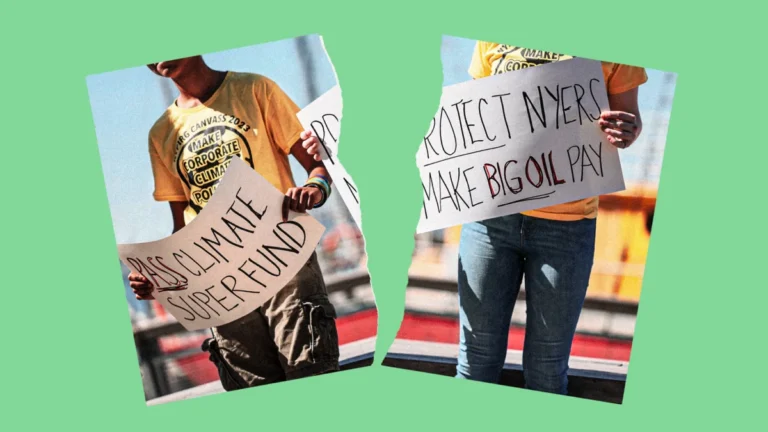
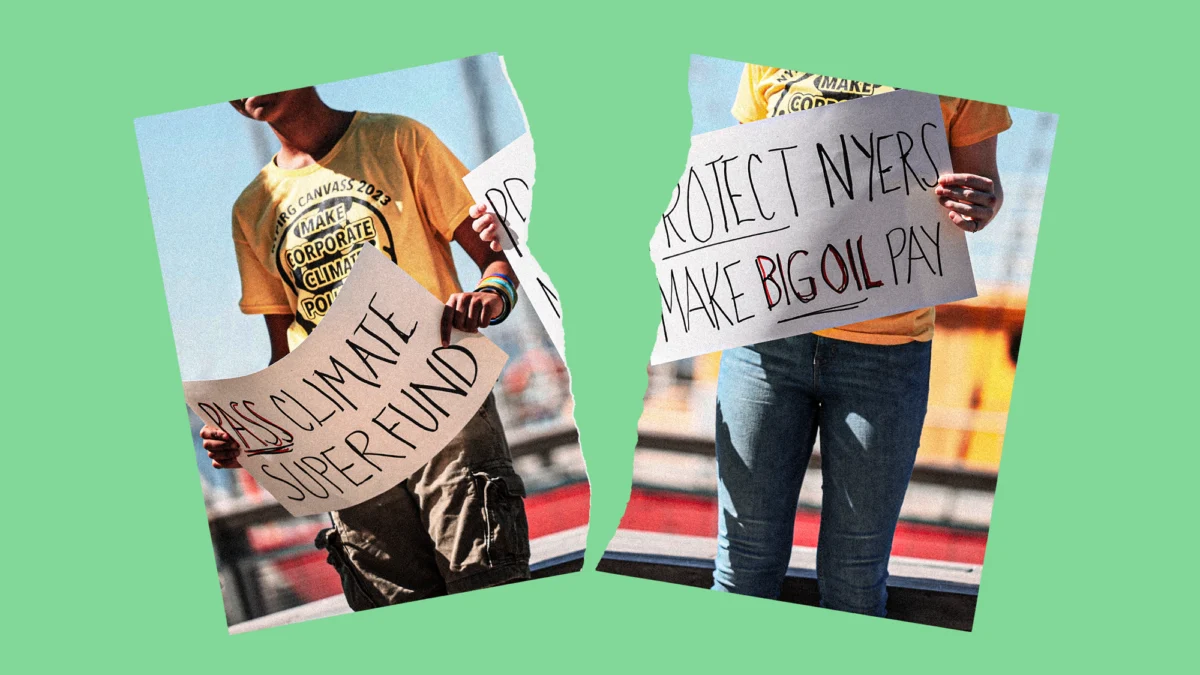
As New York City hosted its annual Climate Week, the atmosphere was thick with both the urgency of climate action and the weight of a major legal setback. On the event’s fourth day, federal Judge P. Kevin Castel issued a ruling that struck down New York’s landmark Climate Change Superfund Act—a piece of legislation designed to force the world’s largest fossil fuel corporations to pay for the mounting damages caused by a warming planet.
The decision represents a significant victory for the fossil fuel industry and the Trump administration, both of which have argued that individual states lack the authority to regulate global atmospheric issues. Yet, even as the ink dries on this ruling, the movement to make "big oil" pay for climate-related infrastructure costs is far from dead. Across the United States, from the shores of Connecticut to the forests of Washington, state lawmakers are doubling down, viewing the legal obstacles as mere hurdles in a long-distance race toward corporate accountability.
The Genesis of the "Polluter Pays" Principle
The New York Climate Change Superfund Act, signed into law in 2024, was envisioned as a state-level response to a failure of federal policy. The bill’s premise was simple, rooted in the legal philosophy of the 1980s federal Superfund statute: if a company causes a toxic mess, that company—not the taxpayer—should foot the bill for the cleanup.
The New York law would have required major fossil fuel companies to pay $75 billion over a 25-year period. These funds were earmarked for critical climate adaptation projects, such as strengthening bridges against floods, bolstering the electrical grid against extreme heat, and mitigating the destruction caused by intensifying storms. For proponents, it was an issue of fundamental fairness: the companies that generated the wealth from carbon-heavy fuels should bear the costs of the destruction those fuels have wrought.
Chronology of a Legal Conflict
The road to the current legal impasse has been marked by a series of escalating challenges:
- 2023: New York lawmakers introduce the Climate Change Superfund Act, sparking a wave of interest from state legislatures nationwide.
- 2024: The bill is enacted, signaling a shift toward aggressive state-led climate litigation.
- Early 2025: The U.S. Department of Justice (DOJ) enters the fray, filing motions for summary judgment against both New York and Vermont’s climate laws, arguing that state-level intervention constitutes "federal overreach."
- Mid-2026: Judge Brenda Sannes issues a ruling against a coalition of states and industry groups, setting a precedent that foreshadowed the recent New York decision.
- September 2026: During Climate Week, Judge P. Kevin Castel formally invalidates the New York law, ruling that it is preempted by the federal Clean Air Act and impermissibly interferes with the federal government’s prerogative to conduct foreign affairs.
The Economic Reality: Why States are Pushing Back
While the courts focus on jurisdictional technicalities, the reality on the ground for states like Minnesota, Vermont, and Washington remains dire. The financial burden of climate change is no longer a theoretical concern for future generations; it is a line item in current state budgets.
In Minnesota, State Representative Athena Hollins, a leader in the Democratic-Farmer-Labor Party, has been a vocal proponent of similar legislation. Her state has weathered 62 confirmed climate or weather-related disasters costing over $1 billion each between 1980 and 2024. Hollins projects that Minnesota could face up to $20 billion in climate-related damages by 2040—a sum equivalent to nearly one-third of the state’s current total budget.
"The costs are coming," Hollins stated. "The question is: is it the taxpayers who are going to pay for it, or is it the billionaires?"
This sentiment is echoed in Vermont, where the memory of the "Great Vermont Flood" of 2023 remains fresh. State Senator Anne Watson, who helped spearhead Vermont’s own version of the bill, points out that the destruction of roads, bridges, and local businesses has forced a shift in policy. For Vermont, the legislation is not merely about environmental ethics; it is about fiscal survival for municipalities that simply cannot afford to rebuild after every extreme weather event.
Supporting Data: Grassroots Demand vs. Lobbying Power
A comprehensive study by Brown University’s Climate and Development Lab highlights a stark disparity between public opinion and legislative outcomes. In states where climate superfund bills have been introduced, public hearings have seen a 3-to-1 ratio of support to opposition. In Vermont, grassroots mobilization was so intense that 12,000 signatures were gathered in a state with a population of only 650,000.
However, the report also warns of the "shadow" influence of lobbying. While public sentiment overwhelmingly favors holding polluters accountable, industry groups—ranging from major oil conglomerates to the U.S. Chamber of Commerce—have utilized immense lobbying resources to sway legislators behind closed doors. This influence is often the deciding factor in whether a bill makes it to the floor for a vote.
Official Responses and Federal Intervention
The Trump administration has made no secret of its opposition to these state initiatives. Following Judge Castel’s ruling, DOJ official Adam Gustafson lauded the decision, stating that the federal government—not the states—possesses the sole authority to set national policy on global pollution.
Interestingly, this argument creates a paradoxical situation. The administration asserts that states cannot regulate greenhouse gases because the federal government should, yet the Environmental Protection Agency (EPA) recently rescinded its own authority to regulate those same emissions.
For the fossil fuel industry, this legal strategy is two-fold: prevent new laws from taking root and dismantle the legal frameworks of those that have already passed. The industry’s argument rests on the idea that climate change is a global phenomenon requiring a unified federal response, and that individual state laws create a chaotic "patchwork" of regulation that threatens energy security.
Future Implications: The "Silver Lining" and the Supreme Court
Despite the defeat in New York, the movement is not retreating. Many state lawmakers are now looking at the judicial opinions as a "map of the landmines."
Washington State Representative Shaun Scott views the recent rulings as a learning opportunity. By identifying the specific legal vulnerabilities cited by Judge Castel—such as the interaction between state laws and the Clean Air Act—legislators believe they can draft future bills that are more resilient to federal challenge. In Seattle, 350Seattle and other advocacy groups are working with local offices to craft legislation that bypasses these specific legal pitfalls, using existing successful models like the Wildfire Alleviation Support Act as a template.
The legal landscape is further complicated by the upcoming Supreme Court case involving Boulder, Colorado, and its lawsuit against Suncor Energy and ExxonMobil. While the specific legal questions in Suncor v. Boulder differ from the superfund bills, the Court’s eventual ruling will provide a crucial signal on how the judiciary views the liability of fossil fuel companies for climate damages. Legal scholars note that even a narrow ruling could be used by lower courts to justify or invalidate future superfund statutes.
Conclusion: A Long-Term Struggle
As states continue to experience the physical and financial tolls of a warming climate, the pressure to find funding for adaptation will only increase. Whether through the courts, or through more robust legislative crafting, the battle to shift the cost of climate change from the public to the private sector is likely to continue for years to come.
As Senator Anne Watson noted after the ruling: "This isn’t going to make us back down. Maybe it’s a little intimidating in certain ways, but we’re not giving up. It’s just a matter of time before the fossil fuel industry is held accountable."
For now, the fight has moved from the streets to the courtrooms, but for the millions of citizens in states facing billions in damages, the stakes could not be higher. The question of who pays for the climate crisis is not just a legal debate—it is a central defining issue of the decade.
About the Author