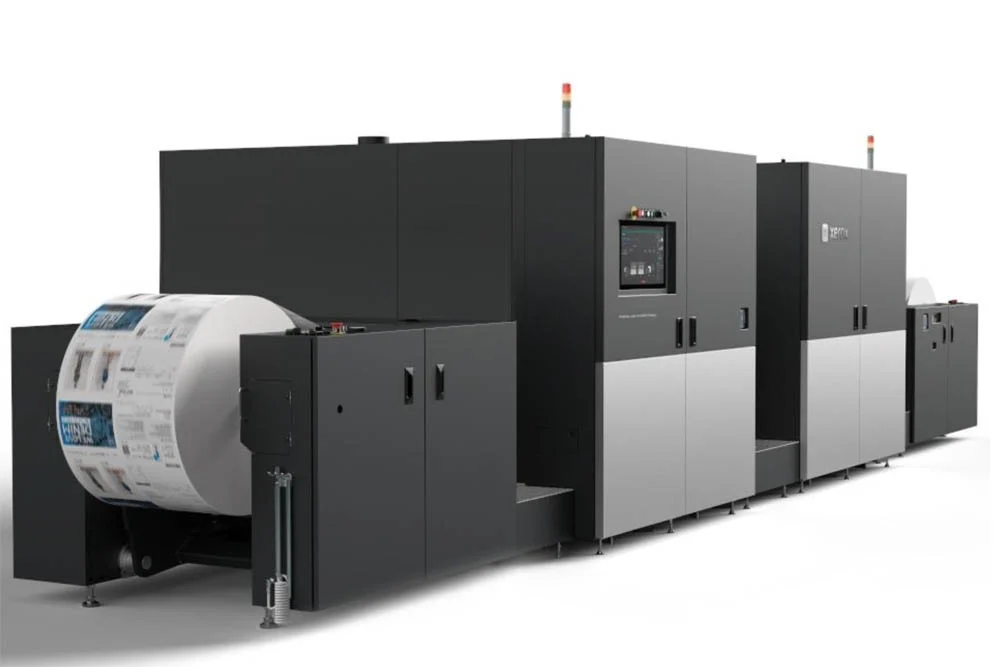
ROCHESTER, NY – In a significant strategic move poised to reshape its presence in the high-volume digital printing landscape, Xerox has officially launched its new Proficio Jet inkjet series. Unveiled at the recently concluded Printing United exposition in the United States, this new lineup marks Xerox’s emphatic entry into the burgeoning production inkjet market, a segment increasingly dominating the growth trajectory of digital print. The introduction of the Proficio Jet CS1100 sheet-fed press and the Proficio Jet CF1200 continuous-feed system signals Xerox’s commitment to delivering advanced, high-speed, and versatile inkjet solutions to print service providers globally.
For decades, Xerox has been synonymous with innovation in digital printing, primarily through its groundbreaking toner-based technologies. However, the industry’s undeniable shift towards inkjet, driven by its unparalleled combination of speed, cost-effectiveness, and quality for specific applications, has necessitated a strategic evolution. The Proficio Jet series is a direct response to this market dynamic, positioning Xerox as a comprehensive provider capable of addressing a wider spectrum of production print needs.
Main Facts: Xerox’s Inkjet Ambition Takes Flight
The launch of the Proficio Jet series is built upon two distinct yet complementary platforms, each designed to tackle different facets of high-volume digital print production:
-
The Xerox Proficio Jet CS1100 A3 Sheet-fed Press: This B3 sheet-fed inkjet machine boasts impressive speeds of up to 300 prints per minute. It leverages newly developed, proprietary Xerox printheads and a sophisticated ink formulation engineered for high resolution, delivering a crisp 1200 x 1200 dpi with 2-bit variable-drop imaging. A key innovation is its scalable drying architecture, designed to accommodate a diverse range of media, including coated stocks and carton up to 350 grams per square meter (gsm), at high production speeds. This versatility aims to enable print providers to consolidate a wide array of applications – from transactional documents and direct mail to graphic communication and commercial print – onto a single, high-performance platform without compromising output quality.
-
The Xerox Proficio Jet CF1200 20-inch Continuous-feed Press: Targeting the ultra-high-volume segment, the CF1200 is an industrial inkjet printer capable of handling continuous web media at speeds of up to 525 feet (approximately 160 meters) per minute, also at a resolution of 1200 dpi. Notably, this machine features a remarkably compact footprint, measuring just 28 feet (around 8.5 meters) in length, positioning it as one of the smallest 20-inch presses in its class. With a monthly capacity of up to 30 million Letter/A4 prints, the CF1200 is built for sustained, heavy-duty operation. It offers integration capabilities with third-party finishing equipment through rewinders, making it ideal for applications such as book production, direct mail, and forms printing. Crucially, the CF1200 appears to be based on the same platform as Fujifilm’s Jet Press 1160, a model recently withdrawn from the European and North American markets. This strategic collaboration underscores a broader technological partnership between Xerox and Fujifilm, extending Xerox’s own ecosystem of workflow, front-end, and service solutions to a proven hardware platform.
While both machines were introduced at Printing United, specific commercial availability dates for either model have not yet been disclosed, leaving the industry eagerly anticipating their market debut.
Chronology: A Strategic Pivot in a Shifting Landscape
Xerox’s journey in the digital printing industry is storied, marked by decades of innovation that began with the pioneering of xerography. From the early days of office copiers to the sophisticated DocuTech, iGen, and Iridesse production presses, Xerox has consistently pushed the boundaries of what’s possible with toner-based digital print. These technologies excelled in delivering vibrant colours, intricate details, and robust media handling, establishing Xerox as a leader in demanding commercial and graphic communications environments.
However, the turn of the millennium witnessed the steady rise of inkjet technology. Initially confined to lower-volume office applications, inkjet rapidly evolved, its inherent advantages – particularly in speed, variable data capabilities, and lower cost per print at higher volumes – making it increasingly attractive for production environments. The early 2010s saw a significant acceleration in inkjet adoption for transactional printing and direct mail, areas where personalized, high-speed output was paramount. As the technology matured, with advancements in printhead design, ink formulations, and drying systems, inkjet began to challenge traditional offset printing and even high-end toner presses in commercial print, book manufacturing, and packaging.
For a period, Xerox’s primary focus remained on refining and expanding its toner-based portfolio, albeit with some earlier, more niche inkjet ventures. This strategy, while successful in maintaining its core market, meant that Xerox wasn’t at the forefront of the initial wave of production inkjet adoption. Competitors such as Ricoh, Canon, Konica Minolta, and HP aggressively developed and marketed their own inkjet solutions, carving out significant market share in this rapidly expanding segment.
The decision to launch the Proficio Jet series, therefore, represents a pivotal moment for Xerox. It signifies a strategic broadening of its portfolio, acknowledging the undeniable momentum of inkjet and positioning the company to capture new revenue streams and strengthen its overall competitive stance. This isn’t merely an incremental product update; it’s a clear declaration of intent to become a major player in the high-growth inkjet space.
The collaboration with Fujifilm on the CF1200, in particular, highlights a pragmatic approach to market entry. The long-standing relationship between Xerox and Fujifilm, which has seen joint ventures and technology sharing for decades, has evidently deepened. While Fujifilm had introduced its Jet Press 1160, its subsequent withdrawal from key Western markets likely presented an opportunity for Xerox. By leveraging a proven Fujifilm platform, Xerox can accelerate its time to market, reduce R&D costs, and immediately offer a robust, high-performance continuous-feed solution. Integrating this hardware into Xerox’s established ecosystem of workflow software (like FreeFlow), front-end controllers, and global service network adds significant value, transforming a third-party engine into a fully supported Xerox solution.
Printing United, the largest and most comprehensive printing event in North America, served as the ideal stage for such a significant announcement. The show brings together print service providers from across the globe, offering a prime opportunity for manufacturers to showcase their latest innovations and gauge industry reaction. The launch at this event underscores the importance Xerox places on the Proficio Jet series as a cornerstone of its future strategy.
Supporting Data: The Inkjet Imperative and Technological Deep Dive
The imperative for Xerox to enter the production inkjet market is underscored by compelling industry data. Market research consistently projects robust growth for production inkjet, often citing compound annual growth rates (CAGR) in the high single to double digits over the next five to seven years. This growth is fueled by several factors:
- Cost-Effectiveness at Volume: For medium to high print volumes, inkjet often offers a lower cost per page compared to toner, especially for jobs with high coverage or variable data.
- Speed and Productivity: Inkjet technology allows for unprecedented speeds, enabling print service providers (PSPs) to complete jobs faster, increase throughput, and take on more work.
- Versatility: Modern inkjet presses can handle a wider range of substrates, including coated papers, films, and even corrugated materials, expanding the applications they can address.
- Personalization and Customization: The digital nature of inkjet is inherently suited for variable data printing, facilitating highly personalized direct mail, marketing materials, and customized publications, which command higher value.
- Sustainability: Many inkjet inks are water-based, offering environmental advantages over some traditional offset or toner processes.
Technical Nuances of the Proficio Jet CS1100:
The CS1100’s specifications highlight several key technological advancements. The 1200 x 1200 dpi resolution combined with 2-bit variable-drop imaging is crucial. Variable-drop technology allows the printheads to eject different sized ink droplets – smaller drops for fine details and lighter tones, and larger drops for solid areas and deeper colours. This capability significantly enhances image quality, smooth gradients, and sharp text, making it suitable for demanding graphic arts applications in addition to transactional and direct mail.
The "scalable drying architecture" is particularly noteworthy, especially given the challenges of printing with water-based inkjet inks on coated media. Coated papers are designed to resist liquid absorption, which can lead to smearing, poor adhesion, and slow drying times with conventional inkjet. A sophisticated drying system, often involving infrared, hot air, or even specialized curing, is essential to ensure rapid drying, excellent ink adhesion, and a durable finish on these challenging substrates. While specific details remain under wraps, the mention of "scalable" suggests a modular design that can be configured to match production requirements and media types, offering flexibility and efficiency. The ability to handle up to 350 gsm media means the CS1100 can tackle applications like postcards, brochures, book covers, and light packaging, further expanding its utility.
The Proficio Jet CF1200 and the Fujifilm Link:
The CF1200’s continuous-feed design is optimized for maximum throughput and efficiency in ultra-high-volume environments. Its speed of 525 feet per minute and monthly capacity of 30 million A4 prints position it squarely against other high-end continuous-feed inkjet presses. This level of productivity is vital for operations like long-run book production, statement printing for financial institutions, or large-scale direct mail campaigns. The compact footprint is a significant advantage in industrial settings where floor space is often at a premium, making it easier for PSPs to integrate into existing production lines.
The strong indication that the CF1200 is based on Fujifilm’s Jet Press 1160 is a critical piece of supporting data. In the printing industry, OEM (Original Equipment Manufacturer) agreements and technology licensing are common. This allows companies to leverage proven technology from partners, accelerating product development and market entry. The technical specifications, physical build, and reported production speeds being "largely identical" to the Jet Press 1160 strongly support this conclusion. Fujifilm’s decision to withdraw the 1160 from certain markets could be due to a variety of factors – perhaps a strategic realignment of its own product portfolio, a focus on other regions, or a recognition that a partnership with a global sales and service powerhouse like Xerox would provide broader market penetration for its underlying technology. For Xerox, this partnership offers a rapid path to a competitive continuous-feed inkjet solution without the extensive R&D investment required to build one from scratch. The integration into Xerox’s ecosystem ensures that customers receive a unified experience, from ordering and installation to ongoing support and supplies.
Official Responses: Xerox’s Vision and Strategic Rationale
While specific quotes from Xerox executives might be forthcoming with the machines’ commercial availability, the strategic rationale behind the Proficio Jet launch is clear. The company aims to:
- Become a Full-Portfolio Digital Print Provider: By adding robust inkjet capabilities, Xerox positions itself to offer solutions across the entire spectrum of digital print, from cut-sheet toner for short-run, high-quality graphic arts to high-speed inkjet for transactional, direct mail, and book production. This allows Xerox to cater to a broader customer base and compete more effectively against rivals who already have strong inkjet offerings.
- Address Evolving Customer Needs: Print service providers are increasingly seeking hybrid solutions and versatile machines that can handle a diverse range of applications efficiently. The Proficio Jet series, with its ability to manage various media types and applications, directly addresses this demand for flexibility and consolidation.
- Leverage Innovation and Partnership: The CS1100 showcases Xerox’s internal R&D capabilities in printheads and ink chemistry, while the CF1200 demonstrates its ability to form strategic partnerships to bring market-ready solutions to customers swiftly. This dual approach signifies a balanced innovation strategy.
- Capitalize on Market Growth: As previously noted, the inkjet segment is a significant growth engine in the printing industry. By making a strong entry, Xerox aims to capture a share of this expanding market and drive future revenue growth.
A hypothetical statement from a Xerox executive might emphasize: "The Proficio Jet series represents a monumental step for Xerox, solidifying our position as a leader in the rapidly evolving digital print landscape. We understand the transformative power of inkjet technology, and with these new presses, we are empowering our customers to unlock unprecedented levels of productivity, versatility, and cost-efficiency. Our commitment to innovation, both through our own R&D and strategic collaborations, ensures that print service providers will have the tools they need to thrive in a dynamic market."
From Fujifilm’s perspective, the partnership likely represents an opportunity to monetize its advanced inkjet technology through licensing and OEM agreements, expanding the reach of its innovations even if it chooses to focus its direct sales efforts elsewhere. This mutual benefit strengthens the long-standing ties between the two industry giants.
Implications: Reshaping the Competitive Landscape and Customer Choice
The introduction of the Xerox Proficio Jet series carries significant implications for Xerox, the broader printing industry, and print service providers alike.
For Xerox:
This launch marks a crucial diversification away from a predominantly toner-heavy portfolio. While toner-based presses will continue to be vital for specific applications, especially those requiring specialized media or unique embellishments, the Proficio Jet series enables Xerox to tap into high-volume, cost-sensitive markets where inkjet excels. This strategic pivot could lead to:
- Strengthened Market Position: Xerox can now offer a more complete suite of digital production solutions, making it a more formidable competitor against companies like Ricoh, Canon, HP, and Konica Minolta, all of whom have established inkjet portfolios.
- Revenue Growth: Capturing a share of the growing inkjet market is expected to contribute positively to Xerox’s top-line revenue and profitability, offsetting any potential stagnation in purely toner-based segments.
- Enhanced Brand Perception: Being a significant player in inkjet will reinforce Xerox’s image as an innovative and forward-thinking technology company, capable of adapting to market demands.
- Challenges: Xerox will face the challenge of integrating these new inkjet offerings seamlessly into its existing sales and service infrastructure. Training sales teams, service technicians, and ensuring robust customer support for a relatively new technology platform will be critical for success. Market acceptance will also depend on competitive pricing, total cost of ownership (TCO), and demonstrated performance.
For the Printing Industry:
Xerox’s entry into production inkjet, particularly with such capable machines, will undoubtedly intensify competition. This increased competition is generally beneficial for the industry as a whole, leading to:
- Accelerated Innovation: Rivals will be spurred to further innovate their own inkjet offerings, driving advancements in speed, quality, media versatility, and cost efficiency.
- Further Shift to Digital: A major player like Xerox investing heavily in inkjet will further accelerate the industry’s ongoing transition from analog (offset) to digital production methods, particularly for mid-to-high volume applications.
- Potential for New Partnerships: The Xerox-Fujifilm model might inspire other manufacturers to explore similar technology licensing or OEM agreements to quickly expand their portfolios.
For Customers (Print Service Providers):
The Proficio Jet series offers PSPs new and compelling options, expanding their choices in the market:
- Increased Choice and Competitive Pricing: A more crowded market generally translates to more competitive pricing and better value propositions for end-users.
- Enhanced Versatility and Application Range: PSPs will have access to powerful tools that can handle a wider array of jobs, from high-speed transactional output to sophisticated graphic communications, often on a single platform. This enables them to diversify their service offerings and attract new clients.
- Greater Efficiency and Profitability: High-speed inkjet presses can significantly reduce turnaround times and operational costs for suitable applications, leading to improved efficiency and potentially higher profit margins.
- Considerations: PSPs will need to carefully evaluate the total cost of ownership, including ink, maintenance, and service contracts, as well as the ease of integration with their existing workflows and post-press equipment. The long-term support and reliability of Xerox’s inkjet platforms will be a key factor in adoption.
Future Outlook:
The Proficio Jet series represents a crucial first step for Xerox in a renewed inkjet strategy. It is highly probable that this initial launch will be followed by further expansions to the Proficio Jet portfolio, potentially including presses with wider web widths, higher speeds, or specialized configurations for niche markets such as packaging or labels. Xerox will likely continue to leverage its workflow software prowess and global service network to differentiate its offerings. As the digital print landscape continues to evolve, Xerox’s commitment to inkjet ensures it remains a central and influential player, ready to meet the future demands of the industry. The full impact of the Proficio Jet series will unfold as the machines become commercially available and begin to demonstrate their capabilities in real-world production environments.
About the Author