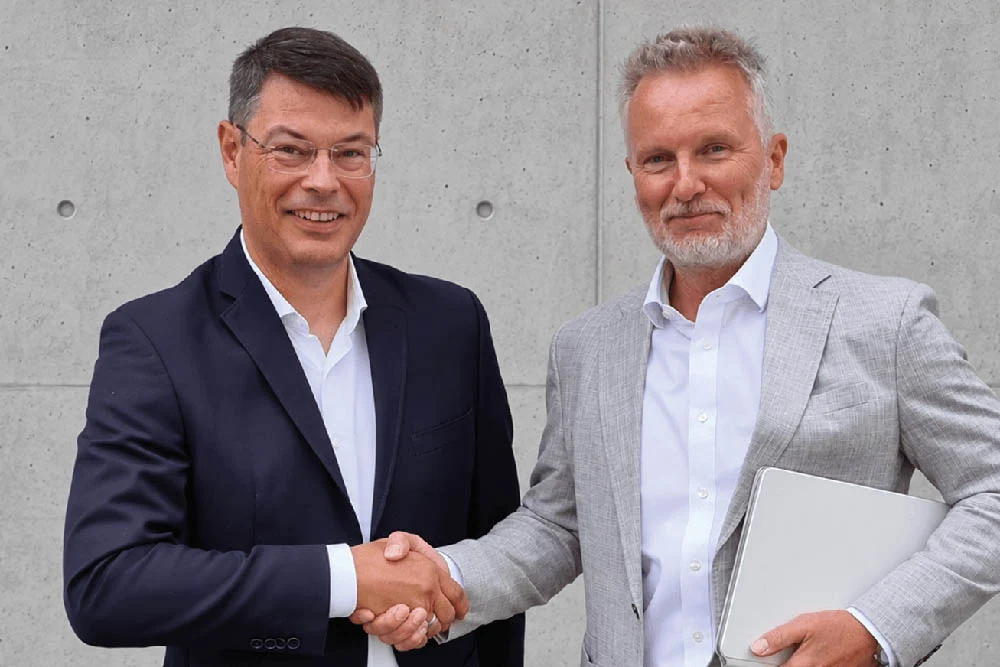
Lübeck/Augsburg, Germany – In a significant strategic move poised to reshape the future of web-offset printing technology, the venerable German industrial conglomerate, Possehl Group, has announced its complete acquisition of Manroland Goss, a global leader in the manufacturing of web-offset printing presses. The transaction, which sees Possehl Group take over all remaining shares previously held by American Industrial Partners (AIP), marks a pivotal moment, cementing Possehl’s long-term commitment to a critical segment of the global printing industry.
The acquisition elevates Possehl Group from a majority stakeholder (51%) to the sole owner of Manroland Goss. This consolidation is anticipated by all parties involved to significantly streamline decision-making processes, foster deeper collaboration with customers and partners, and lay a robust foundation for sustained investment in technological advancements, product development, and comprehensive support for the extensive installed base of Manroland Goss machinery worldwide.
"Manroland Goss is an indispensable component of our diversified industrial portfolio," stated Joachim Brenk, Chairman of the Executive Board of L. Possehl & Co., in an official press release. He further elaborated on the strategic rationale: "With this acquisition, we are establishing a long-term foundation for sustained strategic investments in cutting-edge technology, innovative product development, and unparalleled support for our existing global machine park. This encompasses the continuous evolution of our product portfolio, the creation of novel solutions tailored to market demands, and the significant expansion of our service offerings, spare parts supply chains, and advanced solutions for modernization and upgrades."
The move signals not just a change in ownership structure, but a profound commitment from Possehl to reinforce Manroland Goss’s position at the forefront of the web-offset sector, ensuring its resilience and capacity for innovation in an ever-evolving media landscape.
Main Facts: Solidifying a Strategic Alliance
The core of this significant news lies in the complete integration of Manroland Goss into the Possehl Group. Prior to this transaction, Manroland Goss operated under a shared ownership model, with the Possehl Group holding a 51% majority stake and the remaining shares belonging to the American private equity firm, American Industrial Partners (AIP). This arrangement, while functional, naturally involved a dual decision-making framework.
The shift to 100% ownership by Possehl is predicated on a clear vision: to enhance agility and strategic coherence. By eliminating the complexities inherent in co-ownership with a financial investor, Possehl aims to accelerate long-term strategic initiatives without the typical timelines and exit strategies associated with private equity involvement. This allows for a more unified approach to R&D, market penetration, and customer service, fostering a sense of stability that is often highly valued in capital-intensive industries like printing press manufacturing.
Manroland Goss, headquartered in Augsburg, Germany, is a globally recognized manufacturer of web-offset printing systems, services, and components. Its machines are crucial for high-volume print production, serving sectors such as newspaper printing, commercial printing (magazines, catalogs), and specialized packaging. The company has a rich heritage, having navigated significant industry shifts and emerged as a resilient player.
Possehl Group, founded in Lübeck in 1847, stands as a testament to enduring German industrial strength. Fully owned by the non-profit Possehl Foundation for over a century, its business philosophy is deeply rooted in long-term value creation rather than short-term profit maximization. This unique ownership structure often translates into patient capital and a willingness to invest in core industrial competencies over extended periods, making it an ideal parent company for a specialized manufacturer like Manroland Goss. With a reported total turnover of €8.4 billion and a global footprint encompassing over 200 companies and approximately 13,000 employees across more than 30 countries, Possehl is a formidable force within the German mid-sized industrial enterprise segment.
The full acquisition is therefore more than a mere financial transaction; it represents a strategic alignment designed to infuse Manroland Goss with the stability, resources, and long-term vision necessary to thrive in a competitive global market.
Chronology: A Journey Through Transformation
The story of Manroland Goss, and indeed of Possehl’s increasing involvement, is one of adaptation and resilience within an industry undergoing profound changes. The roots of Manroland Goss stretch back to the illustrious history of MAN Roland Druckmaschinen AG, once a titan of the printing press manufacturing world.
The Genesis and Initial Challenges (Pre-2012): For decades, MAN Roland was synonymous with high-quality printing technology, producing both sheet-fed and web-offset presses. However, the late 2000s and early 2010s brought unprecedented challenges to the traditional printing industry. The rise of digital media, declining newspaper circulation, and a global economic downturn severely impacted demand for new, large-scale printing machinery. This led to significant financial difficulties for MAN Roland.
The Split and the Entry of Private Equity (2012): In a bid to save the company and its valuable technological assets, MAN Roland was split into two distinct entities in 2012 following insolvency proceedings:
- Manroland Sheetfed GmbH: Acquired by Langley Holdings, focusing on sheet-fed offset presses.
- Manroland Web Systems GmbH: Acquired by the German industrial investor L. Possehl & Co. GmbH. This marked Possehl’s initial, crucial entry into the web-offset sector, demonstrating their early belief in the segment’s long-term viability, albeit under a leaner, more focused structure.
The Formation of Manroland Goss (2018): The web-offset market, though stabilized, continued to face pressures. Recognizing the need for further consolidation and synergy to compete effectively on a global scale, Manroland Web Systems merged with Goss International in 2018. Goss International, a long-standing American manufacturer of web-offset presses, had its own complex history, including ownership by various private equity firms. The merger created Manroland Goss Web Systems GmbH, combining the strengths, technologies, and customer bases of two historical giants. This new entity was formed with a specific ownership structure: Possehl Group held 51%, and American Industrial Partners (AIP), which had owned Goss International, held the remaining 49%. This collaboration aimed to leverage combined R&D, manufacturing capabilities, and a global service network.
The AIP Partnership and Strategic Evolution (2018-2024): The partnership with AIP, a seasoned private equity firm known for its operational expertise in industrial companies, provided Manroland Goss with access to capital and strategic guidance during its formative years post-merger. Over this period, Manroland Goss focused on integrating operations, optimizing its product portfolio, and developing solutions for an increasingly digital world, such as automation, workflow integration, and predictive maintenance. While AIP’s involvement was instrumental in consolidating the market and driving initial synergies, private equity firms typically operate on a defined investment horizon, seeking an exit strategy once their value creation objectives are met.
Possehl’s Full Acquisition (2024): The current acquisition of AIP’s remaining shares by Possehl Group represents the culmination of this strategic evolution. It signifies that Manroland Goss has reached a stage where a unified, long-term industrial ownership is deemed most beneficial for its continued growth and stability. For Possehl, it’s a natural progression of their initial investment, reflecting their confidence in Manroland Goss’s market position and future potential, unburdened by the cyclical demands of private equity. This final step solidifies Manroland Goss as a wholly-owned subsidiary, aligning its future directly with Possehl’s patient capital and industrial vision.
Supporting Data: Navigating a Niche Market with Strategic Depth
The full acquisition of Manroland Goss by Possehl Group is not merely an internal corporate restructuring; it’s a strategic move informed by a deep understanding of the printing industry’s dynamics and Possehl’s overarching philosophy as a long-term industrial investor.
The Web-Offset Market Landscape:
While the broader printing industry has seen significant shifts with the advent of digital technologies, the web-offset segment retains a critical, albeit specialized, role. Web-offset presses are indispensable for high-volume, cost-efficient production where print quality, speed, and economy of scale are paramount. Key applications include:
- Newspapers: Despite declining circulation in many regions, newspapers still rely on web-offset for daily production, especially in developing markets and for large regional editions.
- Magazines and Catalogs: High-circulation consumer magazines, retail catalogs, and direct mail pieces continue to leverage web-offset’s efficiency for vibrant, consistent color reproduction and low per-unit costs.
- Books: Certain types of books, particularly high-volume paperbacks, are often printed on web-offset presses.
- Packaging: Specialized web-offset solutions are increasingly used for flexible packaging, labels, and other high-volume packaging applications, often integrated with finishing lines.
The market for new web-offset presses is mature and characterized by fewer but larger installations. Success hinges on innovation that drives efficiency, reduces waste, enhances automation, and offers greater flexibility, including integration with digital finishing or variable data printing solutions. Manroland Goss has been a frontrunner in these areas, developing technologies for faster makeready times, reduced paper waste, and advanced automation features that minimize manual intervention.
Manroland Goss’s Unique Position:
Manroland Goss has successfully carved out a niche as a technology leader in this specialized sector. Its product portfolio includes presses designed for various applications, from compact newspaper presses to highly configurable commercial presses. Beyond new machine sales, a significant and increasingly vital part of its business model revolves around its extensive service offerings. This includes:
- Spare Parts and Consumables: Ensuring the continuous operation of an installed base that spans decades.
- Maintenance and Support Contracts: Providing technical expertise and predictive maintenance solutions.
- Modernization and Upgrades: Extending the lifespan and enhancing the capabilities of existing presses through retrofits, software updates, and component replacements (e.g., control systems, drying technology). This aspect is particularly crucial in a mature market where customers often prefer to upgrade existing assets rather than invest in entirely new presses.
- Digital Integration: Developing solutions for Industry 4.0, such as data analytics for optimizing press performance, remote diagnostics, and automated workflows that bridge the gap between traditional print and digital production environments.
Possehl Group’s Strategic Rationale and Diversified Portfolio:
Possehl’s full acquisition of Manroland Goss is consistent with its broader corporate strategy. The Group operates across ten operationally independent business areas, encompassing diverse industrial sectors such as special purpose machines, construction, precious metals, and rubber technology. What unites these diverse segments is a focus on high-quality, often specialized, industrial products and services, coupled with a long-term investment horizon.
For Possehl, Manroland Goss represents:
- A Core Industrial Competency: Manufacturing complex machinery requiring significant engineering expertise.
- Market Leadership in a Niche: A strong global position in its specific segment.
- Resilient Business Model: The shift towards service and upgrades provides stable revenue streams even if new machine sales fluctuate.
- Long-Term Value: The foundation ownership structure allows Possehl to invest patiently in R&D and market development, rather than being driven by short-term financial targets.
Possehl’s total turnover of €8.4 billion positions it as a substantial player capable of providing the necessary financial backing for Manroland Goss’s ambitious development plans. This deep financial reservoir, combined with a philosophy of empowering its subsidiaries while providing strategic oversight, creates an environment conducive to sustained innovation and market leadership for Manroland Goss. The absence of a private equity partner with an eventual exit strategy means that Manroland Goss can now pursue truly long-term projects and strategic alliances without the pressure of a looming sale.
Official Responses: A Vision for Unified Growth
The official announcement of the full acquisition was met with clear articulation of the strategic benefits, primarily emphasizing stability, continuity, and accelerated innovation. The statements from Possehl Group’s leadership underscore a profound commitment to Manroland Goss’s future.
Joachim Brenk, Chairman of the Executive Board of L. Possehl & Co. GmbH, provided the cornerstone statement, framing the acquisition as a long-term commitment. His emphasis on "creating a long-term foundation for strategic investments" is critical. This is not merely about maintaining the status quo, but about injecting renewed vigor and resources into Manroland Goss. The specifics he outlined – "further development of the product portfolio, the creation of new solutions, as well as the expansion of services, spare parts supply, and solutions for modernization and upgrading" – paint a comprehensive picture of future strategic priorities.
This implies that under 100% Possehl ownership, Manroland Goss will likely:
- Intensify R&D efforts: Investing in next-generation web-offset technologies, potentially exploring hybrid solutions that integrate digital printing elements or advanced automation.
- Strengthen its service arm: Enhancing global support networks, increasing the availability of critical spare parts, and leveraging predictive analytics for proactive maintenance.
- Focus on sustainability: Developing more energy-efficient presses and solutions that reduce material waste, aligning with broader industry trends and regulatory demands.
- Deepen customer relationships: Streamlined decision-making means Manroland Goss can be more responsive to customer feedback and market demands, leading to more tailored solutions and faster development cycles.
While a direct quote from Franz Kriechbaum, CEO of Manroland Goss Group, was not provided in the original snippet regarding this specific announcement, his perspective can be inferred from the nature of the acquisition and standard industry practices. It is highly probable that Kriechbaum and his leadership team view this full integration positively. For a company like Manroland Goss, having a single, committed industrial owner provides stability and clarity of vision that can be challenging under a dual ownership structure, especially when one partner is a financial investor with different strategic drivers. This stability is crucial for employee morale, long-term talent retention, and securing customer confidence.
From the perspective of American Industrial Partners (AIP), their exit from Manroland Goss aligns with the typical lifecycle of private equity investments. AIP’s role was likely to help integrate Goss International with Manroland Web Systems, optimize operations, and grow the combined entity to a point where a successful exit could be realized. The sale of their remaining stake to Possehl suggests a successful conclusion to their investment period, delivering value to their limited partners. While private equity firms typically seek to maximize returns over a defined period (often 3-7 years), their departure here facilitates a more integrated, long-term industrial strategy for Manroland Goss, demonstrating a mutual understanding of the company’s future needs.
The overarching sentiment conveyed by Possehl’s leadership is one of sustained growth through investment and strategic alignment. The acquisition is framed as a commitment to innovation and strengthening Manroland Goss’s market leadership, ensuring that its customers worldwide continue to benefit from cutting-edge technology and robust support.
Implications: Charting a Course for Future Growth and Market Leadership
The full acquisition of Manroland Goss by Possehl Group carries significant implications across several dimensions, promising a new chapter for the printing press manufacturer and potentially influencing the broader industry landscape.
For Manroland Goss:
- Enhanced Stability and Long-Term Vision: The most immediate and profound implication is the newfound stability. Freed from the typical investment horizons and exit pressures of private equity, Manroland Goss can now pursue genuinely long-term strategic initiatives. This translates into greater investment certainty for multi-year R&D projects, infrastructure upgrades, and talent development.
- Streamlined Decision-Making: With a single, unified owner, decision-making processes will become more agile and efficient. This can accelerate product development cycles, market responses, and internal operational improvements.
- Increased Investment in Innovation: As articulated by Joachim Brenk, significant investments are earmarked for technology, product development, and service expansion. This is likely to translate into:
- Advanced Automation: Further integration of robotics, AI, and machine learning to optimize press operations, reduce manual labor, and enhance efficiency.
- Sustainability Solutions: Development of more energy-efficient presses, reduced waste systems, and exploration of sustainable materials or inks.
- Hybrid Technologies: Potential for deeper integration of digital print capabilities or smart finishing solutions into traditional web-offset workflows, catering to the evolving demands for personalization and shorter runs.
- Industry 4.0 and IoT: Expansion of predictive maintenance, remote diagnostics, and data analytics to optimize machine performance and minimize downtime for customers.
- Strengthened Global Service Network: The commitment to expanding service offerings and spare parts supply will enhance customer satisfaction and machine uptime, reinforcing Manroland Goss’s reputation for reliability. This is crucial in a market where the installed base is extensive and customer loyalty is tied to dependable support.
- Employee Confidence: A stable, long-term owner typically boosts employee morale and confidence, as job security and opportunities for professional growth are perceived as more secure. This is vital for retaining skilled engineers, technicians, and sales personnel.
For Possehl Group:
- Reinforced Industrial Portfolio: The full acquisition strengthens Possehl’s position as a diversified industrial conglomerate with a strategic presence in specialized, high-tech manufacturing. Manroland Goss fits perfectly into Possehl’s philosophy of investing in companies with strong market positions and long-term potential.
- Leveraging Synergies: While Manroland Goss operates independently, there may be opportunities for synergistic benefits within the broader Possehl network, such as shared expertise in advanced manufacturing processes, procurement, or global distribution channels.
- Commitment to German Industrial Excellence: The acquisition underscores Possehl’s dedication to maintaining and developing key German industrial competencies, particularly in an era where global competition is fierce. The ownership by a non-profit foundation reinforces this long-term, responsible approach to industrial stewardship.
For the Printing Industry:
- Consolidation and Focus: The move represents further consolidation in the web-offset sector, leaving fewer but stronger players. This can lead to more focused innovation and investment from the remaining manufacturers.
- Renewed Investment in Web-Offset: Possehl’s clear long-term commitment could signal renewed confidence in the enduring value of web-offset technology for specific high-volume applications, potentially encouraging other stakeholders in the industry to invest in upgrading or adopting modern web-offset solutions.
- Competitive Dynamics: The strengthened Manroland Goss, backed by Possehl’s resources, will continue to be a formidable competitor, potentially driving innovation across the entire web-offset market.
- Customer Benefits: Customers can expect enhanced product offerings, more robust service and support, and a clearer long-term roadmap for their investments in Manroland Goss technology. The stability of their supplier is a key consideration for such significant capital expenditures.
In conclusion, Possehl Group’s full acquisition of Manroland Goss is a powerful statement of belief in the future of web-offset printing technology. It promises a future defined by stability, strategic investment, and a relentless pursuit of innovation, ensuring that Manroland Goss remains a pivotal player in delivering the high-quality, high-volume print solutions that continue to underpin numerous global industries. This strategic alignment sets the stage for Manroland Goss to not just survive, but thrive, by continuously evolving its offerings to meet the dynamic demands of the 21st-century print market.
About the Author