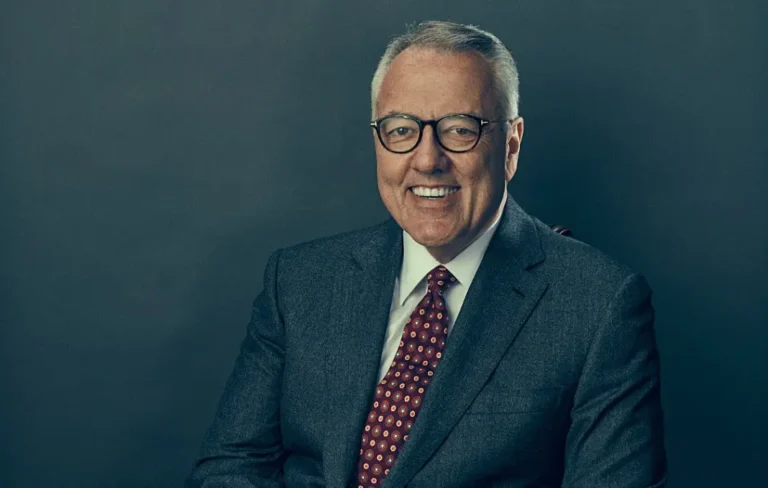
In the high-stakes world of financial services, where quarterly earnings reports often dictate the tenure of executive leadership, it is rare to find a CEO who prioritizes "followership" over raw market share. Yet, Rich Steinmeier, the CEO of LPL Financial, has emerged as a disruptive force by challenging the traditional obsession with the bottom line. Managing a behemoth that supports over 32,000 financial advisors and oversees approximately $2.6 trillion in assets, Steinmeier is proving that the most sustainable competitive advantage is not found in a spreadsheet, but in the human capital of an organization.
The Paradigm Shift: From Ledger to Legacy
For most corporate leaders, the primary metric of success is the figure at the bottom of the ledger. It is the number that satisfies shareholders, keeps analysts at bay, and confirms the firm’s immediate viability. However, Steinmeier views this narrow focus as a potential trap. During a candid appearance on the Corporate Competitor Podcast, he articulated a philosophy that distinguishes between short-term tactical wins and long-term strategic resilience.
"There is a challenge between short-term success and long-term success," Steinmeier noted. "But to focus on the long-term means you should invest in followership."
This concept—followership—is the cornerstone of Steinmeier’s leadership style. It suggests that a leader is only as effective as the willingness of their team to follow them into the unknown. By shifting the corporate gaze from immediate gains to the cultivation of long-term relationships, Steinmeier is attempting to build an institutional culture that can weather market volatility and industry shifts.
A Chronology of Influence: From the Gridiron to the Boardroom
Steinmeier’s approach to leadership did not emerge in a vacuum; it was forged on the athletic fields of his youth. As a participant in competitive football and basketball, Steinmeier learned early on that the strength of the team is the primary determinant of success.
The Lesson of the Bench
A pivotal moment in his development occurred during his high school football career. After being relegated to the bench, a young Steinmeier reacted with frustration, slacking off during practice as a silent protest against his coach’s decision. The turning point came when he witnessed a teammate—the very person who had taken his spot—celebrating a victory in a drill.
That moment of realization was transformative. Steinmeier recognized that by minimizing his own effort, he was not hurting the coach or the team; he was only diminishing his own potential. He resolved then and there that he would never again allow spite or frustration to dictate his work ethic. This lesson in accountability became a fundamental pillar of his professional philosophy: regardless of circumstances, the responsibility for one’s output remains personal.
Building the LPL Infrastructure
As Steinmeier climbed the corporate ladder, eventually taking the helm at LPL Financial, he brought this ethos with him. LPL, a firm that serves as a massive support network for independent financial advisors, requires a unique brand of leadership. Unlike a traditional retail bank, LPL thrives on the success of the thousands of advisors it supports. Steinmeier’s role is not one of direct command-and-control, but rather one of empowerment. He has spent his tenure shifting the firm’s energy away from cost-minimization and toward the development of lasting, high-trust relationships with both employees and the advisors they serve.
Supporting Data: The Scale of Stewardship
The sheer scale of LPL Financial under Steinmeier’s stewardship is staggering. Overseeing $2.6 trillion in brokerage and advisory assets is a task that would overwhelm a leader focused solely on bureaucratic management. However, Steinmeier argues that the complexity of these assets is secondary to the quality of the people managing them.
- Network Reach: Over 32,000 independent financial advisors rely on the infrastructure provided by LPL.
- Asset Management: $2.6 trillion in total assets underscores the firm’s systemic importance to the financial advisory landscape.
- Human Capital: Steinmeier’s leadership philosophy focuses on the "constituent base," which includes employees, clients, and the internal leadership team, rather than viewing these groups as mere overhead or revenue streams.
Official Perspectives: The Philosophy of "Care"
When asked about his daily contributions to the firm, Steinmeier frequently deflects the typical CEO talk of "driving efficiency" or "optimizing workflows." Instead, he offers a more personal, albeit unconventional, assessment of his duties.
"I don’t do much day to day, Don," he joked during his podcast interview. "What I do is actually care for constituents, care for people, care for our employees, care for our clients, care for the leadership team."
This perspective is not merely performative; it is a strategic decision. By prioritizing the emotional and professional well-being of his stakeholders, Steinmeier aims to foster a culture of "surprise and delight." Drawing inspiration from his experience at the 2016 NBA championship parade in Cleveland—where he witnessed the collective joy of a city celebrating a hard-won victory—he has integrated the necessity of celebration into LPL’s corporate DNA.
The "Surprise and Delight" Model
Steinmeier believes that organizations often fail because they treat success as an expectation rather than a milestone to be honored. He encourages his team to "seek out" moments to celebrate. This practice of active recognition serves to break the cycle of the "go-go-go" corporate grind, allowing employees and advisors to pause and reflect on their collective progress.
Implications for the Financial Services Sector
The implications of Steinmeier’s approach are profound for the broader financial industry. For years, the sector has been characterized by high turnover, intense burnout, and a culture of austerity. Steinmeier’s emphasis on "creating and sharing joy" and granting "grace" to oneself and one’s colleagues represents a significant departure from the norm.
Humanizing the Machine
In an era of increasing automation and algorithmic trading, Steinmeier is betting that the human element will be the ultimate differentiator. By building an environment where advisors feel supported rather than monitored, LPL is creating a loyalty loop that is difficult for competitors to replicate. When a leader prioritizes the mental and emotional state of their constituents, the result is often higher retention rates, greater innovation, and a more robust internal culture.
The Future of Leadership
As the financial industry faces a generational shift in leadership, the "Steinmeier Model" offers a blueprint for those looking to balance the cold reality of finance with the warm reality of human behavior. His focus on "followership" suggests that the next generation of executives will need to be more than just technicians; they will need to be architects of community.
Conclusion: The Long-Term View
Rich Steinmeier’s leadership at LPL Financial serves as a powerful reminder that while the balance sheet is a record of the past, the culture is the engine of the future. By investing in people, prioritizing genuine care, and actively fostering moments of joy, he is building a firm that is designed not just to survive the next quarter, but to thrive over the next decade.
In the final analysis, Steinmeier’s career trajectory proves that one does not have to sacrifice success to be a supportive leader. In fact, he suggests the opposite: that the highest form of success is achieved only when those around you are empowered to reach their own potential. As he continues to oversee trillions in assets, his focus remains remarkably consistent: it is not the $2.6 trillion that defines his legacy, but the 32,000 lives and careers he influences every day.
About the Author