In an era where our digital lives are often relegated to the invisible, ephemeral clouds or tucked away in sterile, hum-filled server racks, the concept of data storage has become largely abstract. We treat terabytes of photos, documents, and memories as intangible weightlessness. However, industrial designer Antonin Odin, a student at France’s prestigious École Nationale Supérieure de Création Industrielle (ENSCI), is challenging this detachment with a project that brings the physical reality of data back into our living spaces.
His creation, the "ZO," is not merely a hard drive; it is a mechanical sculpture that gives storage a tangible, morphing body. By translating digital capacity into physical form, Odin is attempting to transform the way we perceive the digital archives that define our modern lives.
The Main Facts: A Kinetic Approach to Data
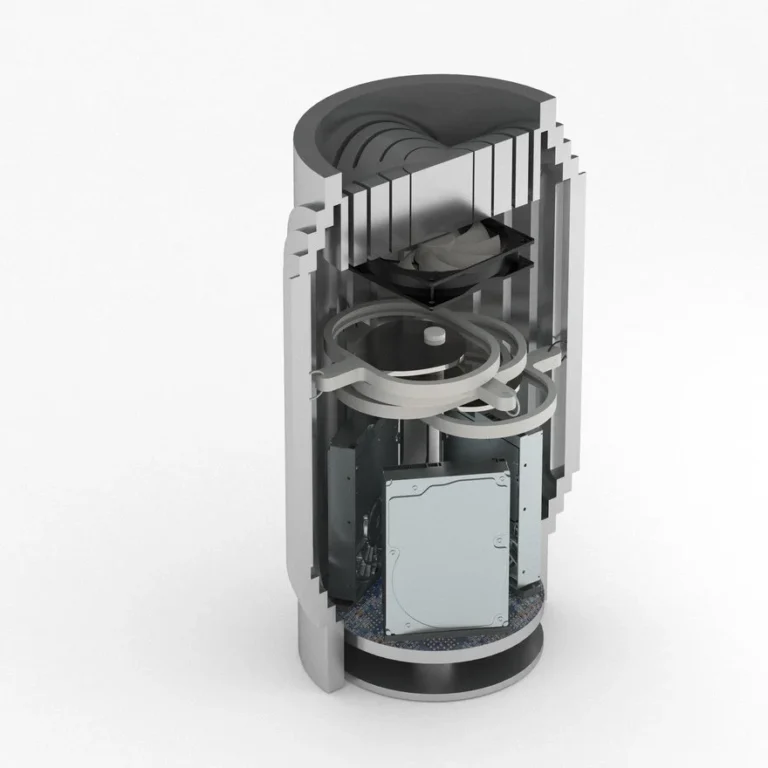
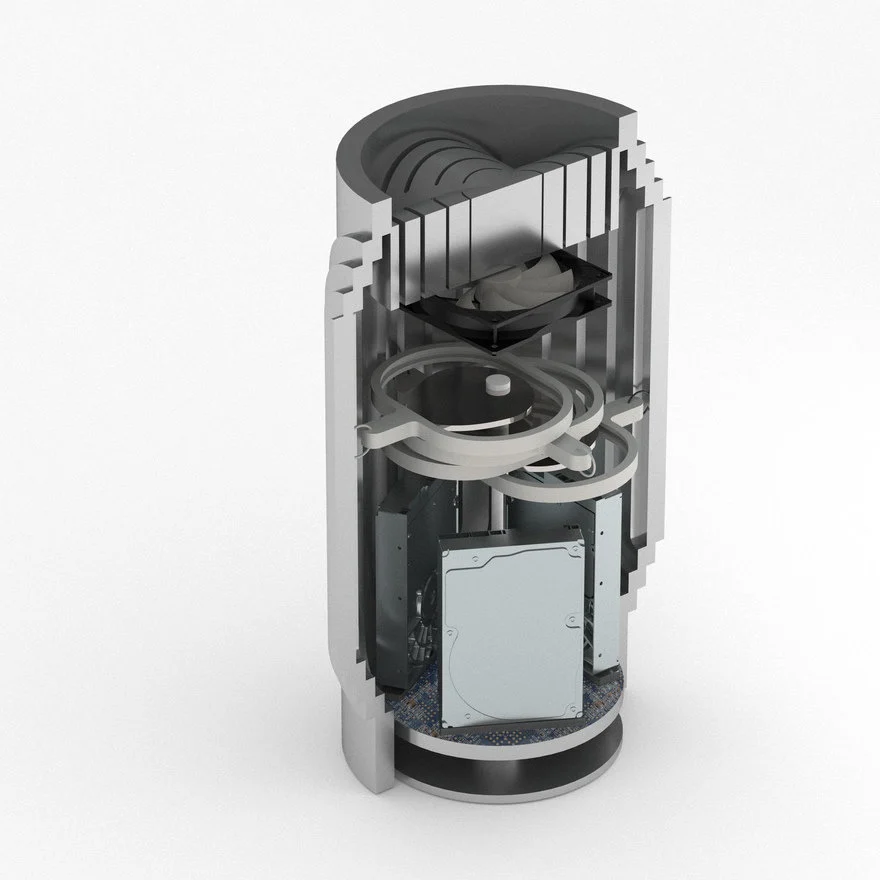
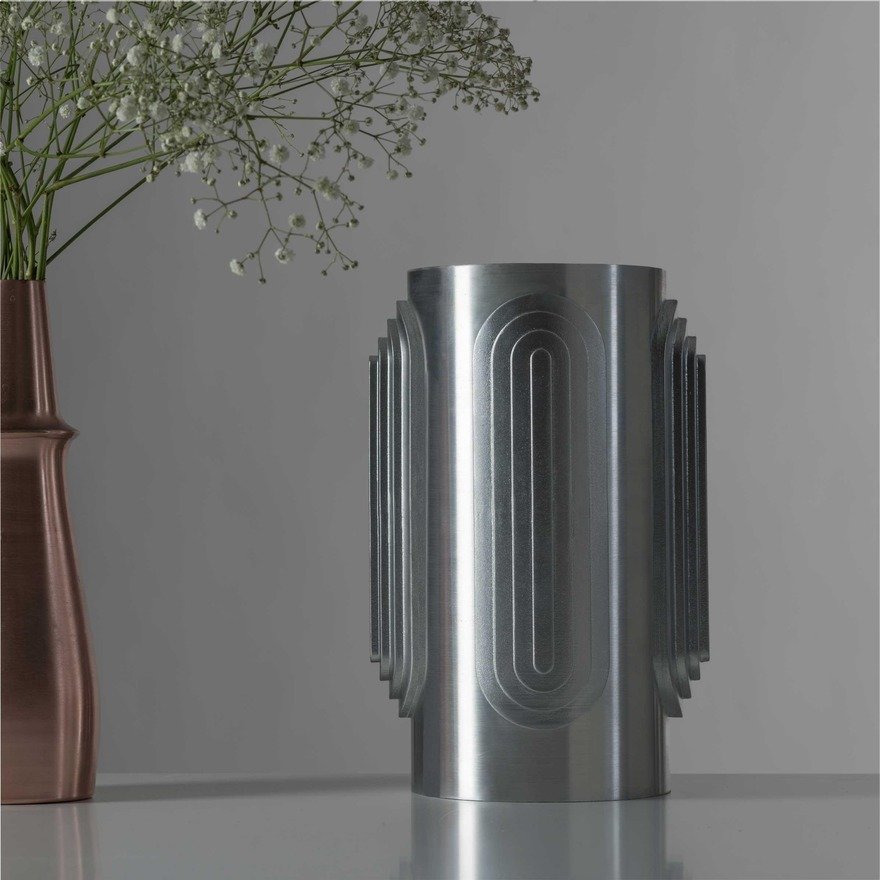
The ZO is a 12 TB personal server designed to act as an aesthetic centerpiece rather than a utilitarian tool to be hidden behind a monitor. At its core, the device functions as a standard high-capacity storage unit, but its exterior is where the innovation lies.
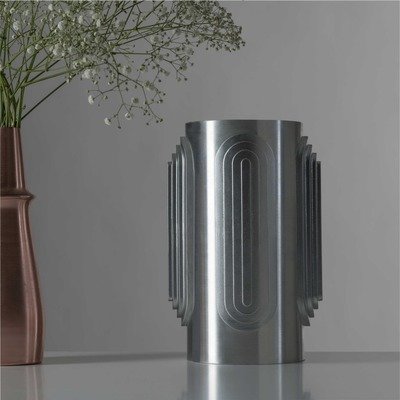
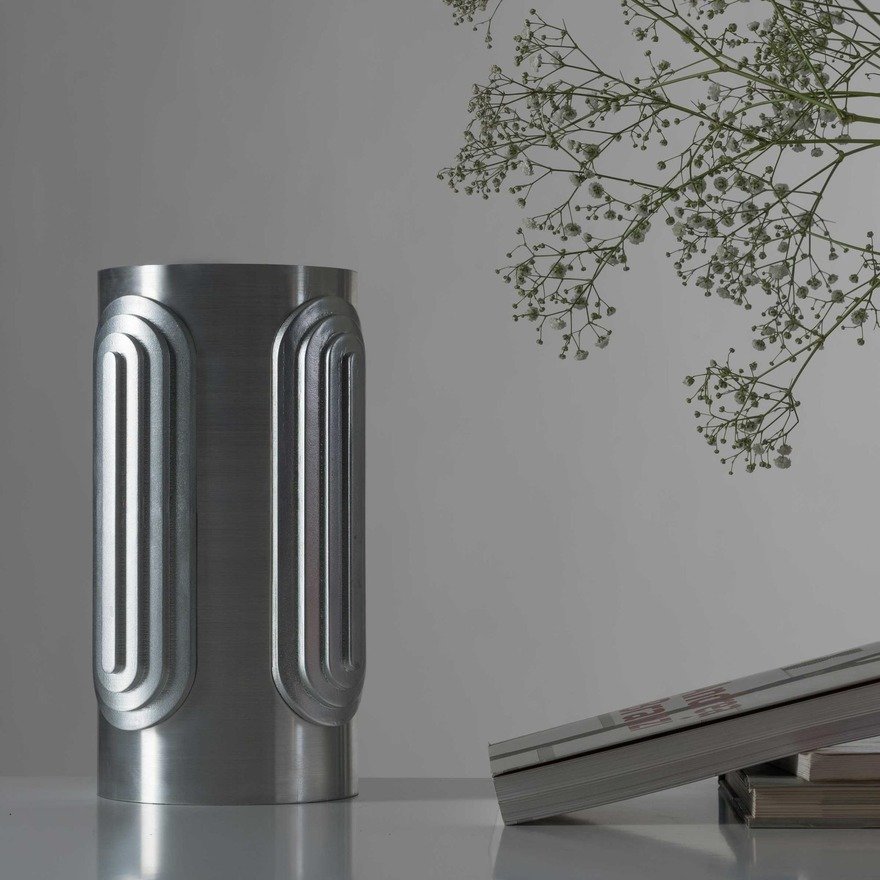
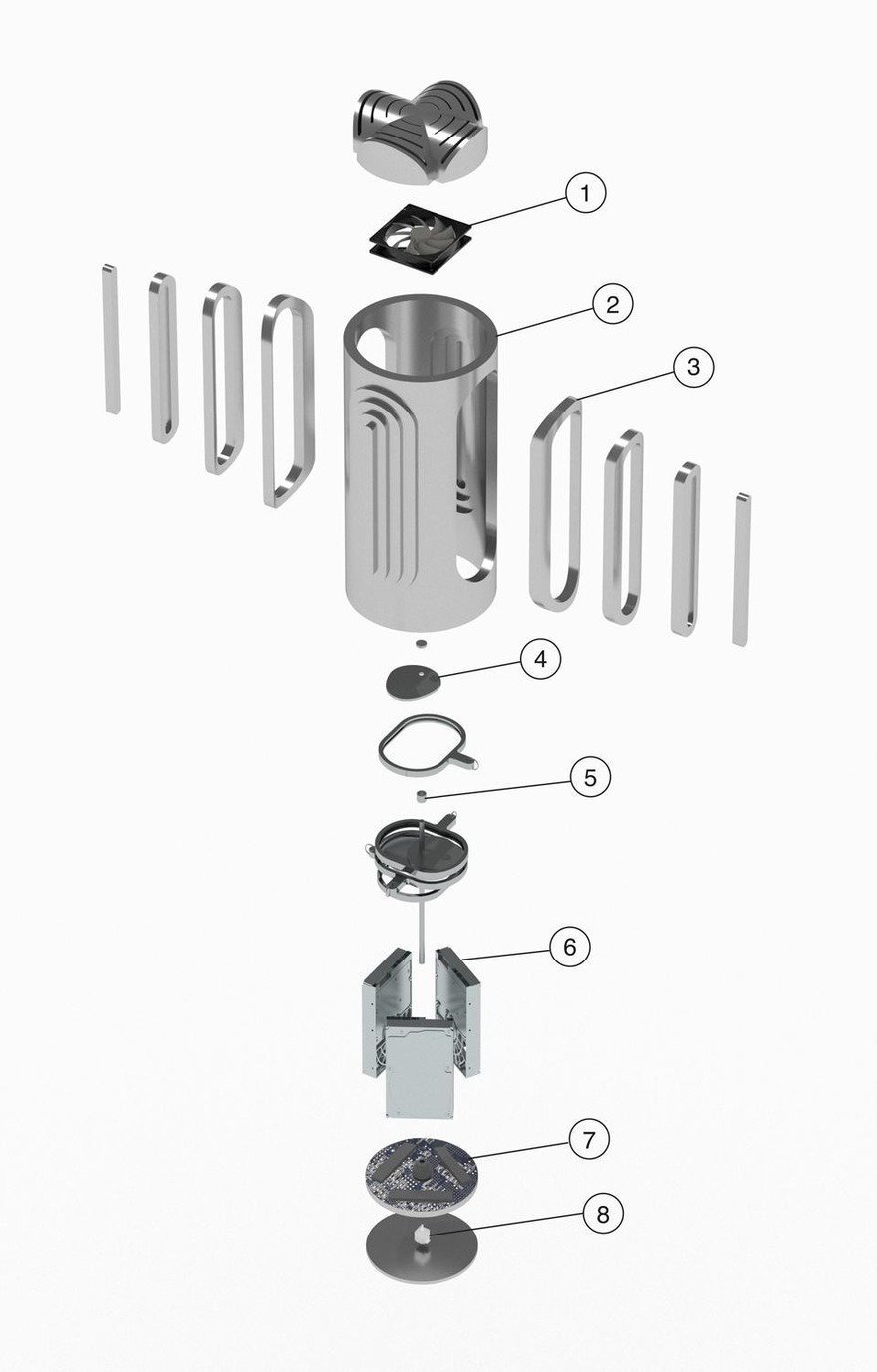
The device manifests as a sleek, minimalist aluminium tube. Its primary feature is a responsive, mechanical exterior that physically expands as the drive reaches capacity. For every 400 GB of data stored, a series of precision-engineered fins slide out of the central housing by one millimeter. When the drive is empty, it stands as a compact, solid pillar. As the user fills it with their digital life, the object physically grows, creating a visual and tactile representation of its internal contents.
Unlike traditional storage devices that rely on blinking LED lights—which are often ambiguous and easily ignored—the ZO provides a permanent, passive status update. Even when switched off, the device retains its shape, acting as a physical ledger of the data it holds.
Chronology of Development: From Concept to Aluminium
The journey of the ZO began within the rigorous, design-focused curriculum of ENSCI. Odin’s objective was to reconcile the increasing desire for aesthetic, functional objects with the functional requirements of modern computing.
The Conceptual Phase
Odin began by identifying a paradox: while we produce more digital content than ever before, our interaction with that content is becoming increasingly alienated. We no longer "own" our data in a physical sense; we lease it from cloud providers. Odin sought to create an object that felt "precious," something that encouraged a ritualistic interaction with data management.
Engineering and Prototyping
The most significant challenge was the manufacturing process. To achieve the fluid, telescopic movement of the fins, Odin turned to Electrical Discharge Machining (EDM). Using a wire thinner than a human hair, he cut the aluminium block in such a way that no visible material was removed. This allowed the rings to remain virtually seamless when closed, appearing as a solid monolith.
The development period saw multiple iterations of the internal mechanism, ensuring that the friction coefficient of the aluminium rings was low enough to allow for smooth expansion without compromising the structural integrity of the device. The result is a feat of mechanical engineering that balances precision manufacturing with high-concept design.
Supporting Data and Technical Specifications
To understand the significance of the ZO, one must look at the intersection of material science and data storage capacity.
- Capacity: 12 Terabytes.
- Expansion Metric: 1mm per 400 GB.
- Material: Aerospace-grade aluminium, chosen for its durability, heat dissipation properties, and aesthetic finish.
- Manufacturing Technique: Wire-cut EDM (Electrical Discharge Machining).
- Design Philosophy: "Physicalization of the Abstract."
The choice of aluminium is deliberate. Beyond its ability to be machined with extreme precision, aluminium serves as a natural heat sink, which is critical for a high-capacity personal server. By integrating the cooling requirement into the aesthetic form of the expanding fins, Odin solves a functional problem with an elegant design solution. The fins do more than indicate capacity; they increase the surface area of the device, assisting in thermal management as the drive works harder to read and write large datasets.
Official Perspectives and Industry Reception
While the ZO remains a student project, it has garnered significant attention from the industrial design community. Design critics have lauded the project for its "honest" approach to technology.
In discussions regarding the project, Odin has emphasized the role of "ritual" in technology. "People increasingly want more visibility over their data, more taste in the objects they live with, and more function from both," he noted during the project’s unveiling.
Design educators at ENSCI have pointed to the ZO as an exemplar of "Post-Digital Design." This movement posits that as technology becomes ubiquitous, it should move away from the "black box" aesthetic—where components are hidden—and toward a "transparent" aesthetic, where the physical form reflects the machine’s inner workings. The ZO does not hide its nature; it flaunts it.
Implications: The Future of Personal Storage
The implications of the ZO project are profound, particularly in how we rethink our relationship with digital hoarding and archival.
The Death of the "Black Box"
For decades, computing hardware has been designed to disappear. From the beige boxes of the 90s to the thin, fanless laptops of today, the trend has been toward invisibility. The ZO flips this trend. By designing a device meant to live on a shelf rather than in a server rack, Odin invites the user to integrate their digital archives into their domestic environment.
Emotional Durability
In an era of disposable electronics, the ZO is built to last. Its construction is permanent, and its aesthetic is timeless. This creates a sense of "emotional durability." When an object is beautiful and interactive, users are more likely to maintain it, keep it, and value the data stored within it. It transforms the act of backing up a hard drive from a chore into a tangible experience of "tending" to one’s digital garden.
The Visibility of Digital Waste
There is also a poignant environmental commentary inherent in the ZO. In a digital world where "cloud storage" creates a false sense of infinite, costless space, the ZO makes the user acutely aware of their limitations. When the fins are fully extended, the user is confronted with the physical reality of a full drive. This forces a conscious decision: delete old, redundant files or expand. It introduces a form of "digital friction" that encourages better data hygiene.
Conclusion: A New Standard for Interaction
Antonin Odin’s ZO is a testament to the power of industrial design to influence human behavior. By assigning a physical weight and volume to digital data, he has elevated a mundane piece of computer hardware into an object of contemplation.
As we continue to generate massive amounts of data—our family histories, our professional work, our creative output—the need for a more meaningful relationship with our archives becomes increasingly clear. The ZO serves as a reminder that even in a virtual world, there is immense value in the tangible. It asks us to consider our data not as a series of ones and zeros floating in a server farm, but as a collection of memories and information that deserves a place in our homes—a place that, quite literally, grows with us.
Whether the ZO reaches mass production or remains a singular, iconic design study, its impact is already felt. It challenges the tech industry to stop hiding the machinery of our lives and instead start celebrating it, proving that even the most complex digital storage can be brought back to the physical world with grace, precision, and purpose.
About the Author