In the modern industrial landscape, electrical infrastructure has transcended its role as mere background utility to become the lifeblood of business-critical operations. As manufacturing facilities, data centers, and power grids become increasingly complex, the reliance on continuous, reliable power has surged. This shift in operational dependency has prompted a fundamental rethink of how electrical service and maintenance are conducted.
For decades, the standard operating procedure for electrical maintenance has remained largely static: when a fault occurs or a routine inspection is required, skilled engineers enter high-risk, potentially hazardous environments to manually assess the situation. However, a new paradigm is emerging—one driven by robotics, advanced sensing, and artificial intelligence (AI)—that promises to decouple human presence from immediate hazard, prioritizing "visibility before exposure."
The Core Transformation: Shifting the Inspection Paradigm
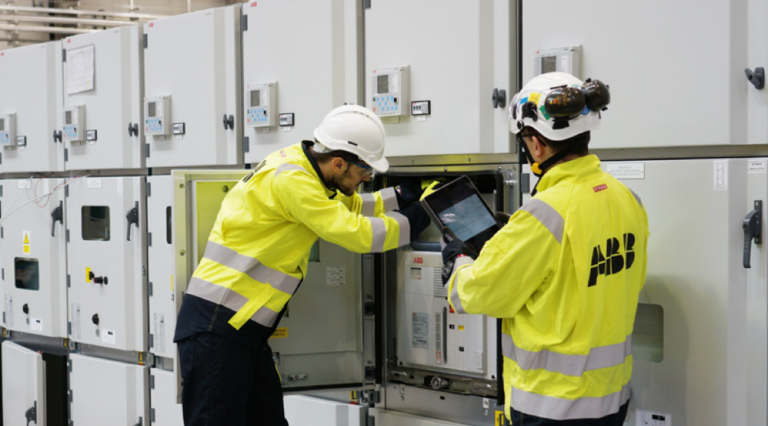
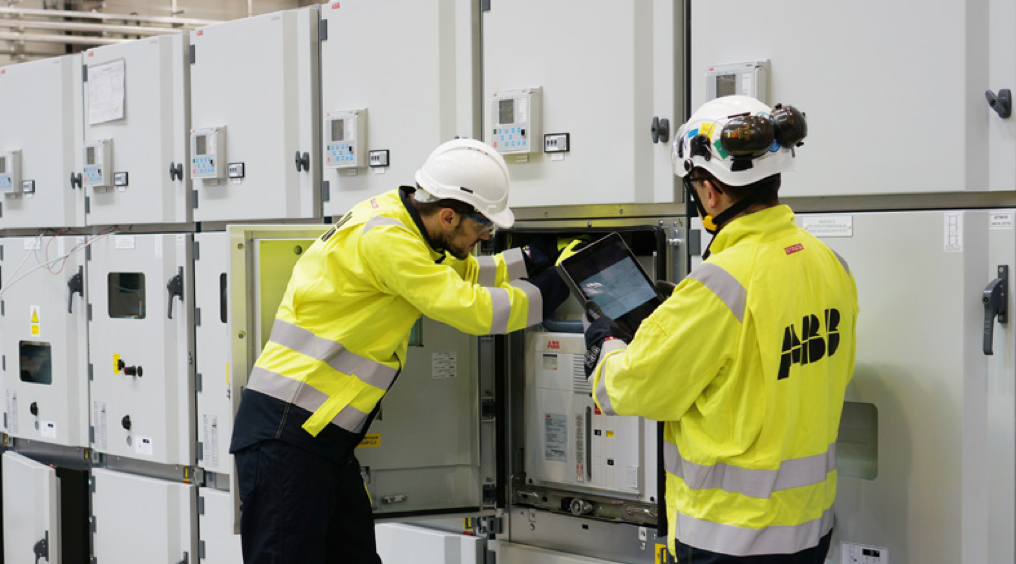
The traditional model of electrical inspection is labor-intensive and inherently risky. When a service team is dispatched to a live switchgear room, engineers are often entering a space with limited, high-level information about the nature of the fault. They rely on their physical presence to perform initial diagnostics, which involves navigating hazardous, high-voltage, or confined environments.
"Do field service engineers always need to be the first to enter a potentially hazardous environment?" asks a new report from industry leader ABB. This question sits at the heart of the current shift in industrial field service. By utilizing robotic inspection platforms, firms are now able to deploy machines into these environments to gather primary data before a human ever steps foot inside.
The Technological Triad: Robotics, Sensors, and Software
The shift is being powered by three convergent technological advancements:
- Robotic Mobility: Advances in autonomous mobile robots (AMRs) and quadrupedal platforms allow machines to traverse industrial terrains that were previously inaccessible to automated systems.
- Multimodal Sensing: Modern robots are equipped with high-resolution visual cameras, thermal imaging arrays, and acoustic sensors that can detect partial discharge or overheating components long before they are visible to the naked eye.
- Edge and Cloud Software: The software layer acts as the "brain," allowing these machines to navigate complex electrical substations while streaming real-time diagnostic data to remote monitoring centers.
A Chronology of Progress: From Reactive to Proactive
To understand the trajectory of automated inspection, one must look at how the industry has evolved over the past decade.
- 2015–2018: The Era of Manual Data Collection. During this period, "digitalization" meant manual digital logging. Engineers used handheld thermal cameras and tablets to record data, which was then manually uploaded to asset management systems. The process was slow and often disconnected from real-time decision-making.
- 2019–2022: The Prototype Phase. Industry players began experimenting with off-the-shelf robotics. However, these early attempts struggled with the specific requirements of electrical environments, such as electromagnetic interference (EMI) shielding and the need for non-conductive materials.
- 2023–2025: The Integration Era. We are currently witnessing the development of specialized "application layers." Companies are no longer just buying robots; they are engineering specific software that allows these machines to interpret switchgear readings and integrate directly into existing SCADA (Supervisory Control and Data Acquisition) and Enterprise Asset Management (EAM) platforms.
- 2026 and Beyond: The Autonomous Future. The focus is moving toward true autonomy, where robotic units perform scheduled patrols, identifying anomalies and flagging them for human review without constant remote-pilot intervention.
Supporting Data: Why Automation is a Business Necessity
The impetus for this technological shift is not merely novelty; it is driven by hard data regarding safety, efficiency, and uptime.
- Risk Mitigation: Statistics from industrial safety boards consistently show that the majority of electrical accidents occur during the "initial assessment" phase, where the engineer is working in an unverified environment. By utilizing robots for this first look, firms can reduce "human-in-the-hazard" time by up to 70% in high-risk areas.
- Data Density: A human engineer, while highly skilled, can only observe what is in their immediate field of vision. A robotic platform can record a full 360-degree thermal map, log acoustic signatures for every component in a row of cabinets, and correlate that data with historical performance metrics in milliseconds.
- Operational Resilience: In an era where downtime can cost millions of dollars per hour, the ability to perform a "deep-scan" of electrical assets without requiring a total power-down is a massive competitive advantage. Predictive maintenance, enabled by continuous robotic monitoring, allows for repairs to be scheduled during planned outages rather than responding to catastrophic failures.
Official Perspectives: Strengthening Human Capability
A common apprehension regarding the introduction of automation is the potential displacement of the human workforce. However, industry experts and leadership at organizations like ABB emphasize that the goal is augmentation, not replacement.
"We are not looking to adopt robots for their own sake," noted a representative from the ABB electrification services team. "The objective is to understand how emerging technologies can be applied to solve real-world service challenges."
The official stance is that human judgment is irreplaceable. The complexity of electrical switchrooms—which often involves legacy hardware mixed with modern digital systems—requires the nuanced expertise of a seasoned engineer. Instead of replacing the engineer, these tools aim to "spare the noise." By offloading the repetitive, dangerous, and physically grueling tasks to machines, the engineer is elevated to a more analytical role: interpreting the data provided by the robots and executing the corrective actions that only a human can perform.
Implications for the Future of Industrial Work
The widespread adoption of automated inspection will have profound implications for the industrial sector, affecting hiring, training, and site management.
1. The Evolving Skill Set
As automation takes hold, the role of the "Field Service Engineer" will shift toward "Systems Diagnostic Specialist." Engineers of the future will need to be as comfortable analyzing a heat-map generated by a neural network as they are with a multimeter. Training programs will need to pivot from purely mechanical/electrical instruction to include robotics maintenance and data analytics.
2. Design for Robotics
Moving forward, we can expect industrial facilities to be designed with "robot-friendliness" in mind. This includes wider access corridors for autonomous units, standardized mounting points for docking stations, and the integration of IoT-enabled sensors directly into the switchgear architecture to facilitate data handshake protocols.
3. A Shift in Cost Structure
While the initial investment in robotics and the associated software ecosystem is significant, the long-term cost-benefit analysis favors automation. Reduced insurance premiums due to lower safety incidents, extended asset lifespans through predictive care, and the elimination of emergency-response costs create a compelling ROI. Automation is not a cost-cutting measure; it is a resource optimization strategy.
4. Safety as a Competitive Advantage
In the global market, companies that can demonstrate a superior safety record through the use of advanced technology will find it easier to attract talent and secure insurance coverage. The "visibility before exposure" model is rapidly becoming the gold standard for corporate social responsibility (CSR) in heavy industry.
Conclusion: The Path Ahead
The transition to automated inspection is not a single event, but a steady march toward a safer and more resilient industrial future. While the technology is still maturing, the trajectory is undeniable. By combining the precision of robotics and the analytical power of AI with the irreplaceable judgment of human engineers, the industry is poised to solve the age-old problem of how to maintain high-voltage, high-stakes infrastructure without endangering the people who keep it running.
As research and development efforts continue to refine these systems, the next decade will likely see robots become a standard piece of equipment in every major substation and industrial plant. The end goal is simple: to ensure that when an engineer finally enters a complex electrical environment, they do so with more information, better preparation, and significantly less risk than at any time in history. For further insights into the future of these services, stakeholders are encouraged to review the latest whitepapers on industrial electrification, which map the technical roadmap for the next generation of power management.
About the Author