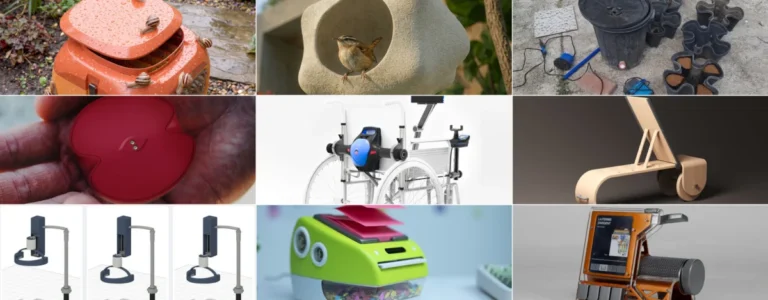
The intersection of technology and domestic life has long been a focal point for industrial designers, but rarely has the mandate been as precise as in the recent "Fusion Forward: Design for Home" competition. A collaborative initiative between Core77 and Autodesk, the contest challenged designers to reimagine the everyday objects that define our living spaces. By leveraging the advanced CAD and CAM capabilities of Autodesk Fusion, participants were tasked with solving real-world problems across three distinct domains: Home & Yard Maintenance, Personal Fitness & Wellness, and Smart Home Devices.
The jury, composed of prominent design and industry leaders, evaluated submissions based on a rigorous set of criteria: material selection, innovative form development, utility, and—crucially—the sophisticated application of Autodesk Fusion’s toolset throughout the design process. After a comprehensive review, the winners have been announced, showcasing a vision of the future that is as empathetic as it is technologically adept.
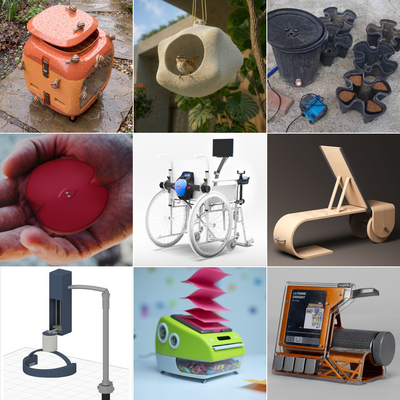
The Evolution of Domestic Utility: A Chronology of Innovation
The competition was designed not merely as an aesthetic exercise, but as a test of functional problem-solving. From the initial open call for entries to the final deliberations, the process highlighted a significant shift in how designers approach product development.
In the early stages, entrants were required to identify a pain point within the home environment. As the competition progressed, designers moved from conceptual sketching into the digital modeling phase, utilizing Fusion’s integrated environment to transition from 2D concepts to 3D realities. The winners were selected for their ability to synthesize complex manufacturing constraints with user-centric design principles, often producing prototypes that were ready for rapid fabrication.
Home & Yard Maintenance: Closing the Loop
In the category of Home & Yard Maintenance, the focus centered on sustainability and the democratization of resource management.
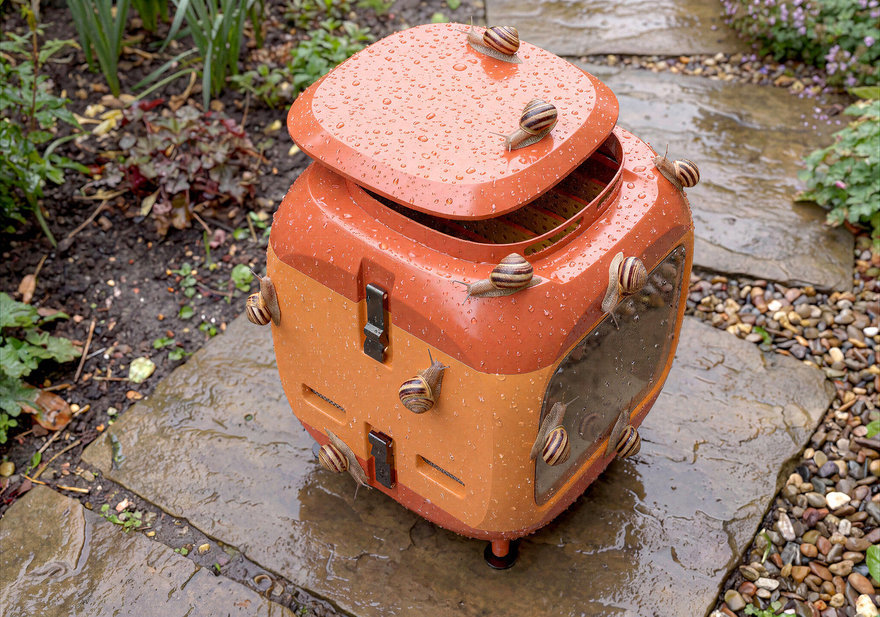
Winner: The EscarGrow Bio-Hub
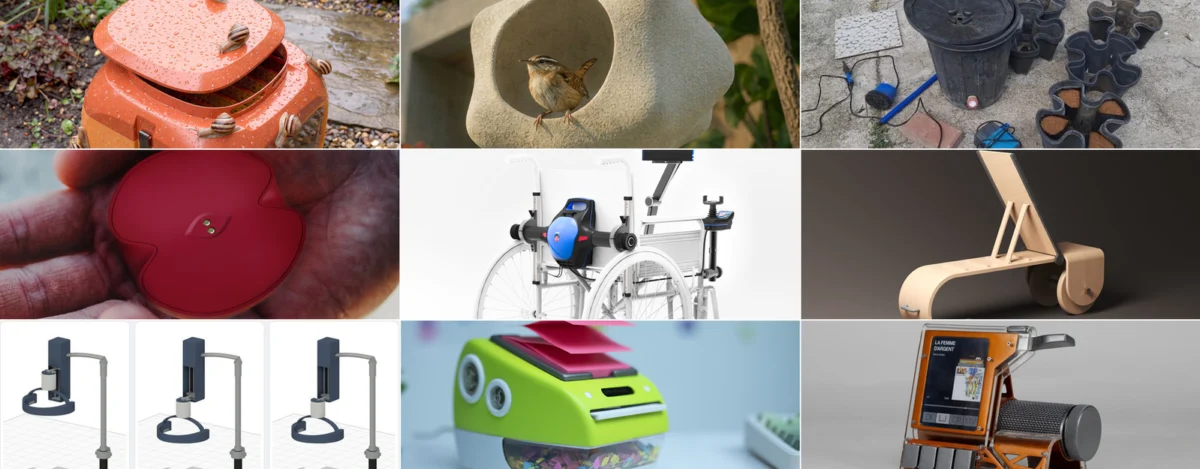
Designer Oleg Vereshchagin secured the top spot with the EscarGrow Bio-Hub, a visionary approach to regenerative agriculture. The unit is a fully automated, closed-loop snail farming module. By integrating organic waste processing with snail habitat maintenance, the system produces nutrient-rich compost and a sustainable protein source. Vereshchagin’s design is notable for its modularity, allowing it to be deployed in diverse environments, from urban gardens to degraded rural lands. Utilizing Fusion’s Solid Modeling and T-Spline tools, Vereshchagin achieved a sealed design that ensures regulatory compliance and biosecurity. Additionally, his creation of the "EscarGrow Mini"—a desktop version for STEM education—underscores the project’s scalability and pedagogical potential.
Runners-Up
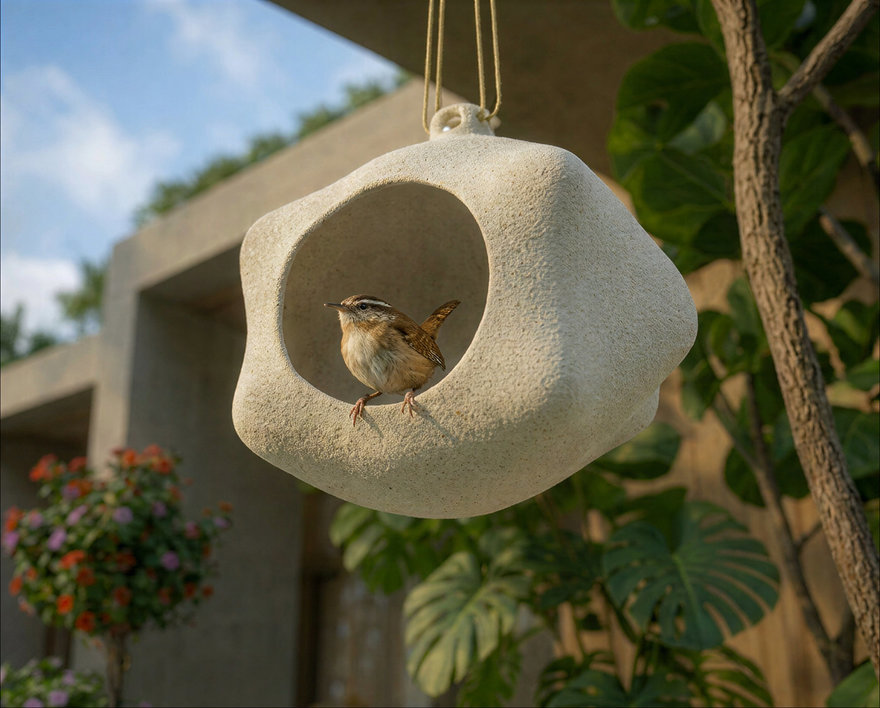
The runners-up in this category pushed the boundaries of accessibility and DIY fabrication. Manuel Ovalle’s NIDO, a 3D-printed birdhouse designed for urban balconies, emphasizes material efficiency. By designing the form to be printed without support structures, Ovalle eliminated waste. His use of Direct Modeling in Fusion allowed him to manipulate organic curvatures, resulting in a design that is both aesthetic and functional.
John Phillips’ Low-Cost Apartment Hydroponic Tower Garden took a more utilitarian approach. Developed for under $20 using common household materials, this vertical garden is a testament to resourceful design. Phillips utilized Fusion to master parametric design and assembly modeling, specifically calculating the pump power required to sustain a five-foot vertical system. His work in the Philippines, teaching food self-sufficiency, adds a vital humanitarian dimension to the project.

Personal Fitness & Wellness: The Human-Centric Turn
The Personal Fitness & Wellness category moved away from the cold, industrial aesthetic often associated with gym equipment, favoring designs that prioritize ergonomics and emotional connection.
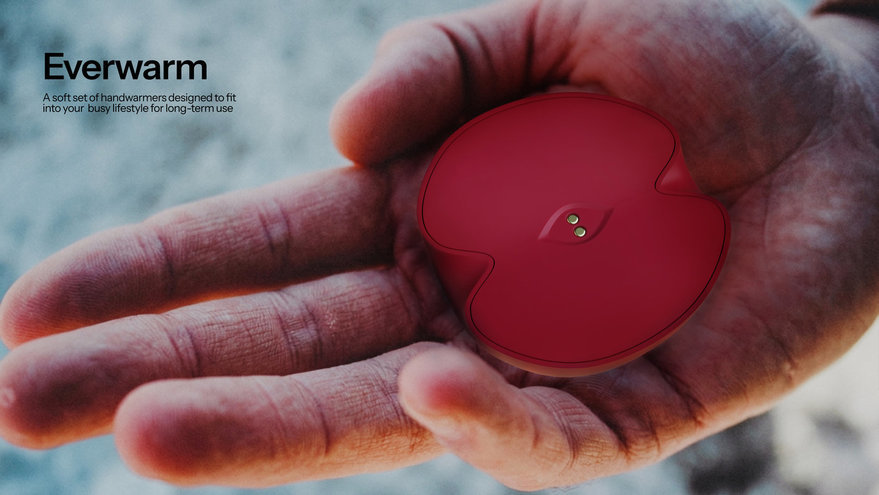
Winner: Everwarm
Anika Srivastava’s Everwarm handwarmers captured the jury’s attention by addressing a common user frustration: the discomfort and inconvenience of existing portable heating products. The Everwarm system features a fruit-inspired, modular design that is both tactile and highly functional. By using pogo pins and magnets, the device allows for seamless charging of individual segments. Srivastava’s use of Fusion allowed her to iterate rapidly, bridging the gap between soft, organic aesthetics and precise mechanical requirements. The ability to create solid, squishy-feeling shapes without manually defining every plane proved to be a decisive advantage in her design process.
Runners-Up
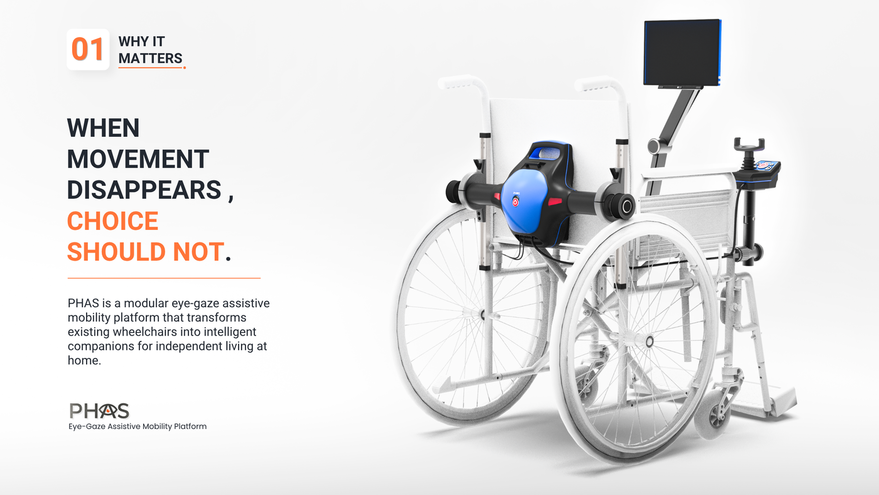
The PHAS Eye-Gaze Mobility System, developed by a team including Aivin Thankachan K, Parthiv Keloth, Hanock Issac, and Stanley Raphel, represents a significant advancement in inclusive design. By retrofitting manual wheelchairs with a modular motorized system and an eye-gaze control interface, the team has created a path to independence for individuals with severe motor impairments.
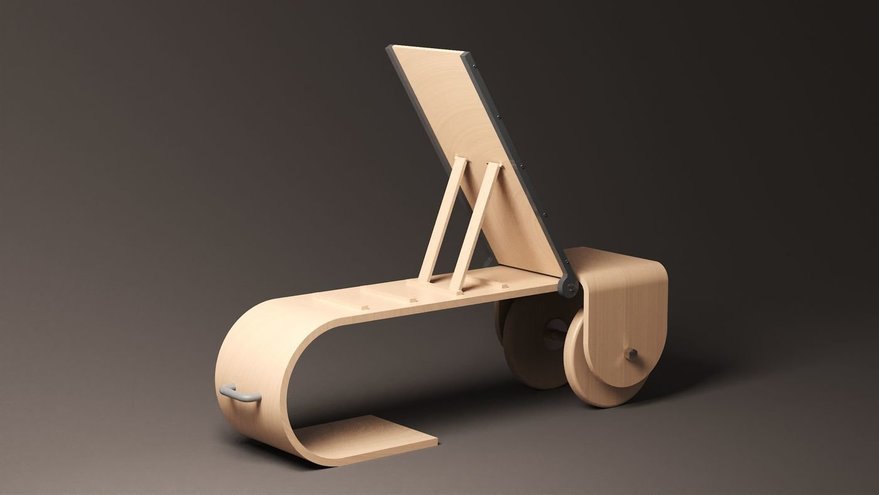
Equally impressive is the Curved Plywood Fitness Bench by Nicole Leal Flores and Isabella Córdoba Inzunza. This project challenges the convention that fitness equipment must be unsightly, treating the bench as a piece of high-end furniture. Their use of parametric design in Fusion allowed for extensive testing of proportions, ensuring the bench could function as a piece of aesthetic home decor while maintaining its structural integrity during intense exercise.
Smart Home Devices: Bridging Accessibility and Interaction
The final category, Smart Home Devices, explored how technology can foster independence and playful interaction within the home.
Winner: HaloDock
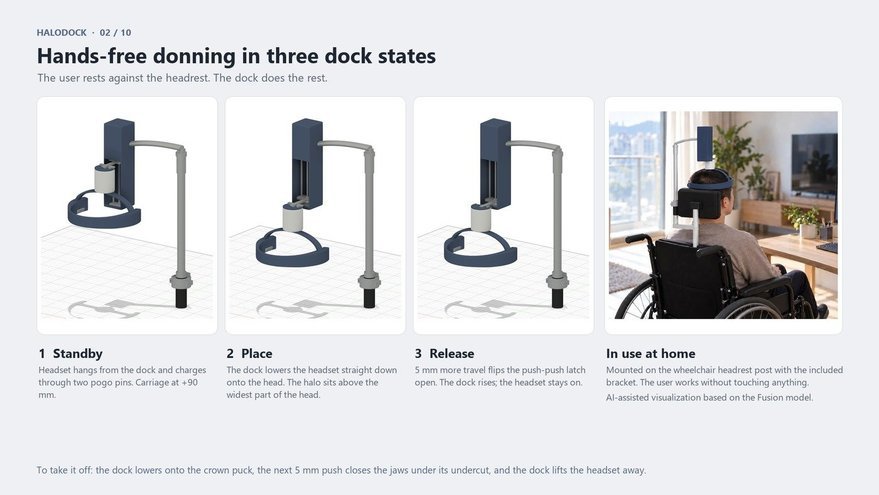
Dongwook Lee’s HaloDock is a masterclass in assistive technology. For individuals with spinal cord injuries, head-controlled devices can be a source of frustration due to the reliance on caregivers for donning and charging. The HaloDock automates the entire lifecycle—donning, removal, and charging—via a simple mechanical interface on the wheelchair headrest. Lee’s design process was rigorous, involving T-Spline modeling, stress analysis, and the development of generative brackets. The result was a 39 percent reduction in cursor jitter, a quantitative victory that highlights the efficacy of the design.
Runners-Up
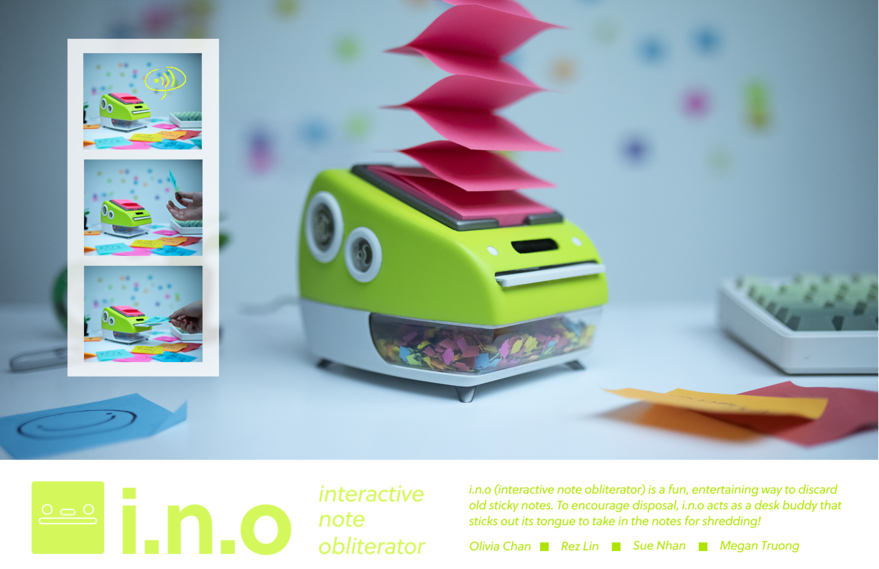
The Interactive Note Obliterator (i.n.o.) by Olivia Chan, Rez Lin, Sue Nhan, and Megan Truong introduced a sense of whimsy to the desk environment. This desktop shredder uses a single-motor mechanism to process sticky notes, demonstrating clever mechanical design through Fusion’s Joint function.
Finally, the Truss speaker system by Lauren Johnson, Daniel Imbert, Chiara Peluzzo, and Malena Vila brings tactile, analog-style interaction to a digital music experience. By utilizing Fusion’s sheet metal tools to unfold the acrylic shell and integrating NFC technology for playlist management, the team successfully blended vintage interface design with modern manufacturing precision.
Implications for the Future of Design
The Fusion Forward competition serves as a microcosm for the broader trends currently reshaping industrial design. Several key themes emerged:
- Democratization of Fabrication: The reliance on 3D printing and DIY-friendly assembly (as seen in the NIDO and the Hydroponic Tower) suggests that the future of home goods is increasingly decentralized. Consumers are moving from passive buyers to active participants in the creation of their domestic environment.
- Integrated Workflows: The success of these designers underscores the importance of a unified digital ecosystem. The ability to move seamlessly between T-Spline organic modeling, parametric structural analysis, and CAM toolpath generation allowed these designers to achieve a high degree of fidelity in their prototypes.
- The Rise of Assistive Design: The dominance of assistive technology in the winners’ circle—most notably the HaloDock and the PHAS mobility system—reflects a maturing design industry that is increasingly prioritizing inclusive, high-impact solutions over purely aesthetic consumer goods.
- Sustainability as a Default: Whether through material-efficient printing or closed-loop biological systems, environmental consciousness was not an "added feature" for these designers; it was the foundational constraint of their work.
Official Responses and Conclusion
The organizers at Core77 and Autodesk emphasized that the quality of submissions exceeded expectations. By providing a platform where professional-grade tools like Fusion 360 were paired with a creative prompt, the competition empowered designers to move beyond theoretical models and into the realm of viable, real-world solutions.
Each category winner received $2,500, while runners-up were awarded Autodesk merchandise. However, the true reward lies in the visibility these projects have gained within the global design community. As these designers continue to refine their work, the "Fusion Forward" results stand as a compelling reminder that the next great innovation for the home may not come from a massive corporate R&D lab, but from a designer with a vision and the right digital tools to bring it to life.
For those inspired by these achievements, the path forward is clear: as design tools become more powerful and accessible, the barrier to entry for solving the world’s most pressing domestic challenges continues to lower. Through self-paced learning and iterative experimentation, the next generation of designers is already building the future—one component at a time.
About the Author