The North American supply chain is witnessing a dramatic divergence in the fortunes of Mexico’s heavy-duty vehicle sector. According to the latest data released by the National Institute of Statistics and Geography (INEGI), Mexico’s manufacturing engine roared back to life in October 2026, posting triple-digit growth in production and export volumes. However, beneath the surface of these record-breaking export figures lies a fragile domestic market, plagued by aging fleets, economic uncertainty, and a persistent influx of used vehicles that threatens the long-term modernization of the country’s transportation infrastructure.
A Staggering Rebound: The October Surge
The October performance figures represent a watershed moment for Mexican industrial output. Following a period of fluctuating demand, manufacturers produced a total of 16,375 heavy-duty vehicles, representing a massive 129.6% increase compared to the 7,131 units manufactured in October 2025. This surge was mirrored by an even more aggressive export performance, with 13,518 vehicles shipped abroad—a staggering 158.9% jump from the 5,221 units exported in the same month of the previous year.
This rapid recovery underscores the pivotal role Mexico plays in the North American logistics ecosystem. As U.S. demand for freight capacity accelerated, Mexican assembly lines—dominated by heavyweights such as Freightliner, International, and Kenworth—ramped up production to meet the insatiable appetite of the American market.
Chronology and Year-to-Date Context
To understand the significance of the October numbers, one must examine the broader 2026 trajectory. The first ten months of the year have been characterized by a volatile recovery, yet the industry remains in positive territory.
- January – March: The year began with cautious optimism, as manufacturers navigated supply chain adjustments and fluctuating raw material costs.
- April – June: Production slowed slightly as regional economic concerns in the U.S. began to influence purchasing decisions, leading to a temporary plateau in exports.
- July – September: The industry began to signal a shift, with modest gains in wholesale sales and a stabilization of production lines.
- October: The "breakout" month. The 129.6% surge in production effectively solidified a strong year-to-date position, with total production reaching 133,496 vehicles—a 17.8% increase over the same period in 2025.
Total exports for the first ten months of 2026 reached 111,912 units, a 20.3% increase year-over-year. This consistency suggests that while October was an outlier in terms of the magnitude of growth, it was supported by a structural increase in demand from the United States, which currently accounts for 93% of Mexico’s total heavy-duty vehicle exports.
Supporting Data: The Manufacturing Hierarchy
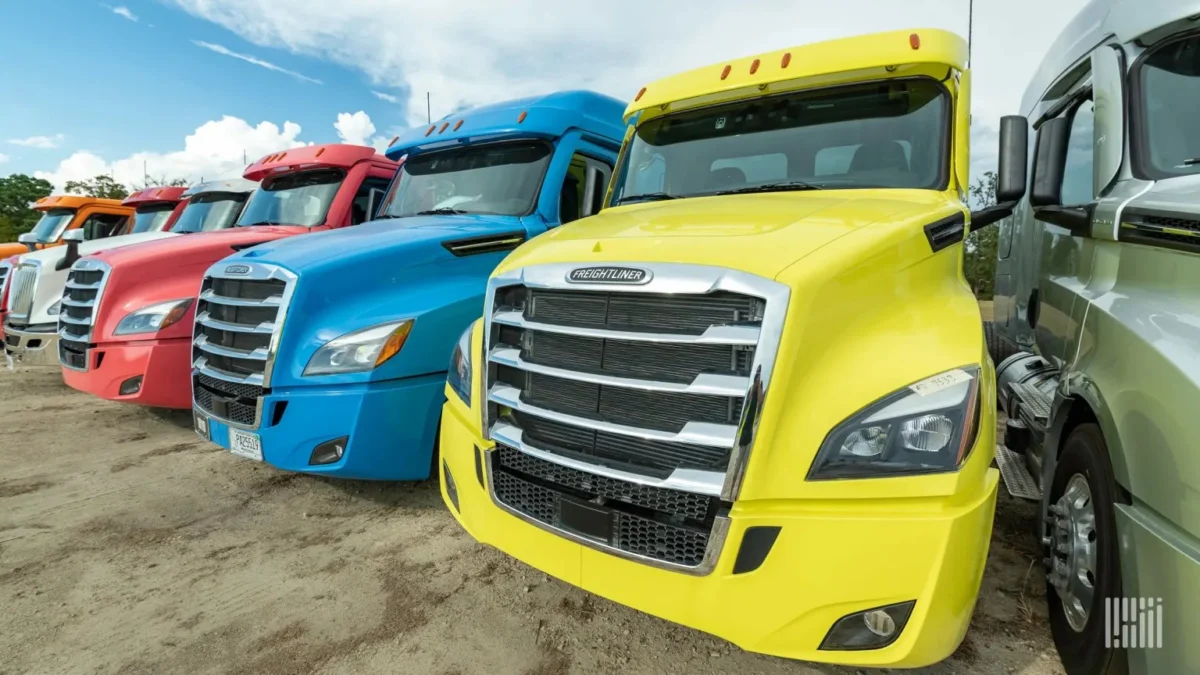
The dominance of major global manufacturers in Mexico’s export success is absolute. In October 2026, Freightliner stood as the industry titan, accounting for approximately 64% of total production and 71% of exports. When combined with International and Kenworth, these three entities represent roughly 97% of all heavy-duty manufacturing within Mexican borders.
| Manufacturer | Production | Exports | Production YoY | Exports YoY |
|---|---|---|---|---|
| Freightliner | 10,457 | 9,568 | +160.3% | +164.1% |
| International | 4,208 | 3,583 | +189.6% | +205.2% |
| Kenworth | 1,145 | 366 | +5.8% | -13.7% |
| Industry Total | 16,375 | 13,518 | +129.6% | +158.9% |
Source: INEGI, Administrative Registry of the Heavy Vehicle Automotive Industry (RAIAVP), November 2026.
While production has soared, the data also highlights the concentration of the market. Smaller manufacturers and specialized producers remain on the periphery, as the "Big Three" leverage their existing supply chains to fulfill U.S. orders, further cementing Mexico’s status as a critical manufacturing hub for North American freight.
Official Responses: The "Mixed Signals" Dilemma
Despite the jubilant export figures, the mood among industry leadership remains guarded. Rogelio Arzate, executive president of the National Association of Bus, Truck and Tractor-Trailer Producers (ANPACT), described the October results as "mixed signals."
"While the export numbers demonstrate the resilience and global competitiveness of our manufacturing sector, the domestic reality is starkly different," Arzate stated during a recent press conference. "Our internal market is struggling. Retail sales remain roughly 16% below where they were this time last year. We are seeing a disconnect between the health of our export-oriented plants and the health of our domestic trucking companies."
Arzate’s concerns are shared by the Mexican Automotive Distributors Association (AMDA). Cristina Vázquez, economic studies coordinator for AMDA, emphasized that October was only the second month in 2026 to show positive year-over-year retail sales growth. Vázquez pointed to a climate of "wait-and-see" among domestic fleet operators. Uncertainty surrounding North American trade policies, combined with persistent inflation, has led many Mexican trucking companies to defer fleet renewal projects, opting instead to maintain aging equipment.
The Structural Challenge: Used Truck Imports
Perhaps the most significant impediment to domestic growth is the continued influx of used heavy-duty vehicles from the United States. ANPACT has been vocal in its opposition to the current regulatory environment, which permits a high volume of older, less-efficient trucks to enter the Mexican market.
The data is startling: for every 100 new heavy-duty vehicles sold in Mexico during the first nine months of 2026, approximately 51.4 used trucks were imported. This ratio creates a "price distortion" effect. Domestic operators, often working with limited capital and narrow margins, frequently find the lower upfront cost of a used, U.S.-imported truck more attractive than investing in new, high-technology, fuel-efficient models.
ANPACT argues that this trend has three negative consequences:
- Environmental Impact: Older, imported trucks do not meet the stringent emissions standards required of new models, undermining Mexico’s sustainability goals.
- Safety Concerns: Older fleets are more prone to mechanical failure, posing significant risks on Mexico’s highways.
- Market Stagnation: The constant supply of cheap, imported used trucks prevents local manufacturers from achieving the scale necessary to offer more competitive financing and pricing for new units.
Implications for the Future
The divergence between export success and domestic stagnation presents a strategic challenge for the Mexican government. If the country is to maintain its status as a premier manufacturing destination, it must ensure that its domestic base is not left behind.
1. The Need for Modernization
There is an urgent call for robust vehicle scrappage programs. By providing financial incentives for small-to-medium trucking companies to retire their oldest vehicles, the government could catalyze a shift toward new, cleaner, and more efficient technology.
2. Trade Policy and Protection
The concern over imported buses—particularly those manufactured in countries outside of existing free trade agreements—suggests that trade policy will be a critical battleground in 2027. ANPACT is pushing for stricter oversight of these imports to ensure that the domestic market is not unfairly undercut by non-compliant vehicles.
3. Financing as a Key Lever
Finally, the industry is calling for improved financing options. As interest rates and economic uncertainty fluctuate, the ability of local carriers to secure affordable loans for capital expenditure will dictate whether the domestic market can recover in the coming year.
Conclusion
The October 2026 data serves as both a celebration and a warning. It is a celebration of the extraordinary productivity and efficiency of Mexico’s heavy-duty vehicle manufacturing plants, which continue to act as the backbone of North American logistics. Yet, it is also a warning that this success cannot be sustained in a vacuum. Without a deliberate strategy to address the domestic fleet’s aging infrastructure and the competitive pressures of the used-truck market, Mexico risks becoming an export-only hub, disconnected from the vital needs of its own domestic transportation sector. As the industry looks toward 2027, the focus must shift from merely manufacturing for the North American market to building a sustainable and modern foundation at home.
About the Author