In the traditional calculus of manufacturing, success has long been defined by a rigid, linear equation: source raw materials at the lowest possible cost, refine them through energy-intensive processes, and deliver the final product to a global market. For decades, this model functioned with a degree of predictability. However, as the 21st century unfolds, that model is fracturing under the weight of geopolitical instability, volatile tariff regimes, and the escalating costs of fossil-fuel-dependent logistics.
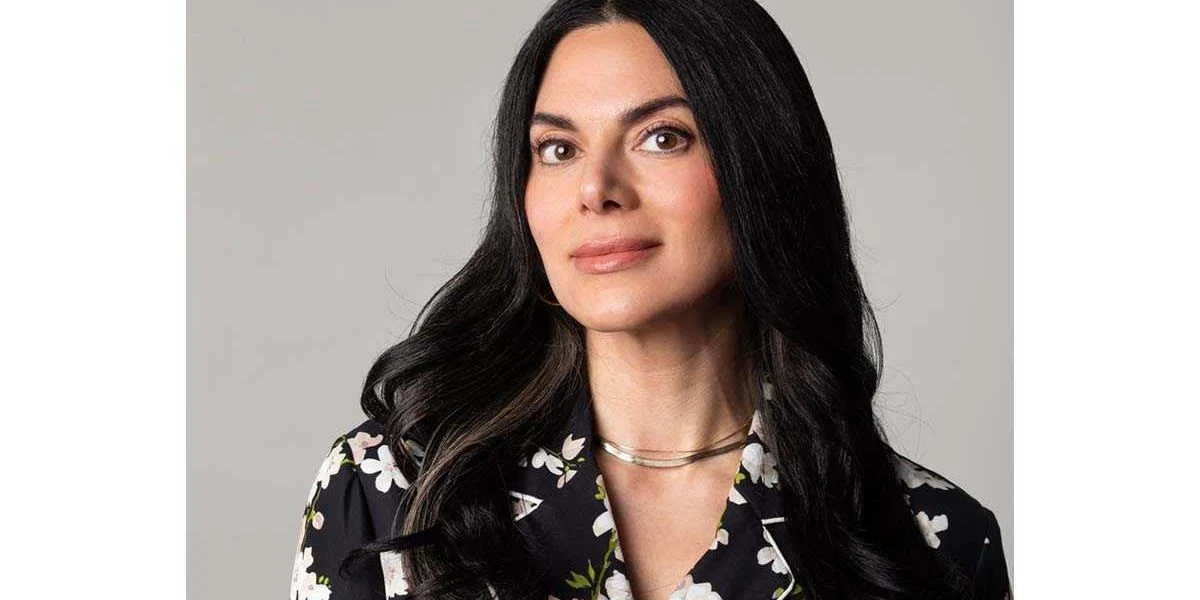
Enter Jo Marini, a serial entrepreneur, military veteran, and MBA professor who is betting that the future of manufacturing isn’t found in a centralized mega-factory, but in the "waste" currently piling up on farms across the globe. As the CEO of Mothership Materials, Marini is leading a quiet revolution in bio-manufacturing, utilizing modular, on-site technology to turn agricultural byproducts into high-value industrial inputs.
The Problem: A Stagnant Supply Chain
For over 200 years, the industrial world has operated on a "take-make-waste" trajectory. Companies source inputs from distant suppliers, subjecting their bottom lines to the whims of shipping lanes, border shocks, and unpredictable fuel prices. According to Marini, the biggest blind spot in modern commerce is the lack of visibility into these long, fragmented supply chains.
"We don’t actually have a lot of visibility into how the input got there, how many handoffs were involved, and the costs associated with those handoffs," Marini explains. "All of these [trade tariffs, border shocks, and fuel costs] have become more unpredictable in the past decade."
The inefficiency is staggering. Global agricultural systems generate an estimated 2 billion tons of waste annually—material that is currently viewed as a logistical burden, often left to rot or hauled away at a loss. Marini’s vision is to treat this "waste" as the most abundant, renewable, and localized resource available.
The Solution: Molecular "Sorting" at the Source
Mothership Materials operates on a principle of decentralization. Instead of bringing waste to a massive, centralized refinery, the company brings the refinery to the waste. Their modular technology acts as a molecular "sorter," capable of breaking down organic matter—be it wood, seaweed, spent grain, bananas, or cacao—into fundamental building blocks.
This bio-manufacturing process extracts molecules that serve as cost-competitive inputs for a vast array of goods, including textiles, fuels, coatings, adhesives, and packaging. By shifting the point of production to the source of the waste, Mothership Materials claims it can shorten supply chains by as much as 80%, effectively insulating manufacturers from the volatility of global logistics.
The Role of Bio-manufacturing
To the non-technical observer, bio-manufacturing can sound like science fiction. In reality, it is a necessary transition away from a petroleum-based economy. By substituting fossil-fuel-derived inputs with plant-based molecules, companies can not only reduce their carbon footprint but also improve the speed and cost-efficiency of their production cycles. Because these inputs are generated locally, the "last mile" of the supply chain is fundamentally reimagined.
Chronology of a Disruption
While Mothership Materials is currently in its growth phase, the trajectory of the company reflects a methodical approach to market entry.
- Foundation and Strategy: Recognizing that the highest friction in supply chains occurs during middle-market distribution, Marini chose to operate "all the way upstream." By positioning their technology directly on farms and at food-processing facilities, Mothership transformed a cost-center (waste disposal) into a revenue-generator for farmers.
- Initial Proof-of-Concepts: The company focused on two primary supply chains: cellulose production for textiles and the extraction of specific sugars for fermentation processes. These low-barrier entries allowed the company to demonstrate the economic viability of their technology without needing to disrupt deeply entrenched, massive infrastructure.
- Strategic Partnerships: Over the past four years, Marini has worked to build a coalition of stakeholders, ranging from agricultural producers to major packaging and textile firms.
- The 2027 Milestone: Looking ahead, the company is targeting early 2027 for a series of high-profile demonstrations. These events will bring together farmers, intermediate producers, and end-market manufacturers to showcase the "fingerprint" of a supply chain that is truly circular and locally integrated.
Supporting Data and Economic Implications
The economic argument for Mothership Materials is compelling. By eliminating the transport of heavy, unprocessed raw materials, manufacturers save on fuel and logistics. Furthermore, because the raw materials—agricultural waste—are essentially free or low-cost, the "input cost" of the final product becomes significantly more stable.
For farmers, the partnership is transformative. Instead of paying to haul waste away or dealing with the environmental liability of burning or composting piles of biomass, they receive compensation from Mothership. This creates a new, diversified revenue stream that adds economic resilience to rural communities.
"We are actually paying them more than they would have gotten with the current options," Marini notes. This creates a "win-win" scenario that lowers the barrier to entry for corporations looking to adopt greener alternatives.
Official Responses and Perspectives
Marini’s work has garnered attention from the Council of Supply Chain Management Professionals (CSCMP), where she is slated to deliver a keynote at the upcoming EDGE conference in Nashville. The industry’s reception has been one of cautious optimism, as major players in the packaging and textile sectors begin to realize that the status quo is increasingly untenable.
When asked about the resistance to change, Marini points to the "sunk cost" fallacy. "There are a lot of very well-established processes and supply chains that exist. Maybe they’re not working perfectly, but a lot of time and resources have been invested in making them work."
However, her advice to supply chain leaders is clear: stop looking at the "glossy, commercialized" solutions and start looking further upstream. Innovation, she argues, is often hidden in the parts of the supply chain that companies have ignored for generations.
The Future: Rethinking the "Sphere of Influence"
The implications of Mothership Materials’ model extend far beyond individual cost savings. It represents a fundamental shift in how we conceive of "product origin."
In the future envisioned by Marini, a consumer might purchase a garment or a package and know exactly which farm the molecular building blocks originated from. This transparency is not just a marketing tool; it is a way to tell a compelling story about how the product was made, who was involved, and how the environmental impact was minimized.
For supply chain leaders, the takeaway is a call to action. To innovate, one must open up their "aperture." As Marini suggests, the most profound changes start with a simple question: "Do I know someone who knows someone who might be able to help me rethink this?"
By looking outside their own sphere of influence and collaborating with upstream partners, companies can move faster, travel further, and operate more cheaply. In the era of the "mothership" of invention, the secret to the future of manufacturing might just be found in the field behind the farm.
Conclusion: A New Standard for Sustainability
As we move toward a more volatile global landscape, the reliance on fragile, long-distance supply chains will likely become a liability rather than a strategy. Mothership Materials is providing a blueprint for a more resilient, localized, and circular economy. Whether through the production of bio-based fibers or the conversion of industrial waste into essential feedstocks, Jo Marini’s approach challenges the industry to stop asking how they can make their current systems slightly more efficient, and start asking how they can build entirely new systems that are inherently sustainable by design.
For those in the supply chain profession, the lesson is clear: the future is not about managing the flow of goods better—it is about fundamentally changing the chemistry of how we create them.
About the Author