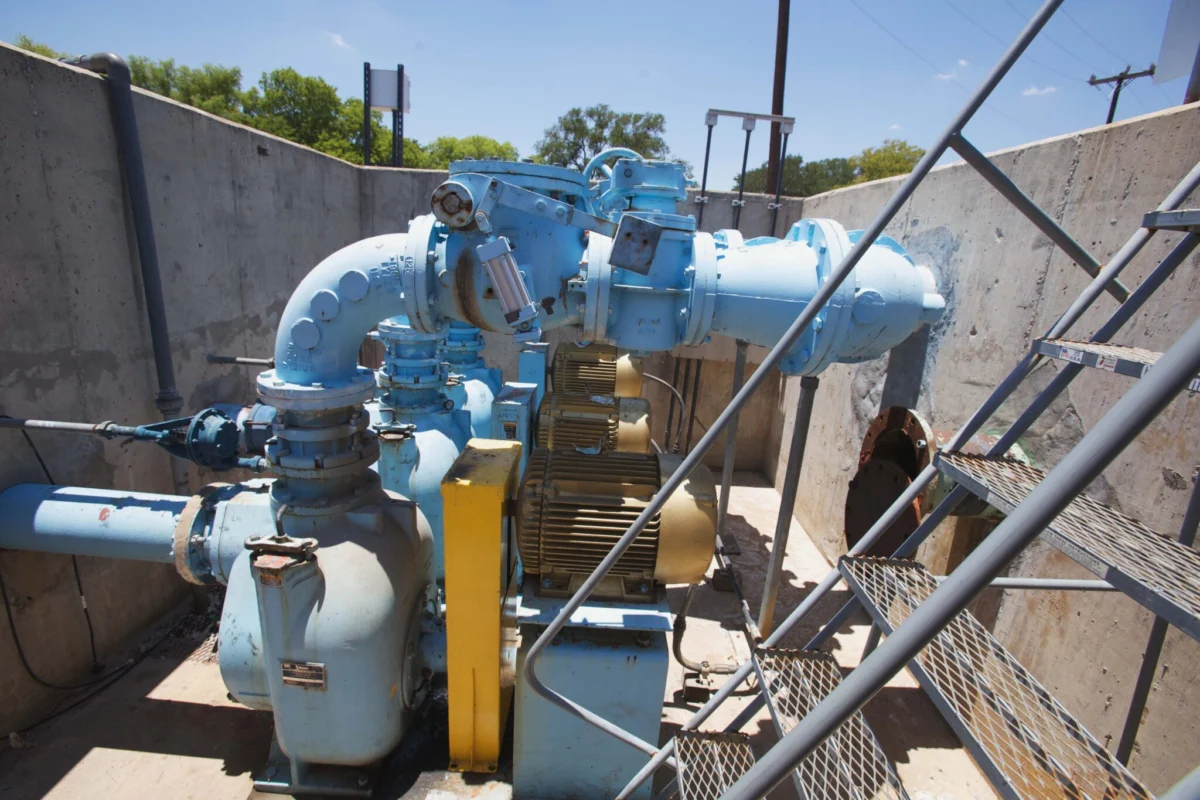
In the modern industrial facility, the most insidious thief of profitability is not catastrophic equipment failure—it is the quiet, incremental creep of inefficiency. Across the United States, motor-driven systems represent the backbone of manufacturing, water treatment, and chemical processing. Yet, in many of these facilities, flow and production output remain constant while electricity consumption steadily climbs.
The issue rarely stems from a broken component. Instead, it arises from a "system drift" where the motor, the pump, and the control strategy fall out of alignment. As the U.S. Department of Energy (DOE) prepares to implement stringent new efficiency standards on June 1, 2027, the mandate for plant engineers has shifted from a best-practice recommendation to a critical operational requirement.
The Anatomy of System Inefficiency
To understand the financial and mechanical stakes, one must first view the pump system not as a collection of parts, but as a singular organism. Inefficiency is almost always the result of a mismatch between the motor’s performance characteristics and the actual load demand of the pump.
The "Slip" Factor
A common oversight occurs when replacing older, legacy motors with modern, high-efficiency units. High-efficiency motors are designed with lower "slip"—the difference between the speed of the magnetic field and the actual rotation of the rotor. While this is an engineering triumph for energy conservation, it results in a slightly higher rotational speed under load.
In centrifugal pump applications, the laws of physics dictate that power demand increases with the cube of the speed. Consequently, even a nominal increase in rotational speed can push a pump away from its Best Efficiency Point (BEP), forcing the motor to work harder, increasing the horsepower demand, and negating the energy gains of the newer, more efficient motor.

The Control Strategy Trap
Legacy systems often rely on fixed-speed motors paired with mechanical throttling valves. When production requirements fluctuate, the motor continues to churn at full capacity while the valve dissipates excess energy as pressure loss. The system "meets demand," but it does so by burning through electricity that never translates into useful work. This creates a hidden tax on operations, manifesting as elevated thermal stress on the motor and premature wear on bearings and insulation.
Chronology of the 2027 DOE Standards
The path toward the current regulatory landscape has been one of gradual acceleration, culminating in the most significant federal update in over a decade.
- The Baseline (Pre-2010s): Industrial motors were largely unstandardized regarding high-efficiency mandates, leading to widespread use of "standard efficiency" motors that wasted significant energy as heat.
- The Transition (2015-2020): The implementation of NEMA Premium efficiency levels (IE3) became the industry benchmark, forcing manufacturers to innovate.
- The Current Phase (2020-2026): Facilities have been in a period of "optimization awareness," where the focus shifted from simple component replacement to the evaluation of total system life-cycle costs.
- The 2027 Milestone: As of June 1, 2027, the DOE mandate will elevate minimum efficiency requirements for most three-phase induction motors (1 to 750 horsepower). Mid-range motors must meet IE4 (NEMA Super Premium) standards, while expanded coverage for fractional horsepower motors is slated for 2029.
Supporting Data: The Case for Lifecycle Analysis
For the prudent plant engineer, the purchase price of a motor is a deceptive metric. Data from the DOE and major industrial manufacturers consistently show that the initial capital expenditure accounts for only a fraction of a motor’s Total Cost of Ownership (TCO).
Consider a motor operating in a continuous-process facility, running 8,000 hours per year. Over a 20-year service life, the electricity consumed by that motor will cost exponentially more than the purchase price of the unit itself.
- Energy Consumption: Industrial motor systems account for approximately 70% of total industrial electricity consumption globally.
- Efficiency Gains: A shift from IE3 to IE4 efficiency levels, when integrated into a well-balanced system, can result in a 10% to 15% reduction in energy waste.
- ROI Acceleration: When factoring in utility rebates—many of which are currently incentivizing the adoption of IE4 and IE5 motors—the payback period for high-efficiency upgrades is frequently reduced to under three years.
Official Perspectives and Industry Implications
Industry leaders at companies like ABB emphasize that compliance is merely the starting line. "The goal is not simply to swap a motor to satisfy a regulator," explains a senior engineering lead. "The goal is to ensure the motor is a ‘right-sized’ component of the entire fluid handling process."

The implication for plant managers is clear: procurement cycles must change. A motor specified today for a project that will be commissioned in 2028 must be vetted against the 2027 standards immediately. Failing to do so risks "compliance debt," where a facility spends capital on equipment that is essentially obsolete before it is even commissioned.
The Rise of IE5 Technology
Beyond the IE4 requirements, the industry is seeing a shift toward IE5 synchronous reluctance motors paired with sophisticated Variable Speed Drives (VSDs). These systems represent the pinnacle of modern efficiency, allowing for precise control of speed and torque. By aligning motor output directly with the actual flow requirements of the system, VSDs eliminate the "throttling valve" waste, ensuring that the motor only draws the power necessary for the current task.
Strategic Implementation: A Roadmap for Engineers
To navigate the upcoming standards and optimize performance, engineering teams should adopt a holistic approach:
1. Conduct a Load Profile Analysis
Do not assume your motor is operating at 100% capacity. Use data logging to determine the actual load profile. If a pump spends most of its time at 70% flow, an oversized motor will operate inefficiently and consume unnecessary reactive power.
2. Prioritize Inverter-Duty Capability
When selecting new motors, ensure they are rated for inverter duty. This provides the flexibility to integrate VSDs in the future without risking insulation damage or overheating, even if the budget does not allow for a full VSD implementation today.

3. Leverage Predictive Maintenance
Efficiency is not a "set it and forget it" metric. Bearings wear, impellers foul, and alignments drift. The integration of modern IoT sensors—which monitor vibration, temperature, and current signatures—allows for predictive maintenance. By detecting a slight increase in vibration or a subtle spike in current draw, engineers can address mechanical misalignment before it manifests as an energy-draining efficiency loss.
4. Evaluate Thermal Performance
An efficient motor is a cool-running motor. By choosing designs that minimize internal heat, you extend the life of the motor windings and insulation. This reduces the frequency of rewinds and replacements, effectively lowering the long-term maintenance budget.
Conclusion: Efficiency as a Competitive Advantage
The 2027 DOE standards represent a paradigm shift in how industrial facilities must view their infrastructure. While the regulations are mandatory, the true incentive for compliance is the resulting operational superiority.
A system that is properly aligned—where the motor is sized for the load, the VSD is tuned to the process, and the condition is monitored in real-time—does more than save on electricity bills. It enhances the reliability of the entire production line. It prevents the "silent drain" of wasted energy and protects the facility from the volatility of energy markets.
For the modern plant engineer, efficiency is no longer just a regulatory hurdle; it is the ultimate indicator of a well-run, future-proof facility. By embracing these standards now, engineers can position their organizations to achieve higher throughput, lower maintenance costs, and a significantly reduced environmental footprint, ensuring that their systems remain the reliable, high-performance engines of industry for decades to come.
About the Author