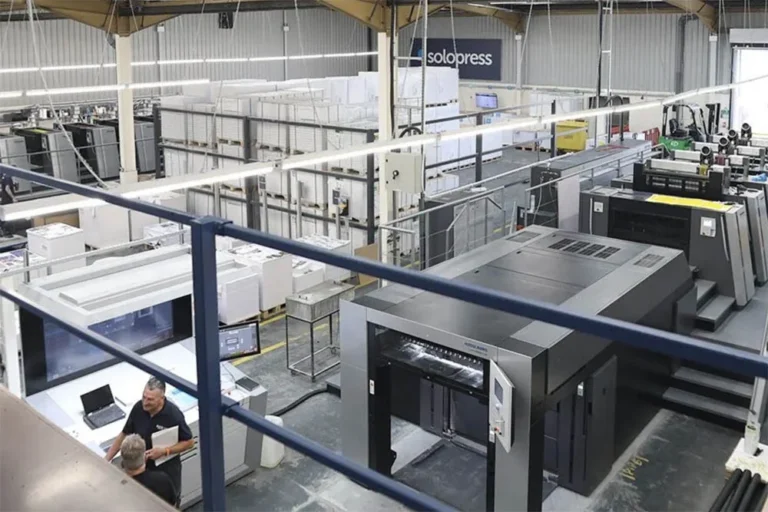
Szczecin, Poland – [Current Date, e.g., October 26, 2023] – Scandinavian Print Group (SPG), a prominent player in the European printing industry, has announced a significant expansion of its production capabilities with the installation of a brand-new Heidelberg 8-color UV sheet-fed offset press. This strategic investment, driven by sustained growth and robust financial performance, solidifies SPG’s commitment to high-quality, efficient, and versatile print production across its extensive pan-European network.
The state-of-the-art press, now operational at SPG’s central production facility in Szczecin, Poland, marks a pivotal moment for the company. It not only enhances SPG’s overall capacity but also underscores a strategic embrace of UV technology, which promises a raft of operational and quality advantages. This move positions SPG to meet the evolving demands of the market, balancing the enduring strengths of traditional offset with the burgeoning potential of digital solutions.
"Our increasing activity and strong financial results have directly fueled these additional investments in printing capacity," stated Esben Mols Kabell, CEO of Scandinavian Print Group. "The new Heidelberg UV machine is a testament to our continuous pursuit of efficiency, quality, and technological leadership, ensuring we remain at the forefront of the industry."
A Strategic Leap in Production Capacity
The integration of the new Heidelberg press brings SPG’s total sheet-fed offset machine count to an impressive ten, all operating in the industry-standard B1 format. This formidable fleet is strategically distributed across SPG’s key European hubs: four machines now reside in Poland, three in Aarhus (Denmark), two at their recently established production hub in Cologne (Germany), and one in Stockholm (Sweden). This geographical spread is crucial for optimizing logistics, reducing delivery times, and providing localized support to a diverse client base across Northern and Central Europe.
Unpacking the New Heidelberg Investment
The newly installed Heidelberg press is a marvel of modern printing engineering, boasting specifications designed for maximum output and minimal waste. According to Esben Mols Kabell, the machine is engineered for an exceptionally swift changeover time of just 1.5 minutes, a critical factor in enhancing productivity, especially for jobs requiring frequent setup adjustments. Furthermore, it achieves an average waste rate of only 27 sheets per job, significantly contributing to cost efficiency and environmental sustainability by minimizing material consumption.
With a maximum speed of 18,000 sheets per hour, this press is a true workhorse, projected to deliver between 60 and 70 million sheets annually. Such high throughput capacity is essential for SPG, which handles a vast array of print jobs, from high-volume commercial runs to specialized marketing materials. The investment not only adds raw capacity but also integrates advanced automation and control systems that ensure consistent quality and operational reliability.
The Rationale Behind UV Technology
A defining feature of the new press is its eight UV color units. While UV technology typically entails a higher initial investment and ongoing operational costs – estimated by SPG to be approximately DKK 700,000 (roughly €94,000 or $100,000 USD) more per year per machine in ink costs – Esben Mols Kabell emphasized that the benefits far outweigh these additional expenditures.
"With UV, we gain a number of advantages that we expect to significantly offset the increased ink costs," Kabell explained. "Foremost among these are substantial savings on delays in post-press processes, particularly binding, due to reduced waiting times for ink to dry. Traditional oil-based inks require time to cure, which can introduce bottlenecks in the workflow. UV inks, however, cure instantly under ultraviolet light, allowing for immediate handling and subsequent processing."
Beyond speed, UV technology dramatically reduces instances of ink set-off or smudging, leading to fewer customer complaints and improved overall print quality. This is particularly crucial for jobs with heavy ink coverage or demanding substrates. Additionally, UV inks offer a significantly larger color gamut, especially on uncoated papers. This expanded color space provides greater creative freedom for designers and ensures more vibrant and accurate color reproduction, which can be a key differentiator in competitive markets.
Kabell also elaborated on the practicalities of the decision, noting that while running with aqueous coating and conventional offset inks is technically possible, it would necessitate a machine approximately 27 meters long. Such a length would render the press impractical to operate, consume substantially more floor space, and incur a much higher capital cost. "UV is simply the rational choice," he concluded, highlighting the balance of performance, footprint, and cost-effectiveness.
SPG’s Evolving Pan-European Footprint
SPG’s investment strategy reflects a broader trend within the European printing industry towards consolidation and the establishment of interconnected production hubs. By distributing its offset capacity across Poland, Denmark, Germany, and Sweden, SPG leverages regional strengths and proximity to markets.
Building a Distributed Production Network
The Szczecin facility in Poland, where the new Heidelberg press is housed, serves as a crucial central production hub, benefiting from its strategic location and access to skilled labor. Aarhus, Denmark, likely represents SPG’s historical or administrative heartland, maintaining a strong operational presence. The recent establishment of a production hub in Cologne, Germany, signifies SPG’s ambition to strengthen its foothold in Western Europe’s largest economy, a market known for its high demand for quality print. Stockholm, Sweden, completes the Nordic presence, ensuring comprehensive coverage across the Scandinavian region.
This multi-site strategy allows SPG to offer enhanced resilience against localized disruptions, optimize logistics, and provide rapid turnaround times for clients across various geographies. It also fosters a competitive environment internally, promoting best practices and continuous improvement across all facilities. The decision to invest in a major B1 format press for a central location like Szczecin reinforces the importance of large-scale, efficient production for core print offerings, while other hubs cater to specific regional needs or specialized services.
The Dynamic Interplay of Offset and Digital
While the new investment is firmly in the offset domain, SPG’s overall production landscape reveals a sophisticated hybrid model, effectively integrating traditional and cutting-edge digital technologies. This comprehensive approach allows SPG to cater to an incredibly diverse range of client needs, from massive print runs requiring the cost-efficiency of offset to highly personalized, short-run jobs best suited for digital.
Deconstructing SPG’s Production Mix
Beyond the ten sheet-fed offset machines, SPG operates two high-production inkjet web presses, also installed in Poland. These machines are ideal for variable data printing, personalized communications, and medium-to-long runs that require quick turnarounds and flexibility in content. Complementing these are a significant number of digital sheet-fed machines distributed across the various production hubs, offering agile solutions for ultra-short runs, proofs, and on-demand printing.
Data from March 2026 provides a clear picture of this integrated strategy:
- Offset production: Accounted for a staggering 18 million square meters, representing over 80% of the total produced square meters.
- Digital sheet production: Reached 1.7 million square meters.
- Inkjet web production: Contributed just over 2.5 million square meters.
These figures emphatically demonstrate that offset printing remains the dominant force in terms of sheer volume for SPG, reflecting its continued relevance for large-scale, high-quality commercial printing.
The "Value Creation" Metric: Beyond Square Meters
Despite offset’s overwhelming share in square meters, Esben Mols Kabell highlighted a crucial distinction: "Offset accounted for over 80% of the produced square meters, but only for 60% of the value creation." This insight is critical. It indicates that while offset handles the bulk of material throughput, digital and inkjet technologies, with their capabilities for personalization, shorter runs, and specialized applications, command higher margins per square meter. This is a common characteristic of modern printing, where the value shifts from simply putting ink on paper to delivering highly customized and time-sensitive solutions.
The strongest growth within SPG’s portfolio has been in inkjet web production, which saw a remarkable 40% increase in square meters compared to the same period last year. This surge underscores the growing demand for high-speed, flexible digital solutions capable of handling variable data efficiently. The total digital volume across SPG’s operations translates to an impressive 33 million A3 sheets per month, showcasing the significant scale achieved by their digital division.
The Shifting Sands of Print Run Crossovers
A common question in the printing industry revolves around the "crossover point"—the print run quantity at which it becomes more cost-effective to use offset versus digital technology. When asked if the new, efficient offset machine alters this boundary, Kabell offered a nuanced perspective.
"It is actually marginal," he responded, implying that the new offset press, while highly efficient, doesn’t dramatically shift the traditional economic thresholds for offset. Instead, he noted, "In practice, the boundary has shifted the other way with our web inkjet machines, which can compete with offset up to around print runs of 1,000, when it is on one of the paper types that we have for that technology."
This statement is profoundly insightful. It highlights that the competitive landscape isn’t solely defined by the latest offset innovation. Rather, the advancements in high-speed inkjet web presses are actively pushing the digital envelope into what was traditionally offset territory, particularly for shorter to medium runs. The caveat about "specific paper types" is important, as paper compatibility and cost remain key considerations for inkjet technologies. This demonstrates SPG’s proactive approach to optimizing each job for the most suitable and cost-effective technology, ensuring clients always receive the best value and quality.
Leadership Insight: Esben Mols Kabell on Vision and Strategy
Esben Mols Kabell’s leadership is evidently driving SPG’s strategic investments and operational philosophy. His insights reveal a company that is not just reacting to market changes but actively shaping its future through calculated technological adoption and a deep understanding of customer needs.
Optimizing for Efficiency and Quality
Kabell’s detailed explanation for choosing UV technology, despite its higher ink costs, showcases a holistic view of total cost of ownership (TCO) rather than just per-unit expenses. By factoring in savings from reduced binding delays, fewer quality complaints, and expanded color capabilities, SPG is making decisions that improve workflow, enhance customer satisfaction, and ultimately bolster its competitive edge. This reflects a commitment to operational excellence and a client-centric approach where quality and speed are paramount.
Navigating the Digital Transformation
His commentary on the interplay between offset and digital technologies further illustrates SPG’s forward-thinking strategy. Recognizing that offset remains critical for high-volume, cost-efficient production, SPG continues to invest in its modernization. Simultaneously, the company acknowledges and actively nurtures the growth of its digital and inkjet capabilities, understanding their increasing role in value creation, personalization, and agile production. This balanced approach ensures SPG is well-equipped for a future where print demands are increasingly diverse and complex.
Broader Implications for the Printing Sector
SPG’s latest investment holds significant implications not just for the company itself but for the wider European printing industry.
A Hybrid Future for Commercial Printing
The strategic investment in both advanced offset and high-production digital platforms reinforces the notion that the future of commercial printing is undeniably hybrid. Companies like SPG are demonstrating that success lies not in choosing one technology over the other, but in mastering the integration of both to create flexible, efficient, and highly responsive production environments. This allows printers to offer a comprehensive suite of services, from massive catalog runs to personalized direct mail campaigns, all under one roof.
Sustainability and Technological Advancement
The adoption of UV technology also touches upon environmental considerations. While the article doesn’t explicitly detail this, UV printing can offer certain environmental advantages, such as the elimination of volatile organic compounds (VOCs) that are often associated with traditional offset inks. The instant curing process also means less energy is consumed in drying, and the reduction in waste sheets contributes to more sustainable practices. As environmental regulations tighten and client demand for eco-friendly solutions grows, these aspects of UV technology become increasingly important.
Strengthening European Production Capabilities
By expanding its capacity in key European locations, SPG contributes to strengthening the continent’s industrial base. Such investments support local economies, create skilled employment opportunities, and ensure that high-quality print production remains accessible within the region, reducing reliance on distant supply chains. This regional focus is particularly relevant in an era where supply chain resilience is a growing concern for businesses.
Conclusion
Scandinavian Print Group’s investment in a new Heidelberg 8-color UV sheet-fed offset press is more than just an addition of machinery; it is a strategic declaration of intent. It signifies a company deeply committed to leveraging cutting-edge technology to drive efficiency, enhance quality, and maintain a competitive edge in a dynamic market. With a robust pan-European footprint, a sophisticated blend of offset and digital capabilities, and a clear vision articulated by its leadership, SPG is well-positioned to continue its trajectory of growth and innovation, serving as a beacon for the evolving print industry. The ongoing ability to balance the proven power of offset with the agile potential of digital ensures that SPG remains a pivotal partner for clients seeking comprehensive and future-proof print solutions.
About the Author