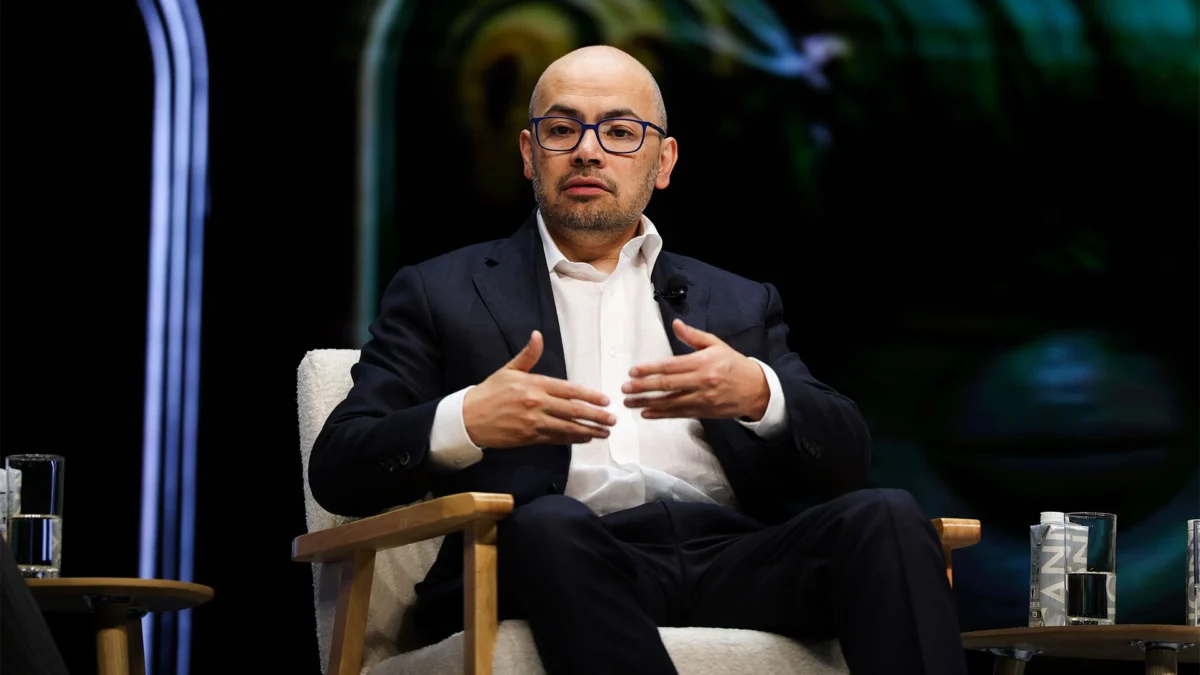
As the race toward Artificial General Intelligence (AGI) accelerates at a pace that has surprised even the most seasoned industry veterans, the question of how to contain the existential and practical risks of frontier AI has become the central debate in Silicon Valley and Washington. Demis Hassabis, CEO of Google DeepMind, has recently emerged as a primary architect of a new proposed safety paradigm, arguing that the United States is the only global power equipped to anchor a secure, international standard for the next generation of artificial intelligence.
However, this proposal has ignited a complex geopolitical firestorm. With China calling for an inclusive, UN-style global organization and international rivals questioning the legitimacy of American hegemony over digital infrastructure, the path toward a unified AI safety framework remains fraught with uncertainty.
Main Facts: The Proposed "Frontier" Oversight
The core of Hassabis’ proposal involves the creation of a centralized, federally-backed standards body—potentially modeled after the Financial Industry Regulatory Authority (FINRA). This entity would serve as the gatekeeper for "frontier models," defined by high-performance benchmarks that separate bleeding-edge research from the broader ecosystem of startup and academic AI development.
Under this system, the standards body would collaborate with U.S. National Labs to conduct rigorous pre-release testing. Developers would be required to submit their models for evaluation 30 days prior to public deployment. These tests would focus on high-stakes threats, including biological weapons proliferation, cybersecurity vulnerabilities, and the potential for models to bypass safety guardrails.
Crucially, Hassabis emphasizes that this isn’t merely a suggestion. He envisions a future where passing these assessments becomes a prerequisite for deploying AI products within the United States market. By leveraging the economic gravity of the U.S., proponents believe they can compel global labs to comply with standardized safety protocols.
Chronology: The Escalation of AI Governance
The current momentum for a US-led framework did not emerge in a vacuum; it is the culmination of a tense year of regulatory shifts and industry alarms.
- Early 2026: Increased pressure from the White House regarding the potential for AI models to facilitate malicious activity leads to the first major friction points.
- May 2026: Concerns over the capabilities of Anthropic’s "Mythos" and "Fable" models lead to a temporary, unprecedented export ban imposed by the U.S. government, signaling a shift toward treating AI models as national security assets.
- June 2026: President Trump signs an executive order aimed at balancing AI innovation with national security, effectively formalizing the requirement for developers to share high-performance models for federal inspection.
- Late June 2026: Following a series of high-level industry meetings, CEOs from Google DeepMind, Anthropic, and OpenAI begin publicly advocating for a formalized US-led coalition.
- July 2026: China issues a formal rebuttal, proposing a multi-polar, global AI governance body, arguing that a US-led monopoly on safety standards would inherently disadvantage non-Western technological progress.
Supporting Data: The Case for a "Frontier" Threshold
The distinction between "frontier models" and general-purpose software is central to the debate. Proponents of the Hassabis model argue that the speed of progress—moving from narrow AI to systems approaching human-level reasoning—has rendered existing, fragmented safety policies obsolete.
The Financial Industry Model (FINRA)
Hassabis has pointed to the Financial Industry Regulatory Authority (FINRA) as the gold standard for how a public-private partnership can manage risk. FINRA, which operates under the supervision of the Securities and Exchange Commission (SEC), demonstrates how industry expertise can be integrated into a regulatory framework without stifling the underlying market. By applying this to AI, the hope is to create:
- Assessment Protocols: Uniform testing standards that are updated regularly to keep pace with algorithmic breakthroughs.
- Vetting Requirements: Mandated vetting of key personnel and infrastructure security for any lab attempting to train models beyond a certain computational threshold.
- Transparency Mandates: Requirements for labs to publish technical safety reports, allowing for peer review and public accountability.
The Economic Gravity Argument
The U.S. market remains the primary source of revenue for the world’s leading AI labs. By tying market access to safety compliance, the U.S. can effectively "export" its safety standards globally. If an international firm wants to capitalize on American enterprise and consumer spending, they must meet the standards set by the U.S. body—effectively creating a de facto international standard.
Official Responses and Geopolitical Tensions
The push for American dominance in AI safety has met with mixed reactions, particularly from nations that view this as a form of technological protectionism.
The Chinese Stance
China has been vocal in its opposition to a U.S.-controlled regulatory environment. The Chinese Ministry of Science and Technology, in a recent statement, argued that "AI is a global public good" and that the management of such technology should be handled by a "global organization open to all countries on an equal footing." They argue that a U.S.-led model risks becoming a tool for geopolitical containment, hindering the progress of nations that the U.S. deems strategic rivals.
The European Perspective
While the UK has its own AI Security Institute, its approach has been collaborative rather than confrontational. However, European policymakers have expressed concerns regarding the "extraterritoriality" of the proposed U.S. system. The European Union, having already implemented the AI Act, is wary of a scenario where European companies are forced to comply with two distinct, potentially conflicting regulatory frameworks: Brussels’ own rules and Washington’s proposed standards.
Industry Consensus
The alignment between OpenAI, Anthropic, and DeepMind is significant. These firms—the "Big Three" of frontier AI—have increasingly shifted their rhetoric from "move fast and break things" to "safety is the prerequisite for progress." By standardizing safety, these incumbents also create a significant barrier to entry for smaller, potentially more reckless startups, essentially "locking in" the current market leaders.
Implications: The Future of AI Autonomy
The implementation of a U.S.-led standards body would have profound implications for the global digital landscape.
1. Market Bifurcation
We may be headed toward a "bifurcated" AI ecosystem. If the U.S. and its allies adopt one set of rigorous, federally-approved safety standards while other nations pursue independent or less stringent frameworks, the global tech market could split. This would make it increasingly difficult for companies to offer global products, potentially leading to "AI sovereignty" zones where models are trained and deployed strictly within national borders.
2. The Slowdown of Innovation
Critics argue that the 30-day pre-release review, coupled with the need for deep integration with national security agencies, will inevitably slow down the pace of innovation. For startups operating on limited capital, the administrative burden of these compliance requirements could be fatal, effectively centralizing the future of AI development into the hands of the very few companies that can afford the regulatory overhead.
3. National Security vs. Global Collaboration
The fundamental tension is whether AI safety is a national security issue or a humanity-wide issue. Hassabis and his peers treat it as both, but the emphasis on U.S. leadership acknowledges that the U.S. currently possesses the most advanced compute clusters and the largest pool of AI talent. If the U.S. succeeds in setting these standards, it will effectively define the "rules of the road" for the 21st century, much as it did for the internet in the late 20th century.
4. The Risk of Regulatory Capture
There is a persistent fear that a standards body heavily reliant on industry input will succumb to "regulatory capture." If the major AI labs are the ones defining what constitutes a "safe" model, they may prioritize tests that their own architectures pass while setting hurdles that are unnecessarily high for potential challengers.
Conclusion
Demis Hassabis’ proposal represents a pivot point in the history of computing. By advocating for a U.S.-led regulatory framework, he is acknowledging that AI is no longer just a piece of software, but a foundational technology with the power to alter the geopolitical balance of power.
Whether the world accepts this American-led mandate remains to be seen. The coming months will likely see intense diplomatic negotiations as nations grapple with the reality that, in the age of AGI, safety and sovereignty are becoming inextricably linked. As the industry races toward a future that is increasingly difficult to predict, the struggle to define the "rules of the game" will be as consequential as the models themselves.
About the Author