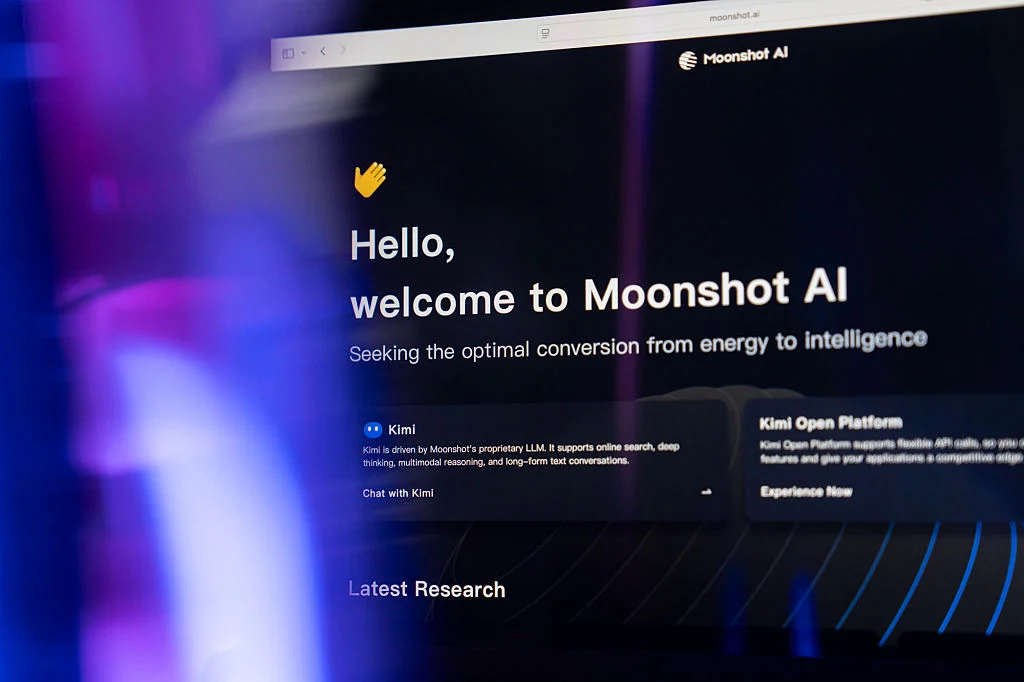
The release of Moonshot AI’s latest model, Kimi K3, has sent shockwaves through the global artificial intelligence landscape, transforming from a mere software update into a flashpoint for geopolitical tension. As the Chinese tech firm unveiled its latest advancement this week, the industry reaction was swift and polarizing, reopening deep-seated wounds regarding open-source intelligence, national security, and the future of global AI hegemony.
The launch of Kimi K3 arrives at a moment of heightened sensitivity. With the U.S. government embroiled in a complex tariff war, ongoing debates surrounding the national security implications of domestic firms like Anthropic, and a looming wave of AI initial public offerings (IPOs), the stakes have never been higher. The result is a fractured discourse that pits the ethos of open-source collaboration against the stark reality of modern economic nationalism.
The Chronology of a Tech Escalation
The emergence of Kimi K3 did not happen in a vacuum. It follows a trajectory set by other Chinese innovators—most notably DeepSeek, which grabbed headlines in January 2025 with the release of its R1 model. That release served as a wake-up call for Silicon Valley, proving that Chinese research labs were not merely catching up but, in some metrics, setting the pace for the industry.
This week’s events unfolded in a rapid, high-stakes sequence:
- Early Week: Moonshot AI officially launched Kimi K3, positioning it as a frontier-level performer.
- Mid-Week: Independent benchmarks from platforms like Arena.ai and Vals AI confirmed that Kimi K3 stands toe-to-toe with proprietary titans like Claude Fable 5 and GPT 5.6 Sol.
- Thursday: Chinese President Xi Jinping addressed the World AI Conference in Shanghai, emphasizing China’s commitment to self-reliance in AI infrastructure.
- Friday: Wall Street reacted with volatility. The Nasdaq Composite dropped approximately 1% as investors offloaded shares of chip manufacturers, fearing that Chinese advancements could trigger further export restrictions or diminish the market share of American incumbents.
Benchmarking the Threat: How Good is Kimi K3?
According to Moonshot’s own internal evaluations, Kimi K3 is not just an incremental improvement; it is a fundamental shift in the company’s capabilities. While the firm candidly admitted that its model still trails behind the most advanced, closed-loop systems—specifically Claude Fable 5 and OpenAI’s GPT 5.6 Sol—it emphasized that Kimi K3 demonstrates "frontier-level performance" across its evaluation suite.
Independent validation has bolstered these claims. Analyses conducted by Arena.ai and Vals AI suggest that the gap between Western proprietary models and Chinese open-source models is narrowing at an accelerated rate. This parity is causing significant consternation in boardrooms across the U.S.
The performance of Kimi K3 is particularly vexing for industry leaders because it challenges the long-held assumption that superior AI requires a closed, proprietary ecosystem. By offering high-performance, open-weight models, Moonshot AI is democratizing access to powerful intelligence, effectively undermining the subscription-based business models that form the bedrock of Western AI companies.
The Regulatory and Political Firestorm
The release of Kimi K3 has provided a platform for some of the most influential figures in tech and government to voice their concerns about the direction of the industry.
The "Tied Hands" Argument
David Sacks, the former Trump administration AI czar and current co-chair of the President’s Council of Advisors on Science and Technology, has been among the most vocal critics of the current American approach. Sacks argued that the United States is "tying itself in knots" through excessive bureaucracy.
"Politicians and bureaucrats are banning new data centers, piling on state regulations, and pushing for new federal agencies to pre-approve frontier models," Sacks noted in a post on X. "This is how you lose the AI race." Sacks further targeted domestic firms like Anthropic, labeling their models as "woke, lobotomized" systems that prioritize safety and ideology over the raw competitiveness required to challenge Chinese dominance.
The Distillation Debate
The issue of "distillation"—the process of training smaller, faster models on the high-quality outputs generated by larger, proprietary models—has become a central theme in this debate. Former Uber CEO Travis Kalanick expressed frustration that Chinese firms are effectively "distilling off" the R&D of American companies.
"If distillation isn’t enforced against, then everyone should be able to distill from everyone else," Kalanick wrote. "Otherwise, one arm is tied behind American models’ backs."
However, the irony is not lost on industry observers: the cross-pollination of innovation is a two-way street. In March 2026, the coding assistant Cursor famously admitted that its latest model was built, in part, on the foundation of Moonshot’s earlier Kimi iterations, illustrating the deep entanglement of the global AI supply chain.
Implications: The Dystopia of "AI Communism"?
Perhaps the most provocative response came from Dean Ball, head of strategic futures at OpenAI. Ball, who previously served in the Trump administration, acknowledged that Kimi K3 is an objectively impressive piece of technology that cannot be easily dismissed as mere distillation.
Ball’s concerns, however, are more systemic. He posited that the proliferation of high-quality open-weight models could lead to what he calls "full AI communism." In this scenario, AI shifts from a proprietary product to a "public good" provided by the state as essential digital infrastructure.
"This future strikes me as a dystopian hellscape," Ball noted. "But I’ve never met an open-weight models advocate who doesn’t ultimately concede this is where things end."
To counter this, Ball suggested that the U.S. government does not need to resort to overt, headline-grabbing bans, which he views as a flawed strategy. Instead, he proposed a "soft law" approach—using federal regulatory agencies to create an environment of fear, uncertainty, and doubt (FUD) regarding Chinese models. By raising the regulatory risk for any enterprise that adopts a Chinese model, the government could effectively freeze them out of the U.S. market without ever needing to legislate an outright prohibition.
A Measured Perspective
Not all observers believe that the arrival of Kimi K3 necessitates a panic-driven response. Shakeel Hashim, editor of the AI-focused publication Transformer, argues that the current hysteria is overblown.
Hashim points out two critical factors:
- Capabilities: While Kimi K3 is powerful, it lacks the dangerous, high-level cyber offensive capabilities that would trigger existential national security alarms.
- Incentives: The Chinese government, despite its current support for open-source AI, will eventually face the same pressures as the U.S. Once Chinese models become powerful enough to pose a risk to the state itself, Beijing will likely implement its own restrictive controls, mirroring the very policies American hawks are currently advocating for.
Conclusion: The New Normal
As the dust settles on the release of Kimi K3, it is clear that the industry has entered a new phase of maturation. The "AI race" is no longer just about who can build the most powerful model; it is about who can navigate the complex intersection of global trade, domestic regulation, and geopolitical strategy.
For American tech firms, the challenge is clear: maintain a competitive edge without succumbing to the paralysis of excessive regulation or the isolationism of a closed-off market. For Chinese firms like Moonshot, the path forward involves balancing their growing global influence with the inevitable oversight of their own government.
One thing remains certain: the age of AI innocence is over. As Kimi K3 proves, the technology is moving faster than the policy, and the resulting friction will define the economic and political landscape for the remainder of the decade. The world is watching, and for now, the only thing everyone seems to agree on is that the status quo is no longer an option.
About the Author