The American economic landscape is undergoing a profound structural transformation. From the humid, innovation-rich corridors of the Southeast to the precision-manufacturing hubs of the Northeast, a massive wave of capital investment is reshaping the nation’s industrial profile. Driven by the "triad" of modern growth—data centers, life sciences, and advanced manufacturing—states along the Eastern Seaboard and inland neighbors are experiencing record-breaking development.
This surge is not merely a reflection of favorable market conditions; it is the result of decades of strategic infrastructure investment, proactive pro-business policy, and a concerted effort to reshore critical industries.
The Drivers of Growth: A Modern Industrial Triad
While the industries vary by region, the underlying catalysts remain consistent. The rise of Artificial Intelligence (AI) has necessitated an unprecedented demand for data center infrastructure, leading to multi-billion-dollar investments in states like Mississippi, Arkansas, and Virginia. Simultaneously, the global push for healthcare autonomy has turned the U.S. into a premier destination for biopharma manufacturing, with companies like Eli Lilly, Johnson & Johnson, and AstraZeneca anchoring massive facilities across North Carolina, Pennsylvania, and Alabama.
Advanced manufacturing, meanwhile, has moved beyond traditional assembly lines. It now encompasses aerospace engineering, quantum computing, and high-tech semiconductor fabrication, creating a demand for a highly skilled workforce that is revitalizing local economies from the Gulf of Mexico to the Canadian border.
A Chronology of Economic Expansion (2025–2026)
The trajectory of this growth is best understood through the rapid succession of major project announcements that defined the 2025–2026 period:
- Early 2025: South Carolina begins the year with significant investments from Eaton and Isuzu, signaling a strong start for the state’s tech-focused manufacturing hub.
- Mid-2025: Florida reaches a milestone with record-breaking exports ($79 billion), while Maine establishes its "Blue Economy" Task Force to coordinate coastal development.
- Late 2025: North Carolina records its best year in history, headlined by the $4 billion JetZero investment. Simultaneously, Virginia cements its status as a data and pharma powerhouse with major groundbreakings.
- Early 2026: The pace accelerates. Mississippi announces the xAI $20 billion data center; Pennsylvania and Alabama continue to attract multi-billion-dollar life sciences investments; and Louisiana secures the $27 billion "Hyperion" Meta data center.
Regional Spotlights: Powerhouses of the New Economy
The Southeast: The New Industrial Heartland
The Southeast has emerged as the clear winner in the race for large-scale capital investment. Alabama stands as a testament to this shift; its 2025 record of $14.6 billion in investment was punctuated by Eli Lilly’s $6 billion commitment in Huntsville. Georgia continues to outpace the national average in export growth, with its $26 billion in new investment between 2024 and 2025 proving that the "Peach State" is a magnet for international giants like Yamaha and UCB.
Mississippi has successfully rebranded its economic identity, transitioning from traditional industries to the vanguard of AI. The $20 billion xAI data center in Southhaven and Amazon’s $11 billion expansion represent a pivot toward the "compute-first" economy.
The Mid-Atlantic: Life Sciences and Data Convergence
Virginia has masterfully leveraged its proximity to federal assets to build a robust defense-to-pharma pipeline. By combining data center growth with massive investments from Merck and Eli Lilly, the state has built an ecosystem that John Newby, CEO of Virginia Bio, describes as "an overnight success that took 20 years."

Pennsylvania is effectively "locking in" the life sciences sector. With over $40 billion in private investment over three years, the state has become a primary home for Johnson & Johnson’s manufacturing footprint. Delaware continues to play a unique role, acting as the corporate legal home for over 80% of U.S. IPOs while simultaneously cultivating a biotech and fintech hub in Wilmington.
The Northeast: Resilience and Innovation
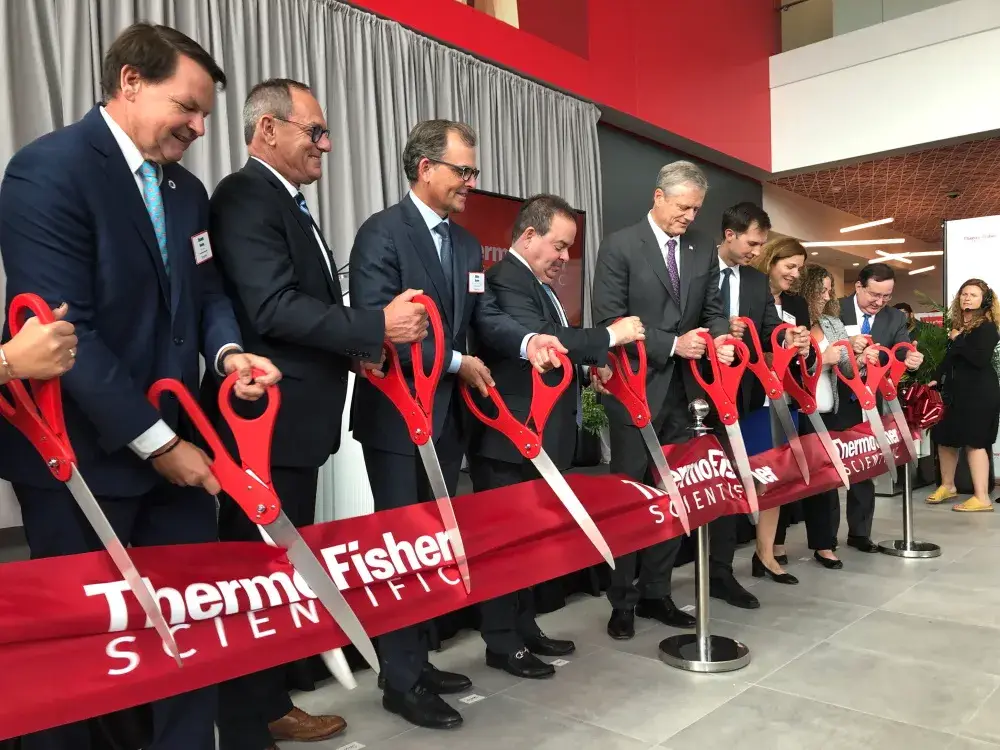
In New Hampshire, the focus is on precision electronics and aerospace, supported by a near-universal broadband rollout that is unlocking rural potential. Massachusetts retains its iron grip on the life sciences industry, as evidenced by Thermo Fisher Scientific’s new Bioprocess Design Center in Plainville and Zealand Pharma’s AI-driven research hub in Cambridge.
Supporting Data: By the Numbers
| State | Primary Growth Driver | Notable Investment |
|---|---|---|
| Mississippi | AI/Data Centers | $20B (xAI) |
| Louisiana | AI/Energy | $27B (Meta) |
| North Carolina | Aerospace/Pharma | $4B (JetZero) |
| Alabama | Pharma/Auto | $6B (Eli Lilly) |
| New York | Semiconductors | $100B (Micron) |
Beyond raw investment, these states are seeing dramatic shifts in export values. Florida’s 37.8% export growth since 2018 and Georgia’s 12.7% year-over-year trade increase underscore that this growth is rooted in global competitiveness, not just domestic consumption.
Official Perspectives: The Strategy Behind the Success
The success of these regions is rarely accidental. Officials across the board emphasize that deliberate policy architecture is the key to attracting "mega-projects."
In Arkansas, Governor Sarah Huckabee Sanders credits the "IMPACT" legislation—which streamlines permitting and offers targeted tax exemptions—for securing billions in data center investments. Similarly, South Carolina director of marketing Dorothy Weaver highlights the importance of the SC Nexus tech hub, the first state-wide federal designation of its kind, as a tool to reinforce the state’s commitment to innovation.
The private sector, in turn, points to the "ecosystem effect." In Kentucky, the connectivity to the Cincinnati regional economy allows companies like Jabil to draw from a tri-state talent pool. As BE NKY Partnership CEO Lee Crume noted, the presence of Fortune 500 companies attracts a density of talent that creates a self-sustaining cycle of innovation.
Implications: The Long-Term Outlook
The current surge in capital investment suggests a structural shift in the American economy that carries several long-term implications:
- Supply Chain Autonomy: By reshoring pharmaceutical manufacturing and semiconductor fabrication, the U.S. is significantly reducing its reliance on fragile global supply chains, particularly for critical healthcare and defense components.
- Infrastructure Upgrades: The massive capital influx is necessitating modern infrastructure, from rural broadband in New Hampshire to container terminal expansions in Maryland. This creates a "rising tide" effect for local public infrastructure.
- Workforce Specialization: As AI and advanced manufacturing take root, the demand for "middle-skill" and high-tech workers is forcing state governments to align education and vocational training programs more closely with industry needs. This is already evident in the quantum-focused partnerships between EPB and Vanderbilt University in Tennessee.
- The Decentralization of Tech: For decades, the "coasts" (specifically California and New York) dominated tech. Today, we are seeing the "decentralization" of these industries, with AI hubs sprouting in Mississippi and biopharma clusters blooming in the rural reaches of North Carolina and Pennsylvania.
Conclusion
The Eastern and Southern states are no longer just participating in the global economy; they are actively defining its next chapter. By embracing the digital transformation of infrastructure and the critical need for domestic manufacturing, these states have created a blueprint for sustainable growth. As these multi-billion-dollar projects transition from groundbreaking ceremonies to full-scale operations through 2026 and beyond, the industrial map of the United States will look fundamentally different—more innovative, more resilient, and more deeply connected to the future of global technology.
About the Author