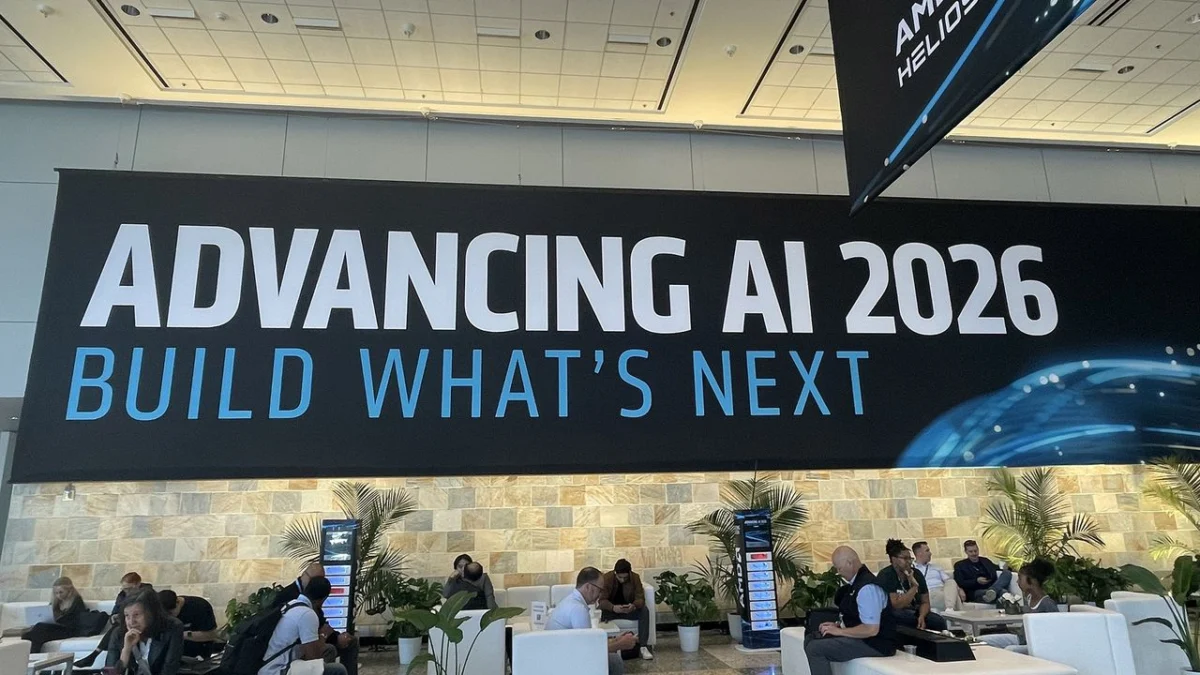
At the highly anticipated "AMD Advancing AI 2026" conference, AMD unveiled a transformative addition to its software ecosystem: Rocm.ai. Designed to bridge the gap between complex hardware capabilities and the modern developer’s workflow, this new suite represents a fundamental pivot in how software is built, deployed, and optimized for AMD’s high-performance compute platforms. By integrating AI-driven agents directly into the development cycle, AMD is aiming to lower the barrier to entry for its silicon, effectively turning popular coding assistants into expert-level "Rocm superusers."
The Core Facts: What is Rocm.ai?
Rocm.ai is not merely a tool; it is a comprehensive AI-native software stack designed to streamline the lifecycle of artificial intelligence workloads on AMD GPUs. At its heart, the platform recognizes that the modern software engineering landscape is becoming increasingly agent-driven. As developers pivot toward natural language processing (NLP) and AI-assisted coding tools to manage their projects, AMD has moved to ensure that its proprietary hardware is not just compatible with these workflows, but deeply integrated into them.
The suite is anchored by three primary pillars:
- Rocm CLI: A centralized, unified command-line interface designed to consolidate the traditionally fragmented tasks of installation, system validation, maintenance, and real-time troubleshooting.
- AMD Skills: A sophisticated integration layer that imbues existing third-party AI coding assistants—such as Cursor, Cloud, and Codex—with specific, AMD-authored technical expertise.
- Hyperloom: An advanced, AI-assisted optimization engine that automates the heavy lifting of workload performance tuning, kernel selection, and parallelization strategy.
By combining these elements, AMD intends to eliminate the tedious "document crawling" and manual configuration that has historically frustrated developers attempting to extract maximum performance from high-end GPU clusters.
A Chronology of the Announcement
The journey to Rocm.ai reflects AMD’s long-term strategy of moving away from hardware-first marketing toward a software-centric value proposition.
- Early 2026 Development Phase: Throughout the first half of the year, AMD’s software engineering teams worked in stealth to define how "agent-driven" development would interact with the Rocm stack. The primary objective was to ensure that the hardware could interpret high-level performance targets rather than requiring manual low-level instruction.
- August 2026 Advancing AI Conference: The formal unveiling occurred during the company’s flagship event. Vamsi Boppana, SVP of AI at AMD, took the stage to demonstrate the platform’s capabilities in real-time, showcasing how an agent could autonomously optimize a complex workload.
- The Roadmap: Following the announcement, AMD confirmed that the full public availability for the Rocm.ai suite is slated for August 2026, marking a significant milestone in the company’s Q3 strategic rollout.
Supporting Data: The Power of Hyperloom
To illustrate the necessity of this shift, AMD highlighted the sheer scale at which modern AI development now operates. In a case study shared by Vamsi Boppana, a lead developer utilized Hyperloom to process a suite of 14,000 individual models.
Before the implementation of Hyperloom, a human-led team would have required weeks—if not months—of manual profiling, kernel testing, and configuration tuning to optimize such a vast volume of models. With the automated, agent-based approach, the system was able to:
- Analyze the specific requirements of each model.
- Select the optimal kernels for the target hardware (specifically the MI355 series).
- Adjust parallelism strategies dynamically.
- Iterate until the performance goals were met.
This ability to scale optimization across tens of thousands of models demonstrates that Rocm.ai is designed to meet the demands of enterprise-level AI deployment, where the bottleneck is no longer just compute power, but the human capacity to tune that power efficiently.
Official Responses: Reimagining the Developer Experience
Vamsi Boppana’s keynote provided the most significant insight into the philosophical shift within AMD. He emphasized that the era of manual, layer-by-layer optimization is nearing its end.
"Developers shouldn’t have to manually reason through every layer of model architecture, kernel selection, prompt strategy, and rack-level deployment," Boppana stated. "AI is transforming this experience, and that is a very, very big shift for AMD hardware and software."
The strategy is clear: rather than forcing developers to learn the intricate nuances of AMD’s hardware architecture, AMD is embedding those nuances into the tools developers already love. By turning coding agents into "Rocm superusers," the company is essentially creating a bridge. A developer can now describe a high-level goal—such as optimizing a Vmax entry with a specific Large Language Model on MI355 hardware—and the agent, backed by AMD Skills, handles the "known good" recipes, profiling, and iterative testing.
Implications for the Industry
The introduction of Rocm.ai carries profound implications for the competitive landscape of AI hardware.
Lowering the Barrier to Entry
The primary hurdle for AMD in the AI market has historically been software ecosystem maturity. By providing a "no-manual-tuning" interface, AMD is making its hardware more attractive to companies that do not have the resources to employ a massive team of specialized GPU kernel developers. This democratizes high-performance AI, allowing smaller firms to compete with the compute efficiency of major tech giants.
The Shift Toward "Agentic" Software Engineering
AMD’s move underscores a broader industry trend: the transition from "code-as-instruction" to "intent-as-instruction." When developers use tools like Cursor or Codex to interact with Rocm.ai, they are providing intent. The software stack then interprets that intent and translates it into optimized machine code. If successful, this will set a new standard for how AI accelerators are marketed and managed.
Consolidation of Workflows
The Rocm CLI is a direct response to the complexity of modern DevOps in AI. By unifying installation and troubleshooting into a single command-line experience, AMD is reducing the "cognitive load" on system administrators and MLOps engineers. This shift likely aims to reduce the total cost of ownership (TCO) for AI infrastructure, as downtime and optimization time are reduced to a fraction of their current requirements.
Future-Proofing AMD Infrastructure
By focusing on an AI-native stack, AMD is ensuring that its software can evolve alongside the hardware. As new generations of MI-series accelerators are released, the "AMD Skills" library can be updated to include new recipes and optimization strategies, meaning that developers will benefit from hardware advancements almost immediately, without having to rewrite their core codebases.
Conclusion: A New Era for AMD
Rocm.ai represents a bold admission by AMD: the complexity of modern AI development has outstripped the traditional, manual-led development model. By leaning into AI-assisted development, AMD is not just providing hardware—they are providing an intelligent partner that understands their silicon better than any human developer could alone.
As the industry approaches the August 2026 launch date, the impact of this suite will be closely watched. If the performance gains observed in the 14,000-model trial translate to the wider developer community, Rocm.ai could well be the catalyst that cements AMD’s position as a dominant force in the AI infrastructure market. The shift from "manual configuration" to "agent-orchestrated performance" is not just an update—it is the new baseline for success in the high-stakes world of artificial intelligence.
About the Author