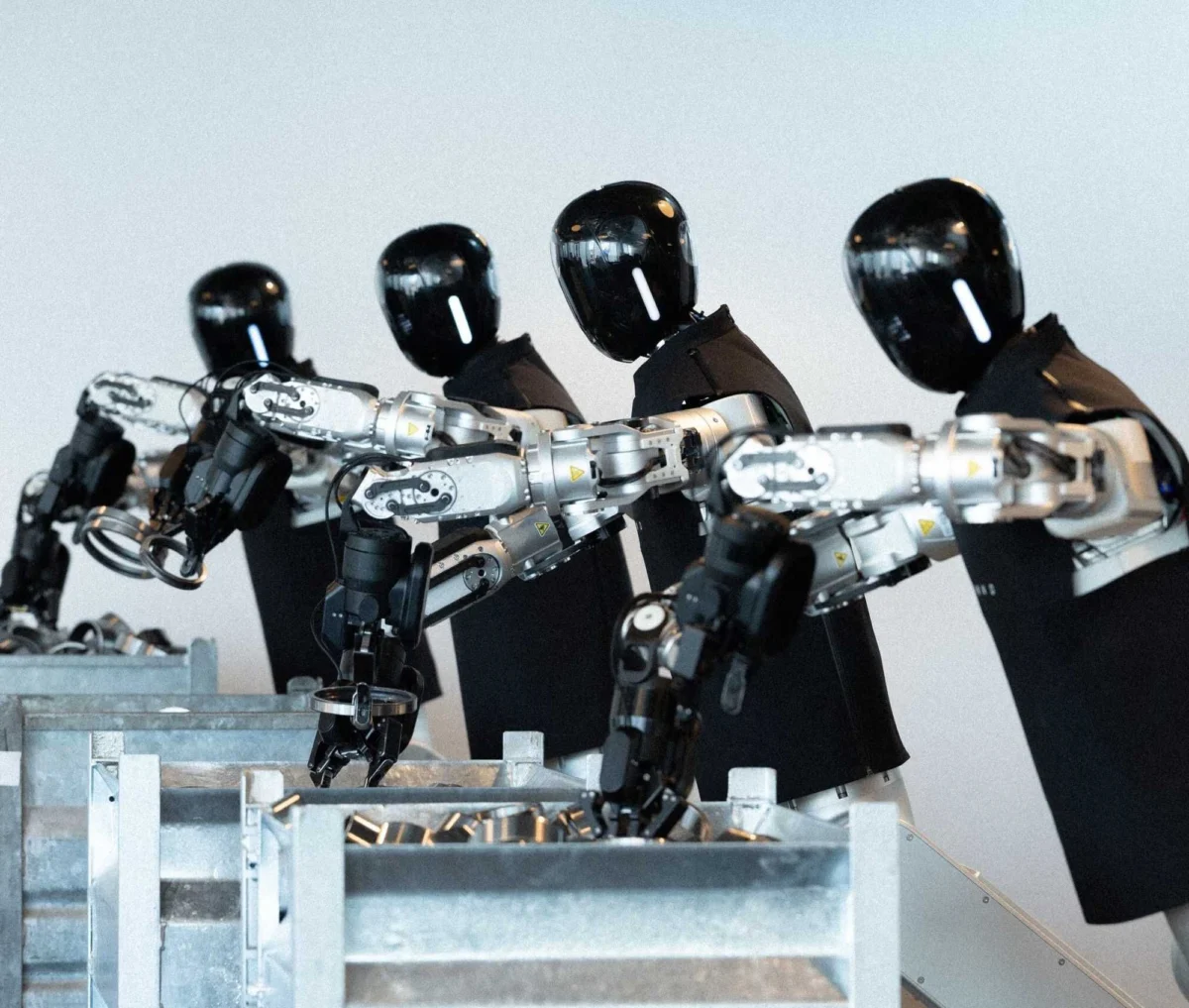
In a landmark development for the European deep-tech sector, British-based robotics firm Humanoid AI has successfully closed a $152 million Series A funding round. This infusion of capital pushes the company’s total lifetime funding to $270 million and grants it a post-money valuation of $1.35 billion, effectively crowning it as Europe’s first "pure-play" humanoid robotics unicorn.
As the global race to integrate "Physical AI" into industrial workflows intensifies, Humanoid AI’s latest financial milestone marks a significant pivot. While the discourse surrounding humanoid robotics has been largely dominated by Silicon Valley titans and state-backed Chinese innovators, this investment signals that the United Kingdom and continental Europe are prepared to stake a claim as global leaders in the next generation of industrial automation.
Main Facts: A New Milestone in Industrial Robotics
The $152 million financing round was spearheaded by the venture capital firm Prime Movers Lab. The syndicate of investors involved in this round reflects a diverse coalition of industrial and financial heavyweights, including Schaeffler, Bosch, Fubon Financial Holding Venture Capital, and Aglaé Ventures.
The capital injection is earmarked for three primary strategic objectives:
- Strengthening Technological Leadership: Further refining the proprietary Physical AI software stack that allows robots to navigate complex, unstructured industrial environments.
- Accelerating Commercial Deployments: Transitioning from prototype environments to large-scale, high-volume production deployments within global supply chain facilities.
- Business Expansion: Expanding the firm’s operational footprint to meet the growing demand for automated labor in manufacturing and logistics sectors across Europe and North America.
By achieving unicorn status, Humanoid AI has successfully navigated the "valley of death" that often claims hardware startups, demonstrating that its robotic platforms are not merely theoretical concepts but viable, scalable solutions ready for the factory floor.
Chronology: The Road to the Unicorn Milestone
The ascent of Humanoid AI is a testament to the rapid evolution of robotics from laboratory curiosity to industrial necessity.
- Founding Phase: The company was established with the core mission of bridging the gap between digital AI and the physical world. The founders identified a critical bottleneck in modern manufacturing: the mismatch between the sophisticated digital capabilities of AI and the physical limitations of legacy industrial automation.
- Seed and Early Growth: Initial rounds of funding focused on proof-of-concept designs. During this period, the engineering team prioritized the development of high-torque actuators and a bipedal locomotion system capable of operating safely alongside human workers.
- The $118 Million Foundation: Before the current $152 million Series A, the company had already secured $118 million in previous financing. This capital allowed the team to build a proprietary AI model specifically designed for "embodied intelligence," a prerequisite for robots that must interpret and interact with the physical world in real-time.
- The Series A Breakthrough: The current $152 million raise represents the largest influx of capital for the company to date. It serves as a bridge between the research and development phase and the commercial rollout phase, positioning the firm to begin mass production.
Supporting Data: Why Physical AI is the Next Frontier
The investment in Humanoid AI is not an isolated event; it is part of a broader, global pivot toward "Physical AI." Unlike traditional industrial robots, which are typically confined to caged environments and perform repetitive, pre-programmed tasks, humanoid robots are designed to operate in spaces designed for humans.
The Industrial Gap
Current supply chain infrastructure relies heavily on manual labor for tasks that are "dull, dirty, or dangerous." According to industry analysts, global labor shortages in logistics and manufacturing are projected to reach critical levels by 2030. Humanoid robots address this by offering:
- Environmental Adaptability: These robots can navigate stairs, uneven surfaces, and cluttered floors without requiring the total redesign of a facility.
- Task Flexibility: Unlike a robotic arm that can only weld or palletize, a humanoid robot can be reprogrammed to switch from inventory management to quality control, offering a higher return on investment (ROI) for factory operators.
Regional Dynamics
Until now, the concentration of humanoid robotics has been bifurcated between the United States—driven by aggressive venture capital—and China, supported by robust state-industrial policy. Humanoid AI’s successful funding round serves as a crucial data point for European investors, suggesting that the continent’s focus on precision engineering and high-level AI research is finally yielding commercial results that can compete on the global stage.
Official Responses: The Strategic Vision
The investment from Prime Movers Lab highlights the shift in investor sentiment toward deep-tech hardware. Zia Huque, General Partner at Prime Movers Lab, offered a bold assessment of the market’s future:
"Humanoid robotics will be one of the defining technologies of the next decade, reshaping how commercial and industrial work gets done. We expect the field to consolidate around a handful of category leaders across the US, Europe, and China. Humanoid AI will be one of a small cadre of robotics companies that will define humanoid robotics in Europe and beyond."
The involvement of industry giants like Bosch and Schaeffler—leaders in automotive and industrial technology—is particularly telling. It suggests that these firms are not merely acting as financial backers but are also positioning themselves as strategic partners who will likely be among the first to integrate Humanoid AI’s technology into their own global manufacturing ecosystems.
Implications: The Future of the Humanoid Workforce
The implications of Humanoid AI’s expansion are far-reaching, touching upon labor, technology, and the future of the global supply chain.
1. The Human-Robot Collaboration Paradigm
The core value proposition of Humanoid AI is its ability to operate safely in "human-centric" environments. This implies a future where the workplace is not fully automated but "co-automated." Robots will take over the physically taxing, repetitive, or dangerous components of a job, allowing human workers to shift toward supervisory and high-level decision-making roles.
2. Economic Resilience and Sovereignty
For the UK and Europe, the ability to build and scale indigenous humanoid robotics companies is a matter of economic sovereignty. As global supply chains face increasing volatility, having a robust local robotics industry ensures that manufacturers have access to the automation tools necessary to keep costs competitive without being entirely reliant on foreign technology providers.
3. The Scaling Challenge
Despite the optimism surrounding this funding round, the road ahead is fraught with technical and operational hurdles. Scaling a humanoid robot from a lab-tested prototype to a machine that can run 24/7 in a warehouse requires immense reliability. The company must now prove that its hardware can handle the wear and tear of industrial life, and that its AI can handle the unpredictable nature of real-world environments without constant human intervention.
4. Societal Impact
As these robots become more common, the conversation around the "future of work" will inevitably intensify. While Humanoid AI frames its mission as a solution to labor shortages, the broader deployment of humanoid labor will necessitate new policy frameworks, ethical guidelines, and perhaps even shifts in workforce training and education.
Conclusion
Humanoid AI’s $152 million Series A is more than a financial victory; it is a signal of maturity for the European robotics sector. By securing the backing of both top-tier venture capital and established industrial partners, the company has positioned itself at the nexus of the most significant technological transformation in modern manufacturing.
As the company moves into its next phase of growth, the global industrial landscape will be watching closely. If Humanoid AI can successfully deploy its robots at scale, it will not only justify the massive valuation it has received but also cement its place as a cornerstone of the future industrial economy—a future where the distinction between human ingenuity and machine capability becomes increasingly, and productively, blurred.
The era of the humanoid worker has arrived, and for the first time, Europe is leading the charge.
About the Author