By Investigative Desk
The Trump administration is quietly advancing a regulatory pivot that could fundamentally reshape the landscape of American industrial oversight. At the heart of the controversy is a proposed Environmental Protection Agency (EPA) rule change that would grant state agencies total autonomy in determining public participation requirements for “minor source” air pollution permits. Critics argue that this maneuver is a calculated effort to clear the path for the rapid, unchecked expansion of energy-intensive data centers and private fossil-fuel power plants, effectively silencing the communities most likely to be affected by these developments.
As the United States aggressively pursues a position as the global hegemon of artificial intelligence, the infrastructure required to power the AI revolution—specifically massive data centers and the gas-fired plants that sustain them—has become a top federal priority. By delegating public notice and engagement protocols to the state level, the EPA is effectively creating a deregulatory environment where the speed of construction takes precedence over local environmental safeguards.
The Mechanics of the Proposal: What is a “Minor Source”?
To understand the stakes of the proposed rule, one must first understand the classification of industrial pollution. Under the Clean Air Act, industrial facilities are categorized based on their projected emissions. “Major sources” are subject to rigorous federal oversight, comprehensive public hearing requirements, and stringent long-term monitoring. These are the giants of the industrial world—refineries, large-scale chemical plants, and massive power stations.
However, the vast majority of new industrial projects, including many modern data center power installations, fall under the “minor source” classification. These facilities, while individually smaller, are cumulatively significant. They include diesel generators, onsite gas plants, and various combustion engines designed to provide constant, reliable electricity to the servers powering the AI boom.
Current federal rules mandate a baseline of public participation for these minor sources to ensure that neighbors are at least informed of potential air quality impacts. The Trump administration’s proposed rule would strip away these federal floor requirements, allowing states to determine if, when, and how the public is notified. For communities already skeptical of the “hidden” industrialization of their neighborhoods, this represents a significant erosion of their right to participate in the democratic process.
A Chronology of the Regulatory Pivot
The movement toward this policy shift has been subtle but steady, mirroring the administration’s broader "AI-first" energy agenda:
- Early 2025: As data center construction spending began to eclipse public infrastructure investment, the administration identified permitting bottlenecks as the primary obstacle to national AI dominance.
- Spring 2025: Industry lobbyists began signaling to federal agencies that the current "patchwork" of public participation requirements was slowing down the deployment of behind-the-meter power solutions.
- June 2025: High-profile public pushback against data center siting reached a fever pitch in states like Michigan and Georgia, where community groups successfully leveraged existing air permitting processes to delay construction.
- July 2026: The EPA formally held a public hearing on the proposed rule, framing the change as an exercise in "regulatory streamlining" and "state empowerment."
- Current Status: The rule remains in the public comment phase, with environmental advocates and state regulators scrambling to assess the long-term impact on air quality transparency.
Supporting Data: The Cost of the AI Boom
The scale of this transition is staggering. In June 2026, U.S. construction spending on data centers officially outpaced spending on all public transportation infrastructure combined. This shift represents a fundamental realignment of the American economy toward digital infrastructure.
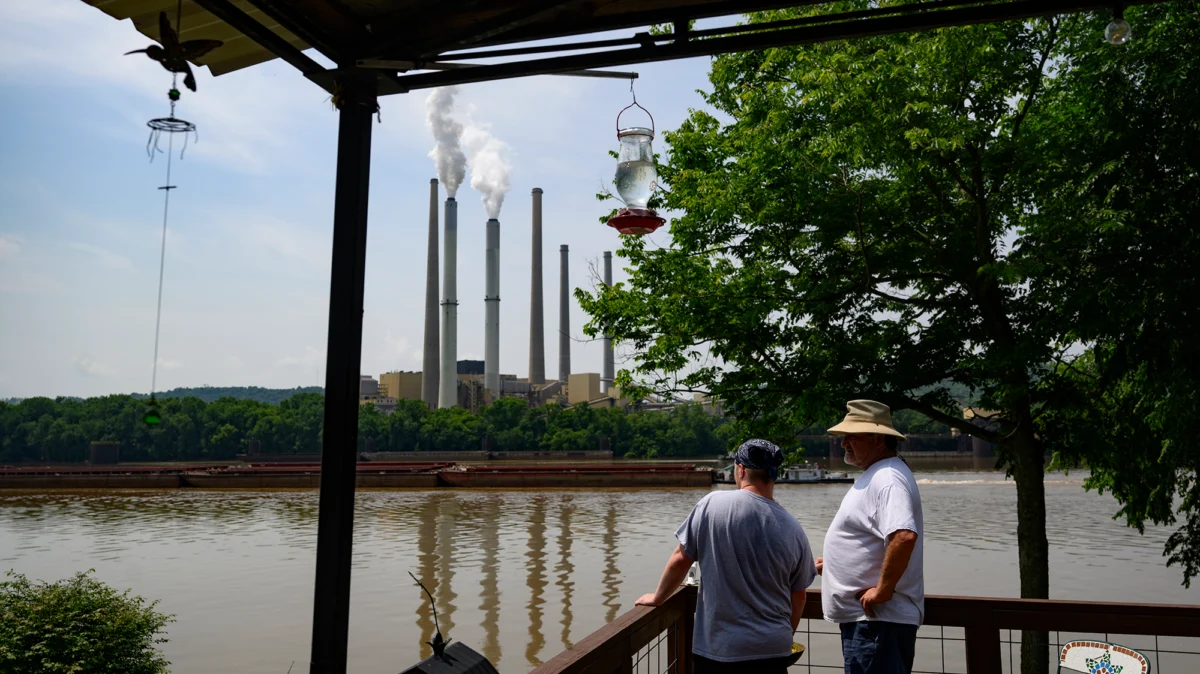
However, this growth is inextricably linked to fossil fuel reliance. Many of these data centers are not plugging into existing green grids; they are building private, gas-powered microgrids to avoid the volatility and regulation of the public utility system. Because these plants are often permitted as “minor sources” of pollution, they currently bypass the most intense levels of federal scrutiny.
Legal experts point out that the administrative burden of these permits is relatively low compared to the economic benefit of the AI infrastructure, suggesting that the drive to remove public input is less about administrative efficiency and more about eliminating the “bottleneck” of local dissent.
The View from the States: A Patchwork of Oversight
The impact of this rule change will not be uniform across the country. Instead, it will exacerbate existing disparities in environmental governance.
The Georgia Example
In Georgia, the Southern Environmental Law Center (SELC) has utilized existing, relatively robust public participation rules to hold developers accountable. Keri Powell, an attorney with the SELC, notes that her organization has frequently used public air permit applications as a "canary in the coal mine" to identify potential environmental violations before construction is finalized. If the EPA removes the federal requirement for notice, the SELC and similar groups could be effectively blinded to pending projects until after the heavy machinery has already arrived.
The Texas Precedent
Texas is often cited by environmentalists as a cautionary tale. The state’s current regulatory environment, which provides minimal opportunity for public input on minor source permitting, has led to a proliferation of gas-fired power infrastructure that has caught many residents by surprise. In several instances, residents in North Texas woke up to find massive diesel and gas engine arrays being installed in their vicinity without ever having received a formal public notification or an opportunity to comment on local air quality degradation.
The Kentucky Dilemma
In Kentucky, state agencies have historically maintained an informal commitment to high levels of public engagement, even when federal requirements were lax. However, legal advocates like Byron Gary of the Kentucky Resources Council warn that these commitments are brittle. "Who knows if the next administration, or even the next shift in political priorities, would actually keep these standards in place?" Gary asks. The proposed EPA rule effectively makes transparency a voluntary, rather than mandatory, feature of state governance.
Official Responses and the "AI Capital" Strategy
The EPA, for its part, maintains that the rule change is a necessary update to modernize the permitting process. An agency spokesperson noted that the rule would put state and local agencies—which are "most familiar with local issues"—in the driver’s seat. The agency emphasized that the proposed change does not alter the actual emission standards, framing the issue purely as one of administrative process.
Furthermore, the EPA has explicitly linked this deregulation to the administration’s goal of making the United States the "AI capital of the world." The implication is clear: to win the global race for artificial intelligence, the U.S. must prioritize the rapid, friction-free deployment of energy infrastructure, even if it means narrowing the scope of public involvement.
Implications: The Democratic Deficit
The implications of this rule are profound. By removing the federal mandate for transparency, the administration is essentially outsourcing the environmental cost of the AI revolution to local municipalities that may lack the resources, legal standing, or political willpower to challenge massive tech corporations.
Vanessa Lynch, an organizer with Moms Clean Air Force, articulated the core fear of the advocacy community during the July hearing: "People want to have a say." As the physical footprint of the digital economy grows, the mechanisms for public oversight are being systematically dismantled.
The battle over this EPA rule is not merely about air permits; it is about the right of local communities to dictate the terms of their own environment. As the administration moves forward, the divide between the push for rapid technological acceleration and the desire for local, democratic control over land and air quality will likely define the political landscape for the remainder of the decade. If the rule is finalized, it will mark a significant shift in the balance of power, favoring corporate speed over the foundational American principle of public participation.
About the Author