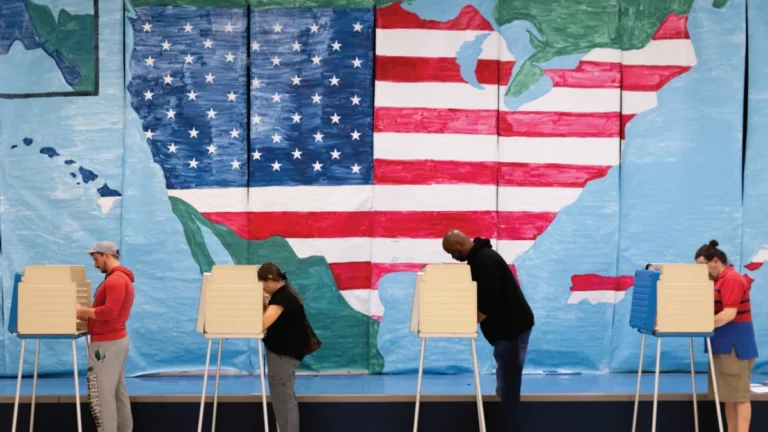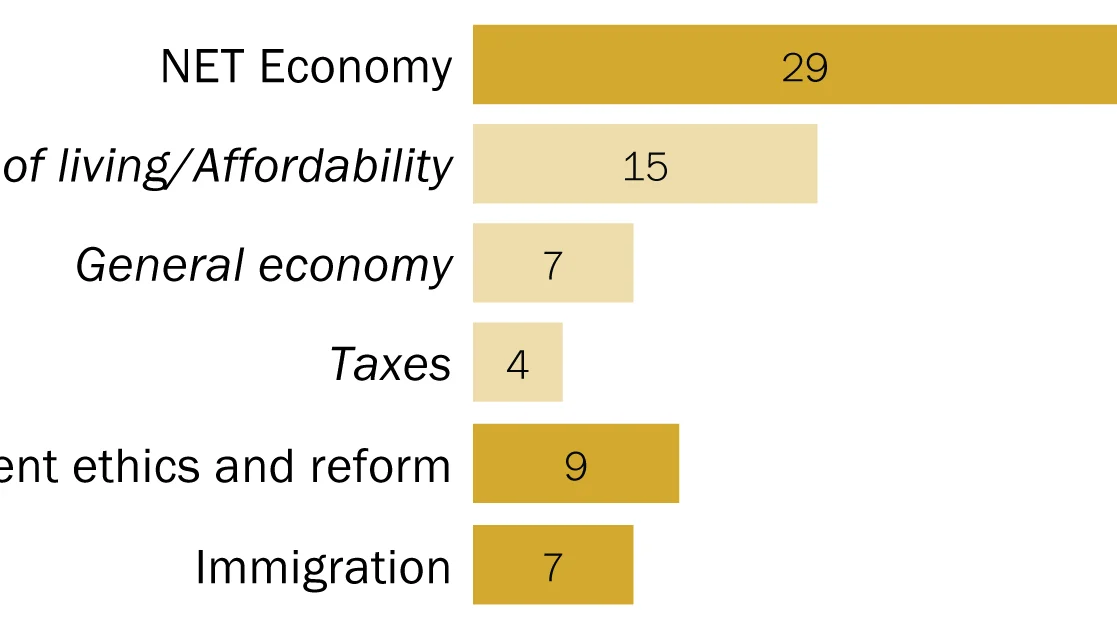
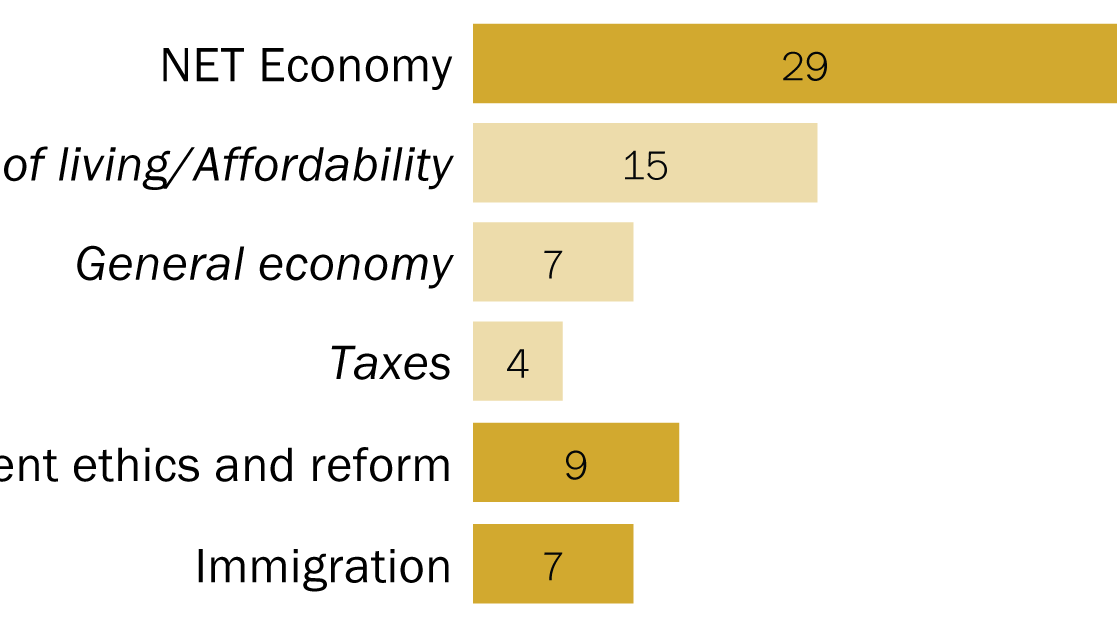
In an era defined by rapid political shifts and increasingly polarized public discourse, the necessity for high-fidelity data has never been more critical. As stakeholders—ranging from policymakers to academic researchers—rely on public opinion polling to gauge the pulse of the American electorate, the methodology behind such findings often determines the validity of the conclusions drawn. This report examines the rigorous procedural framework of Wave 196 of the American Trends Panel (ATP), conducted by the Pew Research Center in July 2026. By dissecting the survey’s architecture, we gain insight into how modern social science navigates the challenges of representative sampling, respondent engagement, and statistical precision.
The Architecture of Representative Data: Main Facts
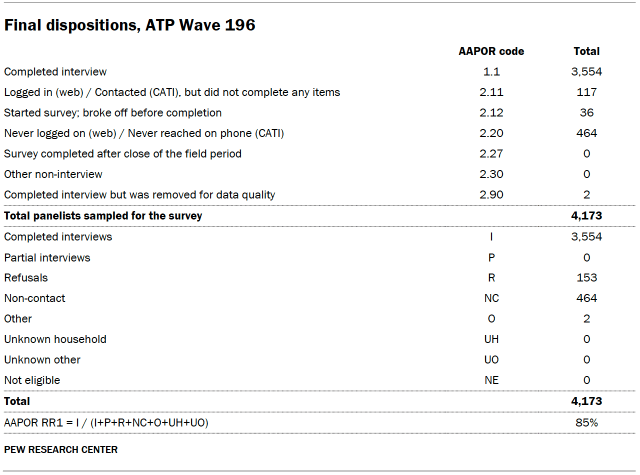
Wave 196 of the American Trends Panel serves as a gold-standard case study in survey methodology. Conducted from July 6 to July 12, 2026, the survey engaged a total of 3,554 panelists from a representative pool of 4,173 sampled U.S. adults. This resulted in an impressive survey-level response rate of 85%, a metric that underscores the efficacy of Pew’s long-term engagement strategy.
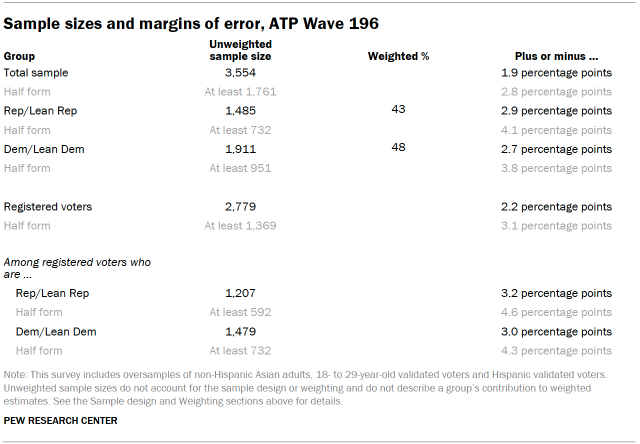
To ensure the survey captured the nuances of the American experience, the researchers employed a stratified random sampling approach. Crucially, the study utilized oversampling for specific demographic segments—namely non-Hispanic Asian adults, as well as Hispanic and 18- to 29-year-old validated voters. By intentionally increasing the sample size of these cohorts, researchers were able to provide more granular, accurate estimates of their experiences, which were subsequently weighted to align with their true proportions in the broader population. The margin of sampling error for the full sample stands at a robust plus or minus 1.9 percentage points, a figure that provides high confidence in the resulting data.
A Chronological Breakdown of the Field Period
The precision of a survey is often won or lost in the execution of its data collection protocol. For Wave 196, the timeline was structured to maximize accessibility while minimizing selection bias.
Pre-Field Preparation
Before the survey launched, the groundwork was laid through both logistical preparation and technical verification. For phone-based participants, prenotification postcards were dispatched on July 2. Concurrently, the technical infrastructure—comprising web interfaces for PC and mobile users—underwent rigorous quality assurance testing by the SSRS project team. This included the population of test data analyzed in SPSS to ensure that branching logic, randomization, and survey flow were operating flawlessly.
The Launch Phase
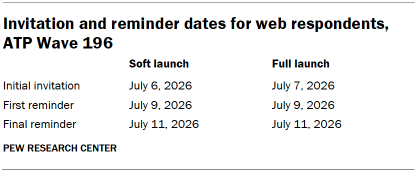
The data collection period officially commenced on July 6, 2026. A "soft launch" strategy was employed to stress-test the live environment. For web respondents, this involved 60 panelists; for phone respondents, the process continued until three successful interviews were completed. This soft launch serves as a critical fail-safe, allowing researchers to identify and resolve any unanticipated technical glitches before the full-scale deployment.
Full-Scale Execution
On July 7, the full launch began, with invitations disseminated to the remaining English- and Spanish-speaking panelists. Throughout the subsequent days, the research team maintained a persistent but measured follow-up protocol. Online participants received email invitations accompanied by up to two reminders; those who consented to SMS communication received similar digital prompts. Phone participants were managed by professional SSRS interviewers, who were authorized to make up to six call attempts to ensure that the voice of the respondent was captured. By the close of the window on July 12, the project had achieved a comprehensive dataset that reflected both the breadth and depth of the target population.
Supporting Data and Technical Integrity
The validity of survey results is inextricably linked to the quality of the raw data. To protect the integrity of the findings, Pew Research Center implemented strict quality control measures to filter out "satisficing"—a phenomenon where respondents provide perfunctory answers to finish the survey quickly.
Researchers monitored for patterns such as rapid completion times, high rates of skipped questions, or "straight-lining" (selecting the same response for every item). As a direct result of these audits, two respondents were disqualified and removed from the final dataset before the weighting process began.
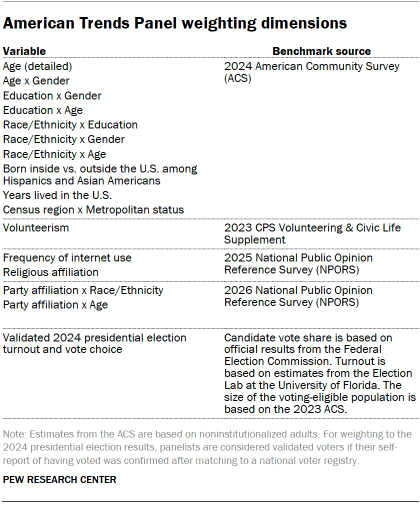
The weighting procedure itself is a multi-stage, sophisticated exercise. It begins with a "base weight" reflecting the probability of a participant being recruited into the panel. These weights are then calibrated against population benchmarks to correct for nonresponse and attrition. Finally, the weights are trimmed at the 1st and 99th percentiles, a mathematical safeguard against the potential for extreme outliers to skew the overall results. This meticulous attention to statistical weight ensures that the final dataset is not merely a collection of voices, but a calibrated mirror of the American public.
Official Responses and Strategic Recruitment
Since its inception, the American Trends Panel has evolved to meet the changing landscape of digital communication. The move in 2018 toward Address-Based Sampling (ABS) represents a significant pivot in strategy. By utilizing the U.S. Postal Service’s Computerized Delivery Sequence File—which covers up to 98% of the U.S. population—Pew has transitioned from relying on traditional random-digit dialing to a more stable, household-based recruitment model.
The recruitment philosophy is built on sustainability. By recruiting new members approximately once per year and incorporating targeted oversampling—such as the inclusion of Black and Hispanic adults in previous years—the Center ensures that the panel remains representative of the country’s demographic evolution.
Furthermore, the incentive structure is designed to mitigate the "participation tax" that often prevents lower-income or harder-to-reach groups from engaging in research. By offering tiered post-paid incentives ranging from $5 to $15—payable via check or major retail gift codes—the researchers incentivize participation across the socioeconomic spectrum. This ensures that the panel does not inadvertently become an echo chamber of those with the most leisure time, but rather a cross-section of the diverse American workforce.
Implications for Public Opinion Research
The methodology of Wave 196 carries significant implications for the future of democratic engagement and policy analysis. As the public grows increasingly wary of the "hidden biases" in polling, the transparency demonstrated by the American Trends Panel serves as a benchmark for the industry.
The Role of Transparency
By detailing the exact mechanisms of recruitment, the logic of the weighting algorithms, and the specific thresholds for data quality, the research team builds trust. In a climate where misinformation is rampant, the ability for the public and academic peers to audit the methodology of a survey is not just a courtesy—it is a foundational requirement of scientific integrity.
Addressing Demographic Complexity
The deliberate decision to oversample specific subgroups acknowledges a fundamental reality: standard random sampling often fails to capture the voices of minority communities with sufficient depth to allow for meaningful analysis. By investing the extra resources required to oversample these populations, Pew provides a clearer, more accurate portrait of the American electorate, allowing for more nuanced debates on policies that disproportionately affect these groups.
A Look Ahead
As we look toward the future of public opinion research, the lessons from Wave 196 are clear: technology, while powerful, is only as effective as the human oversight governing it. The combination of ABS recruitment, multi-modal engagement (SMS, email, and live phone), and rigorous post-collection weighting represents the "state of the art" in social research.
Ultimately, the goal of such an exhaustive process is to provide a reliable baseline for understanding the American experience. As the nation faces complex challenges—from economic shifts to electoral reform—the data produced by this methodology acts as an essential tool for navigating the uncertainty of the future. When research is grounded in such a robust framework, it does more than just report numbers; it provides a credible, empirical foundation upon which the democratic conversation can proceed.
About the Author