Introduction
The landscape of American media is currently defined by two simultaneous and converging trends: an intensifying conflict between the executive branch and traditional journalistic institutions, and a rapid, structural transformation in how citizens consume information. As the White House adopts an increasingly aggressive posture toward news outlets—most notably evidenced by recent legal threats against Politico—the public’s relationship with news platforms continues to migrate toward decentralized, digital-first, and influencer-led ecosystems. This report explores the collision of these two realities, analyzing the legal skirmishes in Washington and the data-driven evolution of the American news consumer.
The Main Facts: A Confrontation Over Accuracy and Authority
The most significant development this week involves a high-stakes standoff between the White House and Politico. Following a report by the outlet that suggested President Donald Trump was weighing the replacement of Chief of Staff Susie Wiles—a claim the President dismissed as "fake news"—the White House Counsel’s office issued a formal demand for retraction.
In a letter penned by White House Counsel Will Scharf, the administration asserted that "freedom of the press is not a professional exemption from accountability." The document served as a stern warning: failure to retract or correct the reporting could lead to formal legal action. This escalation follows a series of punitive measures taken by the administration, including the banning of three major news organizations from White House access last month. These bans have already triggered litigation from affected outlets, setting the stage for a protracted constitutional battle regarding the boundaries of executive power and the role of the press in a digital age.
Chronology of the Conflict
To understand the current impasse, it is necessary to map the timeline of recent frictions:
- Late September 2026: Tensions reach a boiling point as the White House revokes credentials for several news outlets, citing dissatisfaction with coverage. This move immediately sparks legal pushback from media organizations, who argue the ban violates the First Amendment.
- Mid-October 2026: Politico publishes a story alleging that internal discussions are underway within the administration regarding the potential ousting of Chief of Staff Susie Wiles.
- October 20, 2026: President Trump publicly denounces the Politico report as "fake news," signaling a hardening stance against the outlet.
- October 21, 2026: White House Counsel Will Scharf sends a formal letter to Politico, demanding a retraction and threatening legal consequences if the administration’s demands are not met.
- October 22, 2026: Axios breaks the story of the letter, confirming the administration’s formalization of its battle against specific journalistic reporting.
Supporting Data: The Public’s View on Press Limits
While the administration argues for accountability, the American public remains divided on the extent to which the government should intervene in the editorial processes of the media. According to a recent study by the Pew Research Center, facilitated through the Pew-Knight Initiative, there is a clear distinction in how Americans weigh government intervention:
- The Threshold of "False Information": A slight majority of U.S. adults (51%) believe the government should have the authority to force a news organization to retract or remove a story if it contains proven false information.
- Partisan Bias: Only 14% of Americans believe the government should be able to intervene if a story exhibits clear political bias.
- Critical Coverage: The appetite for state intervention drops to its lowest point when the news is merely critical of the government, with only 10% of Americans supporting the government’s power to force a takedown in such cases.
These figures suggest that while the public desires accuracy, there is a deep-seated resistance to government overreach when it comes to the suppression of critical or biased reporting.
Digital Evolution: Where Americans Get Their News
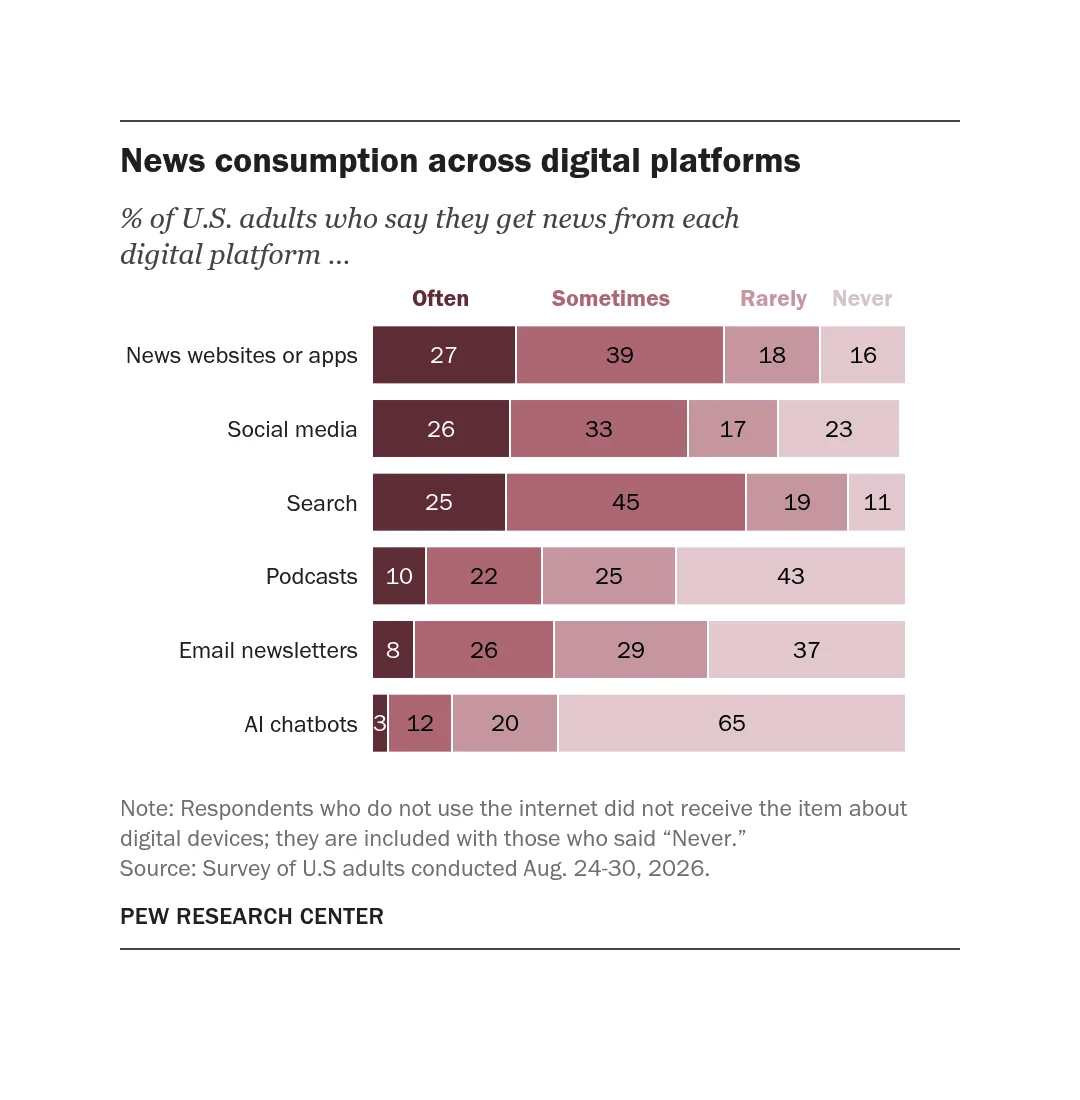
The conflict between the White House and the press is unfolding against a backdrop of rapidly changing media consumption habits. New data from the Pew Research Center’s August 2026 survey highlights a significant migration away from traditional platforms:
The Dominance of Digital Pathways
Americans are increasingly turning to digital ecosystems for their news. Search engines remain a primary gateway, with 70% of U.S. adults reporting they use them to find news at least "sometimes." News websites and apps are similarly popular, with 66% utilizing these platforms.
The Rise of the "News Influencer"
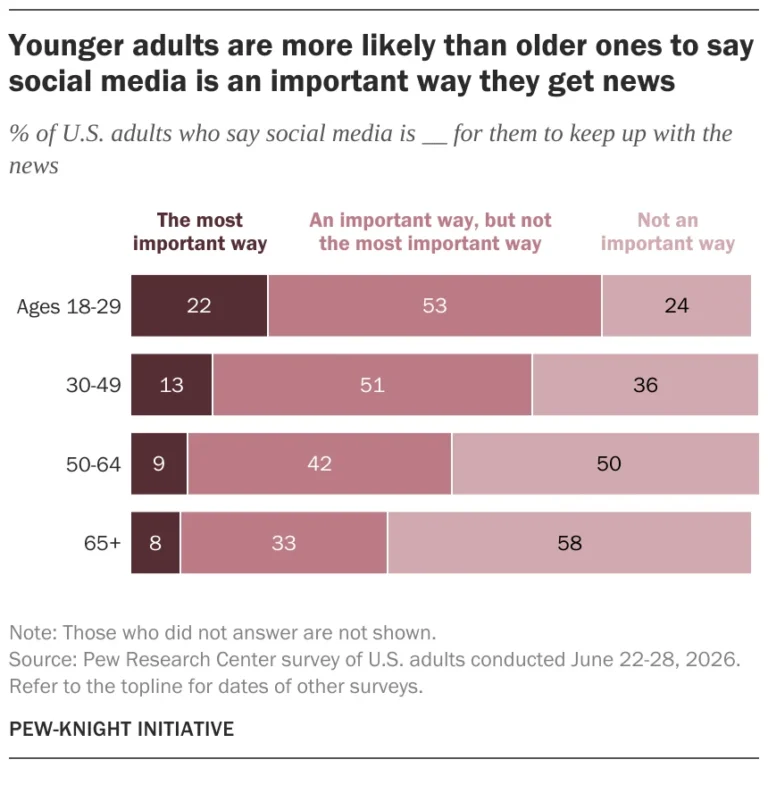
Perhaps the most disruptive change is the role of the individual content creator. Roughly one-in-five U.S. adults (21%) now regularly consume news from influencers on social media. This trend is even more pronounced among younger demographics, with 38% of adults under 30 relying on these figures. This trend has not gone unnoticed by legacy media; C-SPAN’s recent decision to integrate YouTube-based creators like The Young Turks and PBD Podcast into their election night coverage demonstrates an attempt to bridge the gap between traditional broadcast journalism and the influencer economy.

The Emerging Role of AI
Artificial Intelligence is no longer a peripheral technology; it is becoming an active participant in information gathering. While currently used by a smaller segment of the population, the use of AI chatbots like ChatGPT and Google Gemini for news consumption rose from 9% in 2025 to 15% in 2026. This trajectory indicates that as AI becomes more integrated into daily search behaviors, the vetting of AI-generated news will become a central challenge for media literacy.
Official Responses and Perspectives
The White House perspective, as articulated by Counsel Will Scharf, rests on the premise that media organizations have grown reckless in their pursuit of headlines, suggesting that legal threats are a necessary corrective tool for "journalistic malpractice."
Conversely, the media industry views these threats as an existential danger. By targeting outlets with both access bans and legal intimidation, critics argue the administration is attempting to construct a "state-friendly" media environment, effectively bypassing traditional, independent fact-checking mechanisms. The litigation currently underway serves as the legal front of this war, with news organizations arguing that the First Amendment does not merely protect against censorship, but also ensures the "right of access" to public proceedings.
Implications: A New Media Era
The implications of this clash are profound and suggest a permanent alteration to the American political and media landscape.
The Fragility of Access
The banning of news outlets creates a precedent where "the press" is no longer a monolith, but a selective category defined by the administration’s preference. If the courts uphold the government’s right to ban specific outlets, the tradition of the "White House Press Corps" as a neutral, representative body will effectively collapse.
The Decentralization of Truth
As more Americans turn to influencers and social media for their news, the capacity for the government to "control the narrative" through traditional press briefings diminishes. However, this shift creates a new danger: the proliferation of echo chambers. Influencers often bring distinct political perspectives—as noted in the 2024 Pew study—which means the average citizen is increasingly likely to consume news that confirms their pre-existing biases rather than challenging them.
The AI-Driven Future
The rise of AI as a news source presents a unique regulatory and ethical hurdle. If AI platforms become the primary interface through which citizens interact with current events, the developers of these platforms will hold immense, often invisible, power over public discourse. As the August 2026 data shows, this shift is already underway, and the speed of adoption is outpacing current regulatory frameworks.
Conclusion
The ongoing standoff between the White House and the media is a microcosm of a broader crisis of authority. On one side, an administration seeks to exert control over the information narrative, citing the need for accountability. On the other, the traditional press fights for its role as a watchdog in an increasingly hostile environment. Meanwhile, the American public is moving toward a more decentralized, algorithmic, and influencer-led future.
The coming months will be decisive. Whether through the courts, where the battles over access will be decided, or through the marketplace, where the public will decide which sources of information they trust, the landscape of American news is undergoing a transformation that will resonate for years to come. The era of the centralized, institutional news model is fading, replaced by a complex, digital-first environment that is both more accessible and more contentious than ever before.
About the Author