The digital marketplace has undergone a seismic shift over the past decade, moving away from traditional brick-and-mortar inventory management toward lean, agile fulfillment strategies. At the forefront of this transformation is the dropshipping business model. By decoupling the act of selling from the act of physical storage and logistics, entrepreneurs have found a low-barrier path to entering the global e-commerce arena.
For the modern small business owner, the appeal is clear: expand product selections and scale revenue without the crushing overhead costs of warehousing or the risks associated with stagnant inventory.
What is Dropshipping? The Mechanics of Modern Retail
At its core, dropshipping is an e-commerce fulfillment method that shifts the burden of inventory management away from the retailer. In a conventional retail setup, a business owner purchases stock in bulk, stores it in a warehouse or storefront, and ships items manually once a customer makes a purchase.
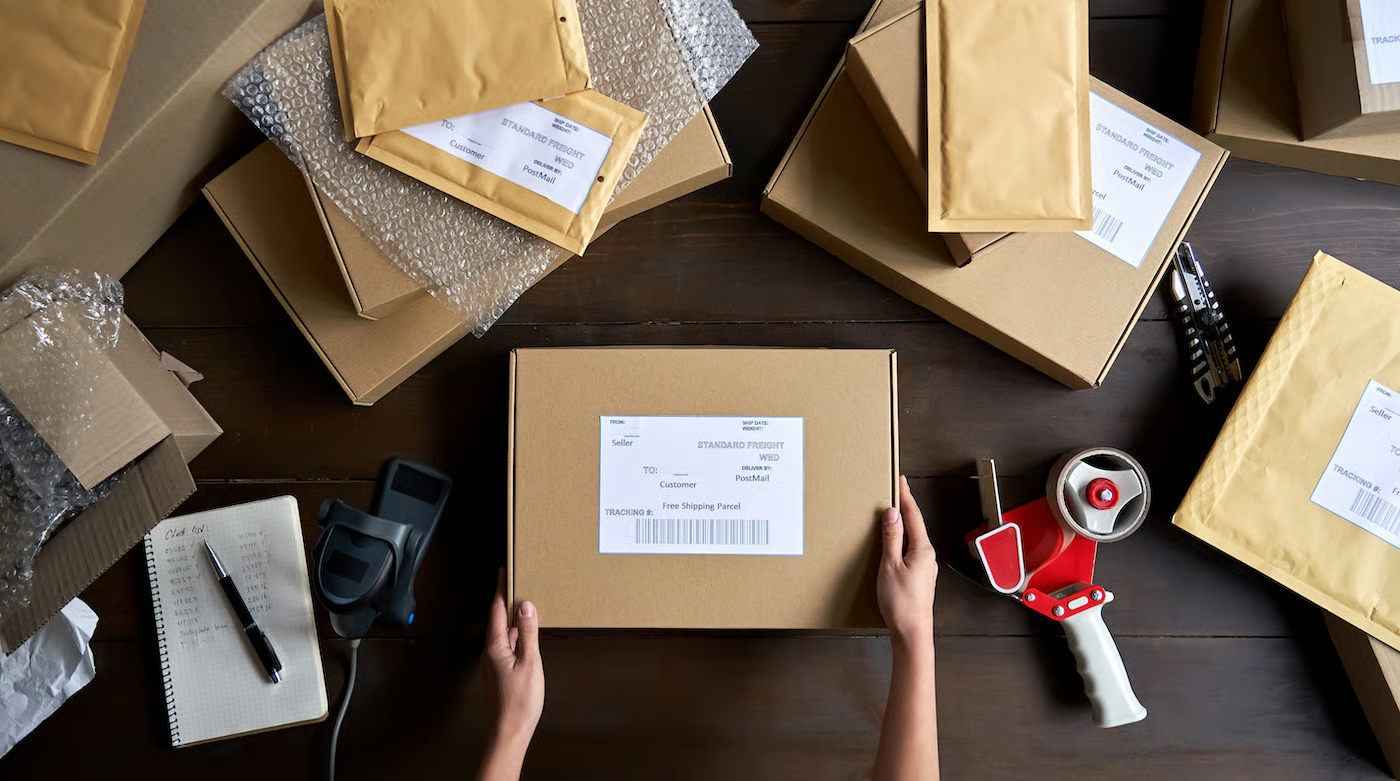
In the dropshipping model, the retailer acts as a digital storefront. When a customer places an order, the retailer forwards the order details to a third-party supplier—typically a manufacturer or wholesaler—who then picks, packs, and ships the product directly to the customer’s doorstep.
The Division of Labor
The success of this model relies on a clear demarcation of responsibilities:
- The Retailer: Responsible for brand identity, product curation, marketing, and customer service. They are the "face" of the transaction.
- The Supplier: Responsible for maintaining physical inventory, quality control, and the logistics of fulfillment.
Crucially, the end consumer often remains unaware that the logistics have been outsourced. For the retailer, this means the ability to pivot product lines rapidly based on market trends without the financial risk of liquidating unsold inventory.
Chronology: The Evolution of the Dropshipping Model
The rise of dropshipping was not an overnight phenomenon; it is the product of decades of technological advancement in global logistics and web connectivity.
- 1990s – The Emergence: With the birth of the commercial internet, early catalog retailers began experimenting with "drop shipment" agreements to reach wider audiences.
- 2000s – The Wholesale Directory Era: As platforms like eBay grew, wholesalers began creating digital directories. Entrepreneurs started using these databases to bridge the gap between low-cost manufacturing hubs and western consumers.
- 2010s – The SaaS Boom: The introduction of user-friendly platforms like Shopify and WooCommerce democratized the ability to build an online store. Coupled with the rise of AliExpress, it became possible for a single individual to launch a global retail operation in a matter of hours.
- 2020s – The Optimization Phase: Today, the model is shifting toward higher-quality branding and faster shipping times. Retailers are moving away from "generic" dropshipping toward private-label partnerships with domestic suppliers, focusing on customer retention rather than one-off impulse buys.
Supporting Data: The Growth Trajectory
The economic implications of this model are reflected in the explosive growth of the sector. Market analysts have consistently tracked the rapid expansion of dropshipping, noting that it is no longer a "niche" strategy but a mainstream component of the retail economy.
According to data from market research firms, the global dropshipping market was valued in the billions in 2021 and is forecasted to grow at a Compound Annual Growth Rate (CAGR) of more than 27% through 2027. This growth is driven by:
- Lower Entry Barriers: The reduction of upfront capital requirements allows more diverse entrepreneurs to enter the market.
- Increased Smartphone Penetration: As global consumers increasingly shop via mobile devices, the demand for high-variety, fast-turnover products has spiked.
- Cross-Border E-commerce: Improvements in international logistics and digital payment gateways have made it seamless for a small business in one country to serve customers across the globe.
Essential Infrastructure for Success
Launching a dropshipping venture requires more than just a good idea; it requires a robust digital architecture. The three pillars of a successful dropshipping business are the supply chain, the storefront, and the marketing engine.
1. Selecting the Right Supplier
The supplier is the lifeblood of the dropshipping operation.
- AliExpress vs. Private Wholesalers: AliExpress remains the industry standard for beginners due to its massive catalog and lack of minimum order quantities (MOQs). However, the long shipping times associated with overseas fulfillment can damage brand reputation.
- The Rise of Domestic Sourcing: To combat shipping latency, many retailers are pivoting to US or EU-based wholesalers. While the product costs may be higher, the value proposition of 3-to-5-day shipping is a significant competitive advantage in a market dominated by "Amazon-style" expectations.
2. E-Commerce Platforms
- Shopify: Favored for its all-in-one ecosystem. Its integrated apps allow for one-click product imports from suppliers and automated order routing.
- WooCommerce: Ideal for those who prioritize control and ownership. Because it is a plugin for WordPress, it offers greater flexibility for content-heavy sites that rely on SEO to drive traffic.
3. The Marketing Engine
In a dropshipping model, you are competing against thousands of other retailers who may be selling the exact same product. Your success hinges on brand differentiation.
- CRM and Email Marketing: Tools like HubSpot and Mailchimp are critical for transforming one-time buyers into loyal customers.
- Social Media Management: Given that most dropshipping products are impulse-driven, platforms like TikTok and Instagram are essential. Tools such as Buffer and Hootsuite allow businesses to maintain a consistent posting cadence across multiple channels.
- SEO Optimization: For long-term viability, relying solely on paid ads is risky. Utilizing Ahrefs or SEMRush to capture organic search traffic ensures the business remains sustainable even if ad costs fluctuate.
Official Perspectives and Industry Implications
Industry experts often debate the sustainability of the "low-effort" dropshipping model. While the model is highly effective for testing products, major industry players warn that the "get rich quick" narrative surrounding dropshipping is misleading.
"The future of dropshipping is not in arbitrage—it’s in curation," says one e-commerce consultant. "Retailers who act as mere middlemen will eventually be squeezed out by lower prices or better logistics. The retailers who win are those who build a brand, curate a niche, and provide genuine value through content and customer support."
The Challenges
It would be remiss to overlook the inherent risks:
- Quality Control: Since you never see the product, you are at the mercy of the supplier. A faulty batch can lead to a surge in refunds and negative reviews.
- Shipping Complexity: Coordinating with multiple suppliers can lead to "split shipments," where a customer receives three different packages for one order, complicating the unboxing experience.
- Tight Margins: Because the model is accessible to everyone, competition is fierce, often leading to a "race to the bottom" in pricing.
Conclusion: Is Dropshipping Right for You?
The dropshipping landscape is evolving from a chaotic "wild west" into a professionalized retail discipline. For the aspiring entrepreneur, it offers a low-risk environment to learn the fundamentals of supply chain management, customer acquisition, and digital marketing.
However, success in this space requires moving beyond the initial setup. It demands a commitment to high-quality branding, proactive customer service, and strategic supplier partnerships. As the market continues to grow by over 27% annually, the opportunity for those who treat dropshipping as a business—rather than a passive income scheme—remains immense. Whether you are looking to test a new product line or launch a full-scale digital boutique, the tools for success are more accessible today than at any point in history.
About the Author