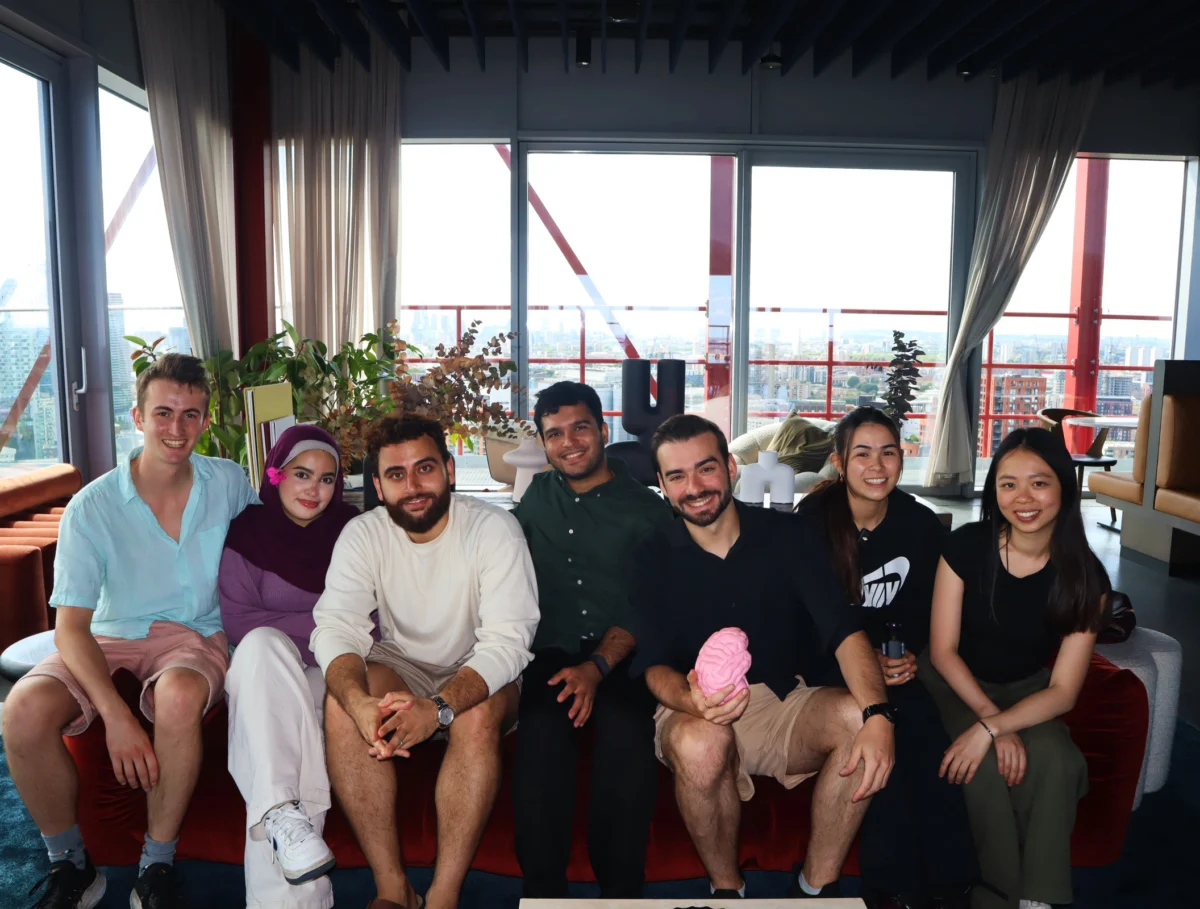
In the high-stakes world of global technology, the “hacker house” has long been synonymous with a specific, frenetic archetype: a cramped, caffeine-fueled warehouse where teams code for 72 hours straight, fueled by the singular, desperate hope of a Demo Day miracle. It is a culture birthed in the crucible of San Francisco—performative, exhausting, and often unsustainable.
However, a new experiment unfolding in an East London waterfront development is challenging this orthodoxy. Six founders have established what they call the "Lift House," a co-living space designed as the antithesis to the Silicon Valley grind. Their objective is not to sprint toward an exit, but to cultivate a “holistic improvement in life.” As 26-year-old founder Rowan Aldean puts it, the mission is to build substantial companies without the “song and dance” of traditional hustle culture.
The Architecture of Balance: What is Lift House?
The London Island Founder House, affectionately dubbed “Lift House,” is a six-story residence that serves as both a private home and a collaborative workspace. Since its launch in March 2026, the house has become a focal point for a growing movement in the U.K. tech scene known as “Londonmaxxing”—a philosophy that encourages founders to optimize their lives, health, and professional output without sacrificing their humanity.
The name “Lift” carries a dual meaning: it refers to the literal elevator in the building, but more importantly, to the house’s mission to uplift tech founders. Unlike the dozens of ephemeral hacker houses scattered across the Bay Area, which often operate in legal gray areas, the Lift House is a deliberate, structured environment.
“I don’t expect the performative and over-the-top events will be a thing here,” says Aldean, who sold his previous AI venture for millions last year. He points to DeepMind, one of London’s most storied AI success stories, as the gold standard. “They’ve won Nobel prizes and built frontier innovation without any song and dance. That is the blueprint.”

A Chronology of the London Pivot
The emergence of Lift House marks a pivotal shift in the trajectory of the U.K. startup ecosystem.
- Early 2024: The "London Founder House" launches as the city’s first dedicated hacker residence. It famously prioritized a "no work-life balance" ethos and required residents to have raised at least $500,000. It served as a proof-of-concept for the city’s ability to house founders, though it ultimately shuttered a year later.
- March 2026: The Lift House officially opens its doors in East London, pivoting away from the aggressive, high-pressure models of its predecessors in favor of a wellness-centric, sustainable approach.
- May 2026: Rowan Aldean and his wife, Zahraa, a pharmaceutical research PhD candidate, move in, solidifying the house as a permanent base for their ongoing ventures.
- Summer 2026: The house establishes its routines—Sunday journals, Tuesday volleyball league games, and community-driven rooftop dinners—setting a new tone for the London tech scene.
Supporting Data: The AI Boom in the U.K.
The rise of the Lift House is not happening in a vacuum. It is occurring alongside a historic surge in investment within the U.K. capital. According to data from Dealroom, London AI startups have raised a staggering $12 billion in 2026 alone, accounting for the vast majority of the $14.7 billion raised by all London-based startups.
The landscape is dominated by heavy hitters—Wayve, Superintelligence, ElevenLabs, Recursive, Ineffable Intelligence, and Isomorphic Labs. Notably, three of these companies were founded by alumni of DeepMind, proving that the city’s ecosystem is maturing into a self-sustaining engine of innovation. This influx of capital has bolstered morale, giving younger founders the confidence to pursue "big swings" without feeling the need to migrate immediately to the United States.
The Daily Grind: Journaling vs. Hustle
The residents of Lift House operate on a schedule that would be viewed with skepticism in a typical San Francisco incubator. While they are deeply ambitious, their methods are rooted in cognitive optimization.
David Amor, a 28-year-old resident who runs a brain coaching startup, introduced the practice of mandatory Sunday journaling. The goal is to quantify personal health metrics—time spent in nature, sleep quality, and nutritional intake—as rigorously as they track their startup’s Key Performance Indicators (KPIs).

“I’m eating healthier, working out more, and sleeping more,” notes Luke, a 27-year-old founder of an AI-marketing firm. “I always make sure to have lunch now, which is something simple, but I wasn’t doing before I lived here.”
The workday structure is equally personalized. Amor begins his day with a 30-second transition from sleep to work, followed by a cold shower to trigger a dopamine spike. Conversely, Aldean often waits until 10 a.m. to start his day, prioritizing high-value investor calls over the performative "early riser" culture that dominates tech folklore.
The "Tall Poppy" and the Cultural Divide
The founders at Lift House are acutely aware of the differences between the U.S. and U.K. markets. Aldean notes that British founders face a unique set of challenges, specifically the “tall poppy syndrome”—a cultural inclination to build someone up, only to ruthlessly tear them down if they become too successful.
This leads to a more reserved, humble approach to business. "There’s nothing like, ‘Oh my god, did you hear the CTO did this?’" Aldean explains, contrasting the gossip-heavy, cutthroat atmosphere of the Valley with the more professional, albeit cautious, London scene.
Furthermore, the U.K. provides distinct structural advantages. The government’s SEIS/EIS tax schemes provide a lifeline for early-stage startups, allowing them to secure funding from angel investors who are incentivized by significant tax breaks. For founders like Luke and his co-founder Varun, this meant they could bootstrap their early operations without surrendering equity to venture capital firms prematurely.

Implications: The Inevitable Tug of America
Despite the deliberate attempt to create a "Londonmaxxing" paradise, the gravitational pull of the United States remains an existential reality. Most U.K. startups eventually reach a crossroads: stay in the familiar, supportive, and balanced ecosystem of London, or move to the U.S. to access the world’s largest economy and the deepest pool of growth capital.
“It’s almost like a factory line,” says Varun. “You start here, and then you expand there, or vice versa.”
The Lift House residents have already begun their U.S. expansion, with investors from cities like Miami explicitly conditioning their funding on a relocation. This creates a tension that is currently bubbling beneath the surface of the entire European tech ecosystem. While founders are bullish on London, the "success" of a company often requires leaving the very city that helped build it.
Conclusion: Building Something That Lasts
As the Lift House approaches the end of its first year, its future remains a point of speculation. Will it continue to be a sanctuary of balance, or will it be forced to evolve as its residents inevitably pursue the hyper-growth requirements of the global market?
For now, the house stands as a symbol of defiance against the "burnout and flash" culture. Its founders are betting that by prioritizing health, community, and intellectual rigor, they can build companies that aren’t just successful, but durable.

“The culture is to build something that lasts,” Aldean concludes, “not necessarily burn out chasing a flash.” Whether or not that philosophy can survive the pressures of international scaling remains the ultimate question for the next generation of British tech entrepreneurs. Regardless of the outcome, the Lift House has already succeeded in proving one thing: in the modern tech world, you don’t necessarily have to be miserable to be a visionary.
About the Author