In the complex ecosystem of the North American trucking industry, financial performance is rarely a simple reflection of freight volumes alone. For North Liberty, Iowa-based truckload carrier Heartland Express (NASDAQ: HTLD), the second quarter of 2026 served as a masterclass in how strategic asset management can offset the headwinds of a cooling freight environment. While the company returned to profitability, a closer look at the balance sheet reveals that the turnaround was less about core operational growth and more about the calculated liquidation of underutilized equipment.
Main Facts: A Tale of Two Financial Realities
Heartland Express reported a net income of $10.6 million, or 14 cents per share, for the second quarter. On the surface, this represents a significant victory when contrasted with the net loss of 14 cents per share recorded during the same period in 2025. However, this headline figure masks a more sobering underlying reality: the return to the black was entirely attributable to a $22 million year-over-year surge in gains from the sale of equipment.
When adjusted for tax, these equipment sales provided a 22-cent-per-share tailwind. Without this one-time boost, the company’s financial performance would have remained firmly in the red.
Revenue for the quarter hit $184 million, marking a 13% decline year-over-year. When fuel surcharges—which act as a pass-through cost—are stripped away, the core revenue decline deepens to 18%. These figures highlight the persistent difficulty that even seasoned carriers face in maintaining top-line growth during periods of diminished market demand and downward pressure on spot rates.
Chronological Overview: Navigating the 2026 Freight Landscape
The path to this second-quarter result has been defined by a series of deliberate, if defensive, maneuvers by Heartland’s management team.
- Early 2026: As the national truckload market faced persistent capacity gluts and tepid demand, Heartland began identifying segments of its fleet that were either aging or failing to meet internal utilization thresholds.
- Q1 2026: The company prioritized liquidity and balance sheet strengthening, setting the stage for the asset disposal strategy that would come to fruition in the following months.
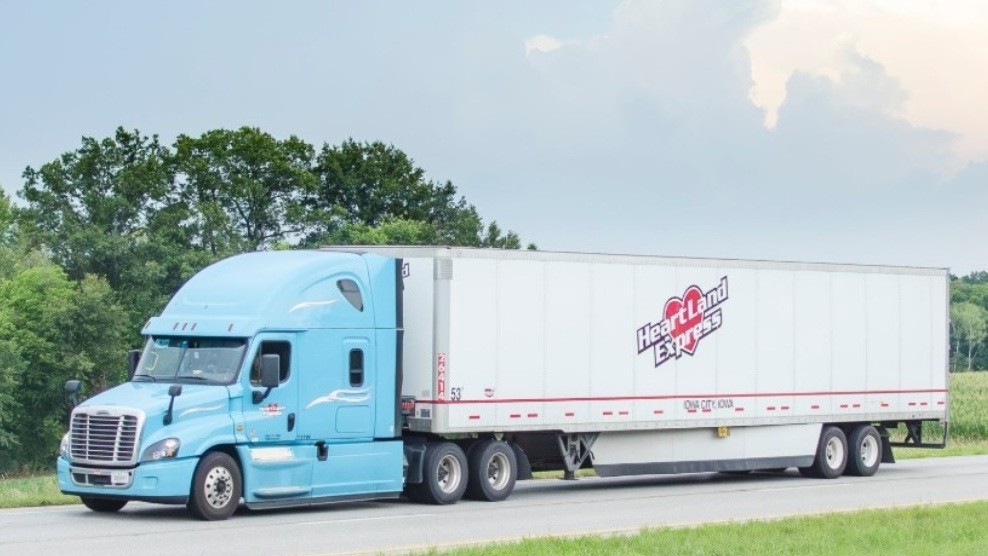
- Q2 2026 (The Reporting Period): Heartland aggressively accelerated the disposal of excess trailers. By taking advantage of specific windows of strength in the used equipment market, the carrier was able to generate the capital necessary to bridge the gap between operating losses and net profit.
- Post-Q2 Outlook: Looking ahead, Heartland has signaled that its fleet culling is not yet complete. The company confirmed in a recent press release that it expects to continue disposing of excess trailers as long as market conditions for used equipment remain favorable.
Supporting Data: Dissecting the Operational Ratio
The most revealing metric provided in the company’s financial disclosure is the discrepancy in its operating ratio (OR). Heartland reported an adjusted operating ratio of 88.3%. In the trucking industry, the OR is the primary indicator of efficiency; it is the inverse of the operating margin, meaning a lower number is better.
However, once the outsized gains from the sale of equipment are removed from the calculation, the company’s true operational efficiency is revealed: the OR would have sat at approximately 103%. An OR above 100% indicates that the company is spending more on operating expenses than it is generating in revenue from its core trucking services.
Despite this, the company has managed its cash flow with commendable discipline. Operating cash flows for the first half of the year reached $36 million, a testament to the company’s ability to generate cash even when operating margins are under pressure. Furthermore, Heartland reduced its net debt by $33 million during the period, bringing it down to $73 million. With $89 million available on an untapped revolving credit facility and full compliance with its financial covenants, the company maintains a robust liquidity position that allows it to weather the current industry cycle without immediate threat of insolvency.
Fleet modernization remains a secondary, yet notable, priority. The average tractor age has been reduced to 2.3 years, down from 2.6 years in the same period last year. This lower age profile suggests that while the company is disposing of older assets, it is simultaneously investing in a more fuel-efficient and maintenance-friendly fleet, which will likely pay dividends when the market eventually turns toward a recovery phase.
Official Responses and Strategic Philosophy
CEO Mike Gerdin provided a nuanced assessment of the results, attempting to balance the reality of the asset sales with an optimistic view of the underlying freight market.

"The improved financial results delivered reflect stronger freight volumes and improved customer pricing resulting from ongoing industry capacity reductions along with reduced operating costs and strategic disposals of under-utilized assets," Gerdin stated.
Gerdin’s comments highlight three pillars of the company’s current strategy:
- Capacity Consolidation: By reducing the total number of trailers, Heartland is effectively shrinking its footprint to match the current demand environment, a process that many carriers are undergoing to restore pricing power.
- Cost Rationalization: The reduction in operating costs is critical to lowering the "break-even" point for the company in an era of lower freight rates.
- Asset Arbitrage: By selling equipment that the market values more highly than the company’s own internal utility, Heartland is effectively reallocating capital into more efficient areas of the business.
Heartland Express maintains a unique stance in the industry by opting not to host quarterly earnings calls and choosing not to disclose granular operating metrics such as specific utilization rates or pricing indices. This transparency gap forces investors to rely heavily on the company’s regulatory filings and press releases, making the interpretation of their asset disposal strategy all the more vital.
Market Implications: The "Used Equipment" Tailwind
The broader implications of Heartland’s quarterly performance extend beyond the company itself. It serves as a cautionary tale for investors and analysts who might be misled by "net income" in the transportation sector. In the current economic climate, where core freight demand is volatile, asset sales have become a "hidden" lever for profitability.
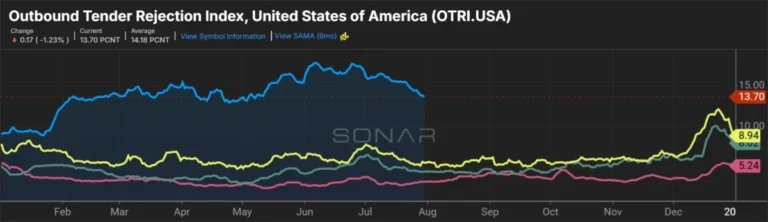
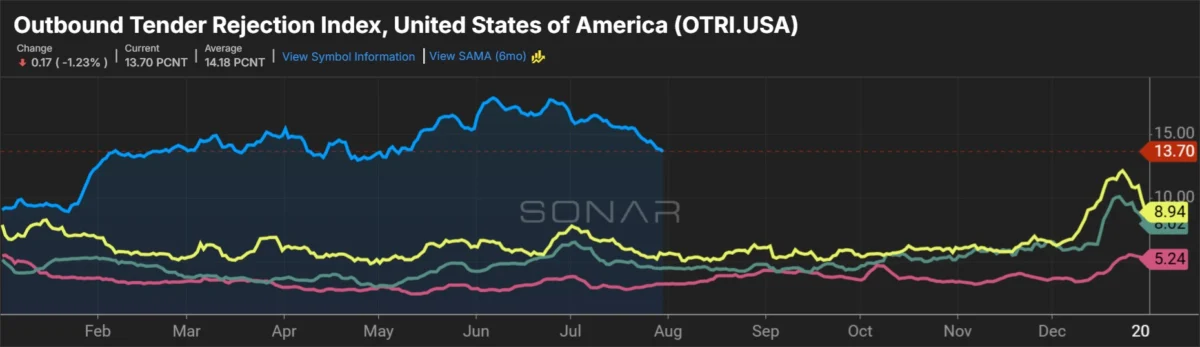
The use of the National Truckload Index (NTIL) and the Outbound Tender Rejection Index (OTRI) provided by platforms like SONAR suggests that the truckload market remains a "tight" environment. While spot rates have shown some resilience compared to the previous year, the volume of freight remains insufficient to drive organic profitability for many large carriers.

For the industry, the lesson is clear: balance sheet management is as important as freight procurement. Companies that possess significant, high-value assets—such as a modern fleet—have a unique "emergency brake" they can pull to generate liquidity. However, this is a finite strategy. Once the excess equipment is sold, the company must rely on its core ability to secure freight at profitable rates.
As Heartland looks to the remainder of 2026, the question for shareholders is whether the current market capacity reductions will lead to the "tighter" market conditions that CEO Mike Gerdin alluded to. If industry-wide capacity continues to exit the market, the remaining carriers, including Heartland, will be well-positioned to leverage their modernized fleets for higher margins.
Conclusion
Heartland Express’s second quarter of 2026 stands as a defining moment for the carrier. By successfully navigating the friction between declining revenue and necessary fleet optimization, the company has proven that it can remain profitable even during lean times. Yet, the reliance on a $22 million gain from asset sales highlights the structural challenges still facing the trucking sector.
Investors should view these results not as a sign of full-scale recovery, but as an indicator of a company that is expertly managing its transition through a difficult economic cycle. With a healthier debt profile and a younger, more efficient fleet, Heartland is clearly preparing for the eventual arrival of more favorable market conditions. Whether that recovery arrives in late 2026 or beyond, the company has successfully secured the runway needed to wait it out.
About the Author