While social media feeds have been inundated with videos of four-legged robots performing viral dance routines, backflips, and precision gymnastics, a quiet revolution has been taking place in the laboratories of Chinese robotics manufacturer Unitree. For years, the spectacle of a "dog-bot" breakdancing served as a proof-of-concept for balance, torque, and rapid-response sensory processing. However, as the novelty fades, the industry is pivoting toward utility.
Enter the Unitree Super Athlete AS2-W: a machine that swaps the choreography for the challenging, uneven, and unforgiving terrain of the real world. By leveraging the agility previously showcased in their entertainment-focused models, Unitree has effectively transformed the "dog-bot" from a novelty act into a specialized, industrial-grade pack mule designed for search, rescue, and logistics.
Main Facts: The Anatomy of the AS2-W
The AS2-W is not merely an iterative update to the company’s previous industrial inspection units; it is a fundamental rethinking of how a quadrupedal robot interacts with the environment. Weighing in at 25 kilograms (approximately 55 pounds) including its onboard battery, the AS2-W is engineered to be portable enough for a single operator to transport, yet robust enough to handle demanding field operations.
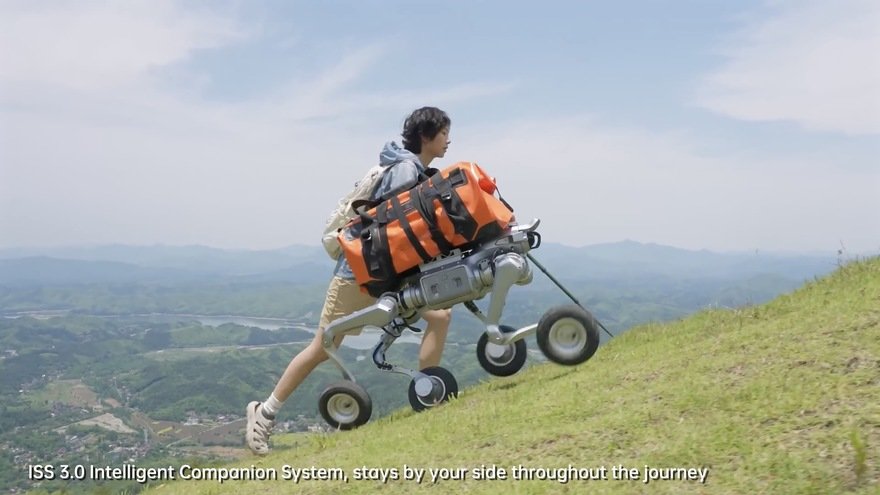
The machine’s primary value proposition lies in its payload capacity. Designed to act as an autonomous or semi-autonomous pack mule, it can carry an additional 16 kilograms (35.3 pounds) of gear, medical supplies, or specialized sensors across rugged terrain. This makes it an ideal candidate for search-and-rescue operations where human personnel might find the ground too unstable or dangerous to traverse.
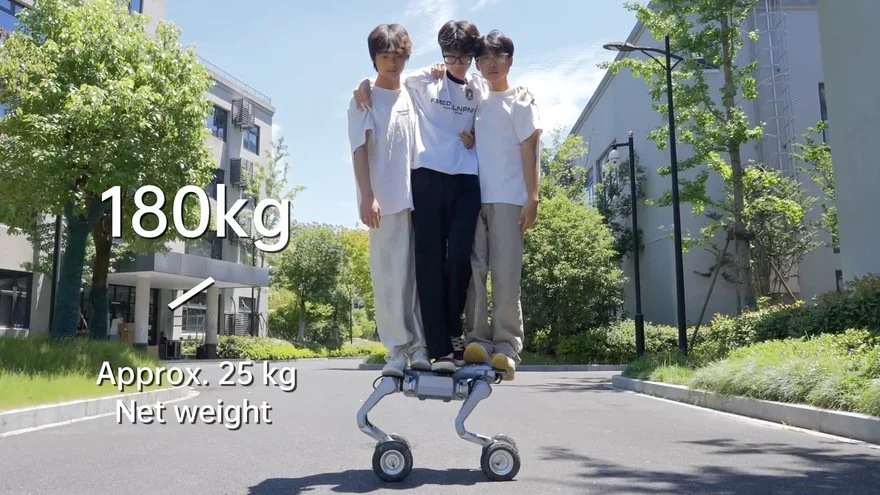
Perhaps most impressively, Unitree has highlighted the structural integrity of the chassis by demonstrating that the unit can withstand a static load of up to 180 kilograms (nearly 400 pounds). While the robot is not designed to move at full speed with such a heavy load, this capability speaks to the extreme durability of its mechanical joints and skeletal frame, suggesting it could potentially double as an improvised support structure or "robotic sawhorse" in emergency environments.
Chronology: From Viral Stunts to Industrial Utility
To understand the trajectory of the AS2-W, one must look back at Unitree’s rapid ascent in the robotics sector.
- The Early Phase (2017–2020): Unitree focused heavily on the "Laikago" and "A1" platforms. These early models were instrumental in establishing the brand’s reputation for agility. The company leaned into public-facing media, showcasing the robots performing feats of balance that were previously only seen in high-budget university research labs.
- The Commercial Pivot (2021–2023): As the "B1" and "Go1" series entered the market, the emphasis shifted. The B1, in particular, was marketed toward industrial inspection—checking pipes, monitoring power plants, and surveying construction sites. This was the era where Unitree transitioned from a tech startup to a logistics provider.
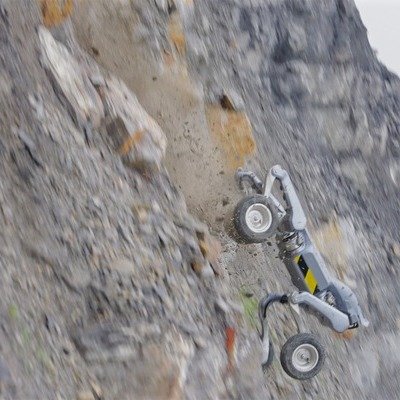
- The AS2-W Era (2024–Present): The launch of the AS2-W represents the synthesis of these two worlds. It combines the high-speed agility of the entertainment bots with the ruggedized, environmental-sensing capabilities of the inspection units. The current focus is on "all-terrain mobility," moving away from the smooth floors of a factory toward the mud, scree, and debris of the great outdoors.
Supporting Data: Engineering the Impossible
The performance of the AS2-W in off-road footage—which Unitree maintains is captured at real-time speeds without digital acceleration—is a testament to advancements in proprietary motor torque density.
Kinetic Performance Metrics
- Weight: 25kg (Base unit)
- Dynamic Payload: 16kg (Active transport capacity)
- Static Load Capacity: 180kg (Maximum structural support)
- Operational Environment: Multi-terrain (Rock, sand, mud, and uneven inclines)
The integration of advanced LiDAR and vision-based SLAM (Simultaneous Localization and Mapping) allows the AS2-W to perceive obstacles before they cause a fall. Unlike earlier models that required pre-mapped environments, the AS2-W utilizes deep-learning models to adjust its gait in real-time, allowing it to adapt to shifting surfaces—a crucial requirement for wilderness search-and-rescue (SAR) missions.
Official Responses and Market Positioning
Unitree has remained characteristically pragmatic regarding the AS2-W’s market positioning. In their official documentation, the company emphasizes the "Super Athlete" moniker, positioning the unit as a high-performance tool rather than a consumer electronic.
When asked about the $37,000 price point, industry analysts note that this is consistent with specialized industrial equipment. While expensive for a "sawhorse," it is remarkably competitive compared to the cost of deploying a search-and-rescue team in high-risk areas. If an AS2-W can replace a human porter or act as a scout in a hazardous environment, the return on investment (ROI) is realized quickly through risk mitigation.
"Our goal," a company representative noted during a recent technical brief, "is to democratize access to high-mobility robotics. The AS2-W is designed to be a reliable partner that doesn’t get tired, doesn’t need to eat, and can navigate terrain that would stop a traditional wheeled vehicle."
Implications: The Future of Remote Logistics
The deployment of machines like the AS2-W has significant implications for several sectors:
1. The Search and Rescue (SAR) Paradigm
In disaster zones—such as those following earthquakes or landslides—traditional vehicles often cannot reach the site of a tragedy. Human rescuers must traverse dangerous rubble on foot, carrying heavy equipment that limits their speed and effectiveness. An autonomous pack-bot like the AS2-W could act as a forward-deployed supply chain, carrying first-aid kits, communication relays, or battery packs for drones, allowing rescuers to operate longer and deeper into the "hot zone."
2. Infrastructure Maintenance
The remote monitoring of pipelines, power grids, and mountain-side infrastructure often requires expensive helicopter surveys or dangerous manual inspections. The AS2-W’s ability to traverse these areas independently suggests a future where maintenance is continuous and proactive rather than reactive, potentially preventing catastrophes before they occur.
3. The "Killer App" Argument
While the $37,000 price tag is high for a hobbyist, for a logistics company or a municipal fire department, it is a rounding error. The "killer app" is not the robot’s ability to dance; it is its ability to serve as a persistent, reliable, and durable logistical asset. As production scales and battery density improves, we are likely to see these units become ubiquitous in remote industrial work.
Conclusion: The Path Forward
The Unitree AS2-W serves as a bridge between the hype-driven world of early robotics and the practical, gritty reality of industrial automation. By proving that a machine can handle both the grace of a gymnast and the endurance of a mule, Unitree has set a new benchmark for what is possible in the field of legged locomotion.
As we move forward, the challenge will be software integration and regulatory acceptance. How do we ensure these machines act safely in human-populated environments? How will they be integrated into existing emergency response workflows? These questions remain, but the hardware is no longer the bottleneck. The AS2-W has arrived, and it is ready to carry the load—quite literally—into the next generation of robotic utility. The breakdancing was merely the opening act; the real work is just beginning.
About the Author