In a move that underscores the rapid electrification of the global supply chain, Toyota Material Handling North America (TMHNA) has officially inaugurated a state-of-the-art, $100 million lift truck manufacturing facility in Columbus, Indiana. The launch of this 295,000-square-foot plant represents a pivotal milestone for a company that already commands a 40% share of the U.S. forklift market, signaling a long-term commitment to domestic production and the evolving technological demands of the logistics sector.
Main Facts: A Hub for Electric Innovation
The new facility is not merely an expansion of floor space; it is a strategic maneuver designed to consolidate and accelerate the production of electric-powered material handling equipment. By adding 295,000 square feet to its existing Columbus footprint, TMHNA has expanded its local presence to a massive 1.9 million square feet "under roof."
The primary output of this new plant is the Class 1 Stand-Up Counterbalanced Forklift—a workhorse of modern warehousing. Previously, this specific model was manufactured exclusively at the company’s facility in Greene, New York. By shifting production to the Midwest, Toyota is optimizing its logistics network, allowing the New York plant to pivot its resources toward the assembly of complex reach trucks, order pickers, and various automation solutions.
This facility operates on a "build-to-order" model, utilizing lean manufacturing principles to ensure that each unit is tailored to the specific operational requirements of the end user. With 75% of the units produced at the facility built to individual customer specifications—including diverse options such as 14 distinct seating configurations—the plant is designed for extreme agility rather than bulk inventory storage.
Chronology: The Evolution of a Material Handling Giant
The opening of this facility is the latest chapter in a multi-year effort by Toyota Industries Corporation (TICO) to unify its global logistics strategy.
- 2025 Merger: A landmark year saw the formal merger of Toyota Material Handling and The Raymond Corporation, forming the unified corporate entity now known as TMHNA. This consolidation allowed for shared research and development, supply chain efficiencies, and a unified brand presence.
- The Automation Reorganization: Following the merger, TICO moved to streamline its warehouse automation portfolio. It reorganized its three primary automation arms—Vanderlande, viastore, and Bastian—into a singular, cohesive unit titled Toyota Automated Logistics (TAL). This transition positioned the company to compete more aggressively in the burgeoning sector of autonomous mobile robots (AMRs) and automated storage and retrieval systems (AS/RS).
- 2024 Expansion: With the new Columbus plant now operational, the company has completed a critical piece of its North American manufacturing puzzle. The facility, which currently produces eight forklifts per day, is slated to reach a production capacity of 24 units per day by September 2024, providing a massive boost to the company’s output capabilities.
Supporting Data: The Electric Transition
The impetus for this $100 million investment is clear: the market for internal combustion forklifts is shrinking, while demand for electric alternatives is surging. According to TMHNA President & CEO Brett Wood, the industry is undergoing a fundamental shift that shows no signs of slowing.
"In 2023, 66% of all lift trucks sold in North America were electric powered, and currently the market is approximately 70% electric," Wood noted during the opening ceremony. The company anticipates that electric forklift demand will climb to 80% of the total market by 2035. This new factory is specifically engineered to handle this electrification trend, ensuring that Toyota remains the dominant supplier as warehouses pivot away from fossil fuels in favor of lithium-ion and hydrogen fuel cell technologies.
The "lean management" strategy employed in the factory relies on the Japanese philosophy of Kaizen, or continuous improvement. This approach focuses on the systematic elimination of waste across eight categories: transportation of parts, excess inventory, unnecessary motion, waiting times, overproduction, over-processing, defects, and the underutilization of human skills.
Official Responses and Strategic Vision
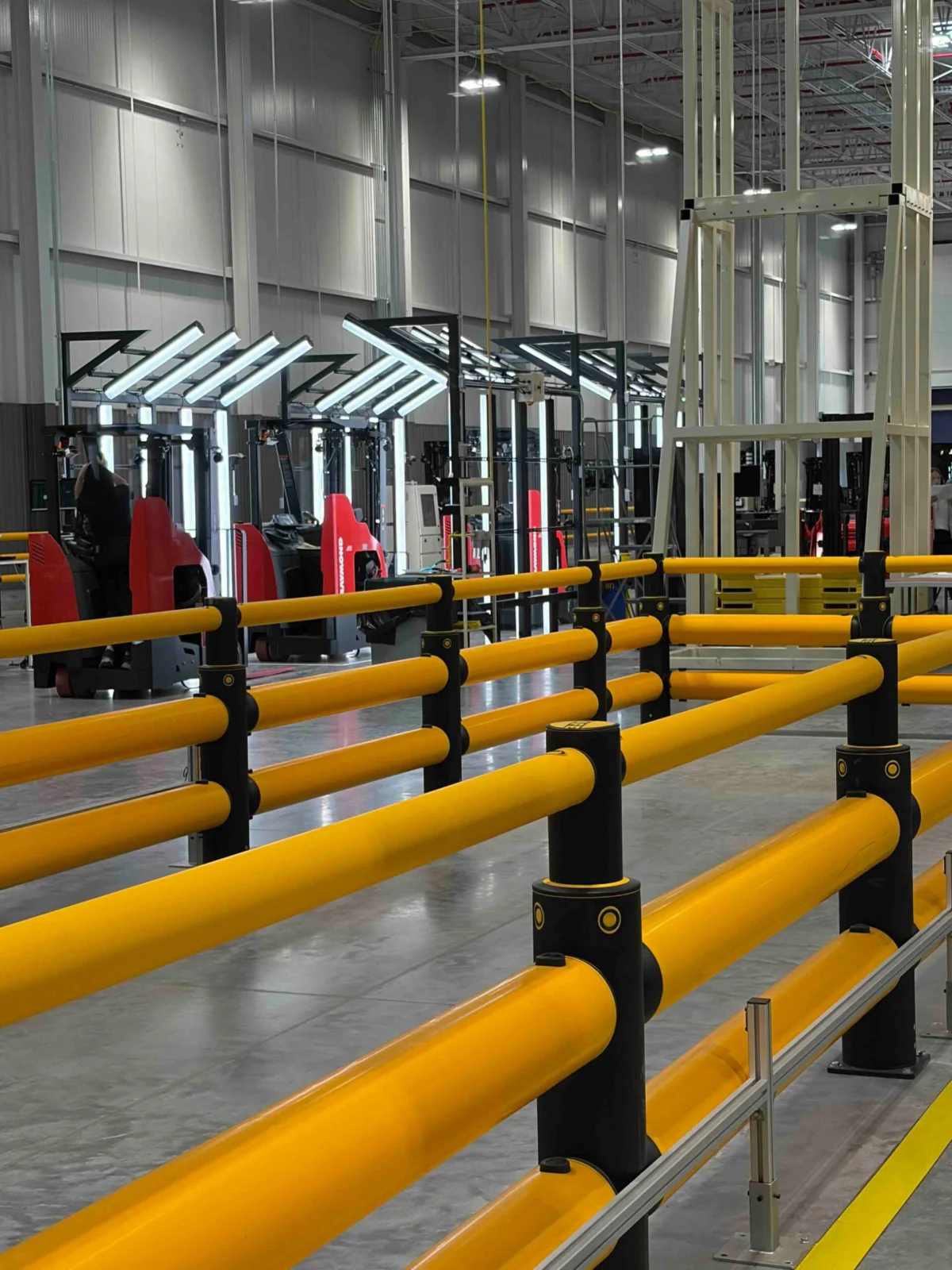
Company leadership emphasized that while the facility utilizes cutting-edge automation, the human element remains the heartbeat of the operation. The factory floor features a sophisticated blend of robotics and human craftsmanship, allowing for rapid adjustments to assembly lines as market demand fluctuates.
Tony Miller, Chief Supply Officer for TMHNA, highlighted the complexities of maintaining a "just-in-time" (JIT) supply chain in an era of global instability. "Some 60% of our parts by value are sourced from sites in North America, but our largest import supplier remains Japan," Miller explained. "TICO creates common components for all vehicles in our catalog, which helps us maintain quality, but it also means we are vulnerable to global supply chain shocks."
To mitigate these risks, TMHNA recently established a Foreign Trade Zone (FTZ) on its Columbus campus. This allows the company to bring imported components directly to the Indiana site, bypassing the bottlenecks often found at major U.S. ports or railyards. This proactive step is vital for the company’s "sacred" assembly sequence. "We work on identifying delays proactively," Miller added. "We focus on keeping the sequence. The sequence is sacred."
Implications for the Industry
The implications of the Columbus expansion extend well beyond Toyota’s balance sheet.
1. Strengthening the Regional Supply Chain
By concentrating manufacturing in the American Midwest, Toyota is reducing its reliance on long-distance trans-Pacific shipping for final assembly. This not only lowers the carbon footprint of its logistics operations but also creates a more resilient manufacturing ecosystem that can respond to regional economic shifts more effectively.
2. The Standardization of Automation
The reorganization of Vanderlande, viastore, and Bastian into Toyota Automated Logistics (TAL) means that customers can increasingly look to a single partner for both their mechanical lift trucks and their software-driven automation systems. The new Indiana plant is a physical manifestation of this integration; it is built with the flexibility to incorporate future automation technologies as they become standardized.
3. Setting the Benchmark for "Build-to-Order"
By refusing to build for stock and instead leaning into highly customized, customer-specific configurations, Toyota is forcing its competitors to adapt. In the modern warehouse, where space is at a premium and operational efficiency is measured in seconds, the ability to receive a custom-built, specialized forklift in a short lead time is a competitive advantage that directly impacts the bottom line of the logistics providers using the equipment.
4. A Template for Sustainable Growth
The transition of the New York factory toward high-tech products like reach trucks and automated systems, paired with the focus on electric forklifts in Indiana, illustrates a clear roadmap for legacy manufacturers. By segmenting production based on product complexity and energy requirements, TMHNA is ensuring that its plants are specialized, efficient, and capable of long-term evolution.
Conclusion: The Road Ahead
As the logistics industry continues to face pressures from labor shortages, the demand for 24/7 fulfillment, and the necessity of carbon reduction, Toyota’s $100 million investment in Indiana serves as a blueprint for the future. The facility is not merely a place to build machines; it is a center of gravity for the next generation of supply chain technology.
With a clear path toward the 80% electrification target and a commitment to Kaizen that ensures every process is constantly refined, Toyota is positioning itself to lead the next era of industrial logistics. For the residents of Columbus and the broader material handling industry, this plant stands as a testament to the fact that, even in an increasingly automated world, the "sacred" marriage of skilled human labor and precision engineering remains the bedrock of success.
About the Author