In an era defined by mass production, disposable furniture, and the hidden complexities of global supply chains, a quiet revolution is taking place in the workshops of Tottori, Japan. It is here that the boundaries between Nordic minimalism and Japanese precision have dissolved, giving birth to a singular object: the Rope Stool. Born from the Tottori-Gothenburg Craft Exchange Project, this piece of furniture is more than just a place to sit—it is a manifesto on the power of collaboration, the elegance of simplicity, and the enduring strength of traditional craftsmanship.
The Genesis: A Cross-Cultural Bridge
The Tottori-Gothenburg Craft Exchange Project, spearheaded by the Japanese retailer Oshinsha, was never intended to be a mere sightseeing excursion for designers. Instead, it was conceived as a rigorous cultural and technical immersion. Oshinsha, an organization dedicated to the promotion and preservation of Japanese artisanal work, sought to bridge the gap between two of the world’s most respected design cultures: Sweden and Japan.
Last year, the project successfully secured funding from both Japanese and Swedish cultural grants, enabling a group of six Swedish creatives to travel to Tottori Prefecture. For three weeks, these designers lived and breathed the local craft ecosystem, working side-by-side with master artisans. The goal was to dismantle the traditional "designer-as-specifier" role and instead foster a collaborative environment where the limitations and possibilities of material could be explored in real-time.
Among these pairings, the partnership between Swedish artist and designer Esbjorn Grip and Japanese chairmaker Junsei Fujimoto stood out as a highlight of the residency. Their challenge was both specific and daunting: to create a functional, comfortable, and aesthetic piece of furniture using only a single, repeatable wooden element.
Chronology: From Concept to Construction
The development of the Rope Stool was a process of rapid iteration and deep-seated experimentation. The first week of the residency was dedicated to research and understanding the local Tottori timber stocks—primarily focusing on sourcing materials that were sustainable and locally available.
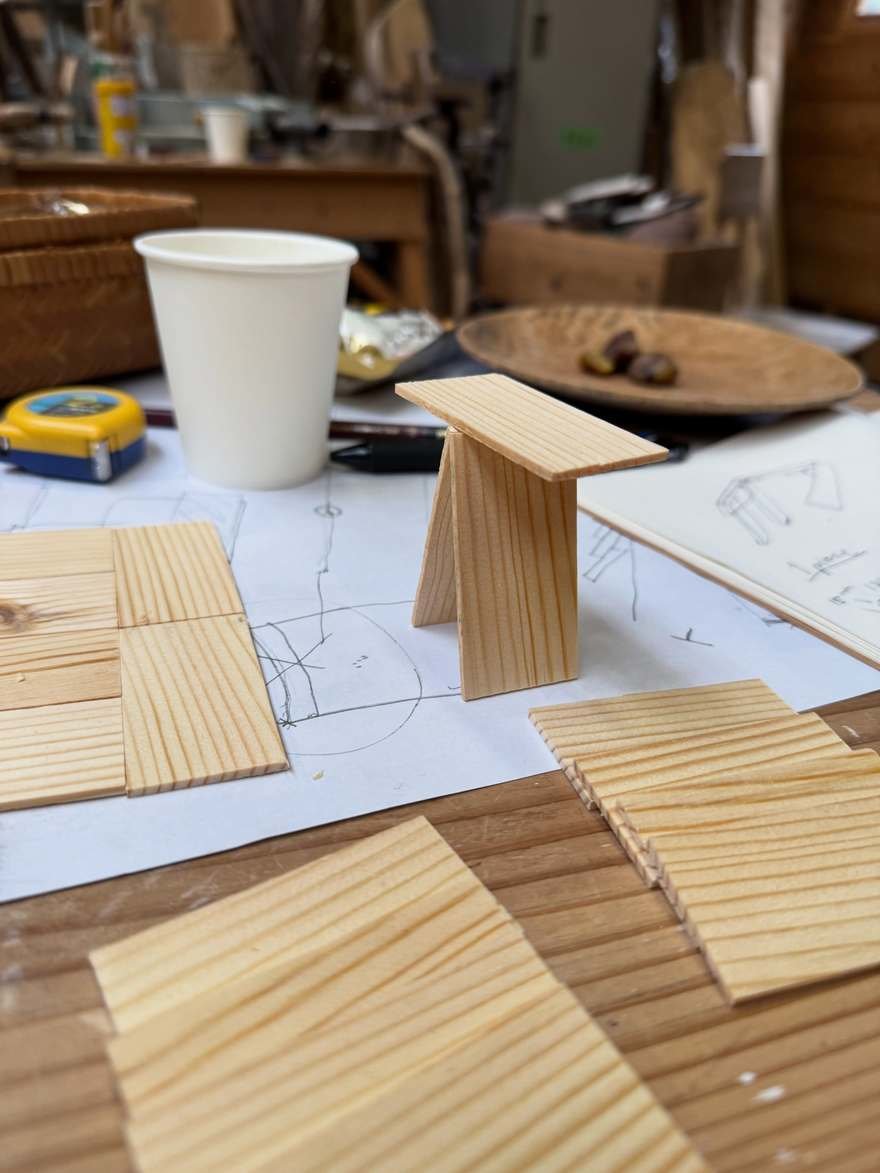
By the second week, Grip and Fujimoto had settled on the "single element" constraint. The challenge was not just to design a stool, but to invent a system of assembly that did not rely on modern hardware. This was a nod to both the Japanese tradition of kigumi (complex wood joinery) and the Swedish focus on functional, flat-pack utility.
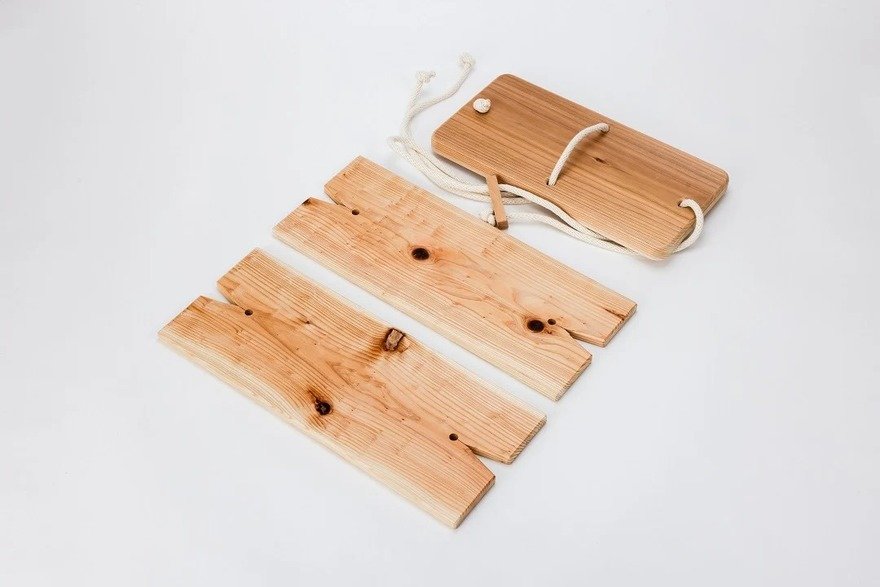
In the third week, the design took its final form. The team moved away from traditional screws, nails, or glue, opting instead for a structural integrity derived entirely from the physics of tension. By weaving rope through a series of uniform wooden slats, they created a self-tensioning structure. When a user sits on the stool, the weight is distributed evenly, causing the rope to tighten and the wooden components to lock into a rigid, stable configuration.
Technical Analysis: The Physics of the Rope Stool
The ingenuity of the Rope Stool lies in its deceptive simplicity. At first glance, it appears as a minimalist sculpture—a series of flat boards held together by cord. However, upon closer inspection, the stool reveals a sophisticated understanding of mechanical engineering.
The Anatomy of the Design
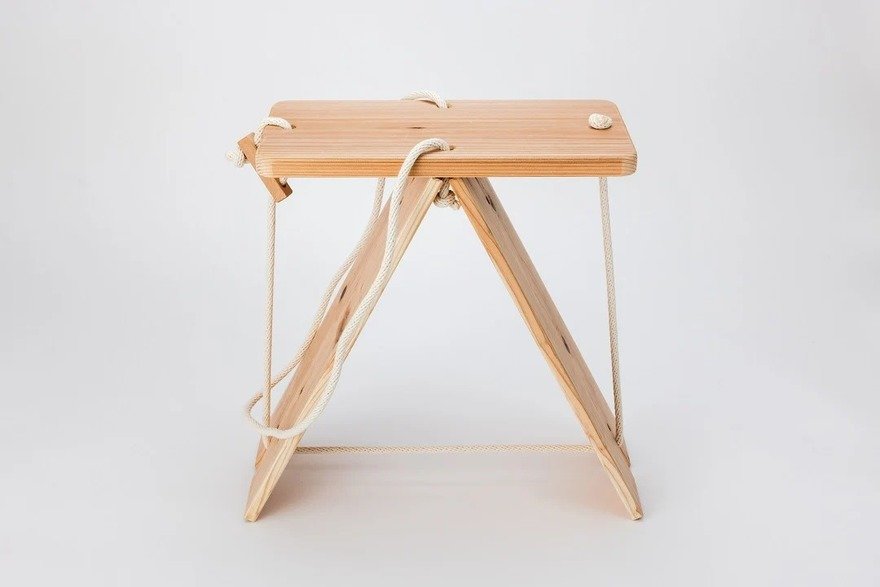
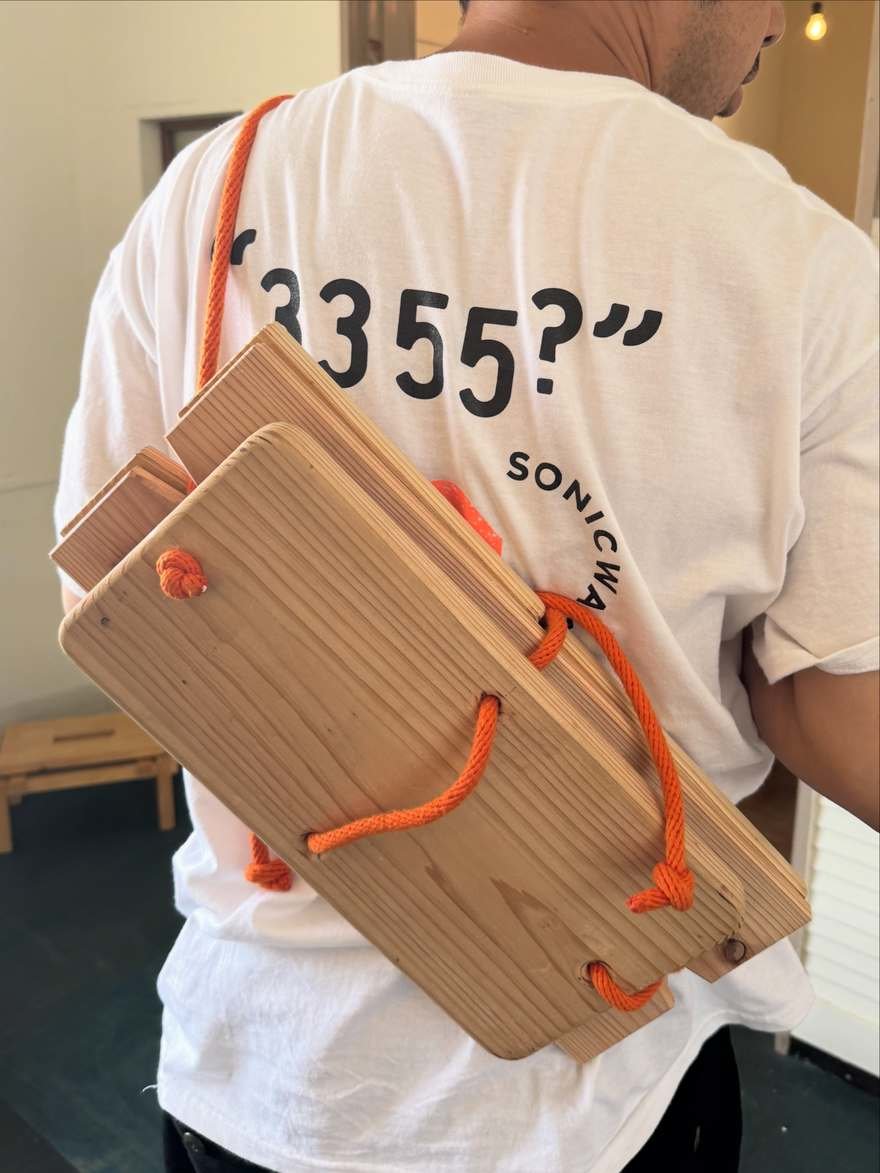
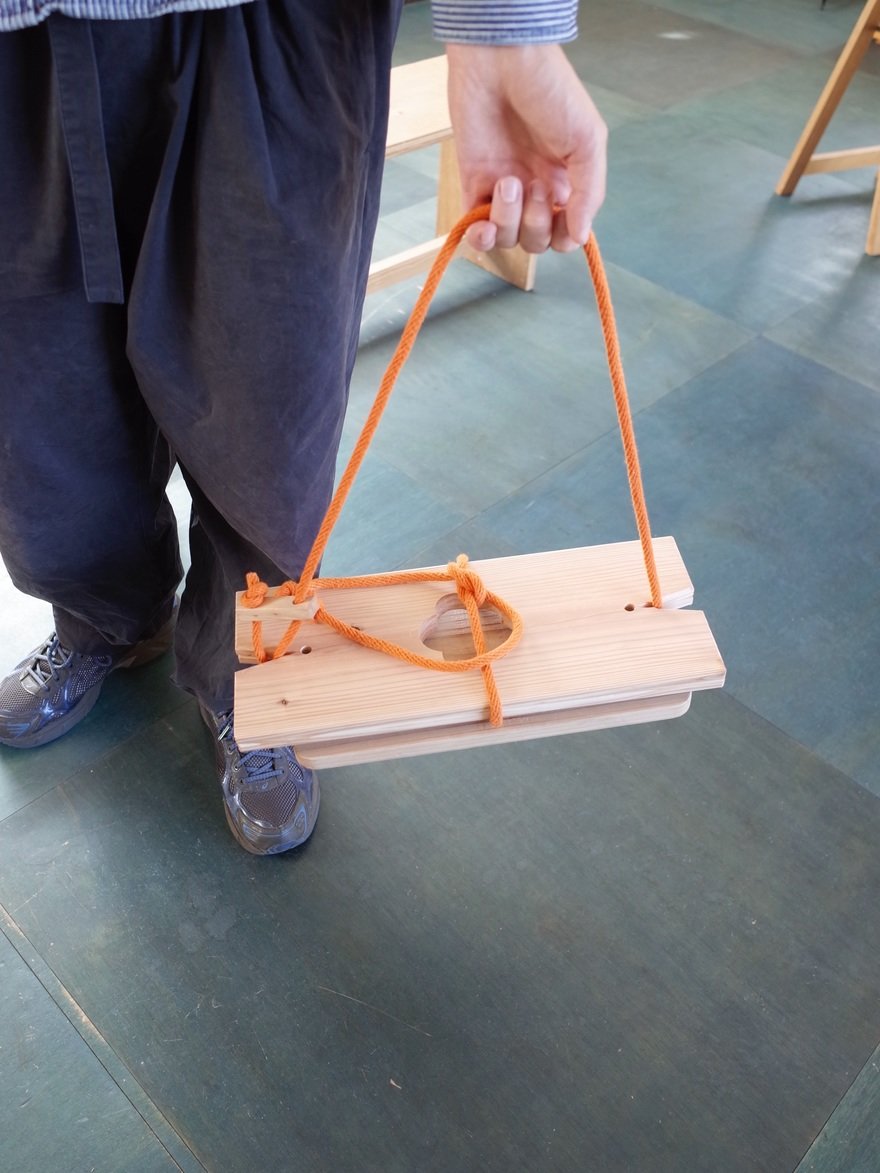
The primary structure consists of a series of identical wooden boards, precision-cut to allow for the passage of a high-tensile rope. Each board is slotted with channels that act as friction points. When the rope is fed through these channels and tightened, it creates a "pre-stressed" condition similar to the principles used in suspension bridge engineering.
- The Modular Element: By using a single, repeatable wooden component, the designers have created a highly efficient manufacturing process. This modularity reduces waste during the milling process and simplifies the logistics of the supply chain.
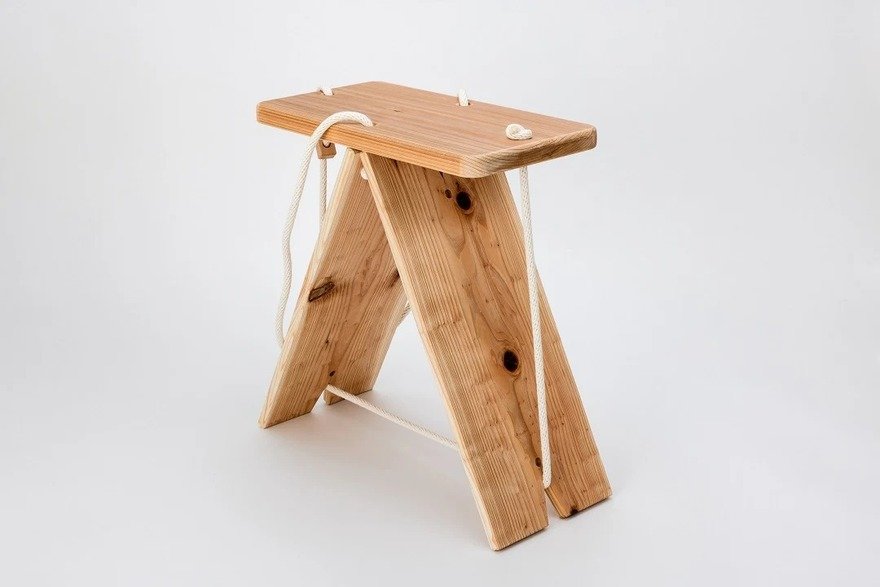
- Tension-Based Assembly: The absence of fasteners is the most striking feature of the stool. Nails and screws are points of failure; they rust, they loosen, and they often cause wood to split. The rope, by contrast, acts as a dynamic fastener that responds to the environment. If the wood expands or contracts with humidity, the rope retains the structural integrity of the seat.
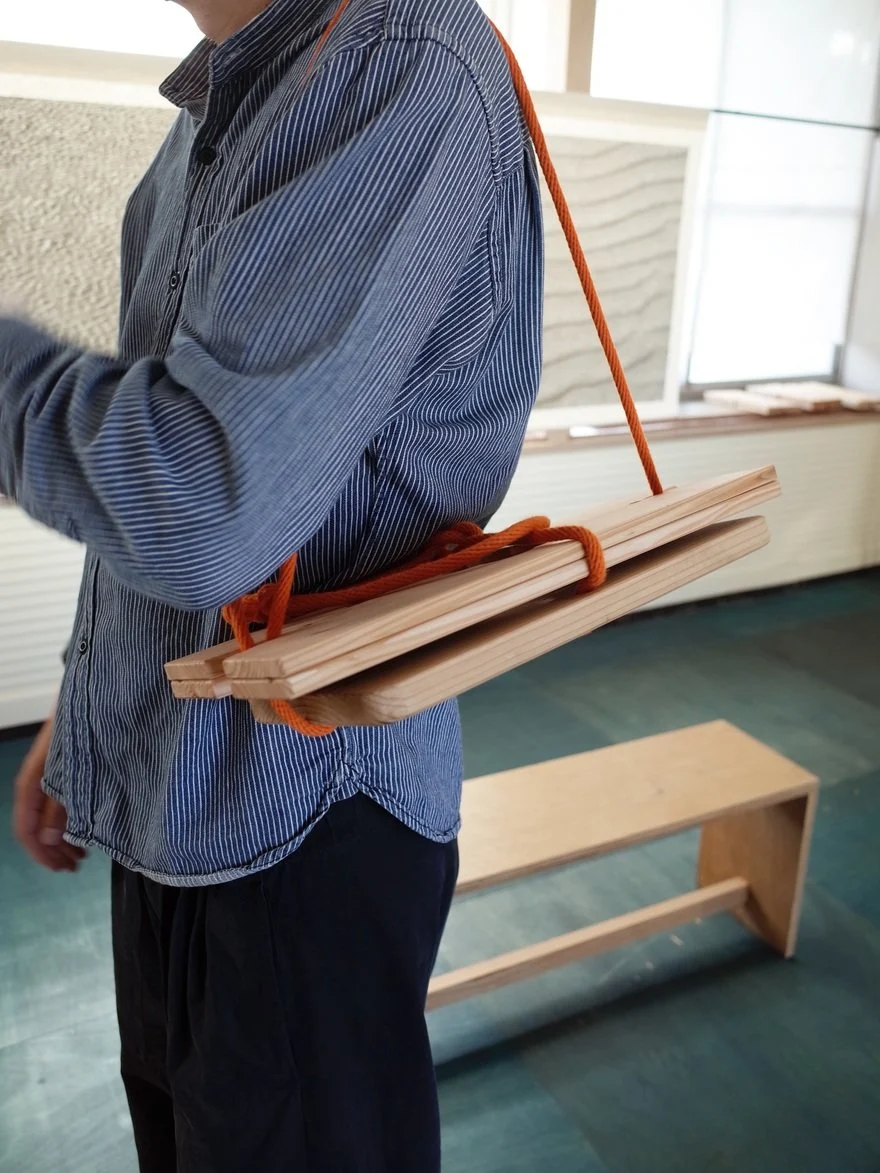
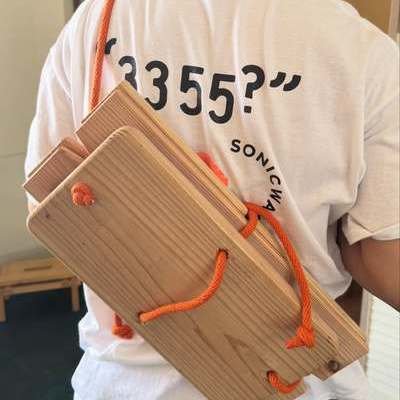
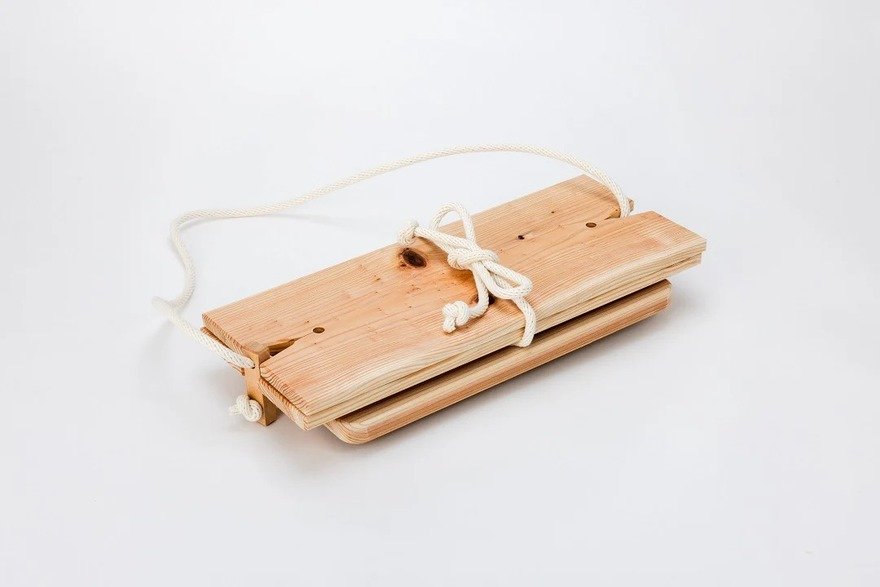
- Ergonomics and Portability: Beyond its structural merits, the stool is designed for the modern nomadic lifestyle. It can be easily disassembled, coiled into a small bundle, and transported. This makes it a rare example of a "heirloom-quality" object that is also entirely portable.
Perspectives from the Makers
In interviews conducted following the project’s conclusion, both Esbjorn Grip and Junsei Fujimoto reflected on the profound impact of the exchange. For Grip, the collaboration was an exercise in "unlearning" the reliance on digital modeling. "In Sweden, we often design on screens," Grip noted. "Working with Fujimoto-san in Tottori forced me to think with my hands. The wood tells you what it wants to do. You have to listen to the grain, the density, and the history of the timber."
Fujimoto, a veteran chairmaker, noted that the collaboration challenged his perspective on traditional techniques. "We often think of our crafts as fixed in time," he said. "Working with Esbjorn allowed me to see how our traditional joinery principles could be reinterpreted through a contemporary, minimalist lens. The rope is not a replacement for traditional joinery; it is a dialogue with it."
Implications for Global Craft
The Rope Stool is more than a commercial product now available through Oshinsha; it serves as a case study for the future of international design collaborations. It suggests that the most innovative solutions do not come from the most complex technologies, but from the most refined understanding of basic materials.
The Sustainability Mandate
In an era where "sustainability" is often a marketing buzzword, the Rope Stool provides a tangible example of circular design. Because it lacks glue and metal hardware, the piece is infinitely repairable. If the rope wears out, it can be replaced by the owner. If a wooden board is damaged, it can be milled and replaced without discarding the entire structure. This design philosophy directly challenges the "planned obsolescence" that dominates the modern furniture industry.
Bridging the Artisan-Designer Divide
The Tottori-Gothenburg project highlights a growing trend in the design world: the "maker-designer." As designers seek to regain control over the production process, and as traditional artisans seek to reach new, global audiences, these types of cross-cultural exchanges become essential. They preserve cultural heritage while ensuring that traditional crafts remain relevant in a globalized economy.
The Road Ahead
The success of the Rope Stool has prompted Oshinsha to consider further iterations of the project. The organizers are currently exploring ways to scale the collaboration, potentially inviting more international designers to Tottori or establishing a permanent workshop space where these ideas can be incubated year-round.
For the consumer, the availability of the Rope Stool via Oshinsha represents a rare opportunity to own a piece of functional art that carries the weight of history and the lightness of modern innovation. It is an object that asks us to reconsider our relationship with the things we own. Do we buy items that we will throw away in five years, or do we invest in objects that grow more meaningful with age, use, and repair?
Conclusion
The Rope Stool is a testament to the fact that, even in a world of high-speed digital manufacturing and AI-generated design, there is no substitute for the human hand. By weaving together the stoic, minimalist aesthetics of Scandinavia and the meticulous, nature-focused craft traditions of Japan, Esbjorn Grip and Junsei Fujimoto have created more than just a seat. They have created a vessel for cultural exchange—a reminder that when we open our workshops to the world, the results are often stronger, more resilient, and more beautiful than anything we could have produced in isolation.
As it stands, the Rope Stool is a beacon for a future where design is once again human-centric, material-conscious, and deeply collaborative. It is an object that does not just sit in a room; it tells a story of travel, tension, and the universal language of good design.
About the Author