
From the silent, high-speed analysis of diagnostic imaging to the automated transcription of patient-doctor dialogues, the integration of artificial intelligence (AI) into the American medical landscape is no longer a futuristic concept—it is a present-day reality. However, a groundbreaking new study by the Pew Research Center suggests that while healthcare providers are rapidly adopting these digital tools, they are leaving a critical stakeholder in the dark: the patient.
According to a survey of 3,488 U.S. adults conducted in late June 2026, there is a profound disconnect between the clinical deployment of AI and patient awareness. While the medical industry touts efficiency and precision, the public is expressing a clear, unified demand for one thing: radical transparency.
The Core Finding: A Call for Disclosure
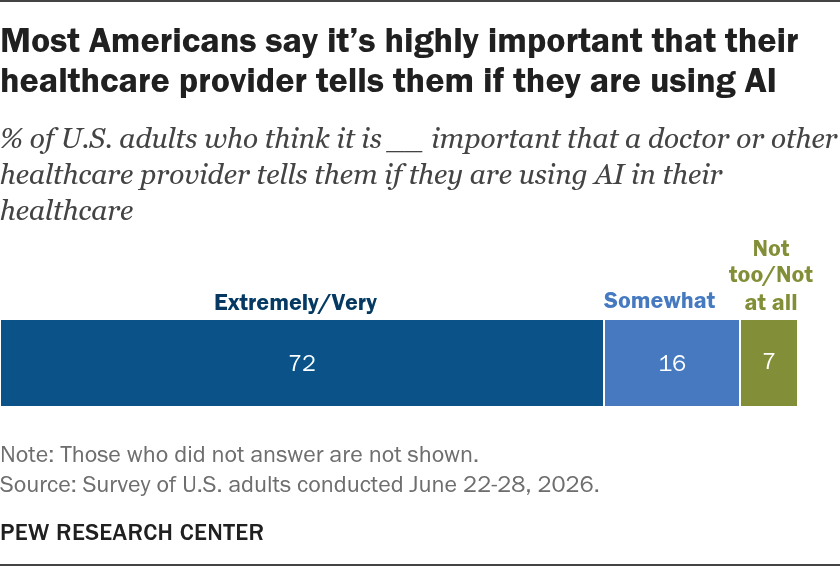
The most striking takeaway from the data is the overwhelming consensus among Americans regarding their right to know. Approximately seven-in-ten U.S. adults (72%) believe it is "extremely" or "very" important that their healthcare providers proactively disclose if and when AI tools are involved in their care.

This desire for transparency transcends traditional demographic divides. Regardless of age, gender, education level, or ethnic background, the sentiment remains constant. Patients are not necessarily rejecting the technology; rather, they are rejecting the lack of agency that currently accompanies its implementation. As the legal and ethical frameworks surrounding informed consent struggle to keep pace with rapid technological advancements, this survey highlights a significant "trust gap" that medical institutions must address to maintain patient confidence.
A Chronology of the AI Shift in Medicine
To understand the current tension, one must look at how quickly the landscape has shifted:
- 2023–2024: Hospitals and private practices began pilot programs for "predictive AI." Early adoption focused primarily on back-office automation—scheduling, billing, and basic administrative triage.
- 2025: The shift moved toward clinical support. Generative AI tools became standard for documenting patient encounters, summarizing long medical histories, and assisting radiologists in flagging anomalies in X-rays and MRIs.
- Early 2026: Regulatory bodies and the American Medical Association (AMA) began intensifying discussions regarding the ethical obligations of physicians. The core debate centered on whether "AI-assisted" is equivalent to "standard of care" and what that requires in terms of patient notification.
- June 2026: The Pew Research Center survey captures the public’s sentiment at a moment where AI is becoming nearly ubiquitous in health systems, yet the patient experience remains largely unchanged—or so they think.
Supporting Data: Where the Line is Drawn
The survey reveals that while patients are wary of AI, their tolerance for it depends heavily on the nature of the task. Americans view "clinical" AI—tools that impact health outcomes—as far more sensitive than "administrative" AI.
The Threshold of Clinical Care
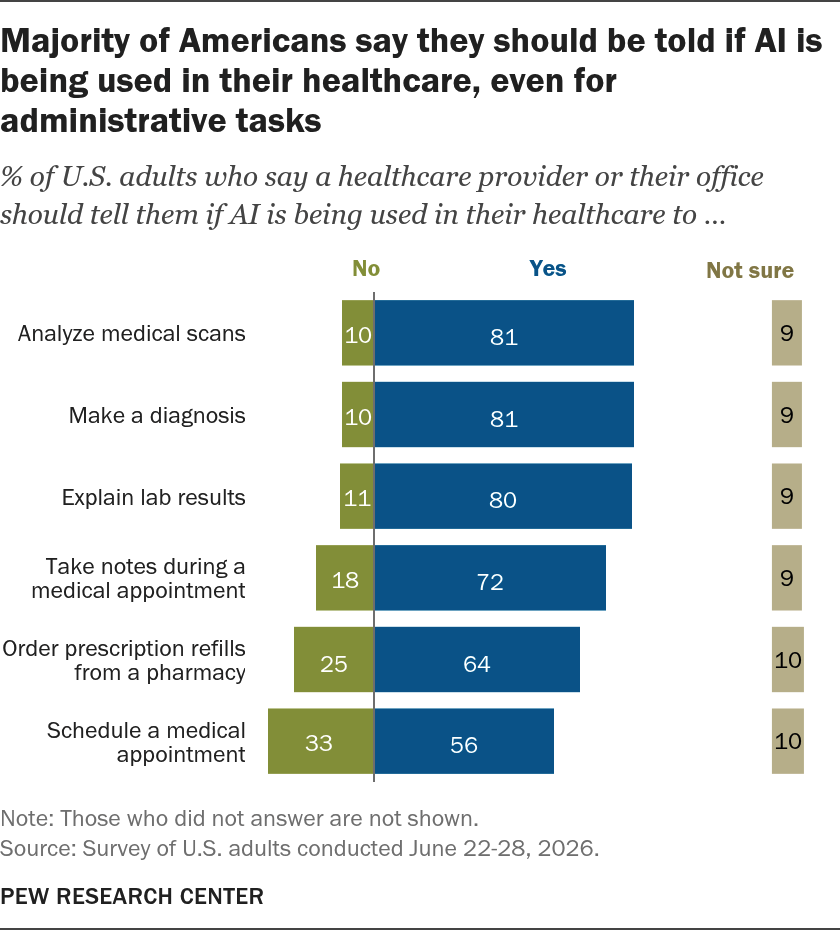
When asked about AI tools that directly influence diagnosis or treatment, the demand for transparency is absolute. More than 80% of respondents insist on being notified if AI is used to:
- Analyze medical scans (81%)
- Make a medical diagnosis (81%)
- Explain complex lab results (80%)
These figures suggest that patients view the "human touch" as non-negotiable when their physical health is on the line. They want to be certain that a human expert is the final arbiter of their medical fate.
The Administrative Gray Area
The public is slightly more lenient regarding administrative tasks, though still demanding. Even for tasks like taking notes during a visit, 72% want to be informed. Interestingly, when it comes to behind-the-scenes tasks—such as ordering prescription refills (64%) or scheduling appointments (56%)—the demand for disclosure drops slightly. Even so, these percentages represent a clear majority, proving that patients want a "digital ledger" of how their personal data and medical processes are being handled.
A Growing Sense of Powerlessness
Perhaps the most concerning finding for health administrators is the perception of control. A significant 53% of Americans feel they have "not too much" or "no" say in whether AI is integrated into their healthcare journey.
The data further highlights a stark disparity in this feeling of powerlessness. White adults, for instance, were more likely (60%) to report feeling they had little to no say compared to their Hispanic (40%), Black (43%), and Asian (42%) counterparts. This suggests that communication strategies regarding technology are failing across the board, but they are failing in different ways across diverse communities.
The frustration is compounded by the fact that patients want more input. When asked about their comfort level, 63% of Americans explicitly stated they would like more say regarding AI use in their care, while only 21% felt comfortable with their current level of influence.
The "Knowledge Gap" Paradox
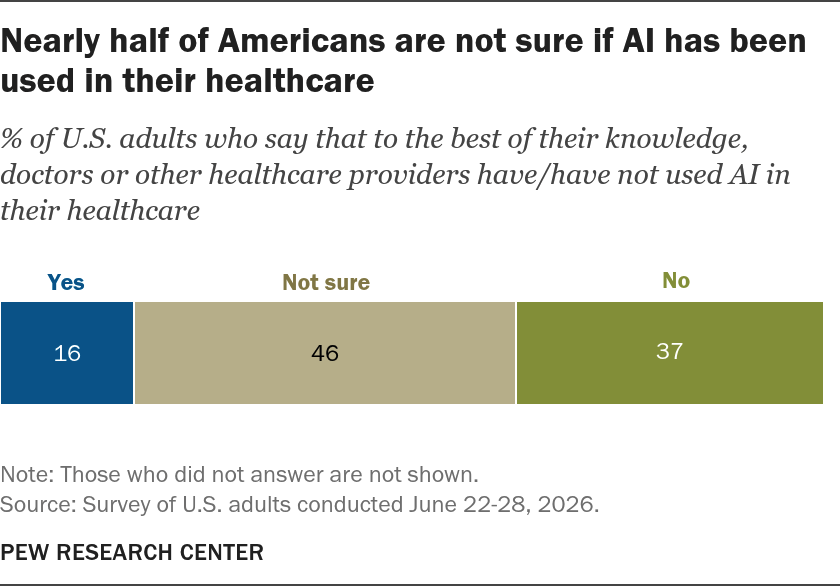
Despite the proliferation of AI, the public remains largely ignorant of its usage. Nearly half of the respondents (46%) admitted they were "not sure" if their doctors had ever used AI in their treatment. Only 16% were confident that it had been used.
This is a startling figure given that, in many modern health systems, AI is already performing routine background analysis. This suggests that current disclosure policies are either nonexistent, buried in lengthy "Terms and Conditions" documents, or communicated in language that patients do not recognize as "AI."
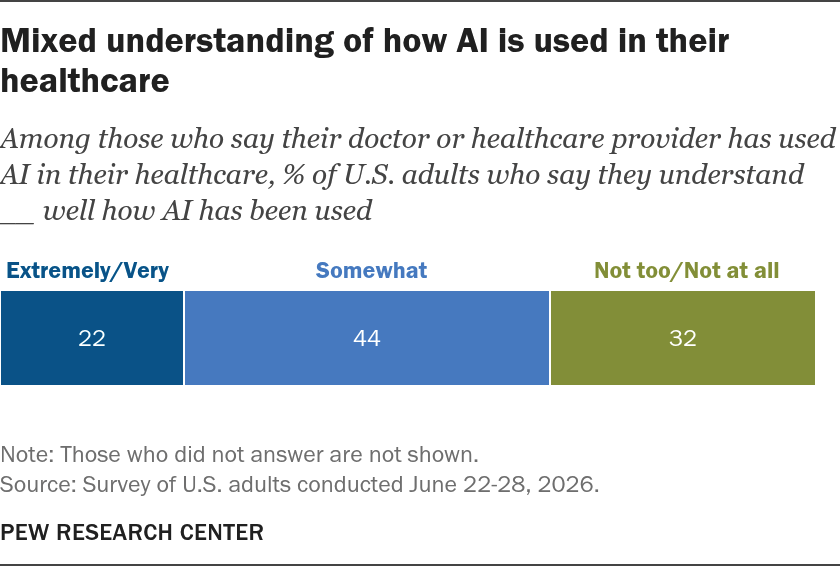
Even among the small group of people who are aware that AI is being used in their care, there is a "mixed understanding" of what that actually means. Only 22% of these individuals feel they understand the application of these tools "extremely or very well." Nearly a third (32%) admit they do not understand it well at all. This lack of literacy creates a fertile ground for skepticism and fear, which can ultimately lead to lower adherence to medical advice.
Implications for the Future of Medicine
The implications of this research are profound for both the medical community and the developers of health-tech tools.
1. The Ethical Mandate for Transparency
The medical field is built on the principle of informed consent. If a patient is unaware that an algorithm has influenced their diagnosis, their consent cannot truly be considered "informed." As we move forward, hospitals will likely need to adopt standard disclosure protocols, similar to how they currently handle HIPAA disclosures.
2. The Trust Economy
Trust is the currency of the patient-doctor relationship. If patients feel that AI is being introduced "in the shadows," it may degrade the patient-provider bond. Physicians who proactively explain their use of AI—such as using a tool to ensure no details were missed in a lab report—may actually find that transparency strengthens, rather than weakens, the trust patients have in their clinical judgment.

3. The Digital Literacy Challenge
The data suggests that the burden of education cannot rest solely on the patient. Medical institutions, government agencies, and AI developers must bridge the gap between "technical jargon" and "patient-accessible information." If the public is to benefit from the efficiency of AI, they must first understand how it serves them.
4. Demographic Considerations
The disparity in how different racial and ethnic groups perceive their control over AI usage suggests that outreach needs to be tailored. Inequities in healthcare are well-documented; if AI is perceived as an "opaque" tool that further complicates access or agency, it could exacerbate existing gaps in health equity.
Conclusion
The findings from the Pew Research Center’s 2026 study serve as a wake-up call to the healthcare industry. The era of "black-box" medicine is coming to an end. While technology promises to revolutionize diagnostics and streamline the crushing administrative burdens of modern medicine, it must be implemented with a commitment to the patient’s right to know.

Americans are not asking for a halt to innovation; they are asking for a seat at the table. They want to be partners in their own care, and that partnership requires that the "black box" be opened, examined, and explained. In the coming years, the winners in the healthcare space will not just be those with the most advanced algorithms, but those who can most effectively build a culture of trust, transparency, and clear communication in an increasingly digital world.
Research Methodology Note
This analysis was conducted by the Pew Research Center, using data from 3,488 U.S. adults surveyed between June 22 and June 28, 2026. Participants were members of the American Trends Panel, a nationally representative group designed to provide a comprehensive look at the views of the American public. The study aims to help policymakers, healthcare providers, and the general public navigate the intersection of rapid technological progress and human-centric care.
About the Author