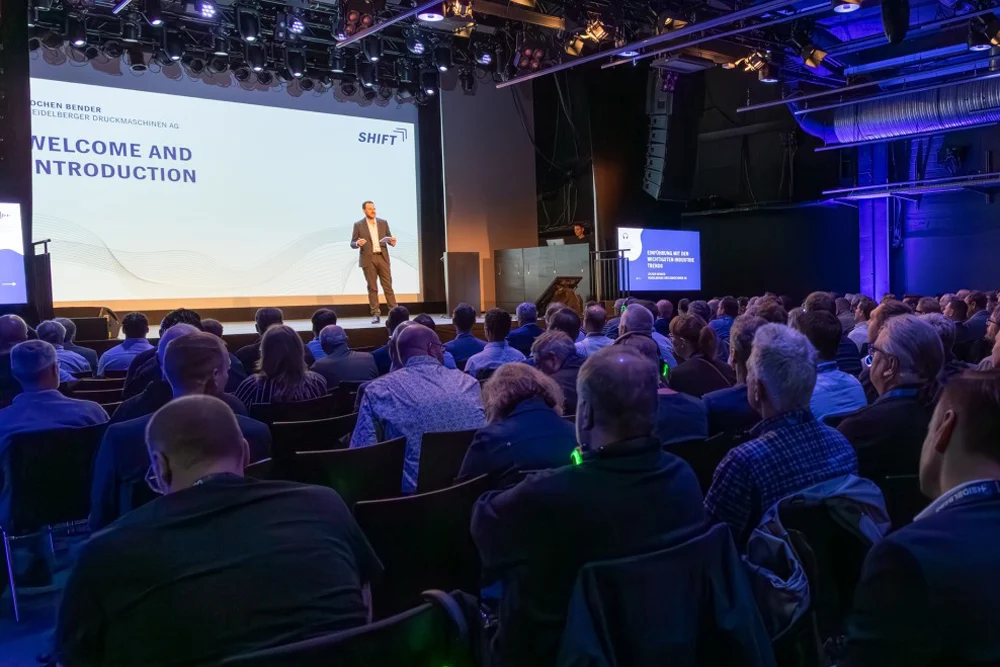
Heidelberg, Germany – October 6, 2026 – The global printing industry is poised for a transformative experience as Heidelberg, a world leader in print solutions, prepares to host the second edition of its groundbreaking event, SHIFT 2026. Following a highly successful inaugural year, SHIFT has rapidly established itself as the preeminent international forum dedicated to AI-driven hybrid print production, bringing together the brightest minds and most innovative technologies shaping the future of the sector.
Scheduled for October 6th and 7th, 2026, this pivotal two-day event will unfold across two significant locations: the historic city of Heidelberg and the company’s state-of-the-art "Home of Print" facility in Wiesloch-Walldorf. SHIFT 2026 is designed to be an immersive journey into the heart of the digital revolution impacting the printing industry, with a sharp focus on advanced automation, cutting-edge robotics, seamless end-to-end digital printing innovations like the Jetfire 50 and Jetfire 75, and the increasingly crucial integration of artificial intelligence into every facet of modern print operations.
The event caters specifically to an influential audience comprising CEOs, executive leaders, key decision-makers within printing companies, and digitalization experts from across the globe. By combining inspiring presentations, tangible real-world case studies, and unparalleled networking opportunities, SHIFT 2026 promises to deliver invaluable insights and practical strategies for navigating the complexities and seizing the opportunities of the evolving print landscape.
Main Facts: Unveiling the Blueprint for Print’s Digital Future
Heidelberg’s SHIFT 2026 stands as a beacon for an industry undergoing profound change, offering a clear roadmap for embracing the digital era. The event’s core mission is to illuminate the path towards highly automated, intelligent, and sustainable print production.
The central theme revolves around the digital transformation of the printing industry, a holistic concept encompassing everything from pre-press workflow optimization to sophisticated post-press automation. A significant emphasis will be placed on AI integration, showcasing how artificial intelligence is moving beyond theoretical discussions to become a practical, indispensable tool for enhancing efficiency, predictive maintenance, and data-driven decision-making within print shops.
Hybrid print production, a strategic combination of the strengths of digital and offset printing, forms another cornerstone of the SHIFT agenda. This approach allows print businesses to achieve unprecedented flexibility, cost-efficiency, and quality across a diverse range of print jobs, from short-run personalized campaigns to high-volume commercial print.
Heidelberg will prominently feature its advanced Jetfire 50 and Jetfire 75 industrial digital printing systems, demonstrating their capabilities in delivering high-speed, high-quality, and versatile print solutions. These systems, coupled with the revolutionary Prinect Touch Free workflow automation, exemplify the end-to-end digital innovations that promise to redefine production paradigms.
Dr. David Schmedding, Chief Sales Officer (CSO) at HEIDELBERG, encapsulates the urgency and vision behind the event: "Without digitalization, automation, and artificial intelligence, sustainable economic success in the printing industry will be practically impossible in the future. Companies that consistently invest in these technologies today will secure decisive competitive advantages." His statement underscores Heidelberg’s commitment to empowering print businesses with the tools and knowledge necessary for long-term prosperity.
Participation in SHIFT 2026 is free, reflecting Heidelberg’s dedication to fostering industry-wide progress and knowledge sharing. Attendees are encouraged to register directly via the Heidelberg website or contact Brian Hansen of Heidelberg Denmark for further details.
Chronology of Innovation and Event Schedule
The SHIFT event is not merely a conference; it’s a carefully curated experience designed to progress from strategic discussions to tangible, live demonstrations, illustrating a clear chronology of how innovation translates into operational reality.
The Genesis of SHIFT: A Forum for the Future
SHIFT’s journey began with a highly successful premiere edition, which immediately established it as the definitive international forum for process digitalization and AI-driven hybrid print production. This initial success validated Heidelberg’s foresight in recognizing the critical need for a platform where industry leaders could converge to discuss, learn, and experience the future of print. The event’s proven concept, which masterfully blends thought leadership with practical application, is now refined and expanded for SHIFT 2026, promising an even richer and more impactful experience. It serves as a testament to the accelerating pace of technological change and the industry’s readiness to embrace these advancements.
Day One: Strategic Insights and Industry Dialogue
The first day of SHIFT 2026, held in the vibrant city of Heidelberg, is meticulously structured to address the most pressing industry trends and challenges through a series of engaging presentations and expert panels. International speakers, drawn from leading printing and technology companies, as well as renowned consulting firms, will share their invaluable expertise and practical insights into successful process digitalization projects.
Planned presentations will delve deep into critical topics such as:
- Data-Driven Production: Exploring how leveraging big data analytics can optimize production schedules, predict maintenance needs, reduce waste, and improve overall operational efficiency. Discussions will cover the implementation of smart sensors, real-time monitoring systems, and advanced data visualization tools that transform raw data into actionable intelligence.
- Workflow Automation: Showcasing how sophisticated software solutions can streamline complex print workflows, from job submission and pre-flighting to imposition and final output. The focus will be on eliminating manual touchpoints, reducing human error, and dramatically accelerating production cycles.
- Hybrid Print Environments: Providing a comprehensive overview of how to effectively integrate digital and offset printing technologies to create flexible, agile production ecosystems. Experts will discuss optimal job routing, color management consistency across different platforms, and the economic benefits of choosing the right technology for the right application.
- Robotics in Print Manufacturing: Presenting the latest advancements in robotic automation for tasks such as material handling, plate loading, quality inspection, and packaging. This segment will highlight how robotics can enhance safety, precision, and productivity in various stages of the print process.
- The Application of Artificial Intelligence in Business and Production Processes: This crucial section will demystify AI, illustrating its practical applications in areas like predictive analytics for equipment performance, automated quality control, intelligent job scheduling, personalized marketing campaigns, and even customer service optimization. Speakers will share concrete examples of how AI algorithms are being trained to learn and adapt, continuously improving print operations.
Furthermore, a highlight of the first day will be presentations from several Heidelberg customers, who will share their firsthand experiences in implementing digital transformation projects. Among them, Meinders & Elstermann will offer a compelling case study. As one of the pilot users of the Prinect Touch Free workflow in conjunction with the industrial digital print system Jetfire 50, they will report on their journey of implementing this innovative new workflow and detail the significant efficiency gains and operational improvements they have already achieved. Their insights will provide attendees with real-world validation and practical guidance.
Day Two: Live Demonstrations at the "Home of Print"
The second day transitions to the experiential, inviting participants to Heidelberg’s iconic "Home of Print," the Print Media Center in Wiesloch-Walldorf. Here, attendees will witness the digital transformation of print production come alive through immersive live demonstrations.
The central focus will be on industrial digital print applications, specifically showcasing the prowess of the Jetfire 50 with its integrated inline finishing capabilities and the high-performance Jetfire 75. Both systems will be demonstrated under the complete control of Prinect Touch Free, illustrating how this intelligent workflow automation solution orchestrates seamless, hands-free production from start to finish.
Beyond the core digital presses, the demonstrations will also encompass:
- Intelligent Postpress Processing: Showcasing automated cutting, folding, binding, and packaging solutions that seamlessly integrate with the digital print workflow, further reducing manual intervention and accelerating delivery times.
- Advanced Data Analysis: Live displays of how real-time production data is captured, analyzed, and presented to operators and managers, enabling immediate adjustments and long-term strategic planning. This includes insights into machine performance, job status, and material consumption.
- Automation Concepts for Fully Integrated Hybrid Production: The highlight of the day will be demonstrations revealing how digital and offset printing can be synergistically combined within a single, automated workflow. Attendees will see how jobs are intelligently routed based on volume, personalization requirements, and cost considerations, ensuring optimal efficiency and quality across the entire production spectrum.
The program on day two will be further enriched by interactive live demonstrations, focused breakout sessions allowing for deeper dives into specific technologies, and presentations from partner companies, showcasing complementary solutions that enhance Heidelberg’s integrated ecosystem. This combination of observation and interaction will provide a comprehensive understanding of how to implement these advanced technologies within their own operations.
Supporting Data and Industry Context
The narrative of SHIFT 2026 is deeply rooted in the current realities and future trajectories of the global printing industry. The technologies presented are not merely novelties but essential tools for survival and growth in an increasingly competitive and dynamic market.
The Digital Imperative in Printing
The printing industry today faces unprecedented pressures. Demand for shorter print runs, increasing personalization, rapid turnaround times, and heightened cost-consciousness are pushing traditional production models to their limits. Digitalization is no longer an option but an imperative. Market research consistently shows a shift towards on-demand printing, variable data printing, and web-to-print solutions, all of which necessitate robust digital infrastructure. Companies that fail to adapt risk obsolescence, while those that embrace digital transformation can unlock new revenue streams, improve customer satisfaction, and achieve greater operational agility. SHIFT 2026 provides the strategic insights and practical examples necessary to navigate this digital imperative successfully.
The Power of AI and Automation
Artificial intelligence and automation are the twin engines driving the next wave of productivity gains in print. AI algorithms can analyze vast datasets to predict equipment failures before they occur, optimize ink consumption, or fine-tune color calibration with unparalleled precision. Automated systems, ranging from robotic loaders to intelligent workflow software, reduce the reliance on manual labor, mitigating challenges posed by labor shortages and human error. This translates into significant benefits: enhanced efficiency, substantial cost reductions through minimized waste and downtime, improved consistency and quality, and the ability to offer new, value-added services to clients. The shift allows print shops to move from reactive problem-solving to proactive, predictive management.
Hybrid Printing: The Best of Both Worlds
For many years, the debate between digital and offset printing was often framed as an "either/or" proposition. Hybrid printing shatters this dichotomy, recognizing that each technology possesses unique strengths. Offset remains unparalleled for very long runs where cost per unit is paramount, while digital excels in personalization, variable data, and ultra-short runs. A hybrid strategy leverages the best of both worlds, enabling print providers to optimize job routing based on specific requirements, thereby maximizing profitability and operational flexibility. This approach allows businesses to handle a broader spectrum of customer needs, from high-volume commercial campaigns to bespoke marketing materials, all while maintaining consistent brand identity and quality. SHIFT 2026 will demonstrate how this seamless integration is not only possible but highly beneficial.
Heidelberg’s Ecosystem: Prinect Touch Free and Jetfire Series
Heidelberg’s commitment to this future is embodied in its integrated ecosystem of hardware and software. The Prinect Touch Free workflow is a cornerstone of this vision, designed to automate complex processes, minimize manual intervention, and ensure a "lights-out" operation wherever possible. By intelligently handling job preparation, scheduling, and press control, Prinect Touch Free empowers print shops to achieve unprecedented levels of efficiency and consistency.
Complementing this software backbone are the Jetfire 50 and Jetfire 75 industrial digital presses. The Jetfire 50, with its inline finishing capabilities, represents a complete solution for short-to-medium run applications, delivering high-quality output with minimal handling. The Jetfire 75 extends this capability to larger formats and higher volumes, catering to a broader range of industrial digital print needs. Together, these technologies form a powerful synergy, demonstrating Heidelberg’s holistic approach to advancing the industry.
Real-World Impact: The Meinders & Elstermann Case Study
The inclusion of real-world case studies, such as that of Meinders & Elstermann, is vital for validating the theoretical benefits of these technologies. Their experience as a pilot user of Prinect Touch Free with the Jetfire 50 offers tangible evidence of the transformative potential. By sharing their implementation journey, the challenges they overcame, and the specific efficiency gains realized – from reduced setup times to improved throughput and consistent quality – Meinders & Elstermann provide invaluable, actionable insights for other print businesses considering similar investments. This practical perspective underscores that the future of print is not a distant concept but a present reality being successfully implemented by forward-thinking companies.
Official Responses and Vision
The strategic direction of Heidelberg and the overarching philosophy behind SHIFT are clearly articulated by its leadership, providing a robust vision for the industry’s future.
Dr. David Schmedding’s Vision for the Future of Print
Dr. David Schmedding, CSO at HEIDELBERG, offers a compelling and unequivocal statement on the necessity of digital transformation: "Without digitalization, automation, and artificial intelligence, sustainable economic success in the printing industry will be practically impossible in the future. Companies that consistently invest in these technologies today will secure decisive competitive advantages." This statement is far more than a corporate slogan; it is a strategic imperative born from a deep understanding of market dynamics and technological evolution.
Dr. Schmedding’s vision emphasizes that the competitive landscape of tomorrow will favor those who are proactive in adopting these advanced technologies. He believes that these investments are not merely about incremental improvements but about fundamentally redefining how print businesses operate, allowing them to offer new services, enter new markets, and achieve levels of efficiency and profitability previously unattainable. He highlights that SHIFT 2026 serves as a critical platform to illustrate, through concrete, real-world examples, precisely how this transformation can be successfully implemented. The event is designed to empower visitors with not just knowledge, but actionable strategies and the confidence to embark on their own digital journeys. He further adds, "Attendees will also gain valuable insights, new perspectives, and the opportunity to exchange ideas with leading industry experts," stressing the collaborative and knowledge-sharing aspect of the forum.
Heidelberg’s Role as an Industry Catalyst
With SHIFT, HEIDELBERG has consciously positioned itself not just as a technology provider, but as a catalyst for industry-wide change and a platform for collective learning. The company recognizes that the challenges of digital transformation are complex and require a collaborative approach. By creating an open forum where industry representatives can learn about real-world application scenarios, share experiences, and witness the print technologies of tomorrow firsthand, Heidelberg is fostering an environment of innovation and mutual growth. This commitment extends beyond product demonstrations; it encompasses a dedication to thought leadership, education, and the cultivation of a future-ready printing ecosystem. The attractive supporting program and extensive networking opportunities planned for both event days further underscore Heidelberg’s role in facilitating meaningful connections and collaborations that will drive the industry forward.
Implications for the Global Printing Industry
The insights and technologies presented at SHIFT 2026 carry significant implications for the global printing industry, touching upon competitiveness, workforce development, sustainability, and the very definition of a modern print shop.
Navigating the Competitive Landscape
In an increasingly globalized and competitive market, the adoption of advanced digital, AI, and automation technologies is no longer a luxury but a strategic necessity. Print businesses that embrace these innovations will gain a decisive competitive edge. They will be able to offer faster turnaround times, handle more complex and personalized jobs, maintain superior quality consistency, and operate at lower costs. This differentiation will be crucial for attracting new clients, retaining existing ones, and expanding market share. SHIFT 2026 provides the blueprint for how print companies can strategically position themselves at the forefront of this competitive evolution.
Reshaping Workforce and Skills
The integration of AI and robotics will inevitably reshape the workforce requirements within the printing industry. While some manual tasks may be automated, there will be a growing demand for new skills in areas such as data analytics, AI programming, automation system management, and complex problem-solving. This necessitates a proactive approach to upskilling and reskilling the existing workforce, as well as fostering new talent with specialized technical competencies. SHIFT 2026 indirectly highlights this need by showcasing the advanced technologies that will define future job roles, encouraging industry leaders to invest in human capital development alongside technological upgrades.
Sustainability and Operational Efficiency
Beyond economic benefits, digitalization and automation offer significant advantages in terms of sustainability. Optimized production planning, reduced material waste through precise control and predictive maintenance, and more efficient energy consumption from modern machinery contribute to a smaller environmental footprint. Data-driven insights can help identify areas for improvement in resource utilization, making print production more environmentally responsible. The focus on efficiency at SHIFT 2026 implicitly promotes sustainable practices, aligning business goals with ecological stewardship.
The Future Print Shop: Agile, Intelligent, and Integrated
The vision emerging from SHIFT 2026 is that of a future print shop that is agile, intelligent, and seamlessly integrated. This is a facility where data flows freely between systems, machines communicate autonomously, and human intervention is reserved for strategic oversight and creative problem-solving. It’s a shop capable of responding instantly to market demands, adapting production schedules on the fly, and delivering highly customized products with unprecedented speed and precision. This integrated ecosystem, powered by AI and automation, represents the pinnacle of operational excellence and positions print businesses as sophisticated manufacturing enterprises.
Call to Action for Industry Leaders
Ultimately, SHIFT 2026 is a call to action for every leader and decision-maker in the global printing industry. It’s an invitation to step into the future, to understand the forces shaping the industry, and to equip their businesses with the tools and strategies necessary for sustained success. The event offers a unique opportunity to gain invaluable insights, forge critical connections, and experience firsthand the transformative power of digitalization, automation, and artificial intelligence. By attending, participants can ensure they are not merely observing the future of print but actively shaping it, securing their place in an intelligent, hybrid production landscape.
For those ready to embrace this future, participation in SHIFT 2026 is free. Registration can be completed directly via the Heidelberg website: https://shift.heidelberg.com/?lang=en. Alternatively, interested parties can contact Brian Hansen from Heidelberg Denmark via email at [email protected] for more information. The future of print is here, and SHIFT 2026 is where it begins.
About the Author