Despite the romanticized image of European urban centers as pedestrian-friendly paradises, the reality of modern metropolitan life remains tethered to the automobile. Even in cities designed centuries before the invention of the combustion engine, cars remain the default mode of transport for those juggling the demands of work, family, and errands. A Belgian startup, Any, is now mounting a sophisticated challenge to this status quo, betting that the solution isn’t to force commuters onto cramped public transit or traditional bicycles, but to reinvent the motorcycle for the realities of modern living.
The "Missing Link" in Urban Mobility
The core philosophy driving Any is a simple, yet radical, question: "What does a real week actually need?" For most, the answer involves more than just a commute. It includes grocery runs, transporting bulky equipment, carrying weekend bags, or even bringing a pet along for the ride. These are the logistical friction points that keep people in their cars.
Any argues that existing two-wheelers—even electric ones—fail to account for this "cargo gap." They are either too slow, lack the range, or are simply incapable of carrying the load of a modern lifestyle. Enter the LUV1, the startup’s flagship "Life Utility Vehicle."
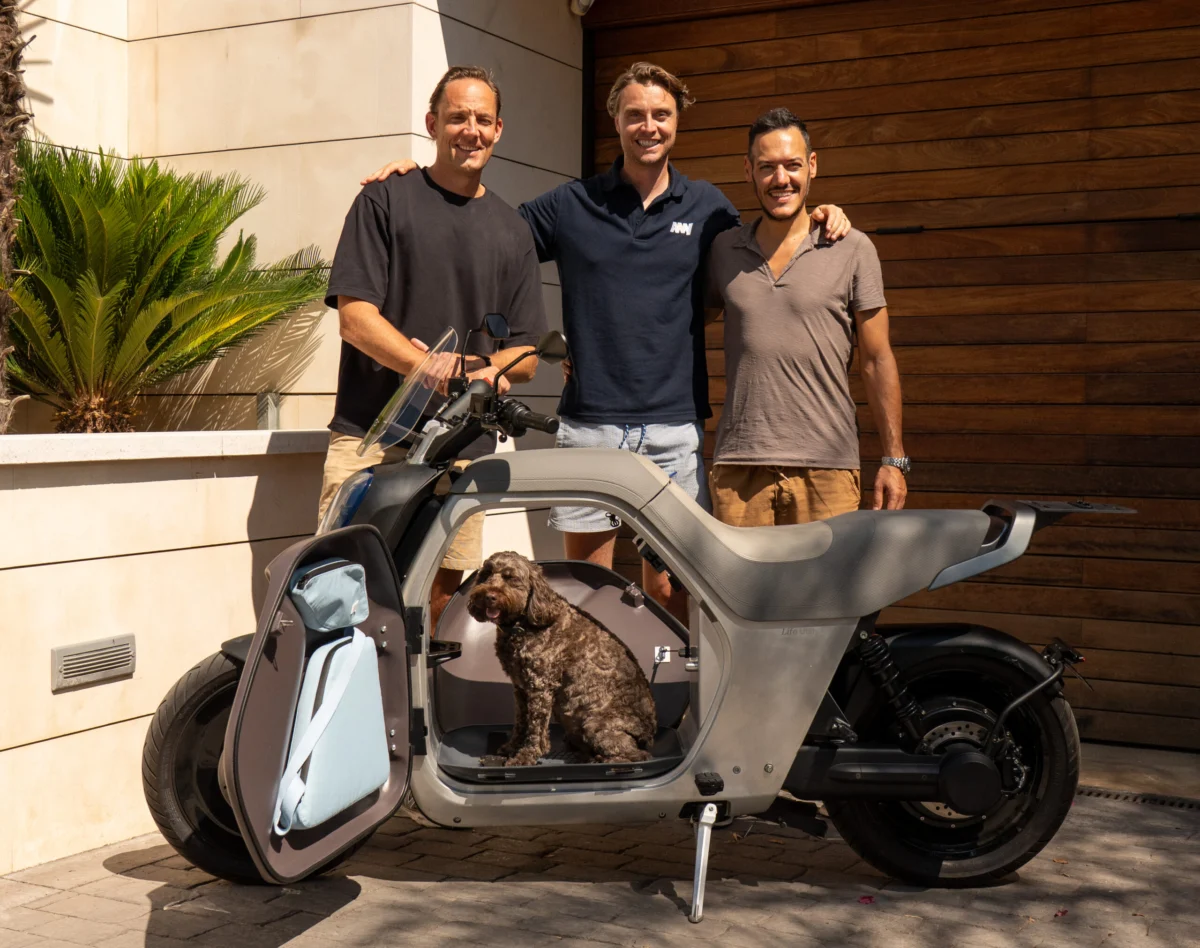
The LUV1 is an electric motorcycle that bridges the gap between the agility of a motorbike and the utility of a cargo bike. Capable of hitting a top speed of 100 km/h (62 mph), it is designed to hold up to 120 liters of storage. It is not just a motorcycle; it is a modular platform engineered to be the primary vehicle for a household.
A Chronology of Disruption: From Concept to Configurator
The journey of Any has been swift, characterized by high-profile design backing and rapid capital accumulation.
- May 2026 (Milan Design Week): The LUV1 prototype makes its public debut. The design, spearheaded by former Pininfarina director Lowie Vermeersch, captures immediate industry attention. The "Life Utility Vehicle" concept is officially introduced to the market.
- Late 2026: Following the buzz from Milan, Any accelerates its digital presence, launching a custom configurator that allows potential riders to tailor their LUV1 with various panels, racks, and accessories.
- November 2026: The startup secures €1.5 million in venture capital, providing the necessary runway to transition from prototype to production planning.
- May 2027: A follow-up funding round of €1.25 million brings the total raised to €2.75 million. By this time, the company reports over 600 reservations, each secured by a fully refundable €49 deposit.
- The Present: With a seasoned leadership team in place—including CEO Pieter Van de Velde and engineering lead Alessandro Mangano—the company is now turning its sights toward a major Series A round of €10 million to facilitate full-scale manufacturing.
Engineering for Real Life: Modular Design
What truly sets the LUV1 apart is its uncompromising modularity. Any understands that a "one-size-fits-all" approach to transport is precisely why the car has dominated for so long. The LUV1 challenges this by offering an adaptable frame.
Users can opt for an open frame for light, airy rides, or outfit the bike with specific panels tailored to their lifestyle. Whether a rider needs to haul camping gear, transport a pet in a secure enclosure, or carry professional work equipment, the LUV1 is designed to be reconfigured.

This modularity extends beyond storage. Optional additions such as specialized windshields, heavy-duty racks, and weather-resistant ponchos allow the vehicle to be used in diverse climates and for various use cases. By hiring Alessandro Mangano—a veteran with pedigree from Ferrari, Aprilia, and Piaggio Group—Any has signaled that they are not merely building a gadget, but a high-performance vehicle capable of meeting the rigorous standards of the automotive world.
Supporting Data and Market Positioning
The European Association of Motorcycle Manufacturers (ACEM) has projected that the two-wheeler market will be predominantly electric by 2030. However, most players in the market are focusing on either high-end electric sport bikes or budget-friendly city scooters.
Any occupies a unique middle ground. Starting at approximately €7,000 (roughly $8,150), the LUV1 is positioned as an affordable alternative to a car while providing a more premium, capable experience than a standard electric cargo bike.
Crucially, the LUV1 is designed to fall under the A1 license category in most jurisdictions. This is a strategic masterstroke: it makes the vehicle accessible to a broad demographic of drivers who may not have the time or desire to obtain a full, advanced motorcycle license, yet are looking for something more substantial than a pedal-assist bicycle.
With two swappable batteries, the LUV1 boasts a range of up to 87 miles per charge. In the dense urban environments of Europe, this is more than sufficient for several days of commuting and errands, effectively mitigating "range anxiety."
Official Responses and Strategic Vision
The leadership team at Any, led by CEO Pieter Van de Velde and CCO Erik de Winter, views the LUV1 as only the beginning. De Winter, who previously co-founded the e-cargo bike-sharing service Cargaroo, brings a deep understanding of urban logistics to the table.
"We aren’t just building a bike," the company noted in recent communications. "We are building a portfolio of vehicles."

This vision is backed by the startup’s interest in the last-mile delivery sector. By creating a vehicle that is as efficient as a motorcycle but as utilitarian as a small van, Any is positioning itself to be a preferred partner for delivery fleets looking to decarbonize without sacrificing cargo capacity. Discussions regarding a "third-wheeler" variant of the LUV1 further suggest that the company is mapping out a comprehensive ecosystem of modular mobility solutions.
The investment community has responded with cautious optimism. By securing high-profile advisors from the automotive sector, Any has managed to bridge the gap between "tech startup" and "automotive manufacturer," a feat that many mobility companies fail to achieve.
Implications for the Future of Cities
The implications of Any’s success—or lack thereof—extend far beyond the company’s bottom line. The "car-first" architecture of modern cities is a result of design choices that prioritized the automobile over the individual. If the LUV1 succeeds in proving that a two-wheeler can fulfill 90% of the utility a car provides, it could lead to a massive shift in urban planning.
Fewer cars mean less demand for sprawling parking infrastructure and lower traffic congestion. However, the path forward is not without hurdles. Any must now execute on its production roadmap. Scaling from a boutique prototype stage to mass production is the "valley of death" for many hardware startups. The planned €10 million Series A round will be the ultimate test of investor confidence in the LUV1’s market viability.
If the startup can hit its delivery targets and prove that their "Life Utility Vehicle" can survive the rigors of daily use, they may just succeed in the goal they set out to achieve: making the car a luxury or a niche choice, rather than an urban necessity.
For the average European resident, the promise of Any is simple: you can trade in the stress of traffic and the cost of parking, but you don’t have to trade in your ability to live your life. As the company prepares for its next phase of growth, the automotive world is watching closely to see if this Belgian startup can truly turn the tide on urban mobility.
About the Author