For over a decade and a half, the U.S. Department of Energy’s Advanced Research Projects Agency-Energy (ARPA-E) has served as the nation’s primary laboratory for high-stakes, high-reward energy innovation. By providing the "patient capital" that private investors are often too risk-averse to supply, the agency has acted as a bridge across the treacherous "valley of death"—the chasm between a promising laboratory experiment and a commercially viable, scalable technology.
However, as the program enters its 16th year, it finds itself at a political and strategic crossroads. A landmark report from the National Academies of Science, released in late 2026, confirms the agency’s historical success while simultaneously urging a radical pivot. As the Trump administration balances a desire for "American energy dominance" with a skepticism toward federal spending, the future of this climate-tech engine remains both essential and precarious.
The Mandate: Bridging the "Valley of Death"
The foundational logic behind ARPA-E, established in 2009, is rooted in the success of the military’s Defense Advanced Research Projects Agency (DARPA). The premise is simple: the private sector is structurally incapable of funding fundamental scientific breakthroughs that require decades of maturation before reaching profitability. Without government intervention, these "moonshot" technologies—ranging from next-generation nuclear reactors to advanced geothermal extraction—would likely languish in academic journals, never reaching the grid.
Over the last 15 years, the agency has deployed more than $4 billion in grants. According to the recent National Academies report, this capital has served as a catalyst, triggering more than $20 billion in follow-on private investment and the issuance of over 1,400 patents. Crucially, the report notes a "crowding in" effect: once ARPA-E de-risks a technology, private venture capital firms, previously wary of the technical hurdles, are far more likely to enter the space.
A Chronology of Innovation and Political Friction
The history of ARPA-E is a testament to the volatility of federal energy policy:
- 2009: ARPA-E is formally established, tasked with preventing the U.S. from falling behind in the global clean energy race. Early focus centers on incremental improvements to solar cells and lithium-ion batteries.
- 2017–2020: During his first term, President Donald Trump attempts to effectively defund the program by withholding appropriated funds—a move later deemed illegal by the Government Accountability Office.
- 2019: The agency begins funding "clean firm" power initiatives, including early support for Fervo Energy, a geothermal startup.
- 2024: The clean-tech sector experiences a wave of enthusiasm, with companies like Natron Energy planning massive manufacturing expansions in the U.S.
- 2025–2026: Following the reelection of Donald Trump, the administration begins a campaign to roll back Biden-era climate subsidies. Despite this, the DOE continues to issue grants for "hard-tech" energy solutions.
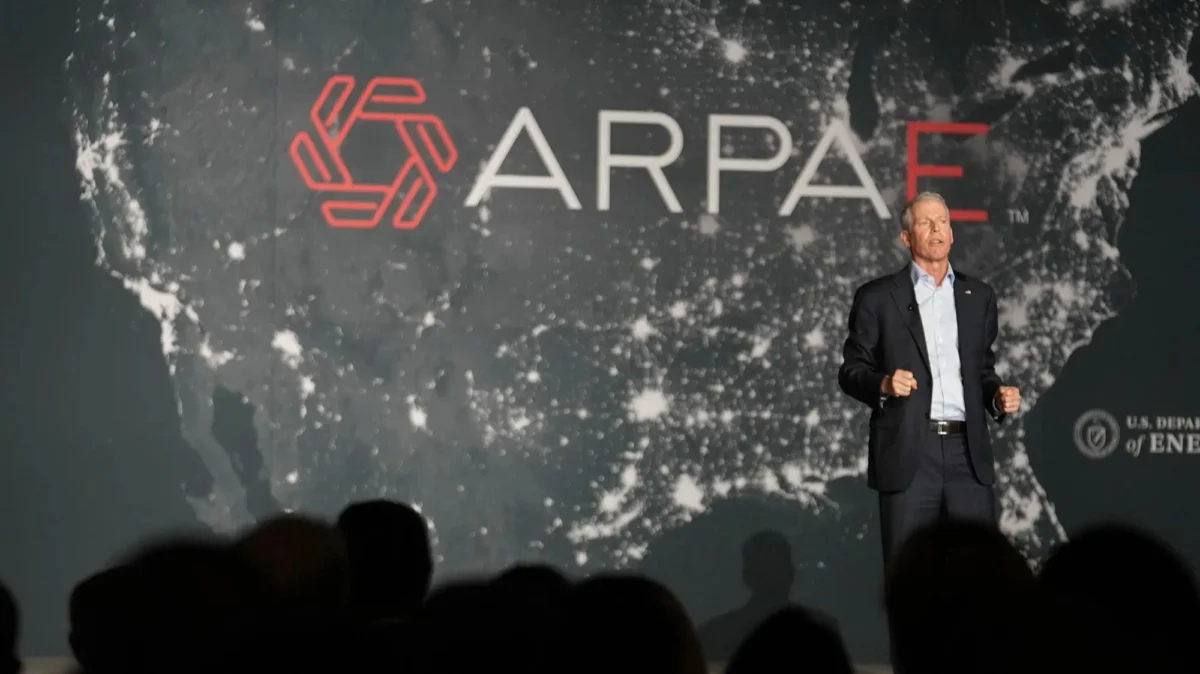
- April 2026: Energy Secretary Chris Wright addresses the ARPA-E summit in San Diego, articulating a vision for the agency that focuses on energy security and grid reliability.
- August 2026: The National Academies of Science releases a definitive report validating the program’s economic efficacy and recommending a shift toward long-term, "harder" energy challenges.
Supporting Data: Why the Model Works
The data provided by the National Academies is unequivocal: ARPA-E projects are statistically more likely to secure patents and attract venture capital than those that are rejected. The "crowding in" effect is the agency’s greatest asset, with approximately 40 percent of grants leading to subsequent private sector replication.
"We’re trying to enable very talented people who could be doing other things to spend their lives trying to do incredibly risky things that, probabilistically speaking, will not deliver a profit in time to benefit them," explains Chris Bataille, a fellow at the Columbia University Center on Global Energy Policy.
The shift in the energy landscape is equally measurable. In the early 2010s, ARPA-E played a critical role in making solar and batteries commercially viable. Today, however, those sectors are mature. Thanks to global manufacturing scale—particularly China’s massive overcapacity—solar and wind are now cost-competitive without government intervention. The report argues that ARPA-E’s limited budget should no longer be spent on these technologies, but rather on the "hard" problems: decarbonizing steel and cement, seasonal energy storage, and nuclear fusion.
The "Clean Firm" Power Transition
While renewables have captured the public imagination, they are intermittent. The U.S. grid remains tethered to coal and gas to ensure baseload power for industrial hubs, data centers, and the growing demands of artificial intelligence. Solving this requires "clean firm" power—energy that is available 24/7.
ARPA-E’s recent successes highlight this shift:
- Fervo Energy: By utilizing horizontal drilling techniques similar to those used in the oil and gas industry, Fervo accesses deep-earth geothermal heat. The company has successfully transitioned from a lab-backed experiment to a commercial partner for tech giants like Google.
- Form Energy: This company is tackling the "intermittency" problem with iron-air batteries, which provide multi-day storage at a fraction of the cost of lithium-ion, potentially transforming how we manage solar and wind energy over seasons.
- X-Energy: Focused on small-scale, modular nuclear reactors, this firm represents the agency’s pivot toward high-density, carbon-free baseload power.
Official Responses and Administrative Conflict
The current administration finds itself in an ideological tug-of-war. On one hand, the Trump administration has explicitly signaled a desire to cut ARPA-E funding by nearly 50 percent in its 2027 budget request, citing "fiscal discipline." On the other hand, the Department of Energy continues to operate the program with the goal of "advancing President Trump’s agenda to restore American energy dominance."
In a statement provided to Grist, the Department of Energy noted that the agency remains committed to "backing breakthrough, high-risk technologies." This suggests that even within an administration hostile to "green" mandates, the strategic necessity of maintaining a technological edge over global competitors like China remains a bipartisan, if inconsistently applied, priority.
Implications: The High Cost of Policy Uncertainty
The real-world impact of political instability is clear. While the program itself has survived, the broader clean-tech ecosystem is suffering from a lack of investor confidence.
A stark example is the trajectory of Natron Energy. After receiving critical ARPA-E support to develop sodium-ion batteries, the company planned a $1.4 billion manufacturing plant in North Carolina. However, as the political climate shifted and private investment for electric vehicle and battery infrastructure dried up following the 2026 political cycle, Natron was unable to secure the necessary private capital to break ground. The company ceased operations last year.
The tragedy of this collapse is not just the loss of a specific company, but the chilling effect it has on future innovators. If the U.S. government signals that it will fund the "hard" R&D but will not maintain the market conditions necessary for those technologies to scale, the next generation of energy entrepreneurs may choose to work elsewhere.
As Chris Bataille notes, the problem is not a lack of potential, but a lack of commitment. "We’re talking about projects that will likely be profitable, but they’re just not valued unless the government values them," Bataille said. "There’s probably one-one-hundredth of the necessary money going into those."
Ultimately, the future of ARPA-E serves as a litmus test for American industrial policy. If the nation is serious about moving off the fossil fuel pathway, it must decide whether it views ARPA-E as a redundant subsidy or an essential national security asset. As the National Academies report suggests, the technology is ready; the question is whether the political will is there to see it across the finish line.
About the Author