For decades, the trope of the cinematic surveillance state has relied on the visual: grainy CCTV footage, facial recognition software, and the frantic tracking of targets across a city’s camera network. We have been conditioned to believe that as long as we avoid the lens, we remain anonymous. However, a quiet revolution in radio frequency technology has rendered this assumption dangerously obsolete.
Modern Wi-Fi routers, long considered benign household appliances that facilitate our streaming and browsing, are undergoing a transformation. They are becoming the sensors of an accidental, pervasive, and largely invisible surveillance system. Recent developments from both major telecommunications providers and academic researchers indicate that the very infrastructure we use to connect to the digital world is now tracking our physical movements—even if we aren’t carrying a single device.
The Main Facts: Turning Airwaves into Eyes
The core of this technological shift lies in a phenomenon known as "Wi-Fi sensing." This technology leverages the way radio waves behave in a physical space. When a Wi-Fi signal travels from a router to a receiver—such as a smartphone or laptop—it does not travel in a straight, unobstructed line. Instead, the waves bounce off walls, furniture, and human bodies.
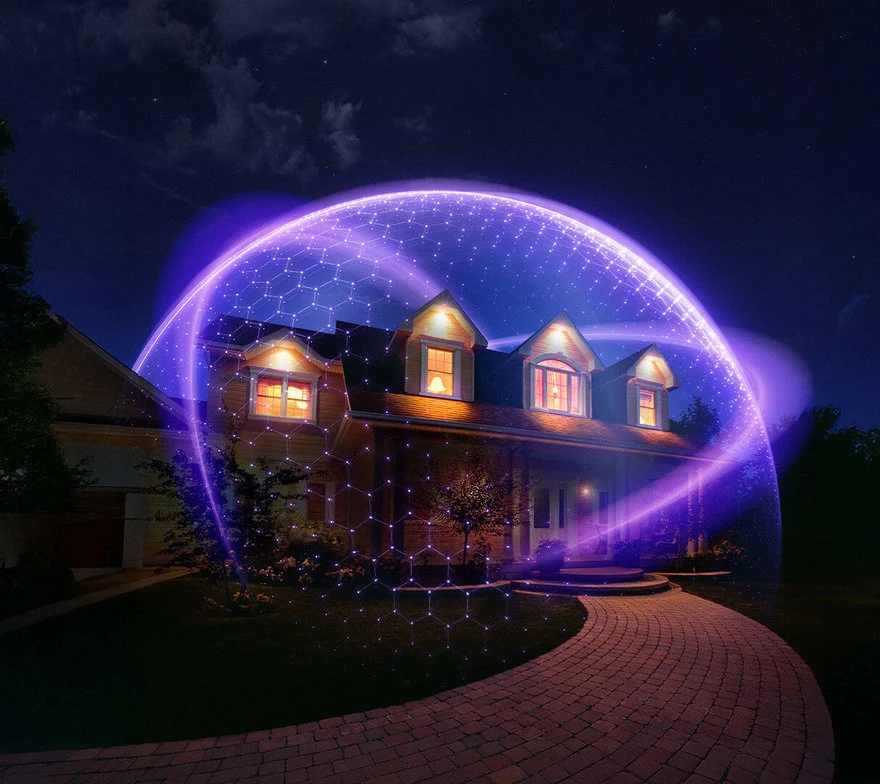
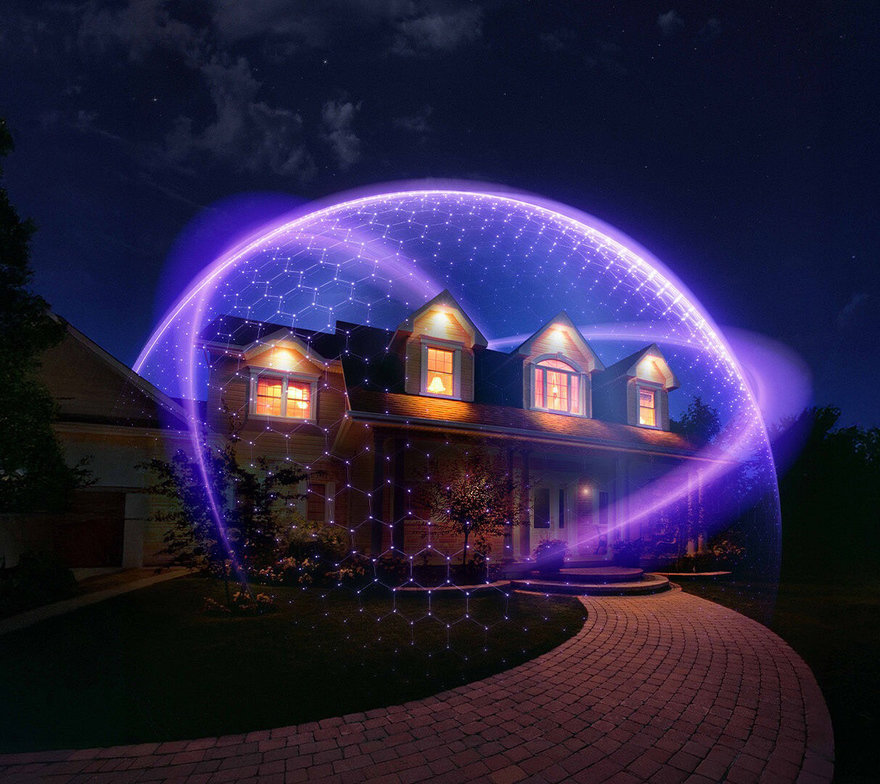
Broadband providers, most notably Comcast with its Xfinity Shield WiFi Motion service, are already monetizing this. By analyzing the fluctuations in signal strength and timing caused by an object moving through a room, a router can effectively function as a motion detector without the need for additional infrared sensors or cameras. The router detects the subtle "shadows" cast by a moving body within the radio field. If the signal pattern is interrupted, the router interprets this as a breach of space. While marketed as a convenient home security feature, it represents a fundamental shift in how we perceive the privacy of our own homes.
Chronology: From Connectivity to Sensing
The evolution of this technology follows a distinct path from functional networking to environmental awareness:

- 2010s: The Rise of Beamforming. As Wi-Fi standards evolved to meet the demands of high-bandwidth streaming, engineers introduced "Beamforming." This allowed routers to direct signals more efficiently toward specific devices. To do this, the router and the device engage in a constant dialogue of Beamforming Feedback Information (BFI), essentially mapping the environment to optimize the path of the signal.
- 2020–2023: The Rise of Smart Home Sensing. Home security companies and ISPs began to realize that the BFI data—which was previously considered "noise" to be discarded—could be interpreted to detect human presence. This led to the rollout of "passive" security features where the router acts as the primary sensor.
- 2025: The Breakthrough of Individual Identification. Researchers at the Karlsruhe Institute of Technology (KIT) published a landmark study demonstrating that Wi-Fi sensing is not limited to detecting motion. By applying advanced machine learning, they proved that individual human body types and gaits create unique, quantifiable "digital fingerprints" in the way they obstruct radio waves.
Supporting Data: The Science of the "BFId"
The study conducted by the Karlsruhe Institute of Technology serves as the most alarming validation of this surveillance potential. The researchers enlisted 197 test participants, requiring them to walk through various Wi-Fi-enabled environments.
The findings were profound. By analyzing the BFI data, the researchers were able to infer the identity of specific individuals with near-100% accuracy. Crucially, this identification was independent of the individual’s gait or the specific angle at which they walked through the network.
The researchers dubbed this system BFId. Unlike traditional biometrics, which require a camera to capture a face or a scanner to capture a thumbprint, BFId operates through the air. Because every human body has a unique shape and density, it interacts with radio frequencies in a way that is distinctly its own. The machine learning model treats these interactions as unique biometric signatures. Even if a person is not carrying a phone, a tablet, or a smartwatch, their mere physical presence creates a unique disturbance that can be cataloged and tracked by any router within range.
Official Responses and Industry Stance
The industry response to these findings has been a delicate balancing act. Companies like Comcast frame these capabilities as a consumer-friendly evolution of the "Smart Home." In their messaging, the ability for a router to "see" is framed as a benefit: it eliminates the need for privacy-invasive cameras or complex alarm installations.
However, the academic community is sounding a different alarm. Researcher Julian Todt, who spearheaded the KIT study, has been vocal about the implications. "This technology turns every router into a potential means for surveillance," Todt stated in his recent findings. "If you regularly pass by a café that operates a Wi-Fi network, you could be identified there without noticing it and be recognized later—for example, by public authorities or companies."

The industry argues that this data is localized and encrypted. Yet, security experts point out that "local" is a relative term in an era of cloud-connected smart home devices. If the data is stored in the cloud, it is inherently vulnerable to subpoena, hacking, or unauthorized third-party access.
Implications: The End of Physical Anonymity
The implications of a world where Wi-Fi acts as a universal tracker are staggering, touching on ethics, law, and the fundamental right to move through public space unnoticed.
1. The De-Anonymization of Public Spaces
In a city, we are surrounded by overlapping Wi-Fi networks from shops, restaurants, and residential buildings. If a centralized authority or a malicious actor were to aggregate data from these routers, they could map an individual’s movement across an entire neighborhood. Because the "BFId" fingerprint is unique, you are essentially carrying an invisible, unchangeable beacon that broadcasts your presence to every router you pass.
2. The Vulnerability of "Linkage" Attacks
While the BFId system might start with a "blank" fingerprint—meaning the system knows "Person A" was here at 2:00 PM, but doesn’t know who "Person A" is—this is only a temporary hurdle. A "linkage attack" would allow a bad actor to combine this Wi-Fi data with other data sets. For example, if a camera identifies you walking into a café at the same time a router records a specific BFId signature, the system can permanently link your identity to that radio fingerprint. From that point on, you are tracked everywhere you go, even in places where there are no cameras.
3. Regulatory Lag
Legislative bodies worldwide are currently struggling to catch up with basic facial recognition laws. Wi-Fi sensing represents an entirely new category of surveillance that current privacy frameworks—such as GDPR or CCPA—are ill-equipped to handle. Because this data is considered "network telemetry" rather than "personal identification," it often falls into a legal gray area, allowing companies to collect it under the guise of network optimization or security.
4. The Future of Privacy
As we move forward, the "right to be forgotten" or the "right to be left alone" may require us to rethink our physical environment. Will we eventually require "RF-shielded" clothing to protect ourselves from being identified by the walls around us? Will we see the emergence of "Wi-Fi jamming" as a privacy-preserving counter-measure?
The transition of the Wi-Fi router from a utility to a surveillance device marks a pivotal moment in the digital age. We have built a world that is hyper-connected, but in the process, we have inadvertently built a panopticon that requires no lenses, no light, and no consent. As the technology behind BFId matures, the distinction between our digital lives and our physical presence is evaporating, leaving us to navigate a world where the very air around us is reporting our movements to the highest bidder.
About the Author