In the heart of the American Midwest, Iowa is grappling with a quiet, devastating epidemic. As the state prepares for the pivotal November 2026 midterm elections—a contest that could determine the legislative trajectory of the final two years of Donald Trump’s presidency—a singular, harrowing issue has eclipsed the traditional debates over the cost of living and inflation: the state’s skyrocketing cancer rates.
For decades, the rolling fields of Iowa have served as the breadbasket of the nation, a powerhouse of corn, soy, and pork production. Yet, behind this economic engine lies a grim reality. According to data from the National Institute on Minority Health and Health Disparities, Iowa now holds the second-highest cancer incidence rate in the United States. It stands alongside Utah and West Virginia as one of only three states where cancer rates are actively climbing. For many Iowans, this is not merely a statistical anomaly—it is a personal, visceral tragedy.
The Human Toll and the Political Awakening
The narrative of the 2026 campaign cycle is being written in town halls and kitchen tables across the state, where voters are demanding accountability. "The road I live on, I think there’s only one family that has not dealt with some kind of cancer," says Seth Watkins, a longtime farmer in southwest Iowa. His sentiment reflects a growing consensus: the status quo is failing.
This crisis has forced a reluctant political class to confront the intersection of industrial agriculture, environmental health, and public policy. While Republicans and Democrats remain divided on the specific causal mechanisms, the pressure to act has become bipartisan. Sarah Green, executive director of the Iowa Environmental Council, notes that the "Iowa public is calling and demanding action and conversation and answers in a way that both parties are needing to respond."
A Chronology of Concern: From Stability to Surge
To understand the current urgency, one must look at the historical trajectory of health in the state.
- Pre-2012: Iowa’s cancer rates largely mirrored national trends, showing no significant deviation from the rest of the country.
- 2012–2020: The inflection point. For reasons researchers are still working to isolate, the state’s cancer incidence began a steady, alarming climb.
- 2022: Data confirms that Iowa’s cancer rate hit approximately 506 cases per 100,000 people, significantly outpacing the national average of 442.
- 2025–2026: Public awareness reaches a fever pitch. A recent survey ranked cancer as the single most pressing issue for Iowans, pushing economic anxieties into the background.
- June 2026: The state legislature passed a $320 million water quality investment, though critics—including environmental advocates—argued the funding was insufficient and failed to address the root causes of agricultural pollution.
- November 2026: The midterm elections are poised to serve as a referendum on how the state addresses this public health emergency.
Supporting Data: The Chemical Footprint
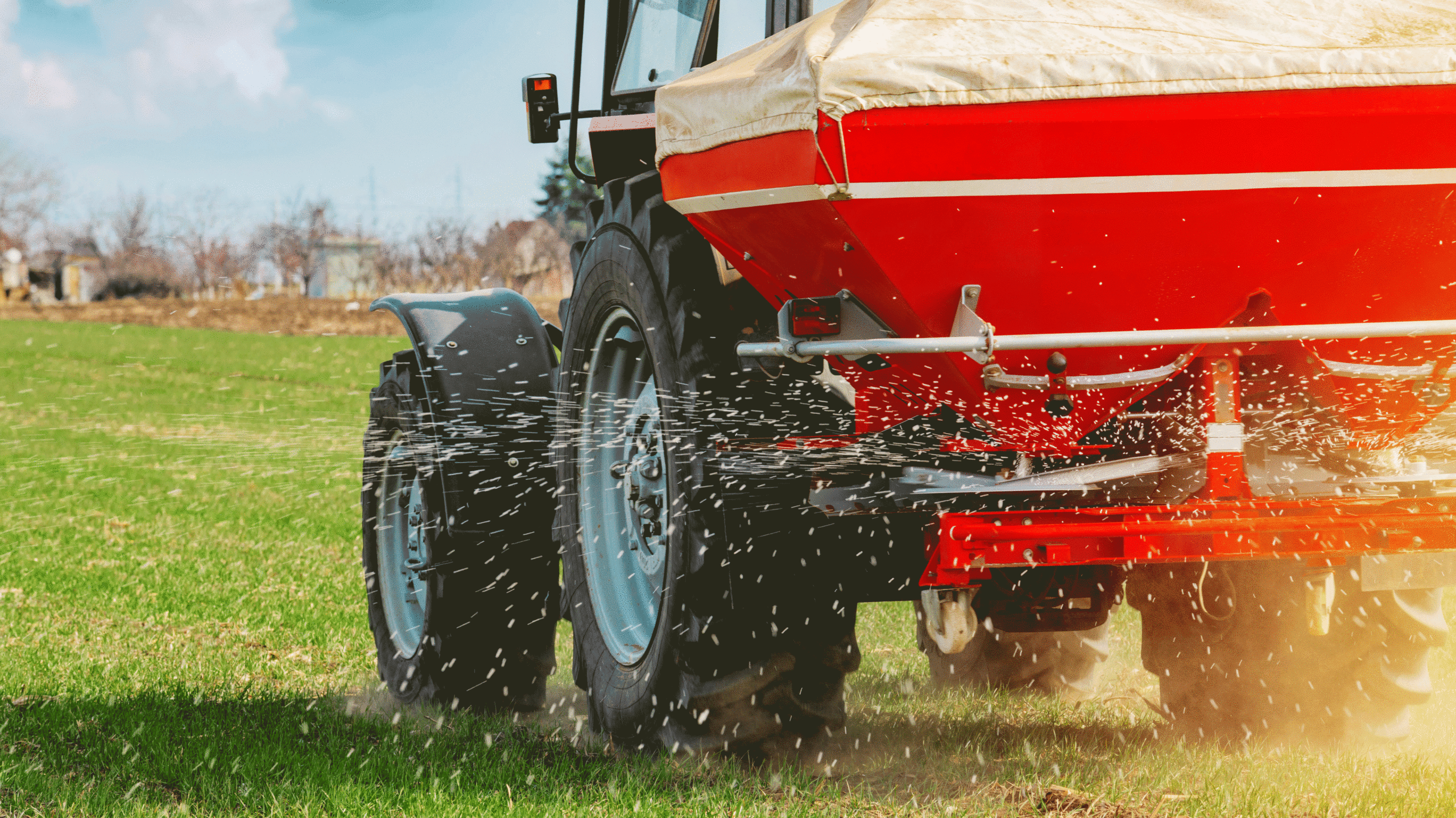
The correlation between Iowa’s economic output and its health outcomes is increasingly difficult to ignore. The state leads the nation in the use of fertilizers and hosts a dense network of Concentrated Animal Feeding Operations (CAFOs). These operations are part of an industrial supply chain that generates massive amounts of waste, often leading to nutrient-heavy runoff.
The contamination of water supplies is a documented phenomenon. In recent years, Des Moines, the state’s capital, has been forced to implement lawn-watering bans as nitrate levels in rivers—the primary source of the city’s drinking water—reached near-record levels. Nitrates are not just a water quality issue; they are linked to a host of health problems, including specific types of cancer.
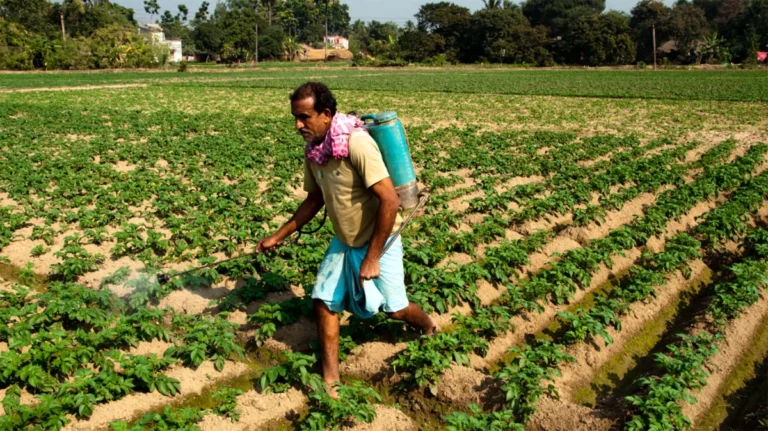
Furthermore, glyphosate—the primary ingredient in the widely used herbicide Roundup—is ubiquitous in Iowa. Scientific literature, including various studies and ongoing legal battles, has suggested links between glyphosate exposure and increased risks of non-Hodgkin lymphoma and acute myeloid leukemia. While the debate over chemical safety is fierce, the prevalence of these cancers in Iowa suggests a need for deeper scrutiny of the chemicals saturating the state’s soil and water.
Official Responses and Ideological Divides
The political response to the crisis has been as varied as the candidates themselves.
In the race for Iowa’s U.S. Senate seat, the contrast is stark. Democrat Josh Turek has centered his campaign on his personal family history with illness—including his father’s exposure to Agent Orange and his sister’s breast cancer battle. His opponent, Republican Representative Ashley Hinson, has focused her platform on broader health policy reforms within the federal framework.
In the gubernatorial contest, the rhetoric is equally charged. The Republican candidate, Zach Lahn, secured his primary win with the backing of the "Make America Healthy Again" (MAHA) movement. Lahn has promised to challenge the influence of Big Ag and Big Pharma, accusing them of prioritizing profit over public safety. His opponent, Democrat Rob Sand, has proposed comprehensive plans to manage manure, monitor radon levels, and expand conservation programs.
Perhaps the most radical proposal comes from Chris Jones, the Democratic candidate for state agriculture secretary. A former University of Iowa researcher, Jones has advocated for a fundamental shift in the state’s agricultural identity. He proposes zoning changes for CAFOs and a "strategic retreat" from the state’s heavy reliance on corn for ethanol, arguing that the current system is essentially "mining" the land rather than practicing sustainable agriculture.
Notably, the incumbent agriculture secretary, Mike Naig, a Republican with ties to the industry as a former Monsanto lobbyist, has remained largely silent, failing to respond to requests for comment regarding the state’s health trajectory.
The "Lobe Rangers" and Grassroots Action
Change, however, is not coming solely from the halls of power. A group of north-central Iowa farmers, identifying themselves as "the Lobe Rangers," has begun implementing sustainable practices that reject the heavy-handed, chemical-dependent model of modern industrial farming.
Zack Smith, a member of the group, argues that the current system is built on "nonsense" and that farmers can be profitable without poisoning their communities. By following voluntary nutrient-reduction strategies, these farmers hope to prove that the state’s agricultural health can be restored.
Similarly, Seth Watkins, who has transitioned his family farm toward diversified crops and smaller, more sustainable plots, views the current industrial model as an extractive industry. "I feel like we’re mining instead of practicing agriculture," Watkins says. "Show me an area… where when the resources are gone, the people are better off."
Implications for the Future
The implications of this health crisis extend far beyond the November ballot. Iowa is a microcosm of a broader national struggle: the tension between corporate-driven agricultural productivity and the environmental and physical health of the citizenry.
The political class is now forced to acknowledge that for many Iowans, the cost of the state’s "economic success" is being paid in cancer diagnoses. Whether the 2026 midterms result in a policy shift or mere rhetoric remains to be seen. As the "Lobe Rangers" and other advocates suggest, the solution will not come from a single election cycle. It will require a multi-level transformation of how Iowa treats its soil, its water, and its people.
For now, the state remains at a crossroads. The data is clear, the public is grieving, and the demand for a new, healthier path for the heartland is becoming a roar that no politician can afford to ignore.
About the Author