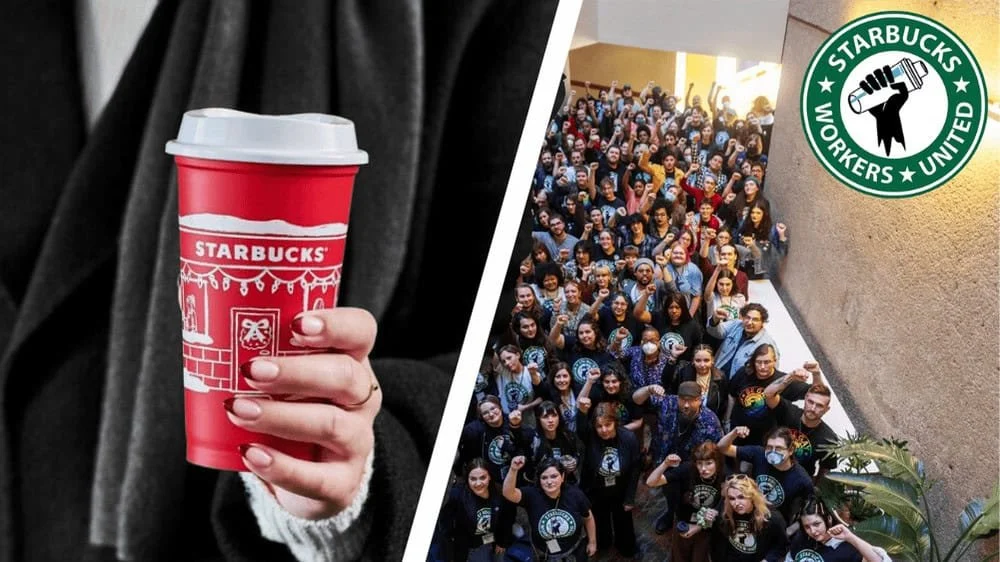
The atmosphere at Starbucks stores across the United States on November 14 was a far cry from the festive, bustling scenes the coffee giant traditionally cultivates for its annual "Red Cup Day." Instead of the usual queues of customers eager to claim their complimentary reusable holiday tumblers, many locations were met with silence, picket signs, and the chants of baristas demanding substantive change.
In what organizers dubbed the "Red Cup Rebellion," baristas at 65 stores walked off the job, strategically timing the action to coincide with one of the company’s highest-traffic promotional events of the year. However, this year’s strike was distinguished by a new, potent element: the active, public participation of high-ranking elected officials. As labor tensions between Starbucks Workers United and the corporate office reach a fever pitch, the movement has transcended the breakroom and entered the halls of government, forcing a national conversation about corporate accountability, the rights of retail workers, and the future of the American service industry.
A Chronology of Escalation: From Local Grievances to National Protests
The roots of the current standoff date back to the historic wave of unionization that began in 2021. Since that time, over 500 Starbucks locations have voted to join Workers United. Despite this momentum, the journey toward a finalized collective bargaining agreement has been fraught with accusations of stalling, bad-faith negotiations, and retaliatory measures.
The events leading up to the November 14 strike were characterized by a deliberate buildup of pressure:
- November 12: U.S. Senator Patty Murray (D-WA), representing the state where Starbucks is headquartered, issued a formal letter to CEO Brian Niccol. In it, she urged the company to engage in good-faith negotiations, emphasizing that the persistent labor disputes were damaging the company’s long-standing reputation as an employer of choice.
- November 13: The rhetoric intensified in Seattle, the heart of the Starbucks empire. Newly elected Mayor-elect Katie Wilson appeared at a rally outside the Starbucks Reserve Roastery, where she publicly advocated for a boycott of the chain. Her presence signaled a seismic shift in how municipal leaders engage with their city’s largest corporate stakeholders.
- November 14: The "Red Cup Rebellion" officially commenced. Baristas at 65 locations walked off the job during peak hours. Simultaneously, New York City Mayor-elect Zohran Mamdani amplified the message on social media, declaring, "No contract, no coffee," and urging his constituents to stand in solidarity with the workers.
The Core Grievances: Why Workers are Still on the Picket Line
While the strike is often simplified as a dispute over wages, the reality of the baristas’ demands is multifaceted. The union is not merely seeking a cost-of-living adjustment; they are pushing for systemic changes that address the daily reality of modern service work.
Predictability and Staffing
Workers have consistently cited the "under-staffing crisis" as a primary concern. The push for efficiency and speed, fueled by complex mobile app orders and an ever-evolving menu, has led to a work environment that many employees describe as unsustainable. Workers are demanding more predictable scheduling, which would allow them to maintain a work-life balance that the current "on-call" style of retail management often destroys.
The Bargaining Void
The most profound source of frustration is the timeline. More than two years have passed since the first store successfully unionized, yet not a single store has signed a contract. For the thousands of baristas who voted for representation, this delay feels like a calculated attempt by the company to drain the union of its energy and momentum. The strike on Red Cup Day was a direct response to this "waiting game," designed to prove that the union’s influence is not waning, but growing.
Political Involvement: A Shift in the Calculus
The intervention of elected officials like Katie Wilson and Zohran Mamdani marks a significant departure from traditional political neutrality. Historically, local politicians have avoided picking sides in private-sector labor disputes, fearing the loss of corporate tax revenue or business development.
However, the political landscape is shifting. For progressive officials in urban centers, supporting organized labor has become a litmus test for their base. Starbucks, by positioning itself as a "progressive" company—touted for its employee benefits and corporate social responsibility initiatives—has inadvertently made itself a target for activists. When a company markets itself on values, it invites scrutiny when those values are perceived to be compromised.
Senator Patty Murray’s involvement is particularly significant. As a high-ranking member of the Senate, her call for negotiations adds federal weight to a local labor issue. It suggests that the "Starbucks problem" is no longer just a series of store-level grievances, but a national labor relations crisis that requires executive-level intervention.
The Challenge for CEO Brian Niccol
Brian Niccol assumed the role of CEO in September 2024, stepping into a role that has become increasingly precarious. His tenure at Chipotle was lauded for operational excellence, yet Starbucks presents a unique, more complex set of challenges.
At Chipotle, Niccol focused on supply chain efficiency and digital integration. At Starbucks, he inherits a workforce that is fundamentally alienated. If Niccol hopes to revitalize the brand, he must reconcile the company’s operational goals with the human cost of those operations. The "Red Cup Rebellion" proves that the workforce is no longer a silent component of the machinery; they are an organized entity with the power to disrupt the brand’s most profitable day of the year.
The company’s response has been carefully guarded, with management stating a desire to reach "fair and sustainable" agreements. However, actions speak louder than press releases. Investors are watching closely to see if Niccol chooses to continue the aggressive, expensive legal strategies of his predecessors or if he opts for a new path of genuine cooperation.
Implications for the Retail Sector
The standoff at Starbucks is a bellwether for the future of the American retail industry. As other major chains face similar unionization drives, the "Starbucks model" of resistance will be tested. If the company is forced to concede to union demands, it could create a domino effect across the retail landscape, emboldening workers at competitors to organize and demand similar protections.
Furthermore, the involvement of mayors and senators suggests that "no contract, no coffee" is becoming a viable political strategy. When elected leaders join picket lines, they provide a legitimacy to labor movements that was previously difficult to achieve. This alignment of grassroots labor activism with mainstream political power makes it increasingly difficult for major corporations to ignore their employees.
Conclusion: The Crossroads of Corporate Culture
Red Cup Day was intended to be a celebration of holiday spirit, a moment where Starbucks could cement its place in the seasonal traditions of millions of customers. Instead, it became a stage for a fundamental conflict between corporate power and worker agency.
As the standoff continues, the question remains: Can Starbucks maintain its reputation as a progressive, employee-centric company while simultaneously battling its own workforce in the courts and on the picket lines? The answer will likely define the legacy of Brian Niccol’s tenure. For now, the "Red Cup Rebellion" serves as a stark reminder that in the modern economy, a brand is only as strong as its relationship with its employees. Whether through a new contract or continued escalation, the future of the company will be written not in boardrooms, but on the front lines of its own stores.
About the Author