In a significant shift for the American retail landscape, home furnishings giant IKEA and consumer electronics leader Best Buy have announced a landmark strategic partnership. This fall, the two retail titans will launch a shop-in-shop pilot program across 10 select locations in Florida and Texas, marking the first time IKEA products will be sold within the physical footprint of another major U.S. retailer.
This collaboration represents a convergence of two retail powerhouses, designed to streamline the complex process of home renovation. By embedding 1,000-square-foot IKEA-branded showrooms within Best Buy stores, the companies aim to bridge the gap between interior design aesthetics and the technological infrastructure of the modern home.
Main Facts: A Synergistic Approach to Home Improvement
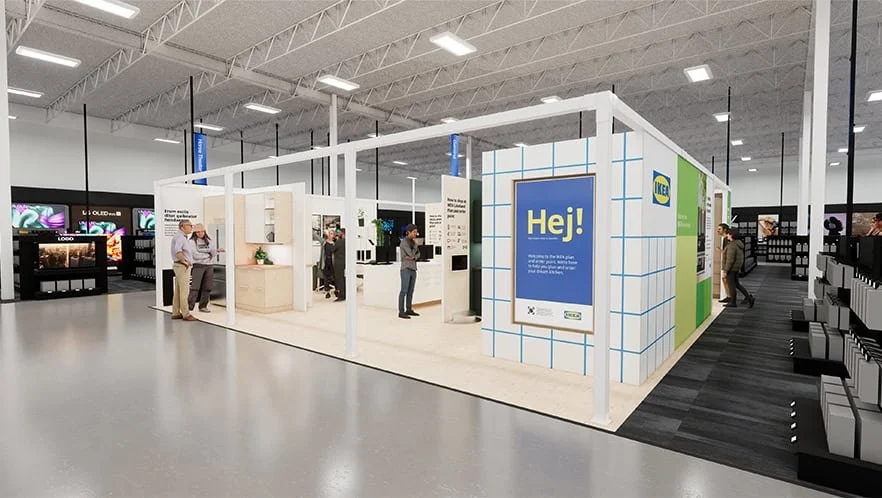
The core of the initiative centers on the intersection of furniture and appliance integration. Each of the 10 designated Best Buy stores will feature a dedicated, IKEA-branded space specifically curated to showcase kitchen and laundry room layouts.
These displays are not merely showrooms; they are functional demonstrations of how IKEA’s signature cabinetry and storage systems harmonize with the high-end appliances sold by Best Buy. By placing these elements side-by-side, the partners intend to solve a long-standing pain point for homeowners: the difficulty of visualizing how specific appliances will fit into custom cabinetry layouts.
Key Operational Details:
- The Footprint: Each shop-in-shop occupies 1,000 square feet of dedicated floor space within the existing Best Buy store.
- Specialized Staffing: The experience is supported by a dual-expertise model. IKEA co-workers will be present to provide professional guidance on space planning and design, while Best Buy staff will provide specialized technical advice regarding appliance compatibility and smart-home integration.
- The Pickup Integration: Two of the pilot locations—Lakeland, Florida, and Alamo Ranch, Texas—will also function as IKEA-authorized pickup points. This allows customers in these regions to order from the broader IKEA catalog online and retrieve their purchases at the local Best Buy without incurring shipping fees.
Chronology: The Road to Integration
The genesis of this partnership follows years of observation regarding changing consumer behaviors. As e-commerce continues to dominate convenience-based shopping, physical retailers have been under increasing pressure to provide "experiential" value.
Phase 1: Strategic Alignment (Early 2024 – Mid-2025)
Both retailers spent the preceding months analyzing customer feedback, which consistently highlighted the challenges of coordinating large-scale home projects. Consumers often felt forced to visit multiple stores, navigate different delivery timelines, and manage complex installation schedules. The internal teams at IKEA and Best Buy began exploring a shared-space model that could centralize the "planning" phase of home improvement.
Phase 2: The Pilot Announcement (Late 2025)
The official announcement confirms that the rollout will commence this fall. The selection of Florida and Texas as the inaugural markets is deliberate. Both states represent high-growth regions with significant residential real estate activity and high demand for kitchen and laundry room renovations, making them ideal testing grounds for the pilot’s success metrics.
Phase 3: The Evaluation Period (2026 and Beyond)
The pilot is slated to run for an initial term, during which both companies will monitor key performance indicators (KPIs), including foot traffic, conversion rates, and the frequency of "cross-shopping" (customers purchasing both IKEA cabinetry and Best Buy appliances). The results of this pilot will dictate whether the program is expanded nationwide or if the partnership will evolve into a different retail format.
Supporting Data: The Convergence of Retail Categories
The logic behind this partnership is supported by shifting trends in the home improvement sector. According to recent retail analytics, homeowners are increasingly viewing the "kitchen" not just as a cooking space, but as the central hub of a smart home.
- Market Integration: Data shows that nearly 65% of home renovation projects involve a mix of furniture/cabinetry and new technology or appliances.
- Efficiency Gains: By consolidating the design process, the IKEA-Best Buy model aims to reduce the "decision fatigue" often associated with home projects. A customer can plan a kitchen island with IKEA storage while simultaneously selecting a smart refrigerator that fits the exact dimensions of that island from Best Buy.
- The Value of Physical Presence: Despite the rise of digital tools, 70% of consumers still prefer to see high-ticket items like appliances and cabinet finishes in person before finalizing a purchase. The 1,000-square-foot model optimizes floor space while providing high-impact visual proof of concept.
Official Responses: Aligning Vision and Execution
Leadership from both organizations has expressed strong optimism regarding the synergy of their brands.
Rob Olson, Chief Operating Officer for IKEA U.S., emphasized the company’s commitment to democratization. "This partnership between IKEA and Best Buy is about making great design and functionality more accessible for the many," Olson stated. He noted that by lowering the barrier to entry for high-quality home planning, the company hopes to reach a wider demographic of homeowners who may have previously found the renovation process intimidating.
Patrick McGinnis, Chief Merchandising Officer for Best Buy, highlighted the technical evolution of the home. "The collaboration is aimed at showing what’s truly possible in blending home design with technology," McGinnis remarked. He pointed out that as appliances become more "connected"—integrating with AI, voice assistants, and energy-management systems—it is vital that they are housed in furniture that is equally modern and functional.
Implications: A New Era for Multi-Brand Retail
The IKEA and Best Buy partnership is more than just a marketing collaboration; it represents a fundamental shift in how large retailers view "co-opetition."
1. The Death of the Silo
For decades, retail categories were strictly siloed: you bought furniture at a furniture store and electronics at an electronics store. This pilot signals that the modern consumer expects a "solution-oriented" shopping experience rather than a "product-oriented" one. If this model proves successful, it could trigger a wave of similar cross-brand partnerships across the industry.
2. Operational Efficiency and Asset Utilization
For Best Buy, the partnership is a strategic use of square footage. As some electronics become smaller or more commoditized, retailers have excess space. Converting a portion of that space into a destination for home design allows Best Buy to increase foot traffic and dwell time, turning their stores into lifestyle hubs.
3. Sustainability and Logistics
The inclusion of pickup points in Lakeland and Alamo Ranch is a masterstroke in logistics. By leveraging existing retail real estate as a logistics node, IKEA is able to reduce the "last mile" shipping costs and carbon footprint associated with home delivery of bulky goods. It also provides a seamless "click-and-collect" experience that satisfies the modern demand for immediate gratification.
4. The Future of the "Smart Home"
Perhaps the most significant implication is the long-term potential for smart-home integration. By aligning IKEA’s design expertise with Best Buy’s "Geek Squad" and technical installation capabilities, the two companies could eventually offer a "Total Home" package—a single point of contact for the design, purchase, and installation of a fully integrated, smart-ready kitchen.
Conclusion: A Blueprint for the Future
As the retail industry continues to navigate the post-pandemic landscape, the IKEA and Best Buy pilot stands as a testament to the power of adaptation. By focusing on the customer’s ultimate goal—a well-designed, functional, and modern home—the two companies are moving beyond the limitations of their individual brands.
While the program is currently limited to 10 stores, the implications for the wider retail sector are profound. If the pilot succeeds, it will likely serve as a blueprint for future retail partnerships, proving that in an era of infinite digital choices, the most successful brands are those that can provide the most cohesive, expert, and convenient physical experience.
For the consumers in Florida and Texas, this fall brings a new opportunity to rethink their living spaces, bolstered by the combined expertise of two of the world’s most recognizable and trusted retail names. As the industry watches closely, the success of these 10 locations may well define the next decade of American home improvement.
About the Author