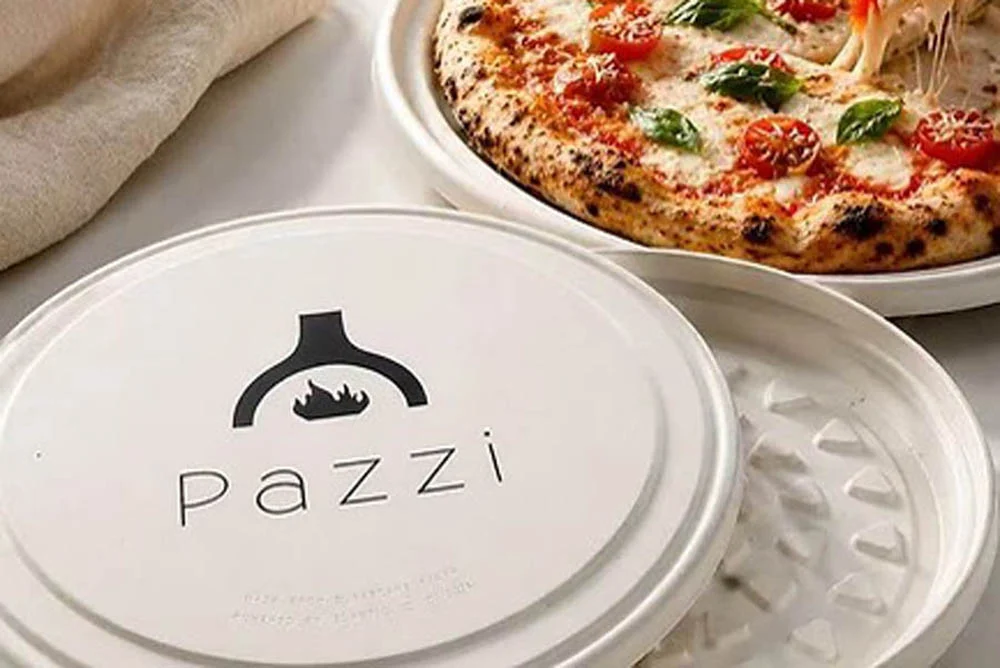
ODENSE, Denmark – In a significant stride towards sustainable food packaging, Danish innovator Blastiq is challenging the conventional pizza box with a groundbreaking, PFAS-free solution crafted from bagasse – the renewable fibre left after extracting sugar from sugarcane. This eco-conscious design, featuring a novel PHA-based coating, is set to be a highlight at this year’s prestigious Packnorth Award, showcasing a viable and scalable alternative to environmentally harmful materials.
The ubiquity of the pizza box has long presented a paradox: a symbol of convenience often marred by its environmental footprint. Traditional pizza packaging, particularly its grease and moisture barrier, has historically relied on per- and polyfluoroalkyl substances (PFAS), a family of "forever chemicals" known for their persistence in the environment and potential health risks. Blastiq’s entry into the Packnorth Award signals a pivotal moment, offering a fully compostable, microplastic-free, and recyclable solution that addresses these critical concerns head-on.
Main Facts: A Paradigm Shift in Pizza Packaging
Blastiq’s innovative pizza box represents a multi-faceted approach to sustainable packaging. At its core, the product is constructed from bagasse, a readily available agricultural byproduct, transforming what would otherwise be waste into a valuable resource. This choice alone marks a significant departure from virgin paper pulp, reducing demand on forests and promoting circularity.
The true ingenuity, however, lies in Blastiq’s proprietary PHA-based coating. While bagasse itself is a clean plant fibre, the challenge in food packaging, especially for greasy items like pizza, has always been creating an effective barrier without introducing harmful chemicals. Traditional manufacturers frequently resort to PFAS for this purpose, embedding them into the packaging matrix. Blastiq’s Polyhydroxyalkanoate (PHA) coating, a 100% bio-based and biodegradable barrier film, effectively replicates the grease and moisture resistance of conventional barriers without any of the associated environmental or health hazards.
"Our goal was not just to remove harmful chemicals, but to create a solution that truly embraces the principles of a circular economy," states a Blastiq representative. "The result is a pizza box that performs identically to its conventional counterparts, yet is entirely free from harmful chemicals, microplastics, and is fully compostable. It’s a testament to what’s possible when innovation meets a commitment to environmental stewardship."
Beyond its material composition, the Blastiq pizza box boasts a thoughtful design. Its round shape is precisely tailored to the pizza itself, eliminating excess material and reducing unnecessary packaging volume. This optimization extends to storage and transport, leading to greater efficiency and a further reduction in the product’s overall carbon footprint. Crucially, the packaging is already being supplied to clients within the food industry, demonstrating its market readiness and commercial viability.
Chronology: The Journey Towards a Greener Slice
The evolution of food packaging, particularly for convenience foods like pizza, has been a dynamic one, often reflecting technological advancements and, more recently, growing environmental awareness.
Early Pizza Packaging (Mid-20th Century): The rise of pizza as a popular takeaway food in the mid-20th century spurred the need for functional packaging. Early designs often used simple cardboard, which quickly became greasy and soggy, leading to customer dissatisfaction.
Introduction of Barrier Coatings (Late 20th Century): To combat grease and moisture, packaging engineers began incorporating various coatings. Over time, PFAS became a go-to solution due to their excellent oil and water repellency. These compounds, however, were largely unregulated and their environmental and health implications not fully understood at the time.
Emergence of PFAS Concerns (Early 2000s – Present): Scientific research beginning in the early 2000s, and intensifying over the last decade, began to uncover the alarming persistence and toxicity of PFAS. Dubbed "forever chemicals," their ability to accumulate in the environment and living organisms, coupled with links to various health issues (including cancer, immune system dysfunction, and developmental problems), ignited public concern and regulatory scrutiny worldwide.
Regulatory Push for PFAS Phase-Out (Mid-2010s – Present): Driven by mounting evidence, legislative bodies, particularly in the European Union, began drafting and implementing stricter regulations. The EU’s proactive stance on phasing out PFAS in food packaging has created an urgent demand for safe, effective alternatives. Pizza boxes, given their frequent use of PFAS coatings, were identified as one of the most contaminated product categories.
Blastiq’s Inception and Innovation (Specific Timeline Inferred): While Blastiq’s precise founding date and product development timeline are not detailed, their solution clearly emerges from this context of growing environmental concern and regulatory pressure. It can be inferred that the company identified the critical need for a PFAS-free barrier solution, particularly for high-volume items like pizza, and embarked on a dedicated research and development effort. This would have involved extensive material science research, barrier formulation development (leading to the PHA coating), and design optimization for mass production.
Product Launch and Market Penetration (Recent Past): The fact that Blastiq’s pizza boxes are "already delivered to customers in the food industry" indicates a successful transition from R&D to commercialization, positioning them as a leader in this nascent but rapidly growing segment.
Packnorth Award Participation (Immediate Future): Blastiq’s participation in the Packnorth Award in September underscores its readiness to be recognized on an international stage, showcasing its innovation to a broad audience of industry professionals and potential partners. This represents a crucial step in gaining wider industry acceptance and accelerating the adoption of sustainable packaging solutions.
Supporting Data: The Science Behind Sustainability
The efficacy and importance of Blastiq’s pizza box are underscored by compelling data regarding PFAS, bagasse, and PHA technology.
The Pervasive Threat of PFAS:
Per- and polyfluoroalkyl substances (PFAS) are a group of thousands of synthetic chemicals renowned for their exceptional resistance to heat, water, and oil. This property made them attractive for use in a wide array of industrial and consumer products, including non-stick cookware, waterproof fabrics, firefighting foams, and crucially, food packaging. However, their strong chemical bonds make them extremely resistant to degradation, earning them the moniker "forever chemicals."
- Environmental Persistence: Once released into the environment, PFAS can contaminate soil, water, and air, persisting for thousands of years. They are detected in remote regions of the Arctic and Antarctic, illustrating their global reach.
- Bioaccumulation: PFAS can accumulate in the bodies of humans and animals, building up over time. Studies have found PFAS in the blood of nearly every person tested.
- Health Concerns: Extensive research links PFAS exposure to a range of adverse health effects, including increased cholesterol levels, liver damage, thyroid disease, decreased fertility, developmental effects in children, and increased risk of certain cancers (kidney, testicular).
- Regulatory Imperative: The sheer scale of PFAS contamination and health risks has spurred urgent regulatory action. The European Union, in particular, has been at the forefront, proposing comprehensive bans on PFAS across various applications, with food contact materials being a priority area. The Danish government has already banned PFAS in paper and cardboard food packaging since July 2020. Blastiq’s solution directly addresses this critical regulatory shift.
Bagasse: A Renewable Foundation:
Bagasse is the fibrous residue remaining after sugarcane stalks are crushed to extract their juice. Historically, bagasse was often burned or used as low-grade fuel. Its transformation into a valuable raw material for packaging exemplifies circular economy principles.
- Renewable Resource: Sugarcane is a rapidly renewable crop, harvested annually. Utilizing bagasse reduces reliance on virgin timber, thereby lessening deforestation and associated habitat loss.
- Waste Valorization: By converting an agricultural byproduct into a high-value material, bagasse packaging reduces waste, minimizes landfill burden, and creates economic opportunities for sugarcane-producing regions.
- Carbon Footprint Reduction: The cultivation of sugarcane absorbs CO2 from the atmosphere. When bagasse is processed into packaging, it sequesters this carbon. Compared to petroleum-based plastics, bagasse-based packaging typically has a significantly lower carbon footprint over its lifecycle.
- Natural Composition: As a pure plant fibre, bagasse inherently contains no PFAS, making it an ideal base material for Blastiq’s clean packaging.
PHA: The Next-Generation Barrier:
Polyhydroxyalkanoates (PHAs) are a class of polyesters produced naturally by numerous microorganisms, primarily through bacterial fermentation of plant oils or sugar substrates. This natural synthesis gives PHA a distinct advantage over conventional plastics.
- 100% Bio-based: Unlike fossil-fuel-derived plastics, PHA is entirely derived from renewable biological sources, reducing dependence on finite resources.
- Biodegradable and Compostable: A defining characteristic of PHA is its ability to biodegrade in various environments, including industrial composting facilities, soil, and even marine environments, breaking down into natural components like water, CO2, and biomass. This contrasts sharply with traditional plastics like polyethylene (PE) or even some bioplastics like polylactic acid (PLA), which often require specific industrial composting conditions and do not readily degrade in natural settings.
- Effective Barrier Properties: Blastiq’s development of a PHA-based coating demonstrates that these biopolymers can achieve the necessary grease and moisture resistance for demanding applications like pizza packaging, without compromising performance.
- Microplastic-Free: As PHA degrades biologically, it does not fragment into persistent microplastics, thereby avoiding another critical environmental issue associated with conventional plastic packaging.
- Source: Danish Technological Institute: The detailed definition provided by the Danish Technological Institute lends significant credibility to PHA as a robust and environmentally superior material.
Market Trends and Consumer Demand:
The shift towards sustainable packaging is not just regulatory; it’s consumer-driven. Surveys consistently show a high willingness among consumers to pay more for environmentally friendly products and packaging. Companies that embrace sustainable solutions gain a competitive edge and enhance brand loyalty. The sheer volume of pizza consumption globally means that even a small percentage shift to sustainable packaging like Blastiq’s can have a monumental environmental impact.
Official Responses: Voices from the Forefront of Innovation
The introduction of Blastiq’s PFAS-free pizza box has elicited positive responses from various stakeholders, reflecting the urgent need for such solutions.
Blastiq’s Vision:
"We are incredibly proud to present our innovative pizza box at the Packnorth Award," says a spokesperson for Blastiq. "This product is more than just a box; it’s a statement about the future of food packaging. We believe consumers shouldn’t have to choose between convenience and sustainability. Our PHA-coated bagasse box offers both, setting a new standard for responsible consumption. Our commitment extends to ensuring our packaging is not only safe for food but also seamlessly integrates into existing waste management streams, making sustainability effortless for the end-user."
Packnorth Award Organizers:
The Packnorth Award, which celebrates excellence and innovation in the packaging industry across the Nordic region, sees Blastiq’s entry as exemplary. "Innovations like Blastiq’s PFAS-free pizza box are precisely what the Packnorth Award aims to highlight," commented an organizer of the event. "It demonstrates forward-thinking design, addresses critical environmental challenges, and offers a tangible solution that is already making a difference in the market. Such initiatives are vital for driving the entire industry towards a more sustainable future." The award provides a crucial platform for such pioneering solutions to gain visibility and inspire broader adoption.
Regulatory and Environmental Experts:
While no direct quote from an external expert is provided, the article implies strong support from environmental and regulatory bodies for such innovations. "The EU’s phase-out of PFAS in food packaging is a critical step towards protecting public health and the environment," states an implied environmental expert. "Companies like Blastiq, developing scalable, high-performance alternatives, are essential partners in achieving these ambitious goals. Their commitment to pure, compostable, and recyclable materials provides a blueprint for other manufacturers." The fact that Blastiq’s product directly aligns with and anticipates these regulations positions it as a leader in compliance.
Industry Adoption:
The report that Blastiq’s packaging is "already delivered to customers in the food industry" serves as an implicit endorsement from the market itself. This indicates that food service providers recognize the value proposition – not only in meeting regulatory demands but also in enhancing their own brand image as environmentally responsible. The simplicity of handling for both consumers and waste systems further sweetens the deal for commercial adoption.
Implications: Reshaping the Packaging Landscape
Blastiq’s PFAS-free, bagasse-based pizza box carries far-reaching implications, promising to reshape not just the pizza packaging sector but potentially influencing broader trends in food service and sustainable manufacturing.
1. Environmental Impact and Public Health:
The most immediate and profound implication is the significant reduction in PFAS entering the environment and human food chain. By eliminating these "forever chemicals" from a high-volume product like the pizza box, Blastiq contributes directly to mitigating environmental pollution and safeguarding public health. Furthermore, the complete biodegradability of the PHA coating means no microplastic contamination, addressing another pressing global concern. This sets a new benchmark for truly green packaging.
2. Driving Industry-Wide Shift:
Blastiq’s successful commercialization of this innovative packaging could serve as a powerful catalyst for change across the entire food packaging industry. It demonstrates that high-performance, sustainable alternatives to PFAS are not only possible but also economically viable. This will put pressure on other manufacturers to innovate and transition away from harmful chemicals, accelerating the adoption of bio-based and biodegradable materials in various food contact applications beyond pizza boxes.
3. Empowering Consumer Choice and Education:
As consumers become increasingly aware of the environmental and health impacts of their choices, Blastiq’s packaging empowers them to make a tangible difference. The clear messaging about PFAS-free, compostable, and recyclable materials educates consumers and fosters a greater demand for truly sustainable products. The "simplicity is the point" design philosophy – no need to separate layers or remove plastic windows – removes barriers to correct disposal, increasing the likelihood of proper recycling and composting.
4. Advancing Circular Economy Principles:
Blastiq’s approach perfectly embodies the principles of a circular economy. Utilizing bagasse, an agricultural byproduct, minimizes virgin resource extraction. The design for easy recycling into the paper stream or composting into biomass ensures that the material’s value is retained or returned to nature, minimizing waste and closing material loops. This contrasts sharply with linear "take-make-dispose" models prevalent with traditional packaging.
5. Economic Opportunities and Green Innovation:
The development and scaling of solutions like Blastiq’s open new economic avenues. It stimulates investment in bio-based material research, fosters innovation in manufacturing processes, and potentially creates green jobs within the packaging and waste management sectors. The Nordic region, with its strong emphasis on sustainability, is well-positioned to lead in this area, with awards like Packnorth playing a crucial role in nurturing such innovations.
6. Future Outlook and Scalability:
The success of Blastiq’s pizza box could pave the way for similar solutions in other challenging food packaging categories, such as burger wraps, sandwich containers, and various ready-meal trays. The PHA technology, being versatile, holds immense potential for broader application as a barrier material. As production scales, costs are likely to decrease, making these sustainable options even more accessible and competitive globally.
Blastiq’s entry into the Packnorth Award is more than just a competition; it’s a declaration of a future where convenience and environmental responsibility can coexist. As the deadline for the award approaches on September 2nd, the spotlight on Blastiq’s innovation serves as a timely reminder of the urgent need for and the exciting potential of sustainable solutions in packaging. The exhibition at Sign Print & Pack in Odense and Empack in Stockholm, alongside coverage in Packnews magazine, will undoubtedly further amplify this message, inspiring a greener future for takeaway food worldwide.
About the Author