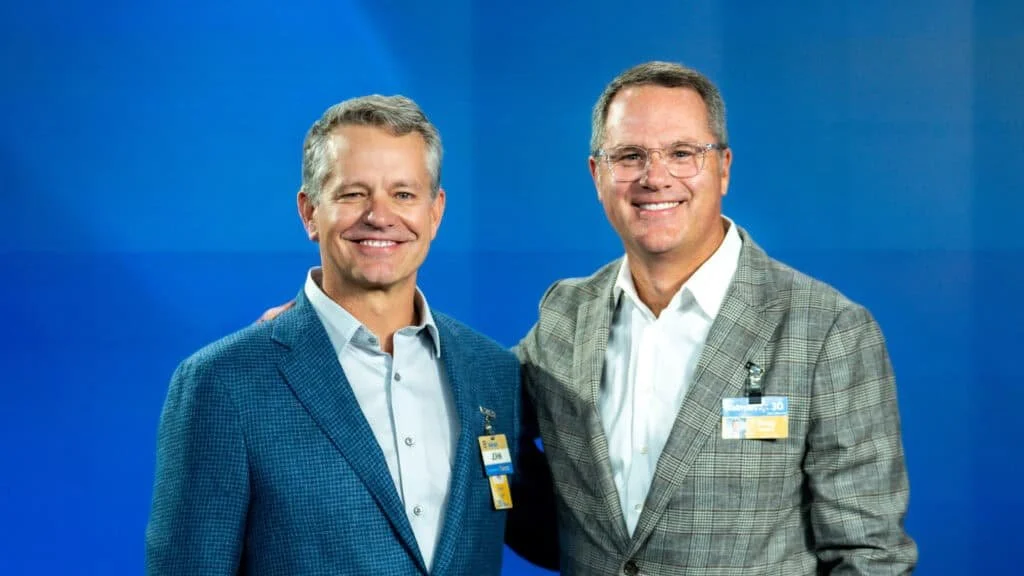
BENTONVILLE, AR – In a move that signals both continuity and a bold leap into the next frontier of global commerce, Walmart Inc. announced on Thursday that Doug McMillon, the architect of the retail giant’s digital renaissance, will retire as Chief Executive Officer after an illustrious 11-year tenure. Stepping into the void is John Furner, the current President and CEO of Walmart U.S., who will assume the mantle as the sixth CEO in the company’s 63-year history, effective February 1, 2026.
This leadership transition is far more than a corporate formality; it is a strategic pivot point for the world’s largest retailer. As Walmart maneuvers through an era defined by artificial intelligence, supply chain volatility, and shifting consumer behavior, the appointment of Furner—a career “Walmartian” who began as an hourly associate—serves as a testament to the company’s deep-rooted culture and its commitment to institutional knowledge.
The Main Facts: A Succession Mapped for Stability
The transition plan is marked by a methodical, long-term approach designed to ensure minimal disruption to the company’s momentum. McMillon, who took the helm in 2014, will not vanish from the corporate landscape; he will remain on the Walmart Board of Directors until the annual shareholders’ meeting in June 2026 and will continue to serve as an advisor to the company through January 2027.
John Furner’s elevation is the culmination of a deliberate succession strategy. As the leader of Walmart’s largest business unit for the past six years, Furner has been the face of the brand’s most critical operational shifts, including the expansion of omnichannel services and the strengthening of the company’s e-commerce ecosystem. With his promotion, the board has opted for a leader who possesses an intimate, granular understanding of the company’s inner workings—an asset deemed essential as the retail sector faces unprecedented technological headwinds.
A Chronology of Growth: From Store 100 to the Boardroom
To understand the weight of Furner’s appointment, one must look at his trajectory, which mirrors the company’s own evolution.
- 1993: John Furner begins his career as an hourly associate at Store 100 in Bentonville, Arkansas, learning the fundamentals of customer service and inventory management on the sales floor.
- 2000s: Furner climbs the management ladder, serving in various merchandising and leadership roles, eventually gaining the reputation as a "fixer" within the organization.
- 2017: He is appointed President and CEO of Sam’s Club, where he is credited with modernizing the membership-based warehouse experience and integrating digital tools.
- 2019: Furner takes over as President and CEO of Walmart U.S., overseeing the company’s massive domestic operation during a period of intense industry competition and the global disruption of the COVID-19 pandemic.
- November 2025: Walmart officially names Furner as the successor to Doug McMillon.
- February 1, 2026: Effective date of Furner’s transition to President and CEO of Walmart Inc.
This 32-year journey provides Furner with a “boots-on-the-ground” perspective that few modern CEOs possess. Having navigated the company through the transition from a traditional brick-and-mortar retailer to a tech-forward hybrid model, he is uniquely positioned to address the challenges of the late 2020s.
Supporting Data: The McMillon Legacy
Under Doug McMillon, Walmart underwent a metamorphosis that many analysts once deemed impossible for a firm of its size. When McMillon succeeded Mike Duke in 2014, the retail landscape was being aggressively disrupted by Amazon, and Walmart was widely viewed as a legacy player struggling to find its footing in the digital age.
The financial results of the McMillon era are striking. During his tenure, Walmart’s shares surged more than fourfold, reflecting investor confidence in the company’s pivot to e-commerce. Beyond the stock price, the company’s fundamental competitive positioning shifted:
- Walmart+ and Marketplace: McMillon aggressively built out the Walmart+ membership program and expanded the company’s third-party seller marketplace, creating a formidable rival to Amazon Prime.
- Supply Chain Modernization: Billions of dollars were poured into automated distribution centers, allowing for faster delivery and lower operational costs.
- Human Capital: In a move that defined his tenure, McMillon prioritized the "associate experience," raising wages and benefits for 2.3 million workers globally. This investment in labor helped stabilize turnover rates and improved the in-store experience during critical periods of economic inflation.
Official Responses: Continuity and Confidence
The announcement was met with overwhelming support from the company’s leadership and the Walton family. Greg Penner, Chairman of the Board, lauded the selection of Furner, describing him as “the right leader to guide Walmart into our next chapter of growth and transformation.”
In a formal statement, Furner expressed humility and a clear vision for the path ahead. “I am deeply honored by the trust the Board and family have placed in me to lead Walmart, a company that has shaped my life and so many others,” Furner said. “As we enter a new retail era fueled by innovation and AI, our purpose and our people will continue to guide us. Together, we’ll find new ways to serve customers, support our associates, and strengthen the communities we call home.”
Industry observers have largely interpreted the appointment as a vote of confidence in the internal culture of the company. In an era where many Fortune 500 companies look to hire "outsider" CEOs to shake up their business models, Walmart’s choice of an internal promotion signals a commitment to the foundational principles that have allowed the company to remain relevant for over six decades.
Implications: Navigating the AI and Retail Frontier
As Furner steps into the top job, the retail industry is bracing for a new phase of competition defined by artificial intelligence, real-time data analytics, and the blurring lines between physical and digital shopping.
The AI Imperative
The next iteration of Walmart’s strategy will likely hinge on how the company leverages AI to optimize its massive inventory and logistics networks. From predictive stocking—where AI anticipates regional product demand before it happens—to personalized shopping experiences that learn a consumer’s preferences over time, the technology is no longer a "nice-to-have" but a core survival requirement.
The Evolution of E-commerce
E-commerce is no longer a separate channel; it is the baseline expectation of the modern consumer. For Furner, the challenge will be to ensure that the convenience of digital shopping is seamlessly integrated with the cost-efficiency of Walmart’s physical stores. The company’s "omnichannel" approach—using stores as fulfillment centers for online orders—has already proven successful, but scaling this efficiency to smaller, high-density markets remains a significant hurdle.
Labor and Community
Furner inherits a company that is one of the largest private employers in the world. As labor movements grow more organized and the cost of living continues to fluctuate, the incoming CEO will face the perennial challenge of balancing shareholder expectations with the need to maintain a satisfied, productive workforce. His background as an hourly associate suggests he may approach these challenges with a focus on the “frontline” experience, potentially pushing for further automation to reduce the burden of repetitive tasks on employees.
Conclusion: A New Era, A Proven Path
The transition from Doug McMillon to John Furner is more than a change in executive leadership; it is a signal to the market that Walmart is confident in its current trajectory. By choosing a leader who understands the rhythm of the sales floor as well as the complexity of the balance sheet, the board has signaled that the company’s future will be built on the same foundations that built its past.
As the retail industry faces a future dominated by algorithms and lightning-fast logistics, Walmart’s bet is that the best person to lead them into that future is someone who has lived the company’s values since the day they started. Whether Furner can maintain the momentum of the McMillon era while stamping his own vision onto the giant remains to be seen, but the industry is watching closely. For now, the message from Bentonville is clear: the store is open, the team is ready, and the transformation continues.
About the Author