The year 2026 has emerged as a grim, definitive milestone in the history of the Anthropocene. From the scorched landscapes of Southern Europe to the submerged streets of Texas, the planet has spent the last eight months reeling under a relentless barrage of extreme weather events. As the atmosphere reacts to decades of accumulated greenhouse gases, the scientific community is no longer merely observing the chaos—it is beginning to map the precise origins of the destruction.
A breakthrough study published this month in the journal Earth’s Future has fundamentally altered the landscape of climate litigation. For the first time, researchers have established a statistically rigorous, direct causal link between the emissions of specific corporate entities and the occurrence of individual extreme weather events. This development marks a shift from general climate modeling to the high-stakes world of "source attribution," providing a roadmap that could force fossil fuel giants to answer for the climate-driven catastrophes that have cost the United States alone over $3.2 trillion since 1980.
A Year of Unprecedented Disarray
The statistics from 2026 paint a portrait of a world pushed to its breaking point. In May, heatwaves shattered historical records across the United Kingdom, France, and Spain, while North Africa faced an unprecedented thermal siege. Simultaneously, South Asia—specifically India, Pakistan, and Bangladesh—endured temperatures oscillating between 113 and 122 degrees Fahrenheit, rendering vast swaths of the region nearly uninhabitable.
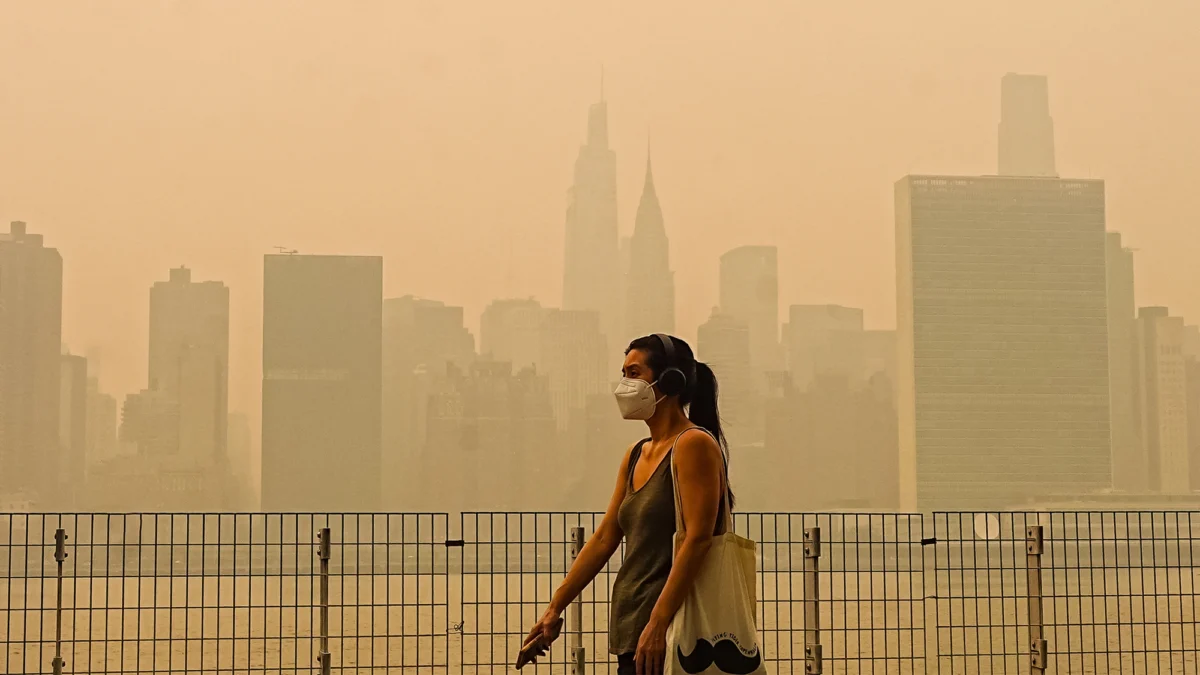
In the United States, the crisis took a devastating toll. A record-breaking March heat dome preceded a July deluge in Texas, where a 1,000-year storm event resulted in multiple fatalities and catastrophic infrastructure failure. This was compounded by the wildfire crisis in Canada, which blanketed North American cities in hazardous smoke. Over 106 million people were exposed to toxic air quality, as the orange haze over New York City became the defining visual symbol of a summer defined by ecological instability. Since 1980, such climate-related disasters have claimed approximately 17,377 lives in the U.S., a figure that continues to climb as the frequency and intensity of these events accelerate.
The Anatomy of the New Science: Source Attribution
The core of the scientific advancement lies in the work of Christopher Callahan, an Earth systems scientist and assistant professor at Indiana University’s O’Neill School of Public and Environmental Affairs. Utilizing a sophisticated methodological framework, Callahan ran over 150 simulations across eight different climate models to isolate the relationship between atmospheric carbon dioxide and the probability of extreme weather.
Unlike previous efforts, which were computationally grueling and often required months of processing time, Callahan’s model is streamlined and "lightweight." By correlating historical emissions data with specific climate impacts, he has successfully demonstrated that human-induced emissions are not merely a background variable; they are a direct catalyst for disaster.
His findings are stark: fossil fuel entities increased the likelihood of the 2021 Pacific Northwest heatwave by 31 percent and the catastrophic 2022 Pakistan floods by 7 percent. "There is no level of emissions that does not contribute to changing climate impacts," Callahan stated. "Every ton matters." This research moves beyond the general consensus that "climate change is happening" to a granular assessment of accountability: if a specific company contributed a specific amount of CO2, they contributed a measurable percentage of the risk for a specific tragedy.
The Legal Battlefield: From Science to the Courtroom
The fossil fuel industry, which is responsible for approximately 68 percent of all greenhouse gas emissions, has long relied on a strategy of "proximate cause" denial. By arguing that weather is naturally volatile, industry lobbyists and legal teams have successfully delayed accountability for decades.
Michael Buschbacher, a partner at the law firm Boyden Gray PLLC, captured the industry’s defensive posture during an October 2025 Federalist Society panel. "Bad weather is of course not new," Buschbacher argued, questioning how plaintiffs could link emissions from a specific company to a specific hurricane. He characterized the wave of litigation as a "payday for contingency fee lawyers" and "virtue signaling," rather than a genuine pursuit of environmental remediation.
However, the legal tides are shifting. More than 40 climate liability lawsuits have been filed by states, municipalities, and tribal governments against oil majors since 2017. At least five of these cases have entered the discovery phase, a critical juncture that may force executives to surrender internal documents detailing what they knew about planetary warming and when they knew it. In response, the American Petroleum Institute has signaled that halting "extreme climate liability policy" is a top legislative priority for 2026.
A Coordinated Assault on Scientific Integrity
As the scientific evidence becomes more damning, the campaign to discredit it has grown increasingly aggressive. Reports have surfaced of a clandestine, industry-backed effort to undermine the National Academies of Sciences, Engineering, and Medicine (NAS) following the publication of a landmark report on extreme weather attribution.
This campaign achieved a chilling success earlier this month when the NAS, under significant pressure from Republican attorneys general and the Trump administration, removed a chapter on climate science from a reference manual intended for federal judges. The move was widely condemned by the scientific community. A NASA scientist, speaking on condition of anonymity, described the decision as "pathetic," posing the rhetorical question: "If they cannot stand up for science, then who is going to?"
Despite these pressures, the scientific consensus remains firm. Michael Mann, a distinguished climate scientist at the University of Pennsylvania, praised the original NAS report for "not pulling any punches." Kristina Dahl of Climate Central noted that such studies are essential for understanding the "range of choices" still available to humanity.
Implications: The Future of Accountability
The integration of source attribution science into the legal system represents a fundamental challenge to the status quo. For decades, fossil fuel companies operated under the assumption that their role in global warming was too diffuse to be quantified. Callahan’s research effectively destroys that shield.
The potential implications for the industry are profound. If courts begin to accept that a company’s emissions can be directly tied to the financial and human costs of a flood or a heatwave, the financial liability could reach astronomical levels. Furthermore, the ability to "calculate changes to extreme events based on historical emissions" provides a standardized metric for future damages, potentially standardizing how climate litigation is handled globally.
However, the road ahead is fraught with political obstacles. The current administration’s ongoing cuts to scientific funding and environmental monitoring systems threaten to stifle the very research required to quantify these risks. As Yann Quilcaille of ETH Zürich observed, the window for effective action is closing. "We need to act quickly, and we have the solutions."
Conclusion
The bridge between climate science and the courtroom is no longer a theoretical construct; it is a burgeoning reality. As the world navigates the increasingly volatile climate of the late 2020s, the ability to trace the fingerprints of carbon to the sources of our collective misery will likely define the next decade of geopolitical and legal struggle.
Whether these scientific findings will "rock the courtroom," as some experts suggest, or be stalled by the sheer weight of industry-backed legal maneuvering remains to be seen. What is clear, however, is that the era of anonymous, consequence-free emissions is drawing to a close. The science has spoken: every ton of carbon matters, and the entities responsible for those tons are finally being asked to account for the world they have helped create.
About the Author