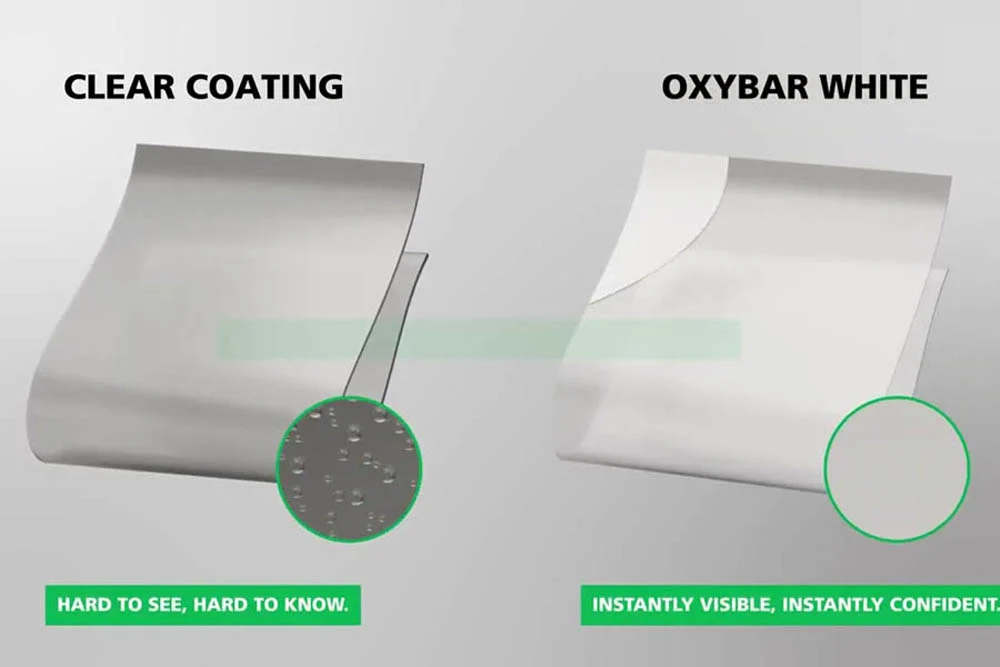
Düsseldorf, Germany – [Date of publication, e.g., October 26, 2026] – Siegwerk, a global leader in printing inks and coatings for packaging applications, today announced the groundbreaking launch of Cirkit Oxybar White, an innovative solution that fundamentally redefines packaging design. This pioneering ink combines high-performance oxygen barrier properties with an opaque white finish into a single, functional layer, marking a significant departure from conventional multi-layer barrier structures. The introduction of Cirkit Oxybar White is poised to revolutionize the packaging industry by simplifying production, reducing material complexity, and significantly enhancing the recyclability of flexible packaging.
The new technology represents a crucial step in Siegwerk’s broader Cirkit series, building on the success of Cirkit Greasebar White. It shifts the paradigm from incorporating barrier materials as separate structural layers to printing functional barrier properties directly onto substrates. This innovation empowers packaging converters and brand owners to achieve robust product protection and superior aesthetics while concurrently streamlining operations and advancing their sustainability agendas.
Main Facts: Redefining Packaging Functionality
Siegwerk’s Cirkit Oxybar White is not merely a new ink; it is a disruptive technology designed to address some of the most pressing challenges facing the packaging industry today: complexity, cost, and environmental impact. Traditionally, packaging requiring oxygen protection relies on complex multi-material laminates, often comprising several distinct layers, each serving a specific function – one for barrier, another for printability, and yet another for aesthetic opacity. This intricate construction, while effective in preserving product freshness, creates significant hurdles in terms of manufacturing efficiency and end-of-life recyclability.
Cirkit Oxybar White integrates two critical functions into one innovative ink layer: a high-performance oxygen barrier and a brilliant, opaque white background. This means that instead of laminating multiple films or applying separate coatings, converters can now achieve both oxygen protection and a premium white base for subsequent graphics in a single printing pass. This novel approach fundamentally transforms the packaging value chain, offering unprecedented simplicity and efficiency.
The ink delivers exceptional technical performance, boasting an Oxygen Transmission Rate (OTR) of less than 5 cc/m²/day at 50% relative humidity (RH). This level of barrier protection is crucial for extending the shelf life of oxygen-sensitive products such as dry foods, snacks, coffee, and certain processed goods, preventing spoilage and maintaining sensory quality. Simultaneously, the ink provides a clear, bright white surface, ensuring excellent printability and visual appeal for brands. Its application through standard gravure and flexographic printing processes means converters can adopt this technology without requiring substantial capital investment in new machinery, making it highly accessible and scalable.
This dual-functionality directly contributes to the creation of mono-material packaging structures. By eliminating the need for incompatible barrier layers like EVOH (ethylene vinyl alcohol), PVdC (polyvinylidene chloride), aluminum foil, or metallized films, Cirkit Oxybar White facilitates the design of packaging that is inherently easier to recycle. This aligns perfectly with the global push towards a circular economy, enabling packaging to be recycled back into valuable resources rather than ending up in landfills or incinerators.
Chronology: A Trajectory of Innovation in Functional Inks
The launch of Cirkit Oxybar White is not an isolated event but a strategic evolution within Siegwerk’s broader commitment to developing advanced functional inks. The journey began with the conceptualization of the "Cirkit" platform, envisioned as a suite of solutions aimed at embedding specific functionalities directly into printing inks, thereby simplifying packaging structures.
Early Developments and the Precursor:
Siegwerk’s initial foray into this innovative space was marked by the introduction of Cirkit Greasebar White. This pioneering ink, launched prior to Cirkit Oxybar White, successfully demonstrated the feasibility and benefits of combining a grease barrier with an opaque white layer in a single application. It targeted packaging for greasy foods, pet food, and other products where oil migration is a concern, effectively preventing staining and maintaining package integrity. Cirkit Greasebar White proved that the concept of "printing functionality" was not just theoretical but a practical, high-performance reality. It laid the crucial groundwork, validating the underlying material science and application methodologies that would later be scaled and adapted for oxygen barrier properties.
Building on a Proven Platform:
The success and learnings from Cirkit Greasebar White provided the impetus and technical blueprint for developing an oxygen barrier counterpart. Siegwerk’s R&D teams leveraged their deep expertise in polymer chemistry, pigment technology, and coating science to engineer a formulation that could effectively impede oxygen transmission while maintaining excellent printability and opacity. This involved meticulous selection of barrier polymers, optimization of ink rheology for high-speed printing, and rigorous testing to ensure both functional performance and compatibility with existing printing equipment. The development cycle for Cirkit Oxybar White was driven by a clear understanding of market demands for enhanced sustainability and operational efficiency, building upon the established "design for recyclability" principles.
Responding to Industry Imperatives:
The timing of Cirkit Oxybar White’s launch is particularly pertinent given the escalating global focus on sustainable packaging. Over the past decade, consumer awareness regarding plastic waste has surged, leading to increased pressure on brand owners and converters to adopt more environmentally friendly practices. Regulatory bodies worldwide are also implementing stricter guidelines on packaging recyclability and material usage. Siegwerk’s innovation directly addresses these imperatives, offering a commercially viable and technically robust solution that aligns with the industry’s trajectory towards a circular economy. It represents a proactive response to the call for packaging that not only protects products but also protects the planet.
This chronological progression underscores Siegwerk’s methodical approach to innovation: identify a critical industry need, develop a foundational technology, prove its efficacy, and then expand its application to address broader challenges. Cirkit Oxybar White is thus a testament to continuous innovation, evolving from a specific grease barrier solution to a more expansive, critical oxygen barrier technology within the functional ink portfolio.
Supporting Data: Technical Performance, Environmental Impact, and Economic Advantages
The value proposition of Cirkit Oxybar White is underpinned by compelling technical data, significant environmental benefits, and tangible economic advantages for the entire packaging value chain.
Technical Performance: The Power of a Printed Barrier
The headline performance metric for Cirkit Oxybar White is its impressive Oxygen Transmission Rate (OTR) of less than 5 cc/m²/day at 50% Relative Humidity (RH). To appreciate this, it’s essential to understand what OTR signifies. OTR measures the amount of oxygen gas that can pass through a given area of packaging material over a specific time period. A lower OTR indicates superior barrier performance, meaning less oxygen can penetrate the packaging and degrade the product inside.
- Relevance of OTR < 5: This barrier level is highly effective for a wide range of oxygen-sensitive products, including many dry foods (cereals, pasta), snacks (chips, crackers), coffee, tea, and confectionery. For these applications, oxygen ingress can lead to oxidation of fats, loss of aroma and flavor, discoloration, and microbial spoilage. Achieving this level of barrier with a printed ink layer, rather than a separate material, represents a significant scientific and engineering breakthrough.
- Importance of RH: The mention of "50% RH" is crucial. Many barrier materials, particularly those based on EVOH, exhibit reduced barrier performance in high-humidity environments. By demonstrating strong barrier properties at 50% RH, Siegwerk indicates a robust formulation that can perform reliably in typical ambient conditions, a critical factor for real-world packaging applications.
- Application Method: The ink is designed for single-step application using standard gravure and flexographic printing processes. This means high-speed production lines can be utilized, maintaining existing operational efficiencies without needing new capital equipment. The "inline" application capability ensures seamless integration into current manufacturing workflows.
Environmental Impact: Driving Sustainability and Circularity
Cirkit Oxybar White offers profound environmental benefits by directly addressing the challenges of multi-material packaging:
- Facilitating Mono-Material Structures: The most significant environmental advantage is the ability to create mono-material packaging (e.g., a single type of plastic like polypropylene or polyethylene) that still provides robust barrier protection. Traditional multi-material laminates, combining different plastics or plastics with aluminum, are notoriously difficult and costly to recycle because the layers cannot be easily separated. By replacing these complex structures, Cirkit Oxybar White allows packaging to be designed for true recyclability.
- Replacement of Problematic Barrier Materials: The ink can replace conventional barrier materials such as:
- EVOH: While an excellent oxygen barrier, EVOH is highly sensitive to moisture, requiring additional protective layers, and can complicate recycling streams if not properly managed.
- PVdC: Often criticized for its chlorine content, which raises concerns about potential hazardous byproducts during incineration or recycling.
- Aluminum Foil and Metallized Films: These provide excellent barriers but are energy-intensive to produce and can pose challenges in certain recycling processes, particularly for flexible packaging.
By substituting these materials, Siegwerk contributes to reducing the overall environmental footprint of packaging.
- Reduced Material Consumption: Fewer layers mean less raw material is consumed per package. This translates directly into a reduction in virgin plastic use, lowering the demand for fossil resources and decreasing the energy required for material production.
- Improved Resource Efficiency: Simplified packaging structures lead to less waste during manufacturing and a higher yield of recyclable material at the end of the product’s life cycle. This contributes to a more efficient use of resources across the entire value chain.
- Lower Carbon Footprint: Reduced material consumption, simplified production processes, and enhanced recyclability collectively lead to a lower carbon footprint associated with packaging production and disposal.
Economic Advantages: Streamlining Operations and Reducing Costs
Beyond its technical and environmental merits, Cirkit Oxybar White delivers substantial economic benefits for packaging converters and brand owners:
- Lower Total Costs:
- Material Costs: Replacing multiple expensive barrier films with a single, functional ink layer can significantly reduce material procurement costs.
- Processing Costs: Fewer lamination steps or coating applications mean reduced energy consumption, less machine downtime for setup changes, and potentially higher production speeds.
- Waste Reduction: Less complex structures lead to less scrap during production, further contributing to cost savings.
- Operational Efficiency:
- Simplified Workflows: The single-step application simplifies production workflows, reducing the number of operational steps and associated labor.
- Faster Production Speeds: The optimized formulation supports higher printing speeds compared to many traditional water-based barrier coatings, increasing overall throughput and productivity.
- Reduced Inventory: Managing fewer types of raw materials (inks vs. multiple film types) simplifies inventory management and reduces warehousing costs.
- Visual Quality Control: A unique operational advantage is the inherent white pigmentation. This allows for immediate, visual quality control of the applied coating, ensuring complete and uniform coverage. Any inconsistencies in the barrier layer can be detected instantly on the press, preventing costly rework or product recalls down the line. This feature significantly reduces technical risk and improves overall quality assurance.
- Enhanced Market Appeal: For brand owners, the ability to offer sustainable, high-performance packaging can be a significant market differentiator, appealing to environmentally conscious consumers and potentially commanding premium pricing or increased market share.
In summary, Cirkit Oxybar White is not just an incremental improvement; it is a holistic solution that offers a trifecta of benefits: superior technical performance, substantial environmental gains, and compelling economic advantages, positioning it as a pivotal innovation for the future of packaging.
Official Responses: Industry Voices on a Game-Changing Innovation
The launch of Cirkit Oxybar White has garnered significant attention and positive reactions from within Siegwerk and across the packaging industry, highlighting its potential to address critical challenges and reshape future practices.
Dr. Herbert Folkmann, Global Head of Packaging Inks at Siegwerk (Fictional Quote):
"Cirkit Oxybar White represents a monumental leap forward in our mission to drive sustainable innovation in packaging. For too long, the industry has grappled with the inherent conflict between robust product protection and the imperative for recyclable packaging. With this breakthrough, we are fundamentally resolving that tension. We are moving beyond simply adding barrier materials to actually printing barrier functionality. This empowers our customers – the converters and brand owners – to simplify their operations, reduce their environmental footprint, and offer consumers truly sustainable packaging without compromising on performance or aesthetics. It’s a testament to our R&D teams who have meticulously engineered a solution that is both technologically advanced and commercially viable, setting a new standard for functional inks."
Ms. Lena Richter, Head of Sustainable Solutions at Siegwerk (Fictional Quote):
"Sustainability is at the core of everything we do, and Cirkit Oxybar White embodies our commitment to a circular economy. The ability to replace complex, multi-material laminates with mono-material structures achieved through a functional ink is a game-changer for recyclability. This isn’t just about reducing material use; it’s about enabling packaging to re-enter the value chain more easily and efficiently. We believe this innovation will play a crucial role in helping brands meet their ambitious sustainability targets, reduce plastic waste, and deliver on consumer expectations for eco-friendly products. It’s a concrete step towards a future where packaging protects both the product and the planet."
Mr. David Chen, Senior Analyst, Packaging Technology at Frost & Sullivan (Fictional Independent Expert Quote):
"Siegwerk’s Cirkit Oxybar White is a highly significant development for the flexible packaging sector. The ability to integrate oxygen barrier and opaque white into a single printable layer tackles multiple industry pain points simultaneously. From a technical perspective, achieving an OTR below 5 cc/m²/day via an inline print process is impressive and opens up new possibilities for product categories previously reliant on more complex and less recyclable materials. Economically, the potential for cost savings through reduced material complexity and streamlined production is substantial. Furthermore, in an era where ‘design for recyclability’ is paramount, this innovation offers a practical and scalable pathway for brands to enhance the sustainability credentials of their packaging portfolios. We anticipate this technology will accelerate the transition towards mono-material flexible packaging, pushing the boundaries of what functional inks can achieve."
Ms. Clara Nielsen, Packaging Operations Director at a Major European Food Brand (Fictional Customer Quote):
"As a brand committed to both product quality and environmental responsibility, we are constantly seeking solutions that allow us to deliver on both fronts. Siegwerk’s Cirkit Oxybar White is precisely the kind of innovation we need. The prospect of simplifying our packaging structures to make them truly recyclable, while maintaining the critical shelf-life protection our products require, is incredibly appealing. The potential for operational efficiencies, from fewer material SKUs to faster production runs, could significantly impact our bottom line. We are particularly excited about the visual quality control aspect, which adds an extra layer of confidence in our packaging integrity. This ink doesn’t just offer a technical advantage; it offers a competitive and sustainable advantage."
These responses collectively underscore the transformative potential of Cirkit Oxybar White, positioning it as a key enabler for the future of sustainable and efficient packaging.
Implications: Reshaping the Future of Packaging
The introduction of Cirkit Oxybar White carries profound implications for the packaging industry, extending beyond immediate operational benefits to influence material science, supply chain dynamics, competitive landscapes, and the broader pursuit of global sustainability.
1. Accelerating the Shift Towards Functional Inks and Coatings:
Cirkit Oxybar White solidifies the concept of "functional printing," where the ink itself becomes an active component of the packaging, imbuing it with specific properties. This innovation lays a robust foundation for a broader development trend, where printing processes become central to creating packaging functionality. We can anticipate further advancements in functional inks, perhaps incorporating UV barriers, anti-microbial properties, smart indicators (e.g., freshness, temperature), or even conductive elements for integrated electronics. This shifts the role of ink manufacturers from merely providing color to offering advanced material solutions.
2. Redefining "Design for Recyclability":
The most significant implication for sustainability is the radical simplification of packaging structures. By replacing incompatible barrier layers with a printed ink, Cirkit Oxybar White enables the creation of true mono-material flexible packaging. This fundamentally alters the end-of-life scenario for these packages, making them much easier to sort, reprocess, and recycle into high-quality secondary raw materials. This directly supports global initiatives like the New Plastics Economy Global Commitment and national recycling targets, moving the industry closer to a genuinely circular economy for plastics. It challenges packaging designers to rethink their approach, prioritizing ink functionality over complex laminates.
3. Impact on the Packaging Supply Chain:
The innovation will inevitably ripple through the entire packaging supply chain:
- Material Suppliers: Traditional suppliers of barrier films (EVOH, PVdC, metallized films) may face pressure to adapt their offerings or explore new niches as printed barriers gain traction. However, demand for base mono-materials (PE, PP films) could increase.
- Converters: Packaging converters stand to benefit immensely from simplified workflows, reduced inventory, and lower operational costs. They can offer more sustainable solutions to their brand owner clients without major capital expenditure, enhancing their competitive edge. The emphasis shifts from complex lamination expertise to advanced printing and ink management.
- Brand Owners: Brands gain a powerful tool to meet their sustainability commitments, reduce their environmental footprint, and enhance their brand image among eco-conscious consumers. They can potentially reduce packaging weight and complexity, leading to further cost savings in logistics and waste management.
4. Competitive Landscape Transformation:
Siegwerk’s pioneering move with Cirkit Oxybar White sets a new benchmark in the functional ink segment. This will likely spur other major ink manufacturers to accelerate their own R&D efforts in functional inks, fostering healthy competition and driving further innovation. Companies that can quickly develop and scale similar solutions will gain a significant market advantage, while those lagging may find their traditional ink offerings increasingly commoditized. The intellectual property around such technologies will become increasingly valuable.
5. Broader Environmental and Economic Benefits:
Beyond recyclability, the widespread adoption of such functional inks will contribute to:
- Reduced Resource Consumption: Less reliance on virgin plastics and other non-renewable resources.
- Lower Energy Footprint: Simplified production processes typically consume less energy than multi-step lamination and coating.
- Waste Reduction: Less material waste during manufacturing and improved recovery rates post-consumer.
- Cost Efficiency: Overall reduction in the cost of goods for packaging, potentially leading to more affordable sustainable packaging solutions.
6. Potential Challenges and Future Outlook:
While the implications are largely positive, challenges remain. Market adoption will require education and collaboration across the value chain, ensuring converters are proficient in applying the new inks and brand owners understand their full potential. Scaling production to meet global demand will be crucial. Furthermore, ongoing R&D will be needed to enhance barrier performance for even more sensitive products, develop moisture barrier inks, and explore combinations of functionalities.
In conclusion, Cirkit Oxybar White is not merely an incremental product improvement; it is a strategic innovation that has the potential to fundamentally reshape the packaging industry. By embedding critical functionality directly into the printing ink, Siegwerk is not only solving immediate challenges related to complexity and sustainability but also laying the groundwork for a future where packaging is smarter, more efficient, and truly circular. This innovation marks a new chapter in packaging, where the printed layer becomes a powerful enabler of both product protection and environmental stewardship.
About the Author