In the high-stakes theater of artificial intelligence, the narrative has long been dominated by Large Language Models (LLMs) consuming the entirety of the written internet. However, a quieter, more tactile revolution is underway in the physical world. XDOF, a startup barely three months out of stealth, is reportedly in late-stage negotiations to secure a Series B funding round that would catapult its valuation to $1.2 billion. Led by 8VC, this meteoric rise underscores a singular, emerging truth: in the race to build general-purpose humanoid and robotic workers, data—not just compute—is the ultimate currency.
The Chronology of a Silicon Valley Sprint
The story of XDOF is one of academic rigor transitioning into rapid-fire commercial execution. Founded in 2024 by UC Berkeley researchers Philipp Wu (CEO) and Fred Shentu (CTO), the company emerged from the fertile ground of the university’s robotics labs. Their mission was born from a frustration shared by many in the field: while AI models for chatbots had petabytes of text, robotics lacked a foundational equivalent for the physical world.
By June 2026, the startup had already signaled its potential with a $70 million Series A round, drawing heavy hitters including Thrive Capital, Andreessen Horowitz, Lux, and Spark Capital. At that time, the company was focused on proving the viability of its data-collection pipeline.
Few expected the company to return to the capital markets so soon. However, the internal metrics of XDOF have proved too compelling for venture capitalists to ignore. With annualized revenue currently approaching $50 million, the startup has transitioned from an experimental project into a critical piece of the AI supply chain. According to sources familiar with the deal, the current talks for a Series B round represent an opportunistic expansion, driven by investor demand rather than a lack of existing capital. While the exact total of the new raise remains under wraps and the valuation figures are subject to change until the ink is dry, the $1.2 billion target signals that XDOF is no longer just a startup—it is an infrastructure play.
The "Scale AI" for the Physical World
To understand the valuation, one must understand the bottleneck. For an AI to learn how to fold laundry, navigate a cluttered kitchen, or sort logistics in a warehouse, it requires "embodied intelligence." Unlike text, which can be scraped from the web, physical movement data must be generated, recorded, and annotated.
Investors are increasingly referring to XDOF as the "Scale AI of robotics." Just as Scale AI provided the labeled datasets that allowed computer vision and LLMs to flourish, XDOF is building the infrastructure to do the same for physical robots. The company creates data pipelines, collection tools, and annotation systems that are effectively plug-and-play for the world’s most advanced AI labs.
The GELLO Foundation
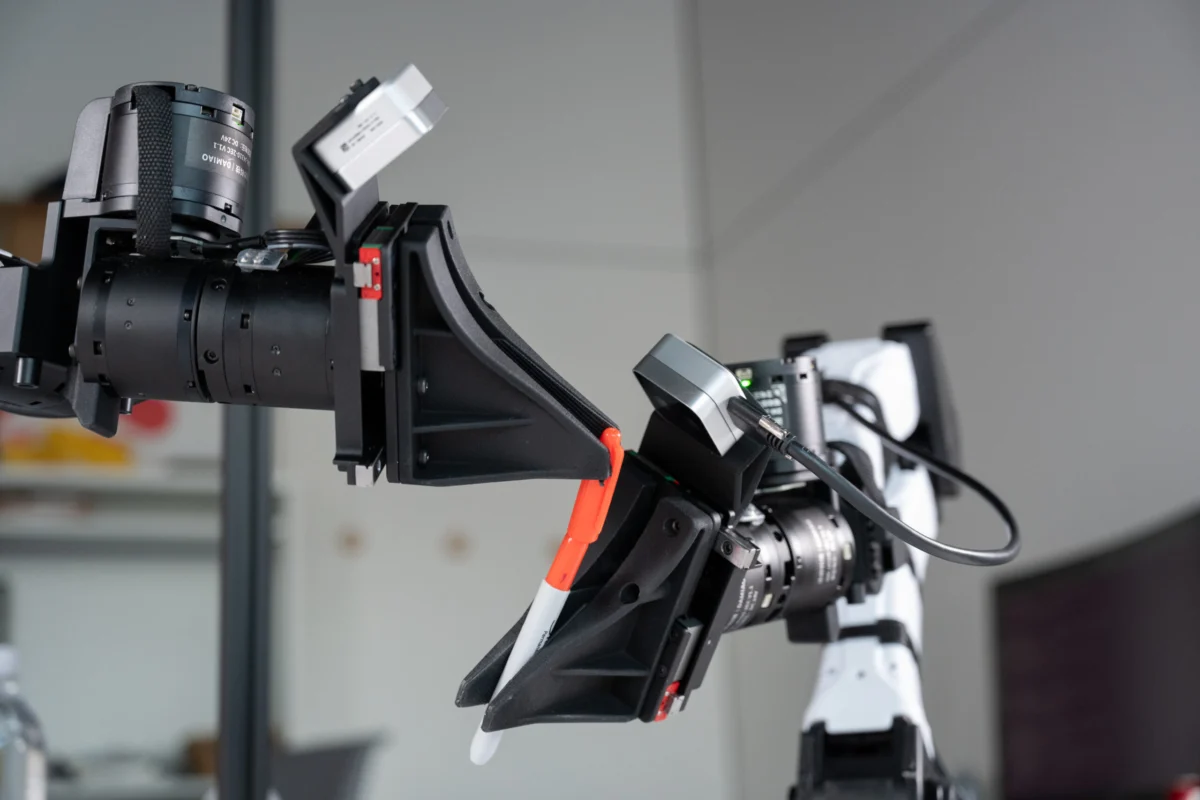
The technical bedrock of XDOF is an innovation known as GELLO, a low-cost teleoperation system developed by Wu and Shentu during their time at Berkeley. GELLO allows a human operator to control a robotic arm remotely, providing a high-fidelity "demonstration" of a task that the robot can then learn from. This project, which began as an academic paper, proved that high-quality training data didn’t necessarily require million-dollar setups, but rather clever systems that could capture the nuance of human dexterity.
The Operational Engine: Human-in-the-Loop
XDOF’s business model is a blend of high-tech software and intensive human-capital management. The startup is scaling a global network of "data collectors." This workforce is divided into two primary categories:
- Remote Teleoperators: Individuals who steer robotic arms from remote locations to complete complex tasks.
- Egocentric Operators: Workers who wear specialized body sensors to capture human motion data—the "ground truth" of how a person navigates and interacts with the physical world.
These operators record everything from the mundane (folding clothes) to the intricate (manipulating fragile objects), creating a vast, structured dataset. To maximize the utility of this work, XDOF is partnering with UC Berkeley’s AI Research lab to release "ABC," an expansive collection of high-quality robot training data. By standardizing this data, XDOF is lowering the barrier to entry for robotics companies, allowing them to focus on their neural architectures rather than the arduous process of data gathering.
Supporting Data and Industry Context
The robotics market is currently suffering from a "data drought." While the hardware for robots—actuators, sensors, and chassis—has advanced significantly, the "brain" remains the weak link.
XDOF’s current traction—serving 20 customers, including several of the world’s most prominent frontier AI labs—validates the thesis that the industry is desperate for outsourced data. As of the latest reports, the company is not alone in this race. Competitors like Mecka AI are also vying for market share, while established giants like Scale AI and newer entrants like Micro1 are expanding their operations to include physical, real-world data collection.
Despite the competition, XDOF’s "first-mover" advantage in specialized teleoperation systems has given it a unique foothold. Its revenue growth trajectory suggests that it has successfully navigated the "dirty, unglamorous work" of data collection, transforming it into a high-margin service that large AI labs are more than willing to pay for.
Official Responses and Deal Status
As of this writing, neither XDOF nor 8VC have provided formal comment regarding the rumored Series B round. This is typical for companies in the "late-stage negotiation" phase, where non-disclosure agreements and regulatory filings often dictate the flow of information.
Industry analysts suggest that the valuation—if finalized at $1.2 billion—would be a significant milestone for a company that has been operational for less than two years. It places XDOF in a rarefied class of AI startups that have achieved "unicorn" status before even reaching their third birthday. The uncertainty surrounding whether this valuation includes the new funding or reflects the post-money valuation adds a layer of complexity to the deal, but the market sentiment remains bullish.
Implications for the Robotics Industry
The implications of XDOF’s success are profound. If a startup can effectively "commoditize" the training data for physical robots, we are likely to see a rapid acceleration in the deployment of general-purpose robots in the workforce.
1. Accelerating Generalization
For years, robots have been relegated to "caged" environments where they repeat a single, pre-programmed task. By feeding models high-quality, human-derived data, XDOF is helping robots transition from deterministic machines to adaptive agents. This is the difference between a robot that can only pick up a specific bolt and a robot that can tidy an entire warehouse floor.
2. The Rise of the Data-Supply Chain
XDOF proves that the AI gold rush is shifting from "model training" to "data refinement." The most valuable companies of the next decade may not be the ones that build the best LLMs, but the ones that control the highest-quality, most diverse, and most proprietary data streams. By positioning itself as the middleman between human labor and robotic intelligence, XDOF is ensuring its relevance in any potential future for the industry.
3. Ethical and Workforce Considerations
The reliance on human "teleoperators" raises questions about the future of labor. As XDOF scales its workforce, it brings the "gig economy" model into the realm of high-level robotics. This creates new opportunities for employment but also necessitates a conversation about how these human-in-the-loop systems will be regulated and how the laborers—the ones whose movements teach the machines—are compensated for their role in training the next generation of workers.
Conclusion
The potential $1.2 billion valuation of XDOF is not just a reflection of its current revenue; it is a bet on the inevitability of the physical AI revolution. By solving the "dirty work" of collecting and curating data, Philipp Wu and Fred Shentu have positioned their startup at the epicenter of the robotics ecosystem.
As the lines between human labor and artificial intelligence continue to blur, XDOF’s role as the primary data supplier will likely become even more entrenched. Whether the company can maintain this momentum in an increasingly crowded and competitive landscape remains to be seen, but for now, the message from the venture capital community is clear: the future of robotics will be written in the data that XDOF collects today.
About the Author