Main Facts: The Final Frontier of Charleston Harbor
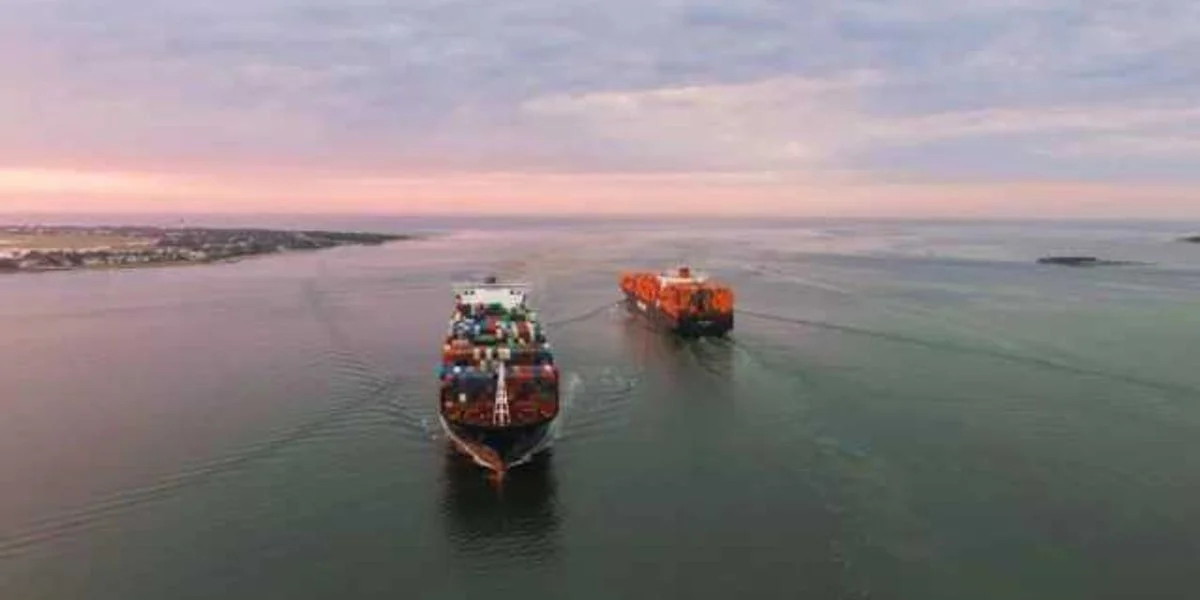
South Carolina Ports (SC Ports) has officially signaled the commencement of a strategic expansion aimed at cementing the Port of Charleston’s position as the premier maritime gateway of the U.S. Southeast. In a collaborative agreement with the U.S. Army Corps of Engineers (USACE), the port authority has initiated a feasibility study to deepen the Cooper River channel reaching the North Charleston Terminal.
Currently, the navigation channel leading to the North Charleston Terminal is maintained at a depth of 48 feet. While this depth is sufficient for many mid-sized vessels, it falls short of the 52-foot benchmark established by the successful harbor deepening project completed in 2022. By extending this deeper draft to the North Charleston facility, SC Ports intends to eliminate the final geographical constraint for large-scale container ships, allowing the terminal to accommodate the world’s largest neo-Panamax vessels at any tide. This move is not merely an infrastructure upgrade; it is a calculated effort to ensure that every container terminal under the SC Ports umbrella operates at maximum capacity and efficiency.
Chronology: A Decade of Dredging and Development
The path to a 52-foot harbor has been a hallmark of South Carolina’s economic development strategy over the past decade. The journey began in earnest as global shipping trends shifted toward the utilization of massive container ships that require significantly deeper drafts than those historically available at U.S. East Coast ports.
The 2022 Milestone
In 2022, the Charleston Harbor Deepening Project achieved a monumental success. The harbor entrance and the shipping channels leading to the Wando Welch Terminal and the Hugh K. Leatherman Terminal were successfully deepened to 52 feet. This project was a massive undertaking that required years of environmental impact assessments, congressional lobbying, and complex engineering. The completion of this phase allowed for two-way traffic in the harbor and ensured that vessels were no longer restricted by tidal schedules, significantly reducing the "waiting time" that had historically plagued large shipping logistics.
The Interim Years
Following the 2022 completion, SC Ports focused on maximizing the throughput at the newly minted Leatherman Terminal. However, as global supply chain pressures mounted post-pandemic, the demand for increased capacity at the North Charleston Terminal—a facility that handles a significant portion of the region’s industrial and automotive cargo—became increasingly apparent.
The Present Feasibility Study
The announcement of the feasibility study with the Army Corps of Engineers represents the formal launch of the final segment of the original vision. This study will examine the geological, environmental, and economic parameters required to deepen the stretch of the Cooper River between the Leatherman Terminal and the North Charleston Terminal. If the feasibility study is approved and funding is secured, it will signify the final link in the chain, effectively completing the deepening of the entire harbor system.
Supporting Data: Why Depth Equals Dominance
To understand why SC Ports is prioritizing this specific stretch of the river, one must examine the metrics of modern maritime logistics.
The Shift to Neo-Panamax
Since the expansion of the Panama Canal, the global shipping fleet has transitioned toward "ultra-large" container vessels. These ships often carry over 15,000 TEUs (twenty-foot equivalent units). When fully laden, these vessels require a draft that exceeds 48 feet. At 48 feet, a vessel must often wait for high tide to enter or depart, or it must operate with a lighter cargo load—both of which diminish the financial viability for the carrier and the port.
Throughput and Economic Velocity
At 52 feet, the Charleston Harbor stands as the deepest in the U.S. Southeast. This depth advantage has already allowed SC Ports to see a surge in vessel calls from major global alliances. Data indicates that ports with depths of 50 feet or greater are increasingly becoming the "ports of call" for major trans-Pacific and trans-Atlantic loops. By extending this depth to North Charleston, the port is effectively future-proofing its infrastructure against even larger ship classes that are currently in the design phase.
Environmental Stewardship and Engineering
The dredging process is not without its complexities. The USACE manages the environmental mitigation strategies, ensuring that the sediment disposal and dredging activities protect the delicate estuarine ecosystems of the Cooper River. Previous phases of the project have utilized innovative sediment management techniques to ensure that the ecological footprint of the project is minimized, a standard that the North Charleston expansion is expected to uphold.
Official Responses: The Strategic Vision
The leadership at SC Ports has been vocal about the necessity of this project, framing it as an essential component of South Carolina’s long-term economic growth.
SC Ports Perspective
Micah Mallace, President and CEO of SC Ports, emphasized that the decision is rooted in competitive necessity. "Deepening this final stretch makes our port more competitive and supports our long-term plan to modernize and enhance North Charleston Terminal," Mallace stated during the announcement. He further noted that the initiative is about more than just numbers on a map; it is about "expedited logistics for port customers and enhancing South Carolina’s competitiveness, helping to drive cargo growth and create jobs."
The Federal Partnership
The U.S. Army Corps of Engineers plays a critical role as the lead agency for this feasibility study. Their involvement ensures that the project meets stringent federal standards for navigation safety and environmental compliance. By partnering with the Corps, SC Ports leverages federal expertise and funding pathways that are vital for projects of this magnitude, which often cost hundreds of millions of dollars.
Implications: A New Era for North Charleston
The successful deepening of the North Charleston terminal will have far-reaching implications for the regional and national economy.
1. Supply Chain Resilience
The current supply chain environment is defined by volatility. By ensuring that vessels do not have to wait for tide windows, SC Ports is effectively increasing the "velocity" of goods. For retailers, manufacturers, and automotive plants throughout the Southeast, this means faster delivery times and more reliable inventory management.
2. Economic Development and Job Creation
The Port of Charleston is the primary engine of South Carolina’s economy. A deeper, more efficient harbor is a powerful incentive for international companies to locate their distribution centers and manufacturing plants within the state. As the terminal becomes capable of handling larger vessels, the demand for warehousing, logistics services, and inland transportation will inevitably increase, driving job creation in the Lowcountry and across the state.
3. Maintaining the Competitive Edge
The competition among U.S. East Coast ports is fierce. Ports from Savannah to Virginia are all vying for the same cargo volume. Charleston’s status as the deepest harbor in the Southeast provides a unique "moat" against competitors. By completing this final stretch, Charleston ensures that it remains a "first-port-of-call" for global shipping lines, which is a significant advantage in the hierarchy of international shipping routes.
4. Modernization of North Charleston Terminal
Beyond the dredging itself, this project is a catalyst for broader modernization. As the channel is prepared for larger ships, the terminal infrastructure—including cranes, yard capacity, and gate technology—is also being evaluated for upgrades. The goal is a seamless, high-tech interface where larger ships can be unloaded with greater speed and precision than ever before.
Conclusion
The announcement by SC Ports to investigate the deepening of the North Charleston Terminal channel is a strategic masterstroke. It signifies the transition from a period of "catch-up" to one of "consolidation," where the goal is to perfect the existing infrastructure. By aligning with the U.S. Army Corps of Engineers, SC Ports is ensuring that the technical and environmental rigor of the project is beyond reproach.
As the feasibility study moves forward, the maritime industry will be watching closely. For the state of South Carolina, this project represents a long-term commitment to maintaining its status as a global trade hub. While the dredging of a river channel may seem like a matter of routine maintenance to the casual observer, it is, in fact, the bedrock upon which the future of the state’s industrial and logistics economy is being built. With the promise of 52-foot access to all its terminals, SC Ports is not just deepening a channel; it is opening the doors to a more efficient, prosperous, and competitive future for the entire Southeast region.
About the Author