
In an era defined by rapid demographic shifts and evolving economic landscapes, understanding what the "American Dream" means to the modern public requires more than simple polling. It demands a rigorous, multi-layered methodological approach that balances traditional statistical precision with cutting-edge advancements in artificial intelligence.
The Pew Research Center’s latest investigation—Wave 181 of the American Trends Panel (ATP)—provides an unprecedented look at how diverse groups of U.S. adults define their aspirations. By combining comprehensive survey data with AI-assisted text analysis, the Center has mapped the contours of national sentiment with high-level accuracy. This report outlines the technical framework that underpinned this ambitious study, offering transparency into how data was collected, validated, and interpreted.
Main Facts: The Scope and Scale of Wave 181
At the heart of the research is the American Trends Panel (ATP), a nationally representative group of U.S. adults recruited through address-based sampling. Wave 181, conducted from October 6 to October 16, 2025, represents a significant logistical achievement.

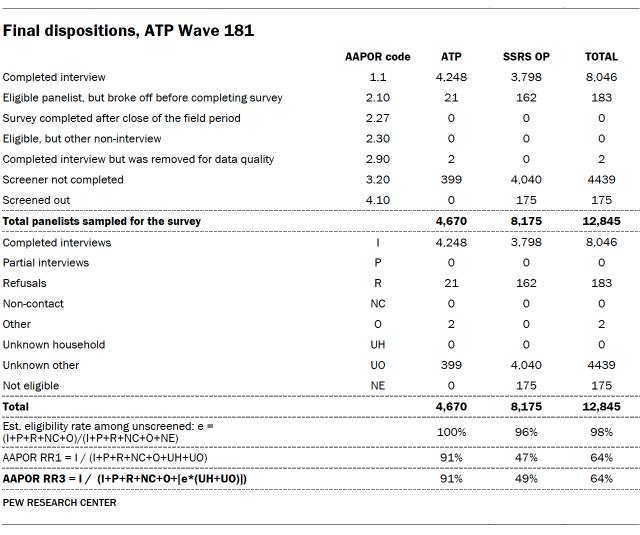
The survey successfully captured insights from 8,046 respondents out of an initial sample of 12,845, yielding a robust survey-level response rate of 64% (based on the AAPOR RR3 standard). This dataset is unique in its composition, blending 4,248 respondents from the core ATP with an additional 3,798 participants from the SSRS Opinion Panel. This integration allowed researchers to provide more granular, precise estimates for demographic subgroups, specifically non-Hispanic Asian and Hispanic adults, who were intentionally oversampled to ensure their perspectives were not lost in the aggregate data.
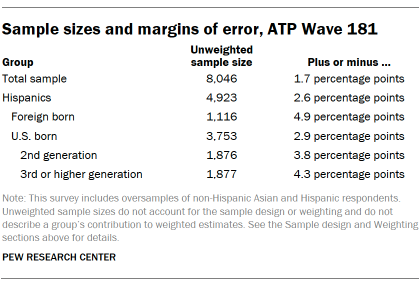
The margin of sampling error for the total sample stands at plus or minus 1.7 percentage points, a figure that underscores the high degree of reliability inherent in the study. To maintain this level of accuracy, the research team employed rigorous data quality controls, including the removal of respondents who exhibited "satisficing" patterns—such as leaving excessive numbers of questions blank or engaging in "straight-lining" (selecting the same answer for every prompt). Only two respondents were excluded from the final analysis, confirming the high engagement of the panel.
Chronology of Research: From Recruitment to Analysis
The lifecycle of this project spanned from the initial recruitment strategies to the final validation of AI-coded responses.
Recruitment and Design
Since 2018, the ATP has utilized address-based sampling (ABS), leveraging the U.S. Postal Service’s Computerized Delivery Sequence File, which covers approximately 90% to 98% of the U.S. population. Households were selected at random, with the "next birthday" method used to select the individual respondent within each household. This evolution from previous random-digit-dial methods ensures that the panel remains representative of the contemporary digital and residential landscape.
Data Collection Fieldwork (October 2025)
- October 3: Prenotification postcards were mailed to phone-based participants.
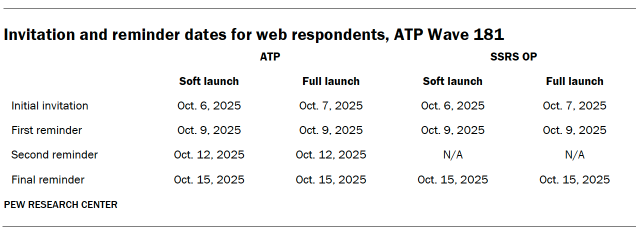
- October 6: The "soft launch" began. A small subset of 801 panelists (60 ATP and 741 SSRS Opinion Panelists) were invited to take the survey to test the infrastructure.
- October 7: The full launch occurred. Invitations were sent to the remainder of the English- and Spanish-speaking participants via email, SMS, and telephone.
- October 16: The field period concluded, marking the end of data collection.
AI Integration and Coding
Following data collection, researchers faced the challenge of interpreting thousands of unique open-ended responses to the question: "In a few words, what does the American dream mean to you?" To handle this, the Center utilized a hybrid approach, combining human qualitative review with unsupervised machine learning and Large Language Models (LLMs). This process—leveraging the GPT-5.2 model—involved iterative validation against human-coded samples to ensure the AI’s interpretations aligned with sociological standards.
Supporting Data: Ensuring Equity and Precision
A critical component of this study is the methodology for calculating "family income tiers." The Center recognizes that a dollar in San Francisco carries a different weight than a dollar in Pine Bluff, Arkansas.
Economic Normalization
To account for these discrepancies, the researchers adjusted family income data for household size and geographic cost-of-living differences. For instance, the price level in Pine Bluff is nearly 20% below the national average, whereas San Francisco-Oakland-Berkeley is roughly 18% higher. By normalizing these figures, the survey ensures that "income tier" assignments reflect true purchasing power rather than nominal salary figures. This ensures that the socioeconomic analysis of the "American Dream" is anchored in reality rather than distorted by regional economic variation.
Weighting and Benchmarking
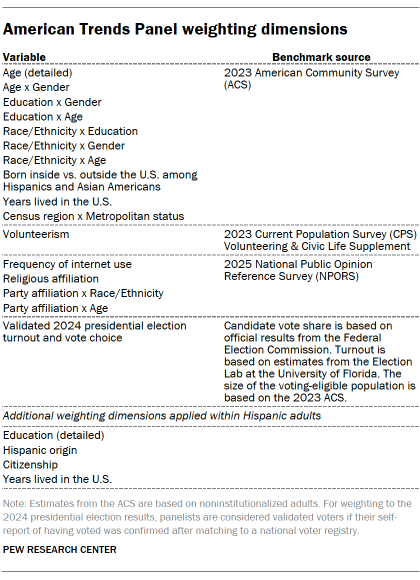
To correct for the oversampling of specific groups and the realities of non-response, the data underwent a multi-stage weighting process. Each panelist was assigned a base weight based on their probability of recruitment. These weights were subsequently calibrated against population benchmarks and trimmed at the 1st and 99.5th percentiles to minimize the impact of extreme outliers. This statistical rigor ensures that the final dataset accurately mirrors the demographic composition of the United States.
Official Responses: The AI Coding Methodology
The use of AI in social science research often invites scrutiny. Pew Research Center addressed this by employing a transparent, multi-step validation process.
According to the project documentation, the team utilized a "model-assisted codebook development process." By integrating human interpretation with unsupervised theme discovery (using the HypotheSAES method), the researchers identified key thematic categories before handing the task to the GPT-5.2 model.
To verify the AI’s performance, the Center conducted a rigorous "double-blind" test. A stratified sample of 201 responses was coded independently by both human experts and the AI. Because the model achieved a micro-averaged F1 score of 0.89—a high threshold for complex, open-ended classification—the team felt confident in deploying the model to categorize the remaining 7,247 responses. This partnership between human oversight and machine efficiency marks a new frontier in public opinion polling.
Implications: The Future of Public Opinion Research
The implications of this methodology extend far beyond the specific findings of the American Dream survey. By demonstrating that AI, when guided by human-derived codebooks and subject to iterative validation, can reliably categorize thousands of nuanced human expressions, Pew has established a new benchmark for speed and scale in qualitative research.
However, the Center remains cautious, acknowledging that while AI accelerates the process, it does not replace the necessity of human judgment. The ongoing need for "deterministic rules" and human-coded validation sets suggests that the future of polling is not "human vs. machine," but rather "human-led, machine-supported."
For policymakers, journalists, and citizens, this methodology provides confidence that the findings are not merely the result of a "black box" algorithm. Instead, they are the product of a transparent, accountable, and mathematically rigorous framework designed to capture the complex, shifting aspirations of the American people. As the demographic and economic landscape of the U.S. continues to change, the ability to combine traditional survey integrity with modern computational power will be the defining factor in our ability to understand the national character.
For those interested in the granular details, the Center has made the full coding prompts and methodology documentation available, ensuring that this study remains a foundation for future academic and journalistic inquiry. Through this commitment to methodological transparency, the American Trends Panel continues to serve as a vital instrument for measuring the health and heartbeat of the nation.
About the Author