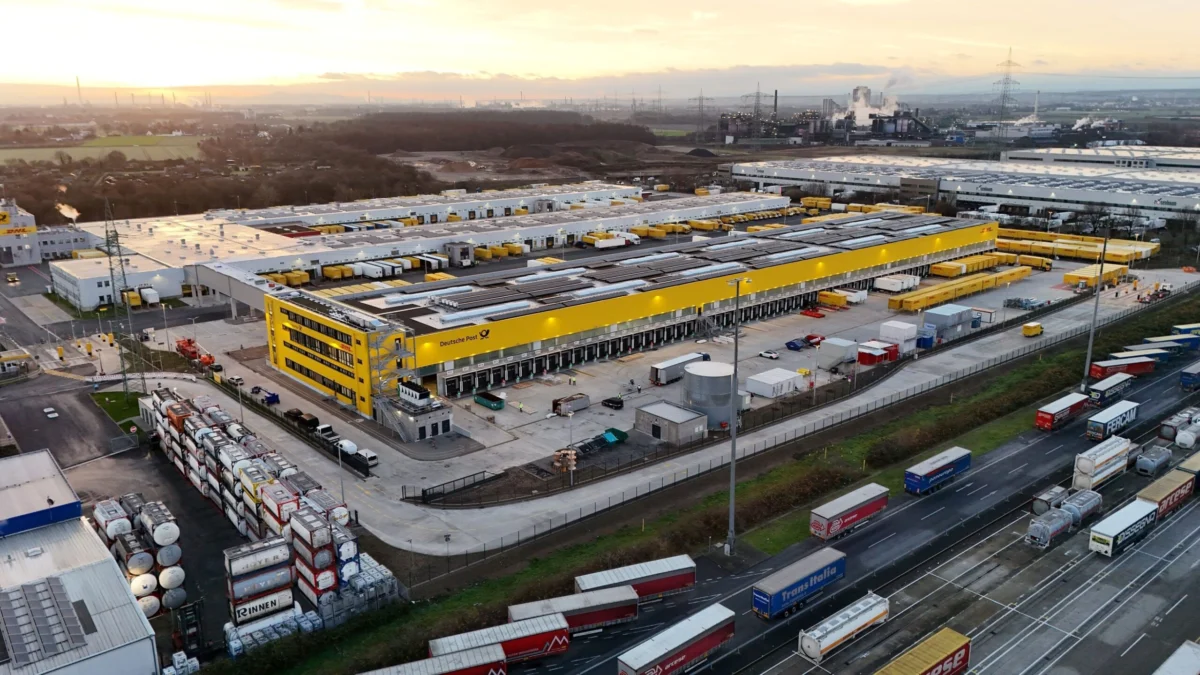
In a decisive move to fortify its position within the rapidly evolving European e-commerce landscape, DHL Group has officially inaugurated a major expansion of its parcel center in Cologne-Eifeltor. This strategic enhancement represents more than just additional square footage; it signals a broader, multi-billion-euro commitment to the modernization of Germany’s postal and logistics infrastructure. As consumer habits shift decisively away from traditional letter correspondence toward digital retail, DHL’s Post & Parcel Germany division is aggressively retooling its network to maintain the speed and reliability that have become the hallmarks of the global logistics giant.
The Cologne-Eifeltor Expansion: A Strategic Pivot
The newly completed expansion at Cologne-Eifeltor is a cornerstone of DHL’s long-term operational strategy. By increasing the facility’s sorting capacity to nearly 50,000 parcels per hour, DHL has effectively elevated the site to a tier-one logistics node within its national network. This throughput now matches the capacity of the company’s previous flagship facility in Bochum, North Rhine-Westphalia, cementing Cologne’s status as a critical engine for the country’s most populous region.
The project, which broke ground earlier this year, was delivered on an accelerated timeline, with the new structure seamlessly integrated into the existing 1994-era facility via a connecting bridge. This "brownfield" redevelopment—built on the footprint of a demolished structure—not only maximizes existing industrial land use but also incorporates the latest in sustainable logistics engineering.
Chronology of the Development
The path to the current inauguration reflects a calculated response to shifting market demands:
- 1994: The original Cologne-Eifeltor parcel center begins operations, serving as a primary hub for the region.
- 2023: DHL Group announces its continued commitment to heavy investment, signaling that the "Post & Parcel" division would spend over €1 billion annually to restructure its network in the face of declining letter volumes and surging e-commerce demand.
- Early 2024: Construction begins on the new extension at the Cologne site, designed to modernize the facility while maintaining continuous operations for the 1.2 million households it serves.
- Summer 2024: Construction reaches completion on schedule, allowing for the integration of high-speed sorting technology.
- October 2024: Official opening ceremony takes place, attended by company leadership, marking the transition to full operational status with an expanded workforce.
Supporting Data: Capacity and Sustainability
To understand the scale of this project, one must look at the metrics governing DHL’s network. While the Cologne-Eifeltor facility is now among the most capable in Germany, it remains secondary only to the massive Aschheim center near Munich, which processes approximately 72,000 parcels per hour.
However, the Cologne expansion is notable for its emphasis on sustainable operations. In alignment with DHL’s global "GoGreen" environmental targets, the facility has been outfitted with a comprehensive suite of energy-saving features:
- Solar Integration: A rooftop solar array provides a renewable energy source for the facility’s daily operations.
- Thermal Efficiency: The installation of a "green roof" serves a dual purpose: improving insulation to keep the building warm during the winter and mitigating the "heat island" effect to maintain cooler temperatures in the summer without heavy reliance on air conditioning.
- Intelligent Infrastructure: The main hall utilizes underfloor heating, while the entire facility is managed by automatic ventilation controls and demand-controlled LED lighting, ensuring that energy is only consumed where and when it is needed.
This investment into "green" logistics is not merely a corporate social responsibility initiative; it is a vital strategy to reduce operational overhead in a sector where margins are constantly pressured by rising energy costs and the demand for low-cost delivery services.
Official Responses and Strategic Vision
During the inauguration ceremony, Marc Hitschfeld, head of operations for Post & Parcel Germany at DHL Group, underscored the necessity of the expansion. "With the expansion of the Cologne-Eifeltor parcel center, we are making a targeted investment in the performance of our network," Hitschfeld noted. "Online retail continues to grow, and our customers rightly expect fast and reliable delivery."
This statement encapsulates the dual challenge facing DHL: the requirement to remain agile enough to handle the massive volatility of e-commerce peak seasons while simultaneously navigating the structural decline of its traditional revenue stream, physical mail. By rightsizing its parcel and letter centers through automation and digitalization, DHL is attempting to future-proof its business model.
Broader Economic and Labor Implications
The expansion carries significant weight for the local economy in Northwest Germany. The addition of 250 new jobs, bringing the facility’s total headcount to 750, provides a meaningful boost to the regional labor market. In an era where logistics firms are struggling with labor shortages, DHL’s ability to scale its workforce is a testament to the company’s strong brand presence and competitive positioning.
Furthermore, the expansion is part of a larger ecosystem of services. DHL’s Post & Parcel Germany division does not operate in a vacuum; it manages the largest parcel locker network in the country and has recently seen its collection points leveraged by platforms like Vinted to facilitate the circular, second-hand economy. As these digital-native businesses continue to scale, the physical infrastructure of DHL—such as the Cologne-Eifeltor hub—becomes the primary interface between the digital economy and the consumer.
The Future of the Network
The "1 billion euros per year" investment program is designed to move beyond traditional sorting. It involves the integration of artificial intelligence for route optimization, the deployment of more electric delivery vehicles, and the expansion of automated parcel lockers to reduce the "last-mile" burden.
The Cologne-Eifeltor project serves as a microcosm of this transition. It demonstrates a move toward higher density, higher efficiency, and higher automation. As letter volumes continue to trend downward, the infrastructure that once served to deliver mail is being systematically converted to handle the packages generated by the digital marketplace.
For the residents of Cologne and the surrounding region, this means more than just a faster delivery window; it represents the survival of a critical infrastructure that supports both the individual shopper and the local business owner. As the industry looks toward the upcoming peak holiday seasons and beyond, the Cologne-Eifeltor center stands ready to shoulder the increased burden, ensuring that the gears of German commerce continue to turn with precision.
In summary, the Cologne-Eifeltor expansion is a strategic masterstroke in the ongoing battle for logistics supremacy. By combining high-capacity, energy-efficient infrastructure with a commitment to regional job growth, DHL Group has reinforced its status as the backbone of the German delivery market. As the company continues its multi-billion-euro transformation, this facility will undoubtedly serve as a benchmark for future developments across the European continent.
About the Author