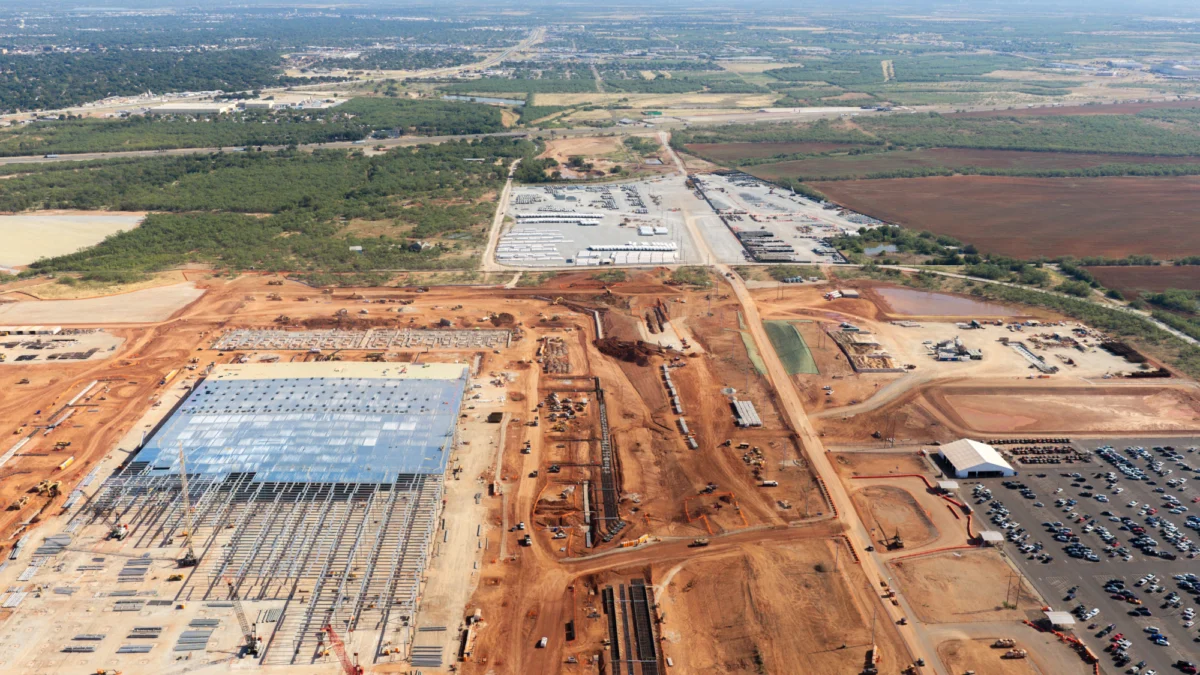
As Silicon Valley titans and Washington policymakers engage in a high-stakes, breathless competition to define the future of artificial intelligence, a troubling secondary narrative has begun to emerge from the sprawling industrial landscapes of the American heartland. In Abilene, Texas, construction is currently underway on the Stargate Oracle AI data center—a gargantuan 4-million-square-foot facility that serves as a physical monument to the nation’s unquenchable thirst for computational power.
While tech executives frequent Capitol Hill to grandstand about the "existential risks" posed by rogue AI models, a growing chorus of former Environmental Protection Agency (EPA) officials and public health experts are warning of a much more tangible, immediate threat: the environmental and public health toll of the infrastructure required to power this digital revolution.
The Current Landscape: A Regulatory Vacuum
The United States is currently home to approximately 3,000 data centers, with an additional 1,500 projects in the planning stages. This unprecedented build-out is occurring at a moment when federal oversight is at its weakest point in decades. A new report from the Environmental Protection Network (EPN), a non-profit organization comprised of former EPA researchers and regulators, highlights that since January 2025, the Trump administration has systematically dismantled at least 30 key pollution safeguards, permitting processes, and inspection protocols.
The result is a "regulatory vacuum" that prioritizes the rapid expansion of hyperscale computing over the health of the communities surrounding these sites. As developers scramble to meet the energy demands of massive AI clusters, the very guardrails designed to monitor air quality, water consumption, and industrial emissions are being dismantled in the name of technological supremacy.
Chronology of a Policy Shift: 2025–2026
To understand how the United States arrived at this juncture, one must look at the rapid pivot in administrative priorities since the start of 2025:
- January 2025: The new administration signals a "compliance-first" orientation, effectively shifting the EPA’s mandate from strict enforcement to industry partnership.
- Mid-2025: The EPA begins dismantling its primary scientific research offices, dispersing the workforce that once provided independent analysis on industrial pollution impacts.
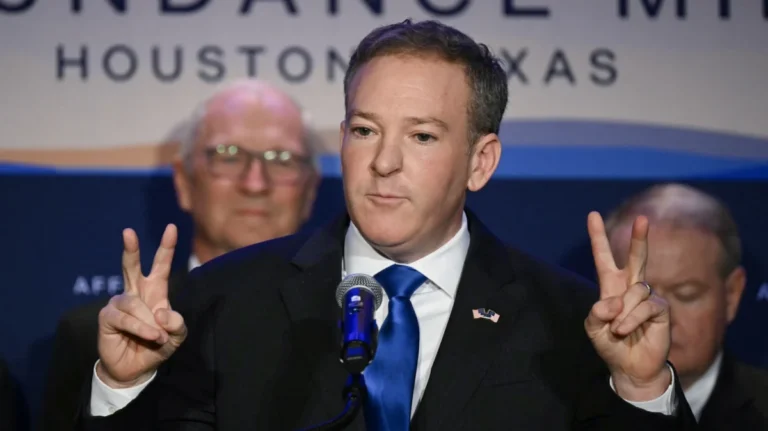
- Late 2025: EPA Administrator Lee Zeldin issues a formal memo articulating the administration’s goal: "Making America the AI Capital of the World." The memo explicitly calls for the removal of "heavy-handed regulations" that hinder data center construction.
- Early 2026: Regulatory changes are proposed to allow developers to commence construction on data centers and their associated power-generation facilities before securing mandatory air pollution permits.
- August 2026: Public awareness intensifies as major projects like the Stargate Oracle facility in Abilene hit critical construction milestones, fueling local and state-level debates over power grid stability.
- September 2026: Former EPA scientists release their comprehensive analysis, sounding the alarm on the cumulative health impacts of the "deregulation-first" strategy.
The Human Toll: Data and Projections
The shift in policy is not merely a bureaucratic change; it has concrete, measurable impacts on public health. According to research cited by the Environmental Protection Network, the pollution associated with the current AI-driven data center boom could result in approximately 1,300 additional deaths annually due to degraded air quality.
Particulate Matter and Long-term Exposure
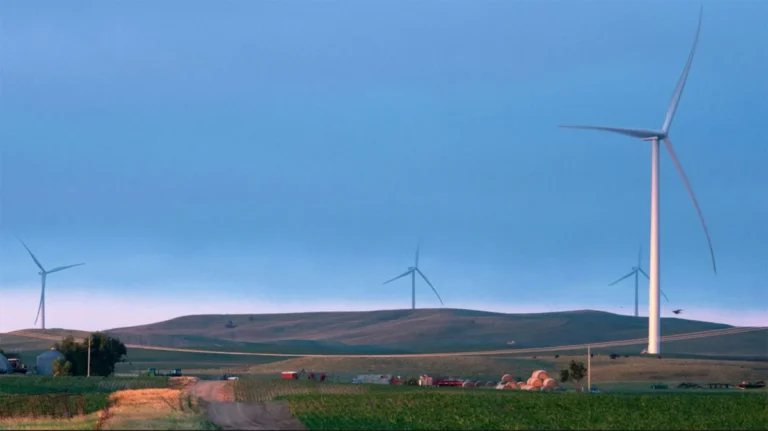
The reliance on fossil-fuel-powered turbines—often used as backup power for hyperscale data centers—presents a significant hazard. These systems emit fine particulate matter (PM2.5) and nitrogen oxides. Dr. Lynn Goldman, a former EPA administrator and physician, explains that the health consequences range from the immediate to the chronic.
"We are looking at a spectrum of impacts," Dr. Goldman noted during a recent press conference. "In the short term, we expect to see an uptick in respiratory-related hospitalizations and cardiac events. Over the long term, we are concerned about the cumulative effects, including cancer and developmental issues, that stem from persistent exposure to these industrial emissions."
The Grid Strain
The energy demand of these facilities is staggering. In many regions, the demand has become so significant that local grids are reaching a breaking point. Texas Governor Greg Abbott recently took the unprecedented step of pausing approvals for new large-scale data center loads, fearing the strain on the Texas power grid. This move highlights the friction between the promise of "AI leadership" and the reality of localized infrastructure failures.
Official Responses and Industry Justification
The current administration’s stance is one of unapologetic acceleration. Administrator Lee Zeldin has consistently framed the deregulation of the energy sector as a matter of national security and economic vitality. From the perspective of the White House, the "AI arms race" with international rivals necessitates a streamlined approach to building energy infrastructure.
"We are committed to bolstering American innovation," Zeldin wrote in his 2025 memo. "By cutting through the red tape that has historically slowed industrial growth, we ensure that America remains the global leader in the most important technology of our time."
However, this rhetoric faces stiff resistance from the scientific community. Dan Costa, who served at the EPA for 35 years, argues that the agency’s historical commitment to the public good has been replaced by an industry-first mandate. "For decades, toxicologists, chemists, and atmospheric scientists worked in concert with academic colleagues on behalf of the American people," Costa said. "We wanted to carry out the EPA’s mission of protecting health from industrial pollution. Transforming our energy system while simultaneously gutting our capacity to understand its impacts makes absolutely no sense."
The Implications: A Future in Flux
The implications of this policy shift extend far beyond the borders of Texas. As data centers proliferate across rural America, the regulatory landscape is becoming a patchwork of disparate standards.
Property Rights and Local Control
In states like Texas, the debate is increasingly focused on property rights and land-use control. Conservative groups, often skeptical of large-scale corporate encroachment, have joined environmentalists in questioning the "fast-track" permitting processes that often bypass local zoning input. The concern is that the rural communities hosting these centers will be left to bear the brunt of the environmental and economic costs while the benefits—the AI advancements—are captured by a handful of coastal technology firms.
The Environmental Justice Aspect
There is also a growing concern regarding environmental justice. Many of the new data centers are being sited in or near economically vulnerable communities that already face disproportionate levels of industrial pollution. By easing the requirements for air pollution permits, the government is effectively shifting the burden of the AI boom onto these communities, exacerbating existing health disparities.
The Path Forward
As the 2026 Midterm elections approach, the "data center crisis" has vaulted into the national spotlight. For many voters, the issue is no longer just about the ethics of AI, but about the fundamental role of government in protecting the air, water, and health of its citizens.
The central question facing the nation is whether the pursuit of AI dominance justifies the systematic weakening of the laws that keep the air breathable and the environment stable. As the Stargate site nears completion and the grid continues to groan under the weight of new energy demands, the consensus among former EPA scientists is clear: without a return to rigorous oversight and a scientific approach to industrial expansion, the "AI Capital of the World" may come at a price that future generations will be unable to pay.
About the Author