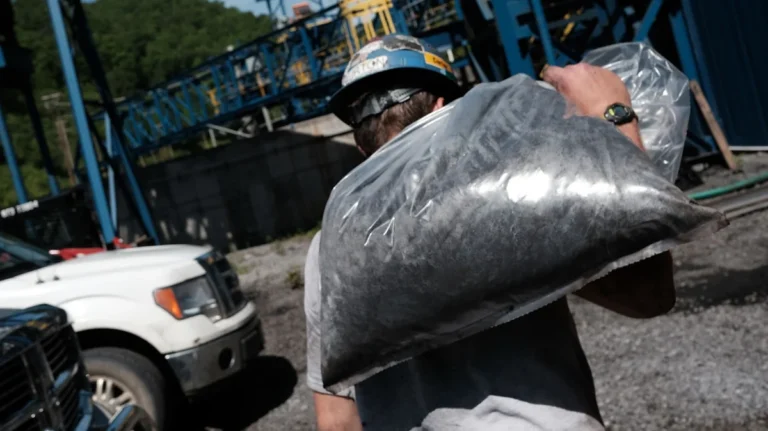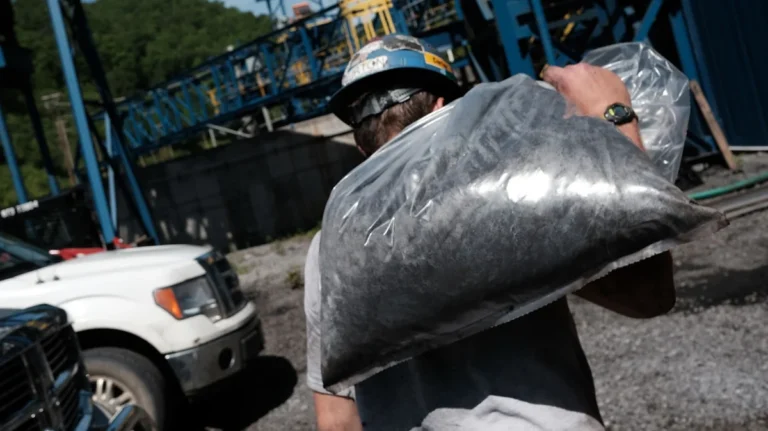
For nearly four decades, Josh Armes navigated the perilous, claustrophobic tunnels beneath the mountains of West Virginia and Virginia. He spent his life extracting the resources that powered the nation’s grid, enduring grueling shifts in the dark, dust-choked bowels of the earth. Today, at 74, the Grundy, Virginia native no longer mines coal; he fights for his life, tethered to an oxygen tank that provides the only relief for lungs ravaged by coal workers’ pneumoconiosis—commonly known as black lung disease.
His story is not an outlier, but a testament to a systemic failure. After a lifetime of labor, Armes and his family have spent the last 12 years trapped in a Kafkaesque legal limbo, battling to retain the federal benefits promised to miners disabled by the very industry that consumed their health. As black lung rates surge to levels not seen in half a century, the plight of the Armes family serves as a harrowing microcosm of a broader, unfolding tragedy in America’s coal country.
The Human Cost: A Life Tethered to Oxygen
The irreversible damage caused by inhaling coal dust over a 38-year career has left Josh Armes physically tethered to his home. Simple acts—walking to the mailbox, speaking in full sentences, or enjoying a meal—are now Herculean tasks. His daily routine is defined by the hiss of his oxygen concentrator and the administration of albuterol inhalers to stave off the suffocating sensation of air hunger.
However, the medical burden is only half the battle. In 2014, the federal black lung benefits he had been receiving for three years were abruptly challenged by a coal operator. This sparked an arduous, multi-year appeals process that has stripped the family of financial stability while Armes’s health continues to decline.
"They can appeal it, get a different judge, and it’s stripped away from you, which I find absolutely insane," Armes says, his voice strained. "They fight you at every single step of the way. I can’t figure out one thing. They sent me a paper that said I got first- and second-stage black lung. That ought to be enough, or do you have to be dead?"
A Chronology of Bureaucratic Attrition
The federal black lung benefits program was established in 1969 with a clear moral mandate: to provide monetary compensation and medical support to those whose health was sacrificed for industrial production. Yet, over the decades, this safety net has been frayed by aggressive legal tactics from mine operators.
- 1969: The federal black lung benefits program is enacted, promising protection for disabled miners.
- 2013–2024: A period marked by systemic obstructionism. During this decade, 40 percent of all approved claims by the Department of Labor were disputed by coal companies.
- 2014: Josh Armes’s benefits are appealed, beginning a decade-long legal battle.
- 2024: Congress blocks funding for the enforcement of a critical silica dust rule, despite a surge in respiratory illnesses.
- 2026: New data reveals that 32.5 percent of veteran underground coal miners in Central Appalachia are suffering from black lung disease, the highest rate since 1978.
For families like the Armes’, the process is designed to wear them down. His daughter, Crystal Armes, notes that the family has been forced to pay out-of-pocket for repeated medical tests and has struggled to secure legal representation willing to navigate the labyrinthine requirements. "The burden of proof lies on the coal miner to prove that he has black lung," Crystal explains. "We have appealed it and appealed it and appealed it. I don’t feel like the process should be this difficult."
Data Behind the Decline
The resurgence of black lung is not a mystery; it is a consequence of modern mining practices. As thinner coal seams are accessed, miners are cutting through more rock, which produces higher concentrations of silica dust. This dust is significantly more toxic than coal dust alone and causes rapid, aggressive lung scarring.
According to a report released in May by the Government Accountability Office (GAO), the situation for miners is dire. Between 2013 and mid-August 2024, 390 miners who were initially approved for benefits saw those benefits rescinded after coal operators won appeals. These miners were then held liable for the "overpayment," a crushing financial blow that often occurs when a miner is already too sick to work.
The GAO report captured the profound despair of the workforce, noting that miners frequently express the belief that mine operators are simply "waiting for them to die" or waiting for them to give up out of exhaustion and poverty. The median duration of an appealed claim is now over three years, with some cases dragging on for more than a decade.
Regulatory Stalls and the Silica Rule
The legislative landscape has become increasingly hostile to worker protections. In April 2024, the Mine Safety and Health Administration (MSHA) introduced a rule aimed at curbing silica dust exposure, which would mandate better ventilation and engineering controls. However, that progress was short-lived.
By June 2024, Congressional Republicans blocked the funding necessary to enforce the rule. Shortly thereafter, the Trump administration signaled it would "indefinitely delay" the rule, citing a pending judicial review. Critics argue this is a calculated delay tactic.
Rebecca Shelton, policy director for the Appalachian Citizens’ Law Center, did not mince words regarding the administration’s stance: "If the Trump administration actually cared about protecting coal miners from black lung, we’d have a strong silica rule in place right now. Instead, they are hiding behind a ridiculous legal process to delay action while miners get sick and die."
The United Mine Workers of America (UMWA) has been one of the most vocal opponents of this delay. Union President Brian Sanson has repeatedly called for the unfreezing of the rule, emphasizing that the human cost is mounting every day that regulators drag their feet. "A company’s profit margin cannot take precedence over a miner’s right to draw a breath," Sanson stated.
Implications: A System in Crisis
The implications of this ongoing crisis are far-reaching. The failure to provide promised benefits to miners does more than just impoverish individual families; it erodes the social contract between the American worker and the industries that fuel the nation.
When miners are forced to choose between the cost of medical care and the cost of survival, the entire community suffers. The current legal framework, which allows companies to engage in endless, costly appeals, effectively creates a "pay-to-delay" system that favors well-funded corporations over aging, ailing workers.
As of the latest reports, the White House has deferred all comment to the Department of Labor. A spokesperson for MSHA stated via email that, "Until pending litigation and limited rulemaking on respirable crystalline silica are resolved, MSHA continues to vigorously enforce the permissible exposure limit of 100 micrograms per cubic meter."
For men like Josh Armes, those numbers are cold comfort. They are not metrics in a regulatory report; they are the measurements of a life being slowly extinguished. As his daughter Crystal points out, the miners who built the foundation of the American economy are being left to fend for themselves in their final years.
"These people, like my dad, he gave his life to mining to support his family, and now we’ve been fighting this fight for over 10 plus years," she said. "We’re hardworking, everyday Americans who go to work every day, pay our taxes, try to do the right thing, and then, we can’t get what was promised us."
Until federal regulators and lawmakers prioritize the lungs of the miners over the litigation strategies of the mine operators, the quiet epidemic in Appalachia is expected to continue its deadly trajectory, leaving a trail of broken health and broken promises in its wake.
About the Author