In the world of logistics and personal transport, the utility trailer has long been a victim of its own footprint. For the average homeowner, hobbyist, or small-business operator, the utility trailer is a seasonal necessity—a vital tool for moving lumber, landscaping materials, or recreational vehicles—that spends 95% of its existence occupying precious square footage in a garage or driveway. It is a "dead space" investment that demands permanent real estate for a temporary task.
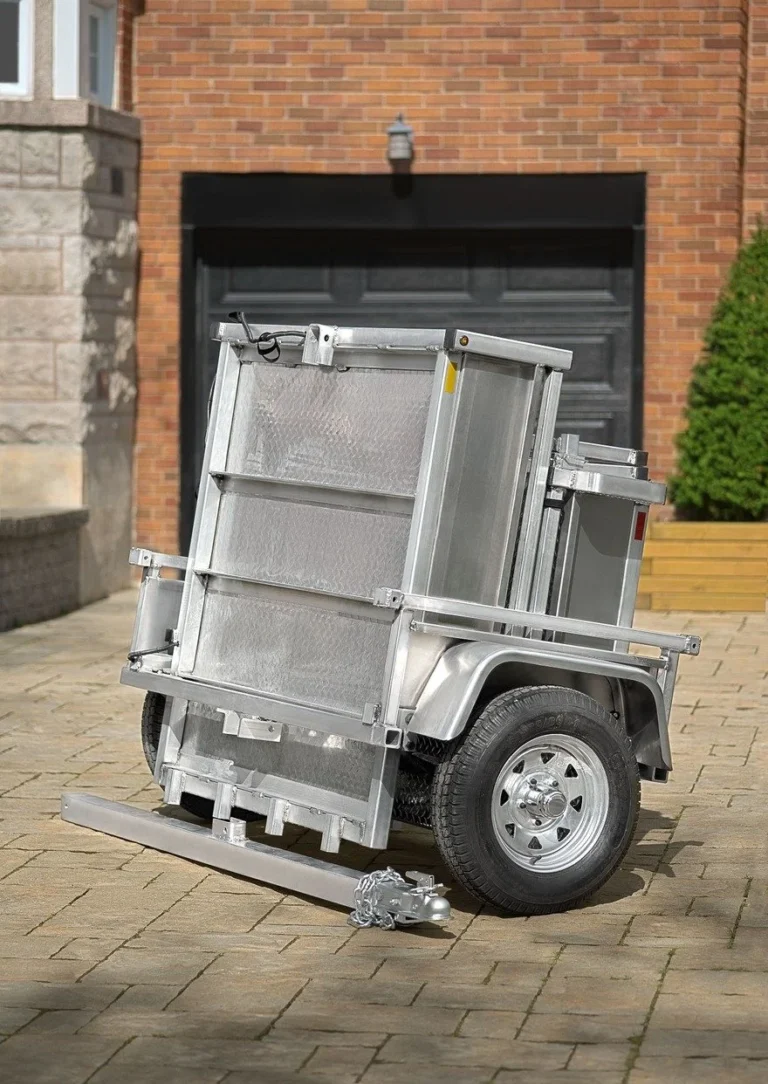
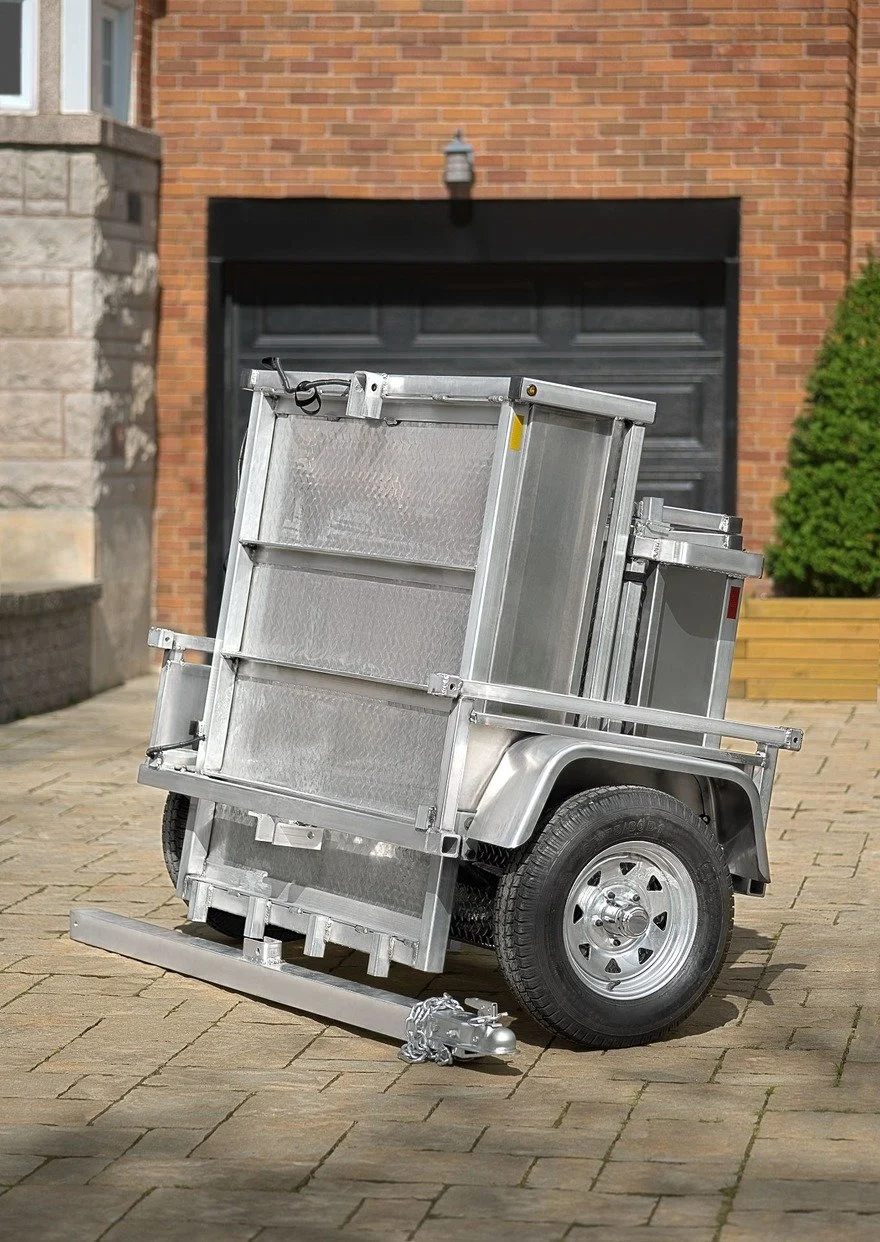
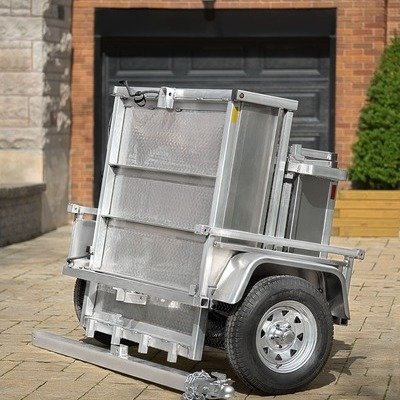
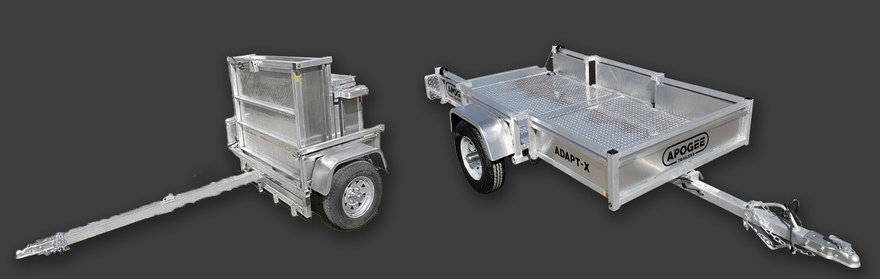
However, a Canadian engineering firm, Apogee Trailers, has introduced a solution that challenges the traditional paradigm of fixed-frame hauling. Their flagship product, the Adapt-X, is not merely a trailer; it is a mechanical study in space-efficiency. By utilizing a sophisticated folding architecture, the Adapt-X offers the robust utility of a heavy-duty hauler that can be collapsed into a compact, manageable box when not in use. It is, quite literally, the automotive equivalent of a Transformer—minus the CGI theatrics and the intergalactic warfare, focusing instead on the grounded, practical demands of modern infrastructure.
Main Facts: The Anatomy of the Adapt-X
At its core, the Adapt-X is designed to bridge the gap between heavy-duty cargo capacity and residential storage limitations. Unlike traditional trailers that require a dedicated parking bay, the Adapt-X is engineered to fit into the footprint of a standard pallet or a narrow garage corner.
Material Composition and Durability
Apogee Trailers has prioritized a lightweight, corrosion-resistant build to ensure longevity. The chassis and frame are constructed primarily from high-grade aluminum. This choice of material is critical; it minimizes the "dead weight" of the trailer itself, allowing for a higher net payload capacity without sacrificing structural integrity. To complement the aluminum frame, the company utilizes stainless steel hardware, which provides superior resistance to rust—a necessity for a product that is frequently exposed to rain, road salt, and varying climates. The axle, the primary stress-point of any towing vehicle, is forged from robust steel to ensure stability under heavy loads.
Versatility in Dimensions
The Adapt-X series is not a "one-size-fits-all" solution. Apogee offers a range of configurations to suit diverse user needs:
- Small-Scale Utility (4×8): Ideal for general residential use, garden waste, or small equipment hauling.
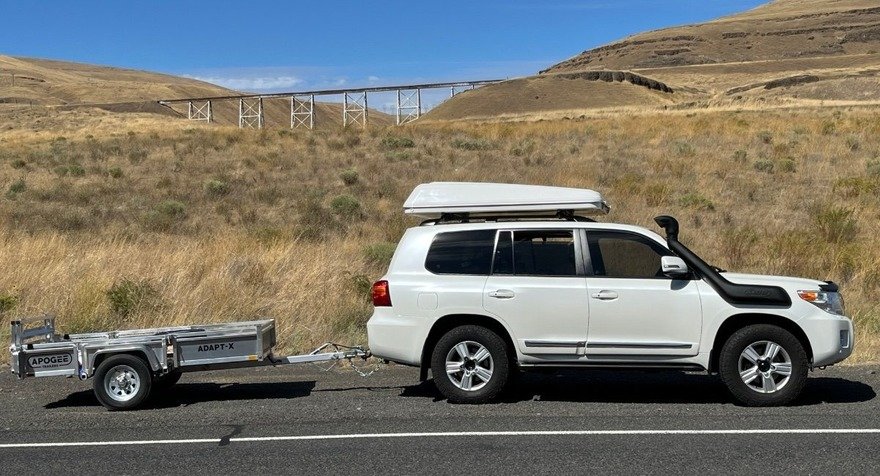
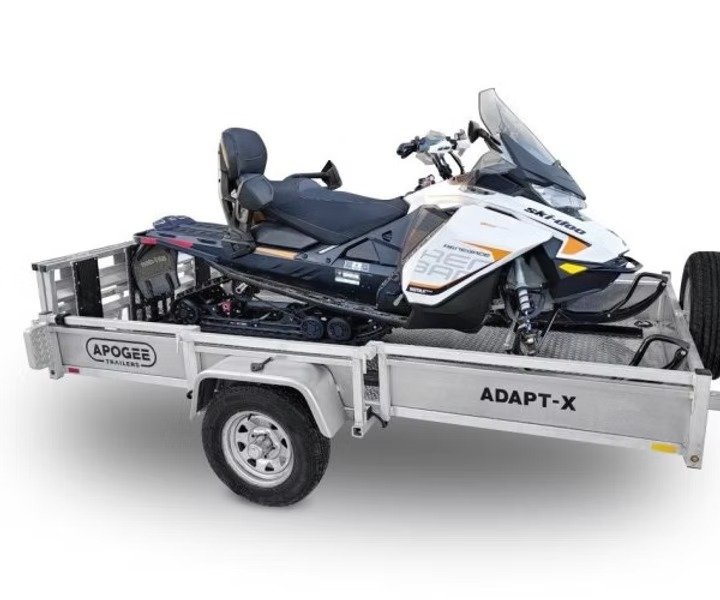
- Commercial/Professional Grade (up to 6×12): Designed for contractors or those with larger recreational equipment, such as side-by-sides or professional-grade lawn maintenance gear.
- Payload Capacity: Depending on the specific model and configuration, these trailers can handle between 2,122 lbs and 2,312 lbs of cargo, a surprising figure for a unit that folds down to a fraction of its operational size.
Chronology: From Concept to Consumer Reality
The development of the Adapt-X did not occur in a vacuum. It emerged from the growing necessity for urban and suburban efficiency. As residential properties have become more densely packed and urban parking has become a premium commodity, the traditional "fixed" trailer became an increasing nuisance for consumers.
The Design Phase
The inception of Apogee Trailers was rooted in the realization that while the demand for trailer utility remained constant, the space available to store them was shrinking. The engineering team spent years iterating on pivot-point mechanics and locking mechanisms. The primary challenge was not just folding the trailer, but doing so without compromising the structural safety or the "tracking" ability of the trailer when hitched to a vehicle.
Market Introduction
Following rigorous testing in the Canadian climate—where extreme temperature fluctuations test the thermal expansion and contraction of metals—the Adapt-X was introduced to the North American market. It quickly gained traction among "prosumers"—individuals who require commercial-grade hauling capabilities but lack the industrial storage space of a commercial yard.
Current Status
Today, the Adapt-X stands as a leader in the niche market of "collapsible logistics." By maintaining a direct-to-consumer model and focusing on high-quality manufacturing, Apogee Trailers has successfully navigated the shift from a boutique engineering project to a recognized brand in the utility vehicle sector.
Supporting Data: Engineering for the Future
The success of the Adapt-X can be quantified through a comparison with traditional steel trailers. In the utility industry, the "Weight-to-Payload Ratio" is the ultimate metric.
The Efficiency Metric
Traditional trailers are often built with heavy-gauge steel, which is inexpensive but contributes significantly to the gross vehicle weight (GVW). By using aluminum, Apogee keeps the unladen weight low, which serves two purposes:
- Fuel Efficiency: Lower curb weight means the towing vehicle consumes less fuel, whether it is an electric truck or a traditional combustion engine.
- Payload Efficiency: Because the trailer itself is lighter, more of the towing capacity of the vehicle can be dedicated to the actual cargo.
The Storage Footprint
Standard 6×12 utility trailers require approximately 72 square feet of permanent storage space. When folded, the Adapt-X reduces this footprint by over 60%, allowing it to be tucked away against a garage wall, underneath a raised deck, or even in a side-yard alleyway. This data is compelling for homeowners who are restricted by Homeowners Association (HOA) rules that prohibit the storage of full-sized trailers on residential driveways.
Official Responses and Industry Reception
The response from the professional hauling community has been largely positive, though guarded by the skepticism typically reserved for "new-tech" mechanical solutions.
The Apogee Philosophy
In interviews, the leadership at Apogee Trailers has emphasized that the Adapt-X was never intended to replace heavy-duty industrial trailers meant for daily, high-intensity construction use. Rather, it is intended to fill the "missing middle"—the gap for the user who needs the strength of a work-trailer but lives a lifestyle that doesn’t permit a 12-foot metal obstacle in their driveway.
Industry Feedback
Critics in the automotive press have pointed to the complexity of moving parts as a potential maintenance concern. However, Apogee has countered this by emphasizing the simplicity of their locking pins and the high-grade stainless steel hardware, which is designed for "field-serviceability." Unlike hydraulic folding systems that can fail due to fluid leaks or electrical shorts, the Adapt-X uses manual, mechanical folding—a "keep it simple" philosophy that ensures the trailer remains functional even after years of wear.
Implications: The Future of Urban Logistics
The existence of the Adapt-X signals a broader trend in consumer goods: the "dematerialization" of utility. We are moving toward an era where the tools we own are expected to be as adaptable as the environments we live in.
Impact on Residential Planning
As urban centers become more densely populated, the Adapt-X offers a glimpse into how homeowners will manage their domestic logistics in the future. If a trailer can be stored in a closet-sized space, it removes one of the final barriers to individual, self-sufficient transport of goods. This could potentially reduce the reliance on short-term equipment rentals, which often come with significant time and cost overheads.
The "Transformer" Effect
While the term "Autobot" is used here in a lighthearted sense, it touches on a serious evolution in mechanical design. The Adapt-X represents the shift from "static infrastructure" to "dynamic infrastructure." In the coming decade, we are likely to see more products adopt this philosophy—not just in trailers, but in modular construction, compact farming equipment, and portable power solutions.
Conclusion: Is it Worth the Investment?
With price points ranging from approximately $4,500 to $6,500, the Adapt-X is a premium investment. It is not designed to compete with budget-grade steel trailers found at big-box retailers. Instead, it is aimed at the consumer who values the combination of high-end materials, Canadian craftsmanship, and, most importantly, the ability to reclaim their space.
For the person who dreams of the utility of a flatbed but wakes up to the reality of a cramped garage, the Adapt-X is not just a tool—it is the solution to a spatial dilemma. It is a testament to the idea that with smart engineering, you don’t have to sacrifice capacity for convenience. In the end, the most useful transformer isn’t the one that saves the world; it’s the one that saves your garage.
About the Author