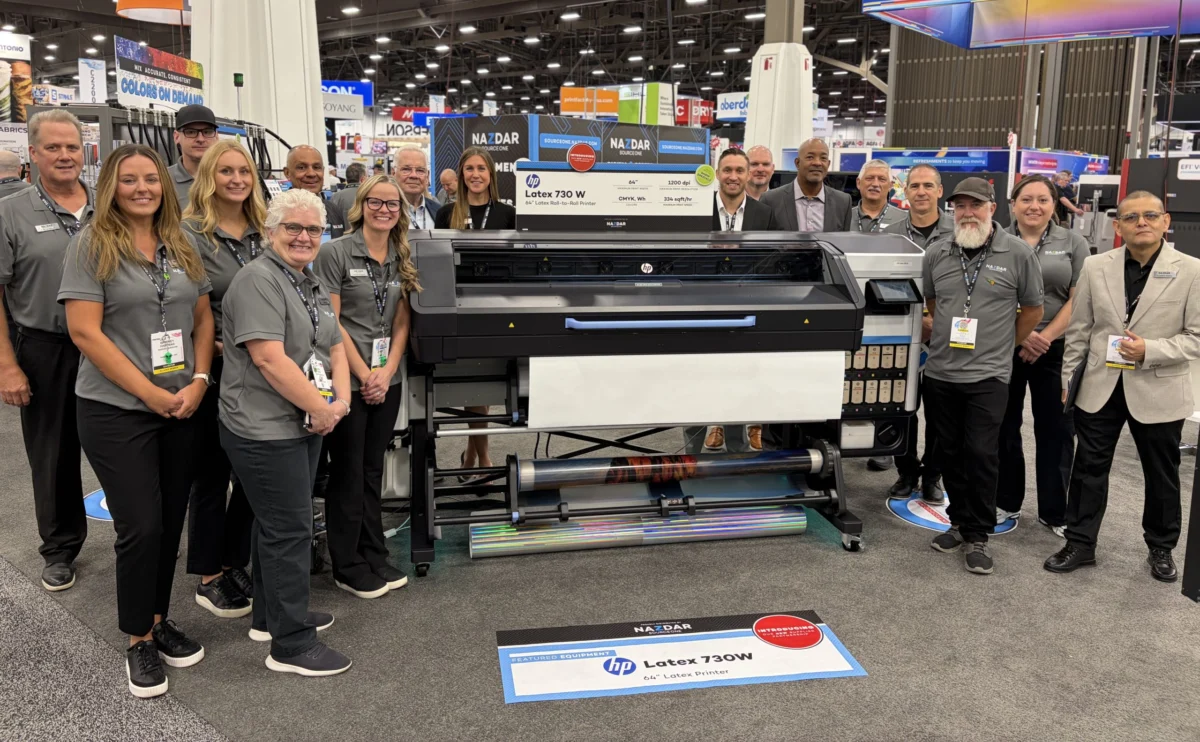
In a move that promises to reshape the landscape of the wide-format printing industry, Nazdar SourceOne, a premier supplier of screen, wide-format digital, and textile printing supplies, has officially announced a strategic partnership with global technology giant HP. This collaboration marks a significant milestone for both entities, integrating HP’s renowned Latex printing technology into Nazdar’s expansive product lineup. By merging Nazdar’s deep-rooted technical expertise and robust distribution network with HP’s cutting-edge, sustainable printing solutions, the partnership aims to provide print service providers (PSPs) with a comprehensive toolkit to navigate the complexities of a modern, fast-paced print environment.
The Core Partnership: A Strategic Alignment
At the heart of this agreement is the introduction of HP’s Latex printer series to the Nazdar SourceOne catalog. This is not merely a distribution deal; it is a strategic alignment designed to bridge the gap between high-performance hardware and the specialized consumables and technical support that Nazdar is known for.
Nazdar SourceOne will initially roll out three key product families: the HP Latex 630/630W, the 730/730W, and the 830/830W series. These machines are engineered to cater to a diverse spectrum of the market, ranging from entry-level shops looking to scale their operations to high-volume, industrial production environments. By adding these units to their existing portfolio, Nazdar is effectively positioning itself as a one-stop-shop for print businesses seeking to transition into, or upgrade within, the Latex printing segment.
A Chronology of Innovation: The Evolution of Wide-Format
To understand the weight of this partnership, one must look at the historical trajectory of both companies. Nazdar has spent decades cementing its reputation as a provider of critical components—inks, substrates, and imaging equipment—that keep the industry moving. Conversely, HP has been the pioneer of the Latex ink revolution, which fundamentally shifted the industry away from solvent-based printing toward more sustainable, odor-free, and versatile production methods.
The path to this partnership was paved by an increasing demand for "greener" printing solutions. As environmental regulations tighten and brand owners demand more sustainable packaging and signage, the pressure on print shops to move away from harsh chemical-based inks has grown.
- The Early Years: Both companies independently identified the need for a shift in technology—Nazdar through its investment in high-quality digital inks and HP through its development of water-based, heat-curable Latex inks.
- The Convergence: Over the last decade, as Latex technology matured, the need for a more integrated support system became apparent. Print providers were asking for partners who could provide the hardware, the maintenance, and the application-specific knowledge in a single package.
- The Announcement: Following months of behind-the-scenes collaboration, the formal announcement cements a relationship that aligns Nazdar’s extensive distribution footprint across North America with HP’s manufacturing prowess.
Supporting Data: Why Latex Technology Matters
The technical advantages of HP Latex technology are well-documented and form the backbone of why this partnership is considered a game-changer for the end-user. For businesses looking to scale, the data-driven benefits are clear:
1. Sustainability and Environmental Compliance
HP Latex inks are water-based, significantly reducing the volatile organic compounds (VOCs) that are synonymous with traditional solvent printing. This allows shops to operate in environments where air quality is a concern, such as schools, hospitals, or retail interior spaces, without the need for intensive ventilation systems.
2. Application Versatility
The range of output possible with the 630, 730, and 830 series is vast. Because the inks are flexible and durable, they are ideal for:
- Retail Signage: High-definition, vibrant colors that capture consumer attention.
- Wall Coverings: Odorless, scratch-resistant prints that are safe for interior design.
- Vehicle Wraps: High elasticity that prevents cracking during the wrapping process.
- White Ink Capability: The "W" in the model names denotes white ink, a game-changer for printing on transparent or colored media, which has historically been a challenge for standard digital printers.
3. Operational Efficiency
The "instant-dry" feature is perhaps the most significant efficiency driver. Unlike solvent or UV-curable inks that may require off-gassing time or complex curing sequences, Latex prints are ready for lamination or finishing immediately upon exiting the printer. This drastically reduces turnaround times, allowing shops to meet the "need-it-yesterday" demands of modern retail.
Official Perspectives: A Synergy of Expertise
The leadership teams from both organizations have expressed immense optimism regarding the collaboration. Mike Johnson, Vice President of Graphic and Industrial Products at Nazdar, emphasized the "best-in-class" nature of the alliance.

"This partnership reflects our commitment to delivering best-in-class products and services that help our customers grow and adapt in an evolving marketplace," Johnson stated. He noted that the true value lies not just in the hardware, but in the combination of Nazdar’s "extensive application expertise" and HP’s technological leadership.
From the HP side, North America Sales Director John Stevens and HP Latex Segment Manager Thomas Giglio echoed these sentiments, framing the partnership as a catalyst for future industry growth. "Together, we unite two industry leaders with decades of innovation, expertise, and passion for advancing large-format print," they remarked. Their focus is clearly on the end-user’s ability to unlock new revenue streams, whether that be through premium interior décor or highly technical industrial applications.
Implications for the Industry
What does this mean for the average print shop owner? Several key implications emerge from this development:
Increased Accessibility to Advanced Tech
By leveraging Nazdar’s distribution network, smaller print providers who may have previously felt intimidated by the complexity of HP’s enterprise-level systems now have a clear, supported path to adoption. Nazdar’s technical support teams will be instrumental in ensuring that the learning curve for these new machines is minimal.
Competitive Pressure and Market Growth
The availability of the 630/730/830 series through a major distributor like Nazdar will likely increase the density of Latex technology in the market. This, in turn, raises the bar for print quality. Shops that do not adopt more versatile, sustainable technology may find it harder to compete with those who can offer a wider array of services—such as white-ink applications—on a faster timeline.
A Focus on Long-Term Success
This is a partnership built for the long haul. Both companies have committed to a collaborative future where innovation remains a priority. As new media types emerge and consumer preferences shift toward eco-friendly products, the combined R&D focus of HP and the market-feedback loop provided by Nazdar will allow for faster adaptation to market trends.
Conclusion: Setting the Stage for the Future
The marriage of Nazdar SourceOne’s industry-leading support services and HP’s innovative Latex printing ecosystem is a signal that the wide-format industry is moving toward a more integrated, service-oriented model. It is no longer enough to simply sell a printer; companies must provide the software, the consumables, the training, and the troubleshooting support to ensure that the customer succeeds.
As this partnership unfolds, the industry will be watching closely. For print service providers, the message is clear: the tools to scale, diversify, and operate sustainably are becoming more accessible than ever before. Whether a shop is looking to enter the lucrative world of interior design, tackle high-end vehicle wraps, or simply increase their daily production capacity, the Nazdar-HP alliance provides a formidable foundation for growth in the years to come.
As technology continues to advance, the synergy between these two giants will likely set the benchmark for how manufacturers and distributors work together to empower the next generation of creative and commercial printing.
About the Author