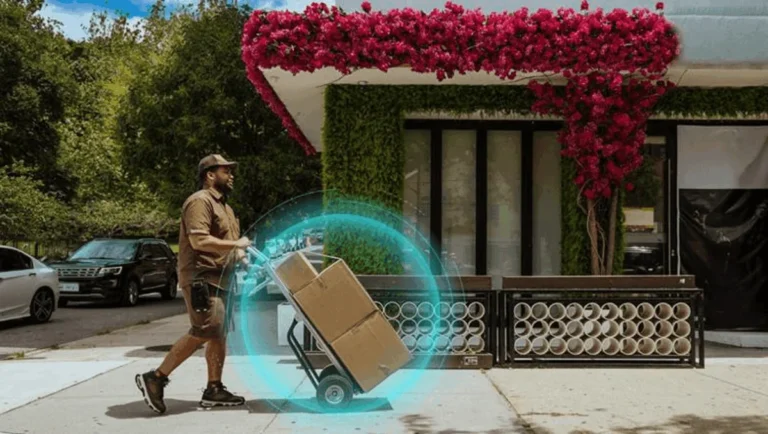
The global robotics landscape is undergoing a seismic shift. In 2025, the International Federation of Robotics (IFR) reported a monumental surge in the adoption of professional service robots, with total global shipments climbing by 24% to reach nearly 250,000 units. At the heart of this transformation lies the transportation and logistics sector, which has cemented its position as the primary driver of the robotics revolution. As industries grapple with labor shortages, supply chain complexities, and the constant demand for increased operational efficiency, service robots have evolved from experimental prototypes into the backbone of modern commercial infrastructure.
The Dominance of Logistics: Data and Market Dynamics
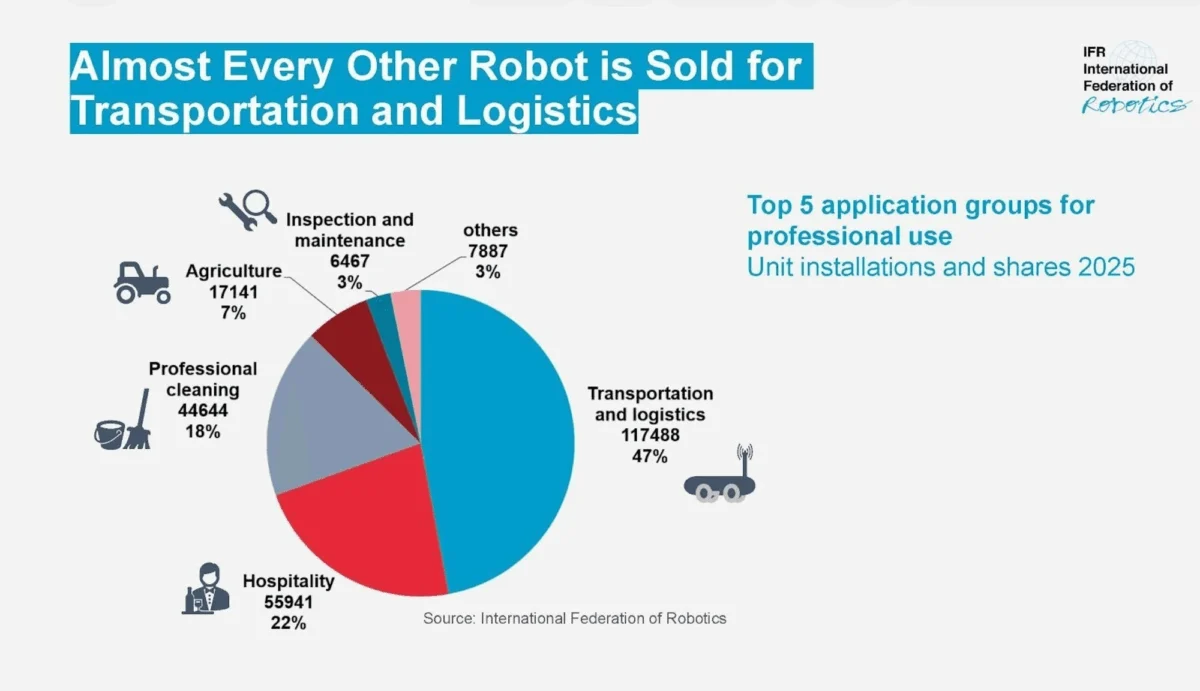
The figures released by the IFR paint a clear picture of an industry in the midst of a growth spurt. Of the nearly 250,000 professional service robots deployed in 2025, 117,500 were specifically tasked with transportation and logistics—a 21% increase from the previous year. This segment now commands a staggering 47% market share, underscoring the critical need for automated solutions in warehousing, last-mile delivery, and facility management.
The Shift in Monetization: From Capital Expenditure to RaaS
Historically, the acquisition of robotic hardware was characterized by massive upfront capital expenditures (CapEx). However, 2025 marked a pivotal shift toward the "Robotics-as-a-Service" (RaaS) model. While traditional direct sales remain a significant revenue stream, RaaS has become the dominant business model in the United States. This subscription-based approach allows firms to scale their robotic fleets based on seasonal demand without the burden of long-term depreciation or massive initial investment. By lowering the barrier to entry, RaaS has democratized access to high-end automation, allowing mid-sized enterprises to compete on a level playing field with industry giants.
Chronology of Adoption: A Multi-Stage Evolution
The journey to the 2025 milestone did not happen overnight. To understand the current landscape, one must look at the progression of technology over the last decade:
- 2015–2018: The Proof-of-Concept Era. During this period, logistics robotics was primarily confined to controlled environments like Amazon’s fulfillment centers. Pilots were frequent, but integration was limited by proprietary software and high costs.
- 2019–2022: The Pandemic Catalyst. COVID-19 acted as a forced accelerator. With labor shortages and social distancing mandates, industries were forced to look at robotics not as a "nice-to-have" luxury, but as a survival mechanism. This era saw the rapid deployment of Autonomous Mobile Robots (AMRs) in hospitals and warehouses.
- 2023–2024: Infrastructure Integration. As AI and sensor technologies matured, the focus shifted from simple hardware deployment to software-defined operations. Robots began to interact more fluidly with existing Warehouse Management Systems (WMS) and ERP software.
- 2025: The Year of Scaling. 2025 stands as the year that service robots moved beyond the "pilot" label. With 24% growth, the industry transitioned from testing to widespread, everyday operational utility.
Supporting Data: The Broader Robotics Ecosystem
While logistics leads the pack, the broader service robot ecosystem is showing robust health across multiple verticals. According to the IFR, growth is not an isolated phenomenon; it is a holistic trend:
- Hospitality: Ranking second in market share, hospitality robots are becoming common fixtures in hotels, airports, and public spaces. These machines facilitate mobile guidance, act as interactive information kiosks, and provide telepresence solutions for remote interaction.
- Professional Cleaning: The third-largest segment is dominated by autonomous floor-cleaning units. As the technology behind LiDAR and SLAM (Simultaneous Localization and Mapping) becomes cheaper and more accurate, these machines are now capable of navigating complex public areas with minimal human oversight.
- Cross-Sector Growth Rates: The IFR’s data confirms that this is a rising tide lifting all boats. Professional service robots grew by 24%, medical-grade robotics saw a 19% increase, and consumer-focused service robots—such as advanced domestic vacuums and lawn mowers—surged by an impressive 37%.
Official Perspectives: Insights from the IFR
Jane Heffner, President of the International Federation of Robotics, emphasizes that the significance of these numbers lies in the ubiquity of the technology. "Service robots are expanding into everyday operations," Heffner stated in the IFR’s recent press release. "Sales went up across all three segments with double-digit growth rates, reflecting a fundamental change in how we perceive work and automation."
Heffner’s perspective highlights a critical nuance: the robotics industry is no longer dependent on a single "killer app." Instead, the diversification of use cases—from hospital corridors to warehouse floors—suggests that the industry has reached a level of maturity that is resistant to localized market shocks.
The Humanoid Frontier: Potential vs. Reality
Perhaps the most discussed—and misunderstood—segment of the 2025 robotics market is the humanoid robot. Designed to replicate human form and flexibility, these machines represent the "holy grail" of automation. In 2025, approximately 7,000 units of full-size humanoids (exceeding 140 cm in height) were sold globally.
The Challenges of Humanoid Integration
Despite the massive media attention and the allure of having a "general-purpose worker," the IFR cautions that the humanoid sector is still in its infancy regarding commercial viability. Current obstacles include:
- Safety Standards: Unlike stationary robots, humanoids operate in human spaces, necessitating a radical overhaul of safety certification protocols.
- Economic Scaling: The cost of training and maintenance for a complex, multi-jointed humanoid remains prohibitively high for most industries compared to specialized robots like conveyors or automated forklifts.
- The "Teleoperation" Trap: Much of the current "success" seen in humanoid pilot projects is actually powered by human teleoperation. True autonomous manipulation—the ability for a robot to identify, grasp, and move objects without a human guiding it from a remote screen—remains a significant engineering hurdle.
For humanoids to move beyond R&D and novelty applications, industry experts suggest a need for significant breakthroughs in intuitive programming and robust, cost-effective manipulation.
Implications: A Future Defined by Collaborative Automation
The implications of the 2025 robotics data are far-reaching, affecting labor, economics, and urban planning.
Labor Dynamics
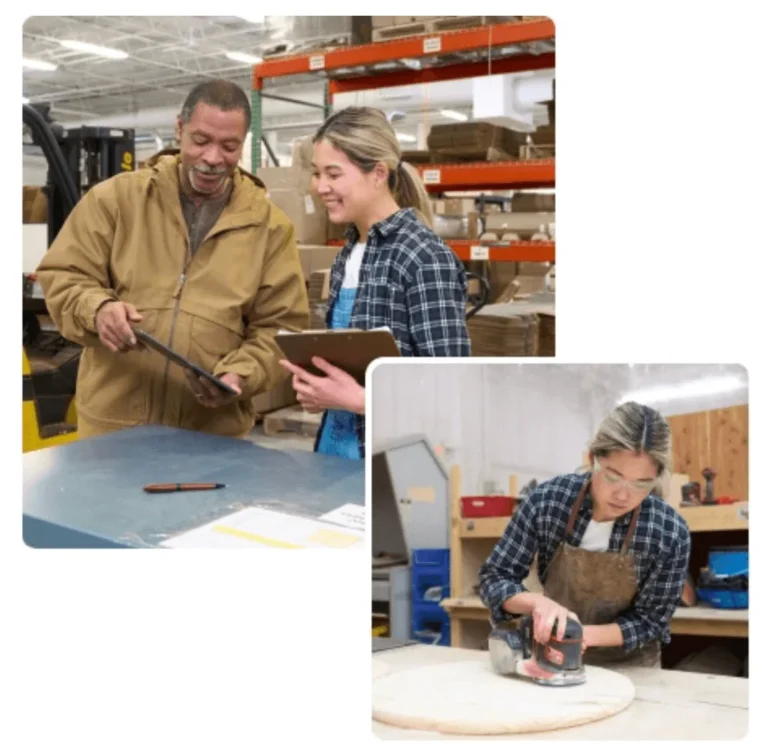
Contrary to the "robot takeover" narrative, the widespread adoption of service robots in 2025 has largely served to augment the human workforce rather than replace it entirely. In the logistics sector, robots handle the "dull, dirty, and dangerous" tasks—the repetitive lifting and long-distance transport—allowing human employees to focus on more complex decision-making and quality control roles.
Operational Resilience
The shift toward RaaS and the rapid growth in logistics automation suggest that companies are prioritizing operational resilience. By integrating robotics, businesses are better shielded against the volatility of labor markets and the unpredictability of global supply chain disruptions.
The Path Forward
Looking beyond 2025, the focus for the industry will likely be on standardization. As the fleet size of professional service robots grows, the need for universal communication protocols between robots of different brands becomes critical. If a fleet of mobile platforms cannot communicate with a building’s elevator system or a warehouse’s inventory software, the potential for efficiency is capped.
Furthermore, as AI continues to evolve, we can expect the line between "logistics" and "service" to blur. A robot that moves a pallet today might, with a software update and a modular attachment, be capable of cleaning a spill or greeting a customer tomorrow.
Conclusion
The data from 2025 confirms that we are living through a pivotal era in industrial history. With nearly 250,000 units deployed, professional service robots have successfully transitioned from the labs of researchers to the front lines of global commerce. While the dream of a fully autonomous humanoid workforce remains a long-term aspiration, the immediate impact of logistics and specialized service robots is undeniable. By embracing flexible business models and refining the software that powers these machines, the global economy is setting the stage for a future where automation is not just an advantage, but an essential component of every successful enterprise.
As Jane Heffner and the IFR have demonstrated, the surge in growth is not merely a statistical anomaly; it is a testament to the fact that the robotics age has finally arrived, and its primary mission is to keep the world moving.
About the Author