
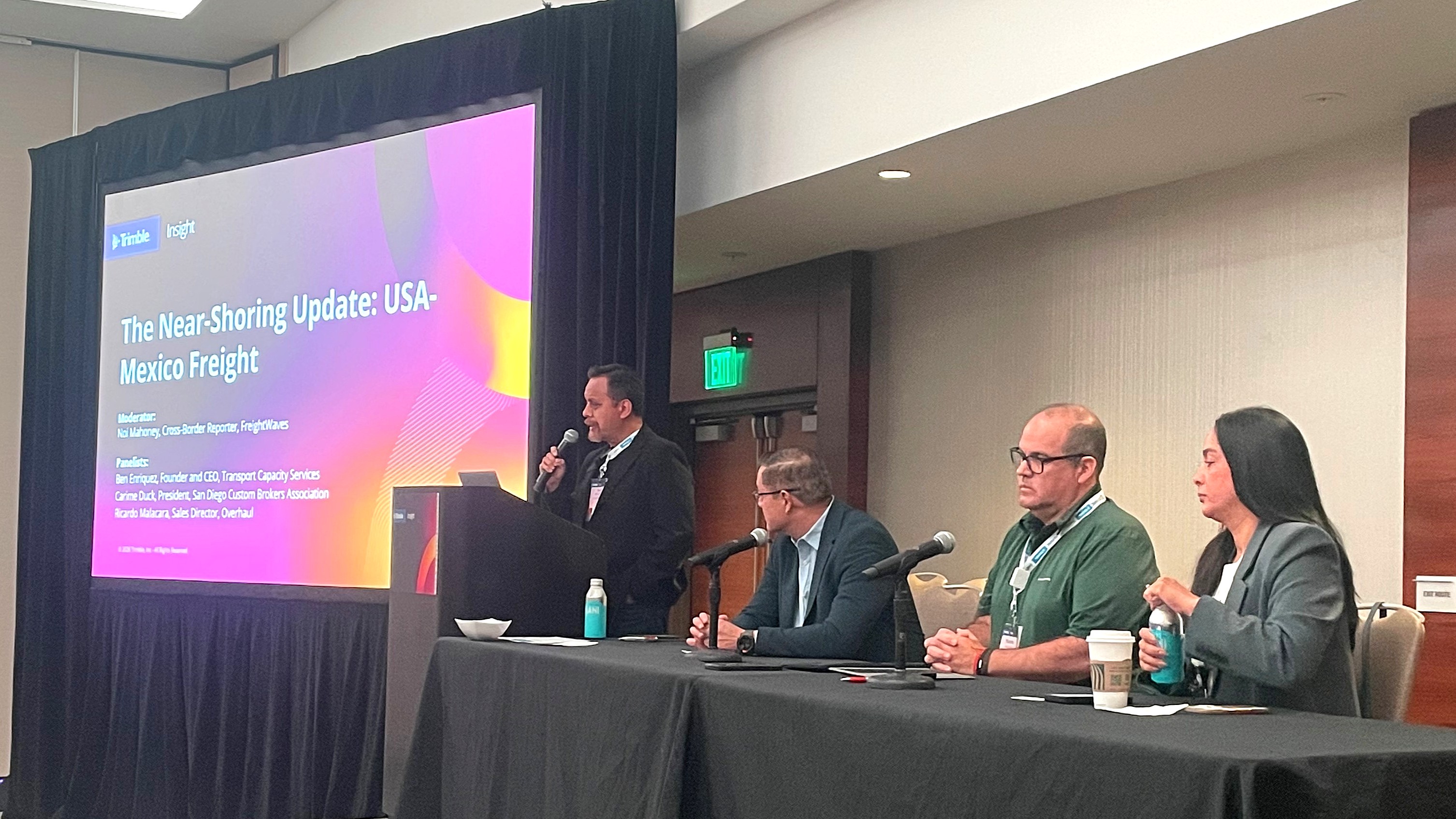
SAN DIEGO — The promise of nearshoring—the strategic relocation of manufacturing closer to the end consumer—continues to reshape the North American industrial landscape. However, as trade volumes between the United States and Mexico surge, a new, complex reality is emerging. Industry leaders gathered at the Trimble Insight 2026 conference this week to issue a stark warning: the logistical infrastructure supporting this growth is under immense pressure, and companies failing to modernize their strategies for driver retention, customs compliance, and cargo security risk becoming casualties of their own supply chains.
The three-day conference, which drew 1,200 industry professionals to San Diego, featured more than 200 sessions, but the “Nearshoring Update: USA-Mexico Freight” panel emerged as a centerpiece of the event. Experts on the panel—Ben Enriquez of Transport Capacity Services, Carime Duck of the San Diego Customs Broker Association, and Ricardo Malacara of security provider Overhaul—painted a picture of a sector at a critical, yet precarious, juncture.
The Persistent Momentum of Nearshoring
Despite the geopolitical headwinds of the past year—including tariff threats and shifting international policies—nearshoring remains an unstoppable force. Ben Enriquez noted that the manufacturing pivot was already well underway before recent political volatility, and the momentum has not slowed.
“The reality is that nearshoring, the ball was already rolling,” Enriquez explained. “There were already manufacturing plants and expansions being done, and they continue to happen.”
The data supports this observation. The integration between U.S. and Mexican manufacturing sectors is deepening, particularly in the automotive industry, where components often cross the border multiple times before a finished vehicle rolls off the assembly line. While uncertainty surrounding the United States-Mexico-Canada Agreement (USMCA) has forced companies to adopt a more cautious, measured approach to capital investment, the fundamental logic of nearshoring remains sound. It is no longer a theoretical trend; it is the operational backbone of modern North American manufacturing.
Chronology of a Capacity Crunch
The current logistical friction can be traced back to a misalignment between growing demand and a stagnating, if not shrinking, supply of cross-border transport.
The Visa and Regulatory Bottleneck:
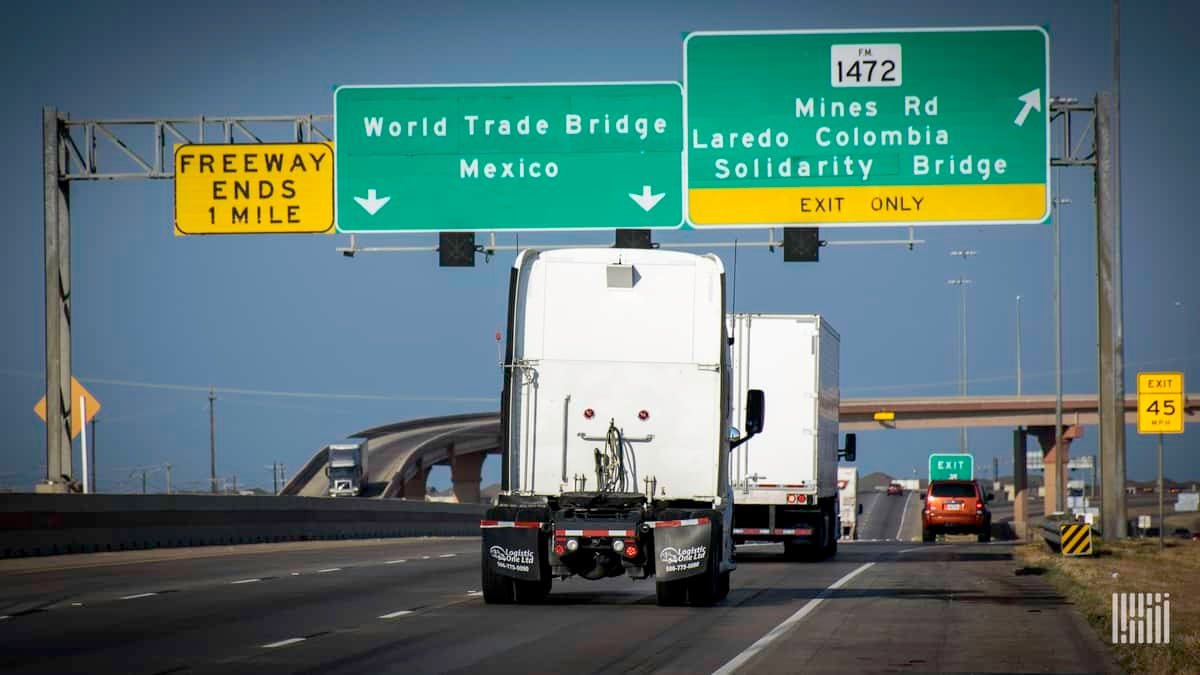
The primary driver of the capacity crisis is an intensifying enforcement environment regarding labor. Mexican B-1 visa drivers—who are legally permitted to transport international freight into the U.S. and return with cargo—are facing heightened scrutiny. Regulations regarding non-domiciled commercial driver’s licenses (CDLs) and strict English-language requirements have fundamentally altered the economics of cross-border trucking.
“The market has changed in a lot of ways, and these issues are making it lose a lot of drivers,” Enriquez said. Enforcement actions against drivers perceived to be engaging in domestic point-to-point transportation (cabotage)—which is prohibited under B-1 status—have effectively removed a significant number of qualified operators from the available pool.
The Economic Squeeze:
For small and midsize carriers, the pressure is two-fold. Rising fuel costs are hitting bottom lines, and the common industry practice of paying for fuel upfront while waiting 30 to 45 days for customer payment is creating a liquidity crisis. As a result, many fleets are downsizing, selling off equipment, or limiting their operational range, creating a paradox where freight volume continues to climb while the capacity to haul it diminishes.
The Seasonal Peak:
Carime Duck highlighted that this instability is no longer a future threat; it is a present reality in Southern California. The fall peak shipping season has exacerbated the shortage, with carriers struggling to meet demand and trucking rates experiencing consistent upward pressure as a direct consequence of the thinning driver pool.
Cargo Theft: The Dark Side of Concentration
As manufacturing hubs like the Bajío region in central Mexico expand, freight has become increasingly concentrated on a finite set of transit corridors. This spatial density has created a "target-rich environment" for organized criminal syndicates.
Ricardo Malacara of Overhaul reported an 11% year-over-year increase in cargo theft within the Bajío region. Most alarmingly, roughly 80% of these incidents now involve violence or the threat thereof. Unlike the opportunistic theft of the past, today’s cargo criminals are sophisticated, technology-driven, and highly organized.
“This is not a casual activity,” Malacara warned. “These are structured organizations that plan, that have technology.”
The Technology Arms Race:
Criminal groups are now routinely using GPS jammers to neutralize standard tracking systems within seconds of an incident. They often leverage "insider" information to identify high-value shipments, such as pharmaceuticals, electronics, and automotive parts. For these syndicates, food and beverage shipments remain the "gold standard" of theft due to their high liquidity, ease of resale, and difficulty in tracing.
Official Perspectives: Shifting from Reaction to Prevention
The panel was unanimous in its assessment that traditional logistics management is no longer sufficient. Companies must evolve their operational philosophy to prioritize prevention and proactive compliance.
The Role of Artificial Intelligence
Artificial Intelligence (AI) is being deployed as a force multiplier across the industry. Customs brokers are using AI to perform secondary compliance checks, catching clerical errors that could lead to costly border delays. Transportation providers are utilizing the technology to automate real-time notifications, giving stakeholders unprecedented visibility.
For security, the goal has shifted from "recovery" to "prevention." Malacara emphasized that if a company’s primary security strategy relies on recovering stolen goods, the strategy has already failed. "For us, a recovered load is a sign of our job not being well done," he stated. AI now allows firms to analyze millions of data points to identify high-risk lanes and times, triggering preemptive warnings to drivers before they enter dangerous zones.
"Classification Engineering"
Carime Duck introduced the concept of "classification engineering," urging companies to integrate customs experts into the earliest stages of product design and sourcing. A common, costly mistake is assuming that assembly in Mexico grants automatic USMCA preferential tariff treatment. If the underlying materials are sourced from non-qualifying regions, the finished product may not meet the rules of origin.
“You need to look at your supply chain,” Duck advised. “There needs to be someone who understands the customs side or the supply chain aspect of it and be in the conversations of engineering and manufacturing.”
Implications: The Imperative for Resilience
The implications for shippers are clear: the era of "just-in-time" logistics without robust risk management is over. The panel offered three critical recommendations for navigating the current landscape:
- Diversify the Carrier Network: Shippers should stop relying on single-provider solutions. Ben Enriquez urged companies to "get more arrows in your quiver" by building a broader, more resilient network of carriers before the next major demand spike occurs.
- Integrate Security into the Business Plan: Security cannot be a downstream afterthought. It must be a recurring, dynamic process, tailored to specific lanes, commodities, and even the time of day. Plans must be in place for when (not if) a GPS tracker is jammed or a driver is compromised.
- Build Deep Partnerships: In a market defined by capacity constraints, relationships are the ultimate hedge. Carriers are more likely to prioritize shippers who treat them as partners rather than commodities. Regular, transparent communication with brokers and transportation providers is the only way to ensure visibility during periods of disruption.
As nearshoring continues to rewrite the map of North American trade, the companies that thrive will be those that view their supply chain as an integrated, high-stakes ecosystem. The "Trimble Insight 2026" panel underscored a singular truth: the logistics of the future will be won by those who value agility, security, and compliance as much as they value speed. As the industry moves forward, the ability to secure capacity today will dictate who remains competitive tomorrow.
About the Author