It is the second-most consumed material on Earth, trailing only water. It serves as the literal foundation of modern civilization, supporting our skyscrapers, bridges, subways, and suburban cul-de-sacs. Yet, concrete is also an environmental disaster, a carbon-heavy behemoth that is crumbling beneath the weight of its own ubiquity and the accelerating pressure of a warming planet.
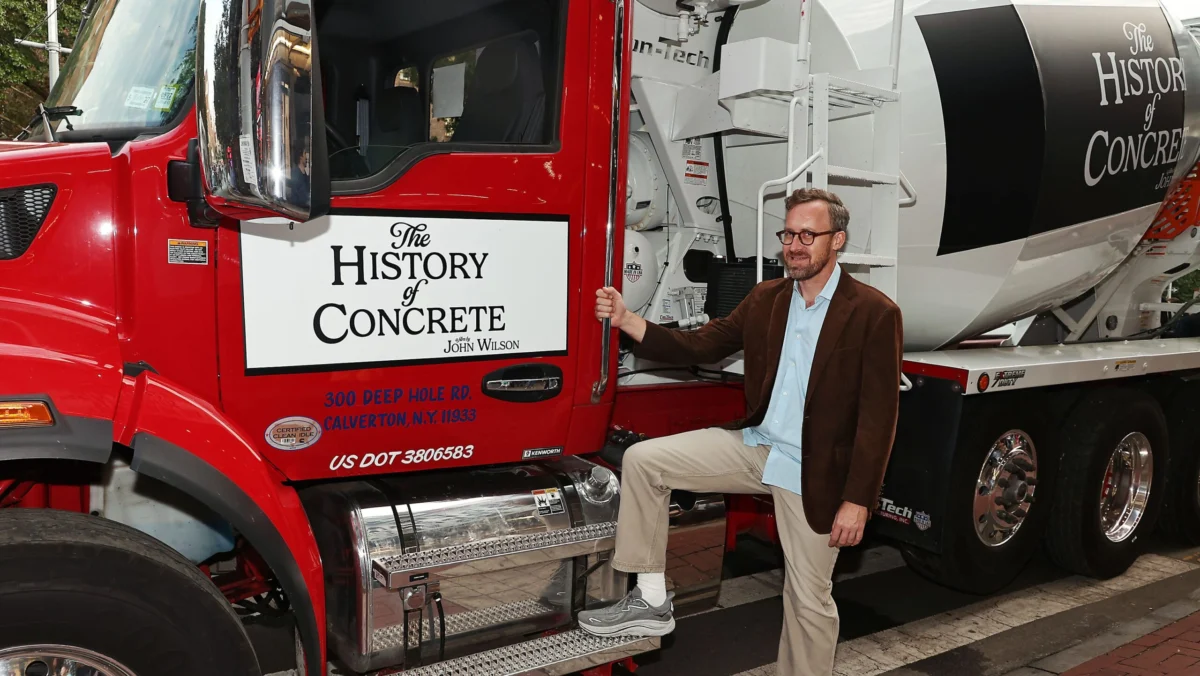
In his new feature-length documentary, The History of Concrete, filmmaker John Wilson—the eccentric, observant mind behind HBO’s acclaimed How To with John Wilson—turns his lens toward this pervasive, gray landscape. By blending laugh-out-loud absurdity with a deeply unsettling examination of infrastructure, Wilson forces us to confront the fact that our world is not only built on concrete; it is slowly drowning in it.
The Man Behind the Mixer: A Stylistic Deep Dive
John Wilson has built his reputation on the art of the digression. His work typically features quick, staccato cuts of handheld footage paired with deadpan, intimate narration. In The History of Concrete, he applies this signature style to a subject that is simultaneously everything and nothing.
The documentary is not a traditional climate film—it is, in its own ironic way, styled like a Hallmark movie. However, Wilson’s curiosity leads him into the dark underbelly of the construction industry. He guides viewers through an eclectic series of vignettes: a family-run mortuary that specializes in tattoo preservation, a high-stakes patriotic brick-laying competition in Las Vegas, and the grueling 3,100-mile “Self-Transcendence” race in Queens, where participants circle a single block for weeks. These disparate stories are held together by the “connective tissue” of concrete, illustrating just how inescapable the material has become in the human experience.
The Catalyst: From Basement Floods to Global Anxiety
The project was born out of personal frustration. After his own apartment building in Queens began to flood, Wilson attempted to repair the foundation himself with a store-bought concrete mix. The leak persisted, sparking a year-long investigation into why our modern structures are failing.
His struggle mirrors a broader, more terrifying reality for New Yorkers and urbanites worldwide. As climate change intensifies storms and drives sea-level rise, the density of concrete—which prevents rainwater from seeping into the earth—creates an “urban sponge” problem. When this concrete cracks, it fails to repel the water, leading to the frequent, costly flooding of subway stations and residential basements.
Supporting Data: A Material in Decline
The structural integrity of our cities is more fragile than the public realizes. During the film, Wilson interviews Sam Schwartz, a former New York City traffic commissioner, who offers a sobering assessment of the Brooklyn Promenade. The 1,800-foot-long structure, which forms the roof of a four-layered expressway, is effectively a collection of patch jobs. According to industry estimates cited in the film, the structure’s lifespan was never intended to exceed 40 years. Schwartz warns that a mass-scale catastrophe could be looming within just a few years.
This is not an isolated incident. Wilson’s footage captures a montage of failure:
- The Spring Street Salt Shed: An architecturally celebrated building currently held together by little more than packing tape.
- Midtown Skyscrapers: A building only a decade old that may already face the wrecking ball due to structural degradation.
- The Sand Shortage: Concrete is composed of water, cement, and sand. We consume roughly 50 billion tons of sand annually. As coastlines erode and demand surges, the world is facing an unprecedented sand crisis, making the very ingredients of our cities a finite and vanishing resource.
The Climate Paradox: An Urban Heat Island
While Wilson focuses on the physical crumbling of concrete, the material’s impact on climate change is multifaceted. Concrete is widely cited as the third-largest contributor to global carbon emissions. Beyond its manufacturing footprint, it acts as a thermal battery.
In the heat of summer, concrete surfaces create the “urban heat island” effect, driving local air temperatures up by as much as 7 degrees Fahrenheit. Pavement can reach a blistering 140 degrees, creating a public health hazard that kills hundreds of people annually in regions like Arizona. As the planet warms, the demand for concrete to build resilient infrastructure inadvertently accelerates the very climate instability that necessitates such construction.
Official Responses and the Failure of Recycling
The documentary takes a critical look at the industry’s attempt to pivot toward sustainability. Wilson visits a concrete recycling plant near a Brooklyn marine terminal, which is marketed as a solution to construction debris. However, the film reveals that these plants often trade one disaster for another. The facility in question was eventually shut down in 2025 following intense community protests, as the plant was filling surrounding neighborhoods with dangerous levels of airborne dust.
There is currently no “clean” way to handle the sheer volume of concrete waste generated by modern demolition. As Wilson notes, our dependency is so profound that changing it would require a total reconfiguration of the human lifestyle—a prospect that is currently met with little more than silence from policy makers.
Implications: The High Cost of Convenience
For viewers, the film raises a troubling question: Is the “green” promise of urban density a lie? We are often told that living in cities is the most sustainable way to exist, but these studies rarely account for the “embodied energy” of the concrete infrastructure—the vast, carbon-intensive networks of roads, sewers, and buildings that make city life possible.
If the materials that sustain our density are short-lived, carbon-heavy, and prone to rapid decay, the long-term carbon footprint of our cities may be significantly higher than current models suggest. The implication is that we have built a lifestyle based on a depreciating asset that we cannot afford to maintain and cannot afford to stop using.
Conclusion: A World Worth Noticing
Despite the grim subject matter, The History of Concrete does not succumb to hopelessness. Instead, it provides an invitation to pay attention.
The film’s power lies in its ability to strip away the familiarity of our environment. Walking out of a theater after viewing the documentary, the audience is forced to see the cracks in the sidewalk, the stains on the subway walls, and the frantic pace of the city through a new, cynical, yet strangely poetic lens.
Wilson leaves us with a lingering thought: we are surrounded by a material that is literally holding us together while simultaneously falling apart. Whether it is a toddler playing on a subway grate or a food truck stuck in a pothole, these mundane moments are now seen as artifacts of a “concrete world” that is both failing and persistent.
As the credits roll, the viewer is left with a simple, unsettling truth: we have paved our way into a corner. And until we find a way to break our reliance on the gray stone that defines our horizon, we are destined to keep patching the cracks, waiting for the next storm to test our resolve.
About the Author