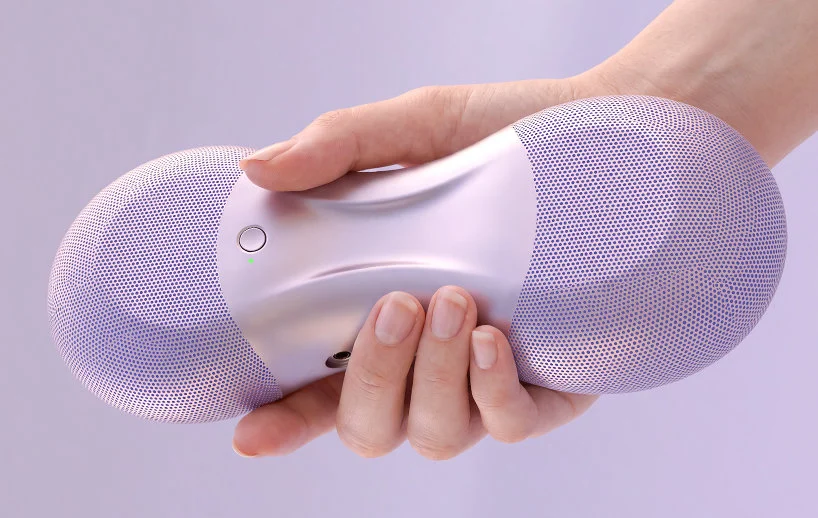
In the traditional landscape of music production, the act of creation is often confined to the digital realm of a computer screen or the mechanical turning of knobs on a console. Sound remains an intangible ghost—a phenomenon we hear, but rarely touch or see in its raw, structural state. Lara Ozansoy, a Basel-based designer and graduate of the FHNW Academy of Art and Design, is challenging this paradigm. Her latest project, Lara’s Multimedia Playground, acts as a bridge between the physical laws of acoustics and the expressive potential of interactive design, turning the act of listening into a tangible, visual, and deeply tactile experience.
The Core Concept: Visualizing the Inaudible
At its heart, the Multimedia Playground asks a fundamental question: What if music could be more than just an auditory experience? By blending industrial design with physics, Ozansoy has created an ecosystem where sound is translated into real-time particle patterns.
The project finds its scientific footing in the study of Chladni figures—a 18th-century discovery by German physicist Ernst Chladni. In these experiments, sand or salt is sprinkled onto a metal plate, which is then bowed or vibrated. As the plate resonates at specific frequencies, the particles migrate to the "nodes"—the areas of the plate that remain still—creating intricate, symmetrical geometric patterns.
Ozansoy has successfully digitized this phenomenon. Her system does not merely "animate" sound; it uses mathematical models derived from the physical principles of vibration to rearrange thousands of digital particles in real-time. Whether it is a pure sine wave or a complex musical composition, the software processes the audio input to generate a "visual fingerprint," allowing users to see the architecture of the sound they are hearing.
A Chronology of Discovery: From Salt Plates to Digital Ecosystems
The development of the Multimedia Playground was a rigorous, multi-stage process that transitioned from low-tech analog experimentation to high-tech industrial design.
Phase 1: Physical Foundation
The project began in the workshop, not the studio. Ozansoy conducted a series of physical experiments using rudimentary materials: salt, metal plates, and plastic surfaces. By applying varying frequencies through speakers, she observed how sound waves physically shaped the salt into patterns. These observations were critical; they proved that the relationship between frequency and geometry was consistent and could be mapped.
Phase 2: Algorithmic Translation
Once the physical principles were established, the focus shifted to the digital realm. Ozansoy moved away from pre-animated graphics, choosing instead to build a system where the visuals are procedurally generated by the audio itself. This ensures that the visuals remain authentic to the sound, maintaining a 1:1 relationship between the frequency input and the particle output.
Phase 3: The Ecosystem Design
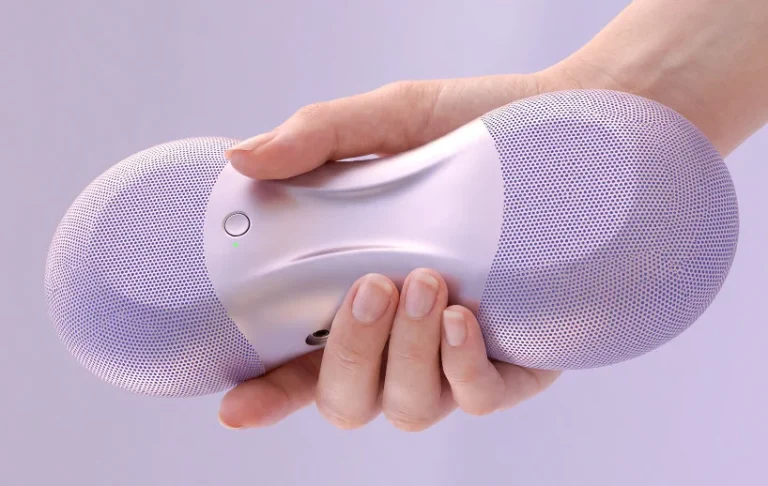
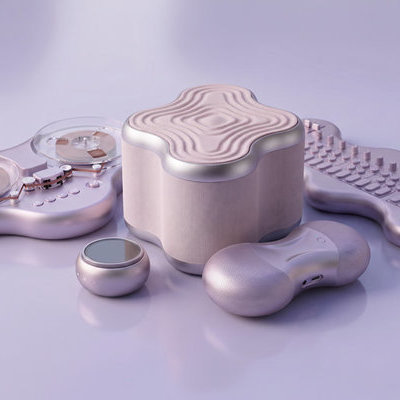
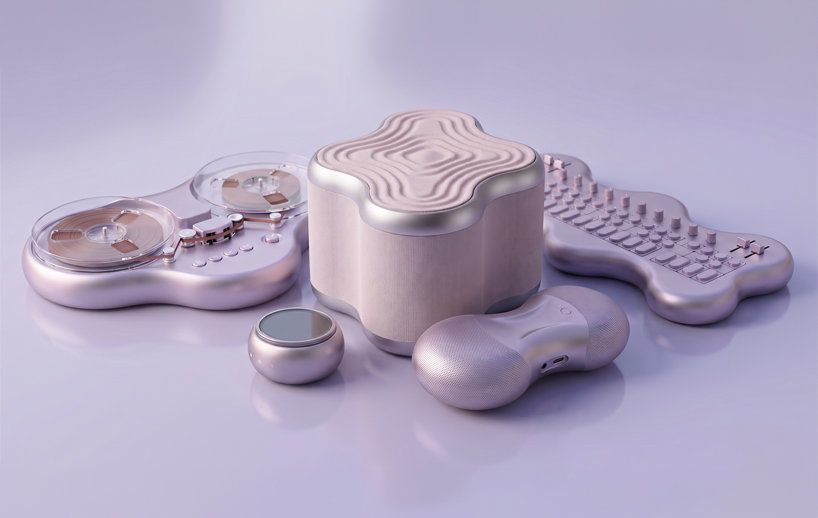
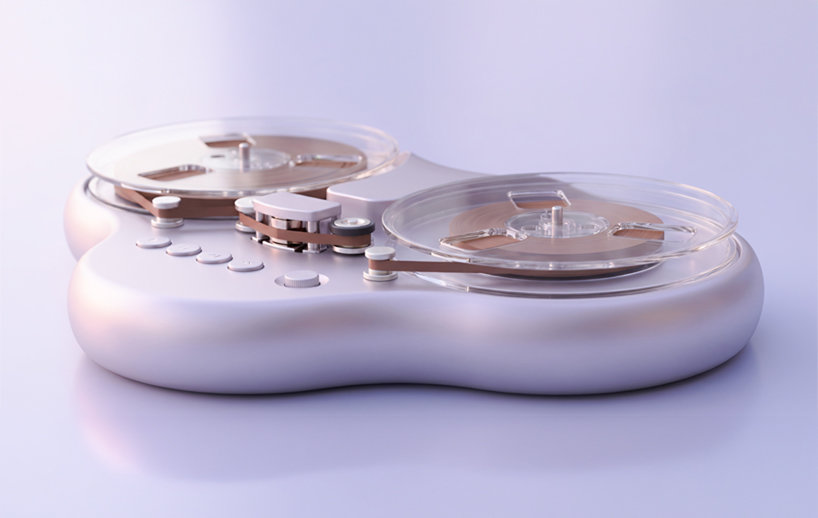
With the software functioning as the "brain," the next challenge was to design the "body." Ozansoy developed a family of five physical audio products designed to facilitate a tactile workflow:

- The Microphone: Capturing raw, ambient sound to be visualized.
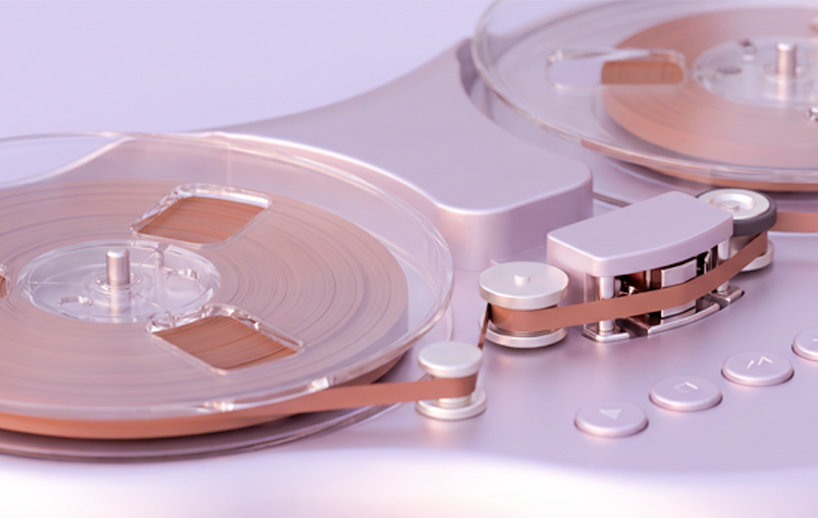
- The Tape Recorder: Recording audio and its corresponding visual sequence.
- The MIDI Controller: Allowing for manual, physical interaction with the patterns.
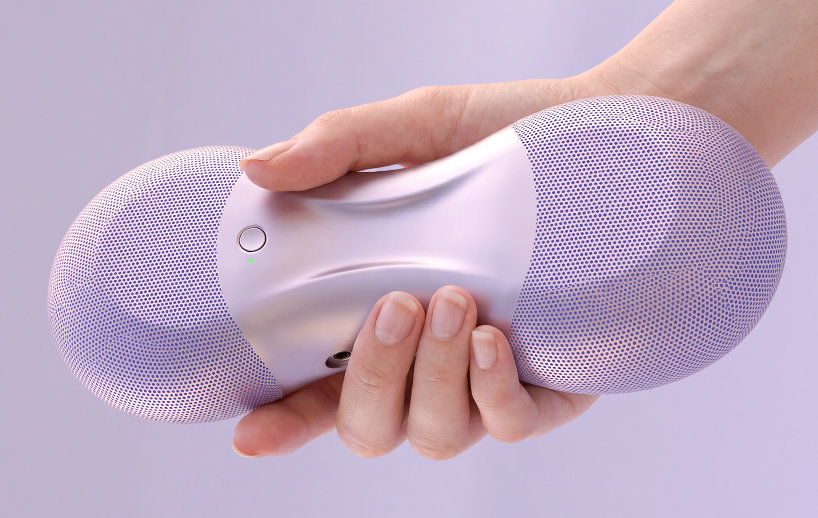
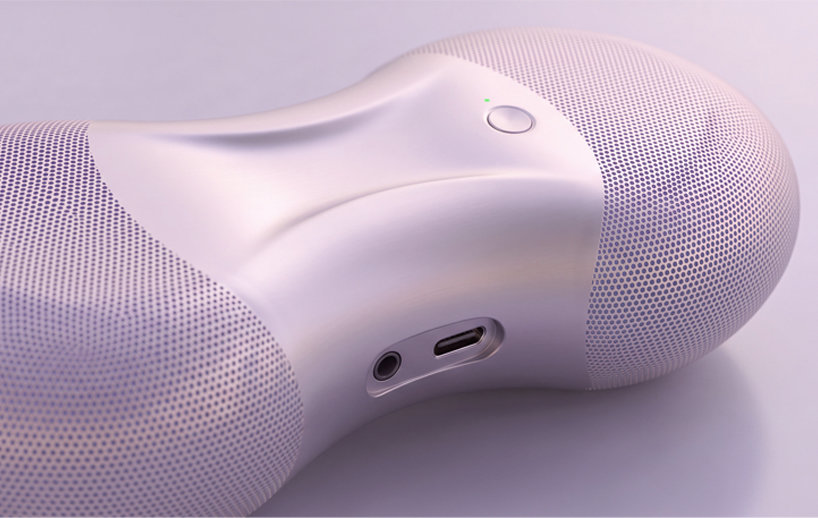
- The Speaker: Providing the high-fidelity output for the sonic experience.
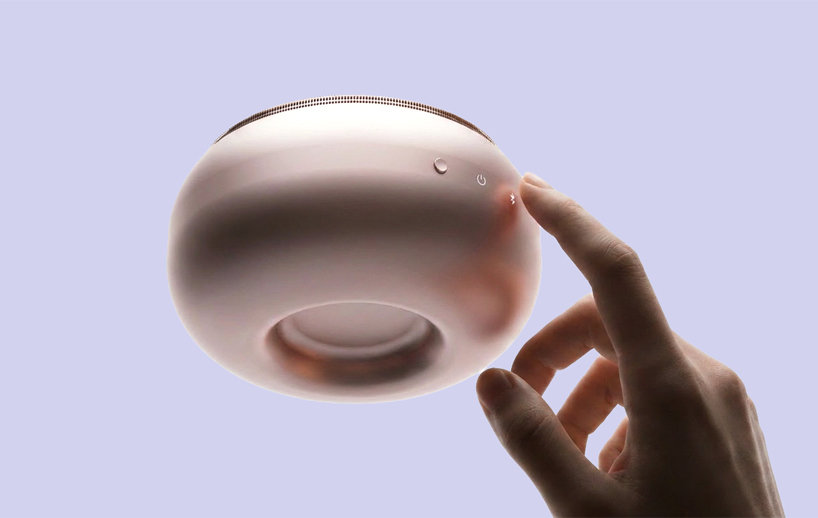
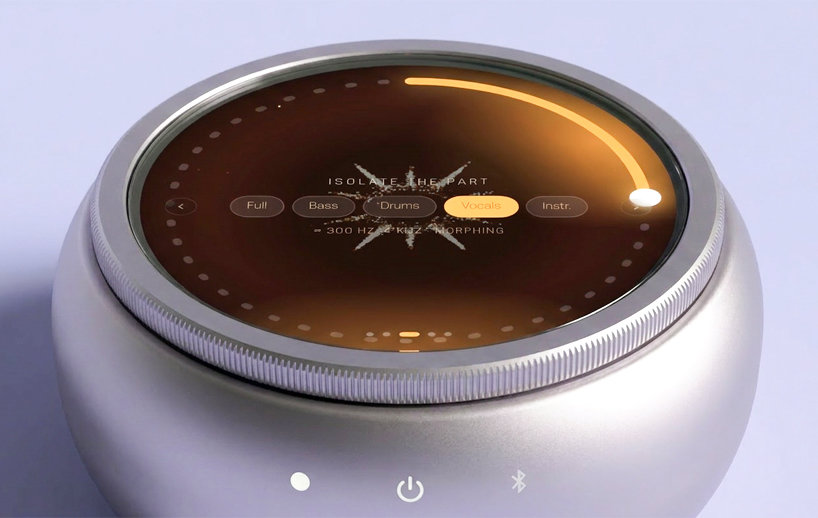
- The Compact Round Controller: A specialized interface module for navigating the system’s settings.
Supporting Data and Design Philosophy
The design language of the Multimedia Playground is intentionally sparse, referencing the visual history of sound representation—grids, nodes, and waves. By incorporating the aesthetic of "connect-the-dots" games, Ozansoy creates a bridge between childhood curiosity and professional music production.
Technical Integration
The system is designed to allow for deep audio analysis. Users can isolate specific frequency ranges—such as high-end harmonics or low-end sub-bass—to see how each element contributes to the overall "shape" of the track. This level of granularity provides a new diagnostic tool for producers, allowing them to visualize the "clutter" in a mix or the balance of a soundscape.
Creative Collaboration
The development was not conducted in isolation. Ozansoy engaged in extensive dialogues with a cross-section of the music industry, including professional musicians, film composers, and audio engineers. One collaborator’s insight—describing the act of composing as "playing with Lego, where every piece has to fit together"—became a core design tenet. This realization shifted the focus of the interface from being merely a "visualizer" to becoming a functional "workstation" where audio and visual parts are assembled with precision.
Official Context and Academic Scope
Lara’s Multimedia Playground was conceived as part of the Masterstudio Industrial Design at the FHNW Academy of Art and Design in Basel, Switzerland. The project serves as a master thesis that argues for a more "playful" approach to professional audio tools.
In her official documentation, Ozansoy emphasizes that the current state of digital audio workstations (DAWs) is often sterile and detached. By reintroducing tactile objects—the physical tape recorder, the dedicated controller—she aims to reclaim the "human" element of music production. Her work positions the designer not just as a tool-maker, but as an architect of experience, arguing that when tools are intuitive and responsive, they foster a deeper state of "flow" for the artist.
The Implications: A New Frontier for Audio and Art
The long-term implications of this project are significant, spanning several creative and technical industries.
The Future of Live Performance
In the realm of live music, the Multimedia Playground offers a revolutionary approach to stage design. Rather than relying on generic, looping VJ visuals, an artist could use this system to project their real-time performance. Because the visuals are generated by the audio in the moment, the performance becomes an authentic, synesthetic display of the music, effectively turning the concert stage into a living, breathing geometric sculpture.
Creative Identity and Branding
The ability to record "visual fingerprints" of audio tracks provides artists with a unique branding opportunity. In an era where digital content is king, having a signature visual language that is mathematically derived from one’s music could provide a powerful identity tool for producers and musicians. It allows the audience to "see" the personality of a track before they even hear it.
Pedagogical Potential
Beyond professional application, the project holds immense potential for education. By making sound "visible," it demystifies the complex physics of acoustics. It could serve as a powerful tool in STEM education, allowing students to experiment with the relationship between vibrations, frequencies, and geometry in a way that is immediately engaging and aesthetically rewarding.
The Return of Tactility
Perhaps the most profound implication of Ozansoy’s work is the pushback against the "flatness" of the screen-based digital experience. By creating a physical ecosystem of controllers, she is advocating for a return to the tactile. Even as we move further into the digital age, our brains crave the sensory feedback of physical buttons, the weight of a controller, and the spatial relationship between objects. By bridging this gap, the Multimedia Playground suggests that the future of technology is not just more power, but more humanity.
Conclusion: Bridging the Gap
Lara Ozansoy has managed to synthesize the cold, hard logic of physics with the warmth and intuition of creative practice. Lara’s Multimedia Playground is more than a research project; it is a vision for a future where music is no longer a separate, abstract entity, but a physical landscape we can inhabit, shape, and share.
As the project continues to evolve, it invites us to reconsider the tools we use to create. It asks us to look past the pixels and the menus and to find the shapes, nodes, and patterns hidden within our own work. In doing so, it restores the wonder to the creative process, reminding us that at the center of every complex technological system, there is room for play. For those interested in tracking the development of this project or exploring its visual documentation, further details are available on Lara Ozansoy’s official website. Through her work, Ozansoy proves that when we give sound a shape, we don’t just hear music—we experience it in its most fundamental, elemental form.
About the Author